What Taylor Swift Concerts Reveal About Stadium Food Price Economics
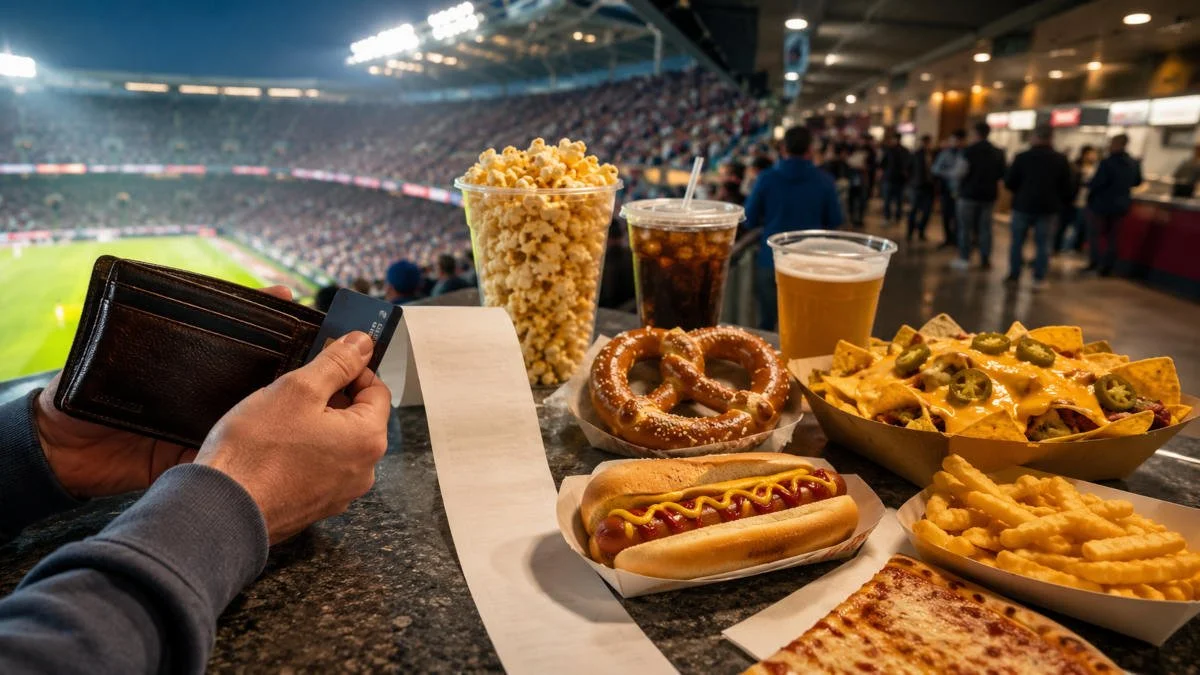
A Taylor Swift stadium concert is what happens when a football venue stops pretending it is a sports facility and becomes a glitter-drenched monetary digestive tract. People enter wearing sequins, friendship bracelets, and the stunned expression of someone who already survived Ticketmaster, only to discover the next boss battle is a $16 beverage in a cup shaped like an emotional support disco ball.
This is not just a concert. It is a pop-up economy with choreography. A temporary city where parking lots become tailgates, restaurants become pregame shrines, hotels become luxury shelters for lyric-based migration, and stadium concessions become a case study in what economists call “inelastic demand,” also known as “you’re trapped inside now, babe, enjoy the pretzel.”
Taylor Swift’s Eras Tour was not merely successful; it was absurdly successful in the way only a cultural event can be absurd. Pollstar estimated the tour grossed $2.2 billion, sold 10.055 million tickets, ran for 149 shows across 51 stadiums, and became the highest-grossing tour of all time. It also averaged 67,487 fans per show, which is less “audience” and more “mid-sized city with eyeliner.”
And when you put that many people in a stadium for three-plus hours, they do not simply listen to music. They buy food. They buy drinks. They buy themed snacks. They buy the idea that a chicken tender becomes spiritually meaningful if someone names it after a song.
That is where stadium food economics gets deliciously stupid.
Taylor Swift Concerts Turn Stadium Food Into a Volume Business With Bangs
Stadium food economics starts with scale. Not “busy Friday night restaurant” scale. Not “the Chick-fil-A drive-thru has become a zoning issue” scale. Stadium scale.
At the final U.S. Eras Tour stops, Food & Wine reported crowds of about 200,000 fans across three nights in Miami, 225,000 across three nights in New Orleans, and more than 200,000 across three nights in Indianapolis, with another roughly 180,000 expected in Vancouver. Carmen Callo of Sodexo Live! compared feeding those crowds to serving “12 Super Bowls over eight weeks,” which is a sentence that should come with a forklift license.
That is the first lesson: stadium food is not restaurant food. It is logistics wearing ranch dressing.
A restaurant asks, “How many tables are booked tonight?” A stadium asks, “Can we sell 32,000 pizza slices before a woman in rhinestone boots has to choose between dinner and the opening notes of ‘Cruel Summer’?”
Those are not the same problem. One is hospitality. The other is a military operation, except the battlefield smells like nacho cheese and the enemy is queue length.
The Captive Audience Is the Secret Sauce, Sadly
A stadium is basically a tiny monarchy after security. Once fans are inside, the economic structure becomes very simple:
You cannot easily leave. You cannot bring whatever food you want. You cannot pause the show. You cannot comparison shop. You cannot say, “Actually, this hot dog seems overpriced, I’ll just go across the street.” No, you will not. Across the street is another line, a barricade, and your friend texting “WHERE ARE YOU SHE’S ABOUT TO COME ON.”
So the stadium has power. Not infinite power, but enough to make a normal person look at a $14 pretzel and say, “Honestly, not the worst thing that’s happened today.”
Food & Wine reported that in 2024 the average NFL stadium beer-and-hot-dog combo cost $15.02, with some stadiums pushing close to $20 for the sacred duo of processed meat and emotional dehydration.
That price is not just about the bun, the beer, or the hot dog’s brave little journey from freezer to roller grill. It is about the whole system: exclusive vendor contracts, labor, insurance, rent, revenue-sharing, supply chain, security rules, cashless payment systems, kitchen constraints, and the fact that nobody wants to miss the bridge.
The stadium does not sell food in a free market. It sells food in a controlled habitat. The fan is not shopping. The fan is surviving.
Themed Stadium Food Is Merchandise You Digest
Taylor Swift concerts reveal the final form of modern concession economics: food as fandom merchandise.
A plain hot dog is lunch for a person who has accepted defeat. But call it “The Karma Dog,” put rainbow slaw on it, drizzle pink garlic aioli over it, and suddenly it is not a hot dog. It is lore. It is edible participation. It is a $13 sodium wand.
Sodexo Live! created a “Swiftie Council” to help develop fan-specific menu ideas for Eras Tour stops at Hard Rock Stadium, Caesars Superdome, Lucas Oil Stadium, and BC Place. The company said more than half a million Swifties came through Sodexo Live! stadiums in North America in 2024, and it described the menu work as going beyond food into fan memories.
Food & Wine reported menu names like Back to Decemburgers, Fearless Fries, Taytor Tots with Seemingly Ranch, Che-ee-ese Pizza, Fresh out of the Popper Popcorn, Sweet Nothing Cookies, and No Beef, No Crime Veggie Burgers.
Are these names ridiculous? Yes. Are they effective? Also yes. That is the cruel thing.
A themed item gives fans a reason to buy the same food they would have ignored if it were called “burger.” The pun creates social value. The photo creates memory value. The shared joke creates fan value. The stadium creates margin value. Everyone wins, except perhaps language itself, which had to endure “Taytor Tots” and may never fully recover.
Stadium Menus Now Sell Identity, Not Calories
The old stadium menu said, “Here is a hot dog, citizen.”
The new stadium menu says, “Here is a themed consumable identity token that signals your participation in a once-in-a-generation pop-cultural moment, plus fries.”
That shift matters. When food becomes part of the event, the fan’s decision changes. The question is no longer, “Am I hungry?” The question becomes, “Will I regret not buying the lavender drink everyone is posting?”
Congratulations, hunger has been acquired by FOMO.
This is why themed drinks and novelty packaging work so well. The customer is buying a prop in their own concert story. A purple mocktail is not just a drink. It is a hand-held accessory for Instagram, TikTok, group chats, and the private delusion that this cup was somehow “worth it” because it had a lyric-adjacent name.
Stadium food economics loves this because the more emotional meaning attached to an item, the less it competes on normal value. Nobody asks whether a commemorative disco-ball cup is a rational beverage container. Of course it is not. It is a tiny plastic monument to vibes.
Mocktails Became a Stadium Money Printer
Taylor Swift concerts also reveal something the stadium business has been figuring out: alcohol is not the only beverage with premium potential.
For decades, stadium beverage economics was basically beer, soda, water, and the occasional cocktail named by someone whose only instruction was “make it blue.” But Eras Tour crowds pushed mocktails and soft drinks into the spotlight.
Food & Wine reported that many Eras drinks were available as mocktails because of the under-21 crowd, and Sodexo Live! estimated about 68,000 mocktails and cocktails sold across three nights in New Orleans, about 30,000 in Miami, and another 30,000 in Indianapolis. Soft drink sales ranged from 24,000 to 33,000 each weekend.
This is huge. A mocktail lets a venue charge premium-drink prices without alcohol. That is not a beverage. That is capitalism discovering a cheat code with club soda.
The genius is that a mocktail can be colorful, photogenic, sweet, collectible, and inclusive for younger fans, sober fans, designated drivers, and anyone who wants the concert drink experience without turning the encore into a hydration lawsuit. Live Nation’s 2025 third-quarter report also pointed to broader ready-to-drink options and said nonalcoholic beverage spending rose 20% per fan, which suggests this is not just a Swiftie sparkle anomaly.
The mocktail is no longer the sad cousin of the cocktail. It is a fully monetized little sugar lantern.
Taylor Swift Shows Why Beverage Strategy Matters More Than Burger Strategy
Food is important. But drinks are where the stadium gets very interested, very fast.
Drinks are easier to carry, faster to consume, often higher margin, and less operationally complicated than hot food. A burger has to be cooked, held, assembled, and served. A themed drink can be batched, poured, garnished with one whimsical edible straw, and sold as if it contains emotional closure.
Concerts also skew beverage-heavy because fans tend to buy before the show and then stay put. Food & Wine reported that Sodexo Live! planned around a big pre-show rush and noted fans do not move much once the performance begins.
This creates a fascinating little problem: the venue has a massive wave of demand before showtime, then a performance window where people are reluctant to leave their seats. That means the stadium has to capture spending quickly or lose it forever. There is no leisurely third-quarter hot dog migration like at a football game. Nobody wants to be the person who missed “All Too Well” because they were negotiating with a malfunctioning card reader at section 118.
That is why the best concession strategy at a concert is not just “have food.” Please, a vending machine can have food. The strategy is: have the right food, in the right places, at the right speed, with the right names, before the fan decides starvation is preferable to missing a surprise song.
Lines Are Revenue Murder With Stanchions
Every stadium knows lines are bad. Yet many stadiums continue to treat concession lines like a sacred American suffering ritual, right up there with airport security and trying to cancel cable.
Long lines are not merely annoying. They are economically stupid.
A Mashgin stadium concessions report found that 58% of fans would spend more on food and beverage if lines were shorter, and it estimated stadium concessions can make as much as $2 million per game, averaging about $30 per fan in attendance.
Now, that is sports-stadium context, not a Taylor-specific number, because nobody is handing us a clipboard labeled “Swiftie Nacho Margin Report.” Cowards. But as a benchmark, it explains why speed matters. If a stadium with 67,000-plus fans has even a fraction of those people skipping a purchase because the line looks like a pilgrimage, that is real money evaporating into impatience.
Mashgin also reported that its AI-powered checkout systems were used at more than 100 locations across 16 NFL stadiums during the 2024–2025 regular season, with a median transaction time under 15 seconds.
That is the future stadium operators want: fewer humans trapped in line, more humans buying things quickly, fewer missed moments, more money extracted before anyone has time to question whether “Fearless Fries” is a cry for help.
Taylor Swift Concerts Compress an Entire Day of Spending Into Three Hours
The average stadium show is not just the concert. It is the pregame, the outfit, the travel, the hotel, the restaurant, the parking, the merch, the drinks, the post-show food, and the late-night emotional debrief over fries.
U.S. Travel reported that Swifties averaged about $1,300 in local spending on travel, hotel stays, food, merchandise, and costumes during the early U.S. leg of the Eras Tour. It also cited about $5 billion in direct destination spending and argued total economic impact likely exceeded $10 billion when indirect spending and non-ticketed activity were included.
That is not a concert. That is a municipal stimulus package wearing red lipstick.
This matters for stadium food because the venue is competing with the surrounding city. Fans may eat before the show, buy inside, and eat again afterward. Restaurants near the stadium are not side characters. They are part of the event economy.
Restaurant Dive, using Toast data, reported that restaurants in the zip code around Nashville’s Nissan Stadium saw average transaction counts rise about 35% year over year during the three Eras Tour dates, while Nashville restaurants overall saw average transactions rise 25% year over year.
The stadium gets the captive dollars. The city gets the spillover dollars. The fan gets the credit card bill and a memory. Beautiful system. Horrifying, but beautiful.
The Federal Reserve Noticed, Which Is How You Know It Got Weird
When the Federal Reserve starts talking about your concert tour, the vibes have escaped containment.
In its July 2023 Beige Book, the Federal Reserve noted that May was the strongest month for hotel revenue in Philadelphia since the onset of the pandemic, “in large part” due to guests coming for Taylor Swift concerts.
That is the level of economic weirdness we are dealing with. This is no longer “fans bought snacks.” This is central-bank-adjacent tourism impact. This is what happens when a singer becomes a demand shock with a capo.
For food businesses, that matters because a Taylor Swift concert weekend is not a normal weekend. It changes staffing. Inventory. Reservations. Menu strategy. Hours. Delivery demand. Bar prep. Coffee demand. Brunch demand. Glitter cleanup demand, which should be its own municipal tax category.
A local restaurant that treats a major stadium concert like an ordinary Saturday deserves what happens to its dishwasher at 10:45 p.m.
Wembley Shows the Global Version of the Same Cash Machine
Taylor Swift concerts also reveal how stadium food economics adapts by market. The menu cannot just be “American hot dog, but in another accent.” Stadium vendors localize the money extraction.
At Wembley Stadium, Delaware North created an Eras Tour menu that included Chicken, Chips and Seemingly Ranch, The Karma Dog, Bad Blood Waffle Fries, and a Peri-Peri Chicken Burger inspired by Swift’s reported love of Nando’s. The drinks included tour-specific cocktails such as a French Blonde Spritz.
This is not random. This is menu localization plus fan-service targeting. Wembley did not just sell food. It sold British venue context, Swift lore, NFL-adjacent relationship discourse, song references, and sauces. So many sauces. At a certain point the stadium menu becomes a scrapbook with aioli.
That is the new economics: the menu has to feel like the event. Generic food still sells, but event-specific food travels better online. A regular sausage feeds a person. A Karma Dog feeds a person and becomes a post. The post becomes unpaid marketing. The unpaid marketing becomes demand. Demand becomes another $9 side of fries called something humiliating.
The Stadium Is Selling Proof You Were There
A lot of stadium concession spending is really souvenir spending in disguise.
Nobody needs a special cup. Humans survived thousands of years drinking from regular vessels, and admittedly most of those humans did not attend the Eras Tour, but still. A themed cup survives the drink. A novelty container outlives the lemonade. A menu item with a lyric pun gives the fan a small piece of the night to photograph, share, discuss, and later pretend was a rational use of money.
This is why stadium food increasingly overlaps with merchandise. The merch stand sells shirts. The concession stand sells consumable merch. The cup says, “I was there.” The fries say, “I understood the joke.” The edible straw says, “I have accepted nonsense as a lifestyle.”
The more a concession item can become evidence of attendance, the less it behaves like food. It becomes a memory receipt.
The Menu Has to Match the Crowd, Not the Building
A football game and a Taylor Swift concert may use the same stadium, but they are not the same event. This is a point so obvious it will still somehow surprise someone in a meeting.
Football crowds move differently. They drink differently. They respond to breaks differently. They may leave their seats during timeouts, halftime, and the long ritual of everyone pretending a booth review is suspenseful. Concert crowds, especially Swift crowds, are more likely to front-load purchases before the show and then stay glued to the performance.
Food & Wine’s reporting on Sodexo Live! makes this clear: operators expected more mocktails and soft drinks because of under-21 fans and families, and they planned staffing around a major pre-show rush.
QuestionPro’s Eras Tour survey also complicates the lazy “it’s all teenagers” assumption: it reported that about 58% of attendees were between 35 and 64, 37% were between 18 and 34, and less than 5% were under 18.
So the crowd is not simply “teen girls screaming.” That stereotype can go sit in the penalty box with the men who still call any popular female artist “manufactured” while worshipping four guys with beards and a pedalboard.
The actual crowd is multi-generational, high-intent, travel-heavy, merch-friendly, and willing to spend. That is a dream customer base for stadium concessions, assuming the venue does not fumble it by offering the same three sad items under heat lamps like it is hosting a county jail picnic.
Stadium Food Economics Runs on Occasion Spending
People spend differently at events because events suspend normal judgment.
At home, a person might compare grocery prices and decide that strawberries are too expensive this week. At a stadium, that same person will buy a $19 cocktail because it is purple and the night feels historic. Humans are not rational. We are raccoons with bank apps and narrative needs.
Concerts create what might be called occasion spending: the willingness to overpay because the purchase belongs to a special moment. The fan is not just buying a drink. The fan is buying “my Eras Tour drink.” The fan is not buying fries. The fan is buying “the fries we ate before Taylor came on.” This is sentimental inflation, and stadiums absolutely know it.
That is why the menu must be tied to the event. Generic food competes on price. Themed food competes on meaning. Meaning has much better margins, because apparently capitalism found a way to monetize friendship bracelets and now nothing is sacred.
Concession Pricing Is Also a Bet on Exhaustion
By the time a fan reaches the concession stand, they may have already:
Found parking.
Cleared security.
Located friends.
Managed a clear-bag policy.
Taken 47 photos.
Bought merch.
Traded bracelets.
Stared at the stadium map like it was a pirate scroll.
Discovered their seat is in a different zip code.
At that point, comparison shopping is dead. The fan wants food quickly and will pay the “please make this easy” tax.
That is part of stadium food economics too. The venue is not only selling food. It is selling reduced friction. The fan pays because the alternative is hassle. A $12 slice of pizza becomes acceptable because the fan is tired, excited, hungry, and deeply unwilling to re-enter the crowd river.
This is why speed and convenience are not luxuries. They are product features. A fast concession stand is not simply “nice.” It increases the chance the fan buys at all. The slow line is the only thing that can defeat stadium pricing. Not morality. Not reason. The line.
Taylor Swift Concerts Prove Nonalcoholic Drinks Have Graduated
The old nonalcoholic stadium beverage hierarchy was bleak: soda, water, maybe lemonade if the venue was feeling emotionally available.
Eras Tour menus showed a better path. Make the drink visually fun. Give it a name. Offer it with or without alcohol. Make it appealing to fans of all ages. Put it in a collectible cup if possible. Add an edible straw because apparently even the straw must now audition.
This is not just cute. It is smart business.
A parent with a child can buy the mocktail. A sober adult can buy it. A younger fan can buy it. A group can all buy versions of the same drink without separating into “real cocktail” and “sad Sprite” factions. That broadens the addressable market, which is business-school talk for “more people can be convinced to buy the purple thing.”
The lesson for venues is obvious: stop treating nonalcoholic options like punishment. If the NA drink looks like a medical sample while the cocktail gets glitter and a garnish, you are leaving money on the concourse.
The Food Has to Be Fast, Photogenic, and Idiot-Proof
A Taylor Swift concert is not the place for a complicated chef-driven tasting menu, unless your goal is to watch 800 fans scream because the whipped ricotta toast caused them to miss “Champagne Problems.”
The ideal stadium concert food has to meet several criteria:
It must be fast.
It must be portable.
It must survive being eaten while standing.
It must not require a knife, a table, or an advanced degree in sauce management.
It must be recognizable enough for mass appeal.
It must be customizable enough to feel special.
It must be photogenic enough to justify the price.
This is why pizza, tenders, nachos, fries, popcorn, hot dogs, burgers, cookies, soft pretzels, and colorful drinks dominate. They are operationally obvious and emotionally flexible. Rename them, garnish them, serve them in a novelty container, and suddenly the stadium has invented “immersive dining,” which used to be called “putting words on a menu.”
Taylor Swift Stadium Food Is Also Data Strategy
Behind every themed concession item is a boring spreadsheet wearing sparkles.
Operators have to estimate demand by category: hot food, snacks, alcohol, mocktails, soft drinks, water, premium items, family-friendly items, quick-service staples. They have to plan procurement, staffing, points of sale, equipment, storage, replenishment, and waste.
Food & Wine reported that Sodexo Live! used analytics and taste testing to determine what would resonate, then worked with procurement to make sure supply could meet demand.
That is the unglamorous truth under the glitter. A “magical fan experience” is built on spreadsheets, par levels, labor schedules, inventory movement, and the terrifying knowledge that running out of the special mocktail before the show starts will cause more emotional damage than a surprise breakup album.
The fan sees a themed drink. The operator sees cups per minute, syrup levels, ice logistics, speed of service, margin, and whether section 300 is about to become a beverage desert.
The Outside Economy Gets Its Own Eras Tour
The stadium sells the official version of the moment. The surrounding city sells the unofficial expansion pack.
Coffee shops create Swift drinks. Bars create themed cocktails. Restaurants offer pre-show menus. Bakeries sell lyric cupcakes. Hotels do package deals. Food trucks appear near fan zones. Brunch places become glitter containment facilities.
This is where the stadium food economy spills outward. The fan may not even have a ticket and still participate by eating nearby, buying themed drinks, going to pre-parties, or simply standing in a merch line long enough to qualify as endurance athletics.
U.S. Travel noted that major events bring out-of-town visitors who spend on hotels, food, transportation, merchandise, and costumes, and it argued the Eras Tour’s impact was unusually strong because it happened across many cities and nights.
The result is a full ecosystem: the stadium captures the sealed-inside spending, while the city captures the before-and-after spending. Restaurants that prepare can make real money. Restaurants that do not prepare get to discover what it feels like when 900 glittered adults show up asking whether the kitchen is still open.
Local Restaurants Should Treat Concert Weekends Like Weather Events
A Taylor Swift concert weekend is basically a glitter hurricane with reservations.
Restaurants near stadiums should not merely “expect it to be busy.” That is adorable. A toddler expects cookies. Adults build systems.
They should prep extra staff, simplify menus, create fast-turnaround items, offer themed specials, extend hours where possible, and communicate clearly about reservations, walk-ins, and wait times. The goal is not fine dining. The goal is controlled throughput with enough charm that customers feel like they are part of the event rather than livestock in sequins.
Restaurant Dive’s Nashville data shows why this matters: the restaurant transaction bump around Nissan Stadium was substantial, and local operators described the weekend as record-breaking.
Useful tip for restaurants: do not create a 14-ingredient Taylor-themed cocktail that takes six minutes to build when 200 fans are trying to make a 7:00 p.m. show. Make it pretty, batchable, fast, and profitable. The lavender syrup does not need a backstory.
Fans Should Understand the Stadium Is Not Your Friend
This does not mean fans should never buy stadium food. That would be joyless, and joylessness is how people end up commenting “overrated” under videos of sold-out concerts.
Buy the themed drink. Eat the silly fries. Get the cup. Enjoy the night. Life is short, and occasionally it is correct to purchase an overpriced cookie because the cookie has a pun on it.
But understand the machine.
Eat a real meal before entering if you do not want to be economically mugged by chicken tenders. Check the venue’s water bottle and bag policies before arriving. Budget for food and drinks before you step into the concourse, because once you are inside, your brain will see a novelty cup and begin making decisions like a golden retriever with Apple Pay.
Useful fan rule: buy one special concession item because it makes the night more fun. Do not buy five because the stadium successfully turned your hunger into a loyalty program.
Venues Should Learn That Fans Will Pay, But They Are Not Stupid
There is a difference between premium pricing and insult pricing.
Fans understand stadium food costs more. They are not infants. They have seen an airport. But if the food is slow, cold, generic, and expensive, the venue is not creating a premium experience. It is creating resentment with napkins.
Taylor Swift concerts show that fans will spend when the item is fast, fun, themed, photogenic, and connected to the event. The value does not have to come entirely from portion size or ingredient cost. It can come from memory, convenience, and presentation.
But the food still has to be competent. A pun cannot save a dead fry. A themed burger still needs to taste like something other than regret in a bun. A mocktail should not be three ounces of syrup and a dream.
The best stadium operators understand this. The worst ones think a captive audience means they can serve anything. That is how you get viral complaints, abandoned lines, and fans smuggling protein bars like revolutionaries.
Stadium Food Economics Is Really About Converting Attention Into Transactions
The modern stadium is not simply a place where an event happens. It is a retail environment wrapped around an event.
The ticket gets the fan through the gate. After that, the venue tries to monetize attention, hunger, thirst, identity, convenience, nostalgia, urgency, and fear of missing out. It sells parking, merch, food, drinks, premium seating, VIP areas, mobile ordering, and anything else that can be attached to the night without causing the building to groan under the weight of capitalism.
Taylor Swift concerts make this obvious because the fans arrive with unusually high emotional investment. They are not casually attending. They planned. They traveled. They dressed. They budgeted. They made bracelets. They survived resale prices that looked like ransom notes. By the time they reach concessions, they are primed to treat the whole night as special.
The stadium’s job is to turn that emotional intensity into purchases.
That sounds cynical because it is. It is also true.
The Eras Tour Made Concessions Part of the Show
The biggest revelation is that stadium food is no longer outside the entertainment experience. It is inside it.
The themed menu, the mocktail, the cup, the local restaurant specials, the pre-show drink, the bracelet trading over fries, the post-show snack run—all of it becomes part of the fan’s story. Food is not just what people eat while waiting for the show. Food is one more way the show expands into the world.
That is why Taylor Swift concerts are such a clean case study. The demand is huge. The fans are motivated. The stadiums are enormous. The menus are themed. The city economies respond. The concession lines expose operational limits. The drinks reveal demographic strategy. The restaurant spikes reveal spillover. The souvenir cups reveal emotional merchandising.
It is all there, wrapped in glitter and charged at stadium prices.
Taylor Swift Made the $18 Hot Dog Legible
Taylor Swift concerts reveal stadium food economics in its purest, sparkliest, most financially aggressive form.
They show how captive crowds make pricing possible. How scale makes concessions serious. How themed menus turn ordinary food into fan participation. How mocktails can become premium products. How line length can kill revenue. How nearby restaurants benefit from event tourism. How stadiums and cities convert cultural obsession into sales, taxes, hotel nights, drinks, snacks, and souvenir cups that will eventually live in someone’s cabinet next to three other plastic mistakes.
The Eras Tour did not invent stadium food economics. It just made the system impossible to ignore.
A Taylor Swift stadium show is music, yes. It is also logistics. Hospitality. Retail strategy. Behavioral economics. Tourism. Queue theory. Menu engineering. Emotional pricing. And somewhere in the middle of all that, a fan holding a lyric-themed drink says, “This was expensive, but worth it.”
That sentence is the entire business model.
The stadium heard it, smiled politely, and charged extra for ranch.