What Cyberpunk 2077 Says About Ultra-Processed Food Futures
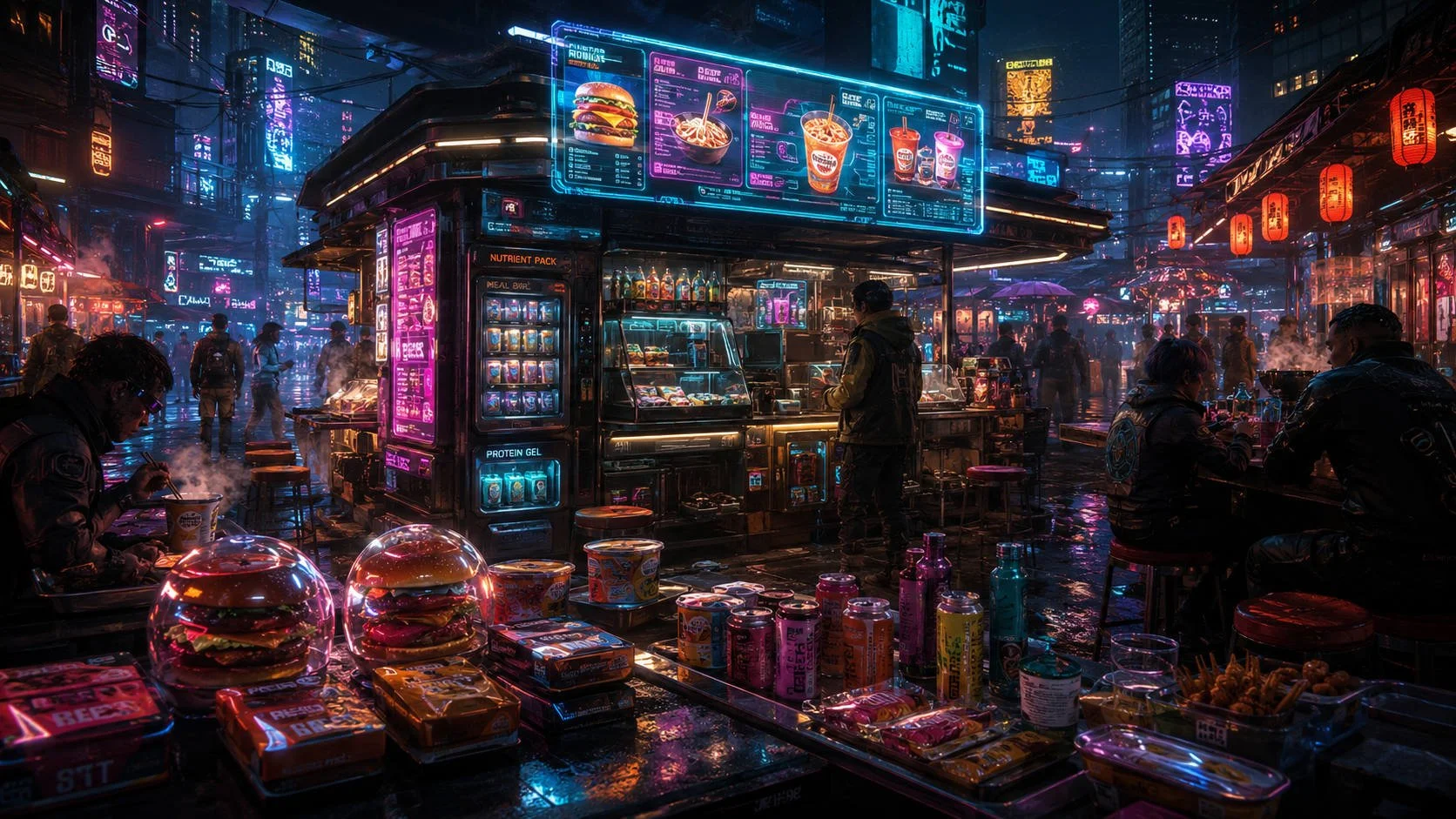
Cyberpunk 2077 is a game about chrome bodies, corporate violence, brain implants, mercenary gigs, and Night City, a megalopolis officially described as obsessed with power, glamour, and body modification. Naturally, the most horrifying part is lunch. Because sure, getting your nervous system sponsored by a weapons company seems bad, but have you considered eating synthetic vending-machine burritos in a windowless apartment while a soda ad screams at you in six colors? Very subtle, future. Very dignified.
Night City’s food world is not a sleek lab-grown utopia where everyone eats sustainable cultured steak beside a vertical farm while wearing tasteful linen. No, that would be too optimistic, and optimism in cyberpunk is how you get mugged by a drone. The food future in Cyberpunk 2077 is cheap synthetic protein, branded nutrient paste, vending-machine meals, fake meat, fake milk, fake choice, and real hunger dressed in neon packaging.
That is why the game is so useful as food satire. It does not simply say, “Ultra-processed food is bad.” That would be boring, and Night City does not do boring. It says something nastier: when corporations control food, ultra-processing becomes less about convenience and more about dependence.
Night City’s Food Future Is Already Half Here, Which Is Rude
Ultra-processed food is not science fiction. It is breakfast cereal, packaged snacks, sweetened drinks, frozen meals, fast-food sandwiches, flavored protein products, shelf-stable desserts, and various edible rectangles pretending to be “fuel.” The CDC reported that during August 2021 to August 2023, ultra-processed foods made up 55% of total calories consumed by Americans age 1 and older; youth got 61.9% of calories from ultra-processed foods, while adults got 53%. So yes, before anyone laughs at Night City for eating industrial sludge, maybe glance at the national snack drawer.
The CDC also notes that ultra-processed foods tend to be hyperpalatable, energy-dense, low in dietary fiber, and often high in salt, sweeteners, and unhealthy fats. In other words, they are designed to be easy to eat, hard to stop eating, and extremely good at making your pantry look like it was stocked by a vending machine with childhood trauma.
That is what Cyberpunk 2077 exaggerates so well. The future is not one new weird food. It is a total environment where cheap, processed, branded, portable calories become the default. Not because everyone prefers them. Because the system makes everything else expensive, rare, or inconvenient.
Kibble and SCOP: When Food Becomes “Technically Nutrition”
The Cyberpunk tabletop lore behind Cyberpunk 2077 has long used synthetic food as part of its worldbuilding. R. Talsorian Games describes Cyberpunk RED as official lore set in 2045, midway between Cyberpunk 2020 and Cyberpunk 2077, and its material treats Kibble and SCOP as ordinary parts of Night City diets rather than exotic novelties.
That is the joke, and also the nightmare. Kibble sounds like pet food because it basically is the emotional concept of pet food applied to humans: dry, cheap, vitamin-packed, made to keep bodies operational. The Cyberpunk Wiki, compiling references from the RPG books and game materials, describes Kibble as cheap, grainy pellets containing amino acids and vitamins, mostly made from kelp, plankton, and soy proteins. Beautiful. Dinner, but with the mouthfeel of a warehouse memo.
SCOP, meanwhile, evolves by 2077 into a broad term for synthetic meat and meat-like products, with cheap varieties reportedly made from worms or insects grown on protein farms. The same Cyberpunk food entry notes that in Night City, vending machines sell items like sushi, beans, and burritos, cheap apartments may have vending machines instead of kitchens, and fresh organic fruit and vegetables remain expensive status foods for the wealthy.
This is ultra-processing as class structure. Poor people get nutrition-shaped product. Rich people get ingredients.
The Vending Machine Kitchen Is the Most Cyberpunk Thing in the Game
A vending machine inside a cheap apartment as a replacement for a kitchen is one of those details that feels cartoonish until you remember how many real apartments already barely support cooking. Tiny kitchens. No time. No storage. No money. Long commutes. Food delivery apps. Convenience stores. Microwave dinners. Energy drinks. Protein bars. Meal replacements. We are not in Night City yet, but the highway signs are distressingly clear.
The vending-machine kitchen says: you do not cook; you transact. You do not prepare food; you access product. You do not gather around a table; you stand under an advertisement and receive a burrito from a slot like a defeated casino pigeon.
This is where Cyberpunk 2077 understands ultra-processed food better than many wellness lectures do. The problem is not that all processing is evil. Cooking is processing. Canning can be useful. Freezing is useful. Pasteurization is useful. The problem is when processing becomes a replacement for food culture, food access, and food agency.
Night City does not show a future where food technology liberated everyone from kitchen labor. It shows a future where corporations turned hunger into a subscription service with sauces.
“Choice” Becomes a Wall of Fake Flavors
One of the most believable parts of Night City is the fake abundance. There are brands everywhere. Drinks everywhere. Snacks everywhere. Vending machines everywhere. Ads everywhere. You can buy something constantly, but that does not mean you have meaningful choice. It means you have a thousand flavors of the same corporate nutrient brick.
This is the grim little genius of ultra-processed food futures: they do not feel like deprivation. They feel like options. Blue drink. Pink drink. Fire flavor. Sakura flavor. Synthetic burrito. Protein paste. Noodle cup. Spicy tube. Meat-ish patty. A soda brand like NiCola has multiple flavors in Cyberpunk 2077, because obviously the future must have several ways to carbonate despair.
That is the difference between abundance and variety. Abundance says there is food everywhere. Variety says the food is actually different in meaningful ways. Ultra-processed systems are very good at abundance. They are less good at nourishment, cooking, seasonality, agriculture, and the strange human need to eat something that did not emerge from a nozzle.
Night City’s shelves are full. That is not the same as being fed.
The Real-World Science Is Less Neon, Still Annoying
The real-world concern around ultra-processed foods is not just moral panic from people who say “seed oils” like they are reading villain names. There is research behind the worry, though nutrition science remains complicated because human beings keep being annoying variables with jobs, budgets, cravings, genetics, and access issues.
The NIH Clinical Center reported on a tightly controlled randomized study led by Kevin Hall in which 20 adults ate ultra-processed and minimally processed diets for two weeks each. The diets were matched for presented calories, sugar, fiber, fat, salt, and carbohydrates, but participants could eat as much or as little as they wanted; on the ultra-processed diet, they ate about 500 more calories per day, ate faster, gained about 0.9 kilograms, and lost a similar amount on the unprocessed diet.
That is the kind of result Night City would absolutely turn into a motivational billboard. “Eat faster, feel less full, buy more. Your hunger, optimized.”
A 2024 BMJ umbrella review also found that higher ultra-processed food exposure was associated with higher risks of several adverse health outcomes, especially cardiometabolic, common mental disorder, and mortality outcomes. The authors also noted limits in evidence quality, because science, unlike corporate packaging, sometimes admits uncertainty like an adult.
The Cyberpunk Future Is Not “Fake Food.” It Is Fake Control.
The cruelest part of Cyberpunk 2077 is that the body is customizable, but the food system is not. You can replace limbs, install optics, tune reflexes, upgrade weapons, and alter your body into a corporate battlefield. But what do most people eat? Whatever the system makes cheap.
That is the ultra-processed food future in one sentence: maximum personal branding, minimum real control.
You can pick your soda flavor. You can pick your synthetic meat format. You can pick your nutrient paste. You can pick the vending machine. You can pick the ad that insults your intelligence at the highest volume. But can you afford fresh produce? Can you cook? Do you have time? Do you have a kitchen? Do you live near anything that is not a corporate convenience channel wearing a human mask?
This is why Cyberpunk 2077 makes food feel political without giving you a lecture. Fresh food becomes a luxury. Cooking becomes almost artisanal. Street vendors exist, but even they are often working with synthetic bases and prepack components. The poor do not lack calories; they lack sovereignty.
Congratulations, everyone. The future has snacks.
Night City Understands “Healthy” Branding Before It Happens
Ultra-processed food does not always look like junk food. That is the trick. Some of it looks sporty. Some looks medical. Some looks ecological. Some looks futuristic. Some looks like it has been blessed by a wellness committee with matching sneakers.
Night City food brands would absolutely sell you “performance kelp protein crisps” with a hologram athlete who has not eaten solid food since 2062. They would sell “clean insect protein.” They would sell “lab-grown heritage-style flavor.” They would sell “mindfulness noodles.” They would sell “ancestral synth-meat,” which makes no sense, but neither does half the grocery aisle now, so please stop acting surprised.
The CDC’s top sources of ultra-processed calories among U.S. youth and adults include categories like sandwiches, sweet bakery products, savory snacks, sweetened beverages, pizza, and breads, rolls, and tortillas. In other words, ultra-processing is not hiding only in obvious candy-colored villain foods. It is in normal meals too, which is extremely rude of lunch.
That is what Night City captures: ultra-processing becomes invisible when it becomes ordinary. Nobody in the game stops and says, “Ah yes, my dystopian synthetic meal.” They just eat, because it is there, cheap, branded, and available. The most terrifying futures are not the ones that shock people. They are the ones people stop noticing.
The Class Divide Is Freshness
The richer you are in Night City, the closer you can get to “real” food. Organic ingredients, fresh fruit, fresh vegetables, restaurant meals made from genuine ingredients — those exist, but not as the baseline. They are luxury goods. In this future, an apple is basically a Rolex with fiber.
This is not exactly subtle, but subtlety is for worlds where corporations are not naming soda flavors like malware updates.
The food divide in Cyberpunk 2077 is not only calories versus hunger. It is freshness versus shelf life. Cooking versus dispensing. Agriculture versus manufacturing. Ingredients versus formulations. Table versus vending machine. Human practice versus corporate channel.
Real life already echoes this, though not as dramatically. The CDC found that among adults, ultra-processed calorie share was lowest in the highest family income group, while lower and middle-income groups consumed a higher share. That does not mean rich people are morally better eaters, please calm down, farmers market aristocracy. It means access, time, price, and food environments matter.
Night City simply turns the dial until the quiet inequality becomes a neon billboard.
The Line Cook Is the Last Resistance Fighter
One of the best details in recent official Cyberpunk RED material is that even in a world of Kibble and SCOP, cooks still matter. R. Talsorian’s “Everyday People” DLC says even Kibble and SCOP can be made palatable with the right techniques and extra ingredients, and that some cooks specialize in making decent cheap food for Night City residents.
That line is weirdly hopeful. Not “the revolution will be televised” hopeful. More like “someone with a truck and garlic-lemon sauce can still make lunch less depressing” hopeful.
This is the counterpoint to ultra-processed futures: people adapt. They remix. They season. They stretch. They build street food out of bad ingredients. They make community around whatever is available. They take industrial food and try to make it taste like somebody cared.
That does not excuse the system. It just reminds us that food culture is stubborn. The street finds its own uses for things, and apparently one of those uses is making edible pellets taste less like a vitamin prison.
The Useful Lesson: Don’t Worship “Natural,” Watch the System
The lazy takeaway from Cyberpunk 2077 would be “synthetic food bad, natural food good.” Very tidy. Very Instagram. Very likely to lead to someone charging $14 for a “real food” energy bar wrapped in compostable smugness.
The better lesson is: who controls the food, and what choices are actually available?
Synthetic protein could be useful. Lab-grown foods could be useful. Fortified foods can prevent deficiencies. Shelf-stable foods can save lives. Processing can make food safer, cheaper, longer-lasting, and more accessible. The issue is not technology by itself. The issue is when technology serves extraction rather than nourishment.
Night City is not scary because it has synthetic food. It is scary because synthetic food is what the poor are given while the wealthy buy freshness. It is scary because convenience replaces kitchens. It is scary because every edible object is branded. It is scary because the difference between “food” and “product” has been bulldozed by companies with mascots and armed security.
How Not to Eat Like Night City, If You Have the Option
The practical advice is boring, which means it might help.
Cook sometimes. Not always. Nobody is asking you to become a pastoral soup monk. But cooking even a few basic meals gives you back some control over ingredients, portions, and flavor.
Keep cheap whole-food anchors around: oats, rice, beans, lentils, eggs, potatoes, frozen vegetables, canned tomatoes, fruit, yogurt, tuna, rotisserie chicken, peanut butter, whole-grain bread if you like it. This is not glamorous. Neither is being owned by snack companies.
Use ultra-processed foods strategically instead of letting them run the household like tiny shelf-stable landlords. A protein bar after practice is not the end of civilization. A pantry made entirely of bars, chips, drinks, pouches, and heat-and-eat boxes is where the Night City music starts playing.
Read labels without turning into a joyless detective. Look for foods with more fiber, protein, and recognizable ingredients when possible. Watch liquid calories. Watch “health” products that are just candy wearing gym clothes.
Most importantly, do not shame people for relying on convenience. The NIH researchers themselves noted that restricting ultra-processed food is hard because less-processed food often takes more time and money to prepare. “Just eat whole foods” is not advice if someone lacks money, time, equipment, transportation, or a kitchen that does not resemble a closet with a sink.
Cyberpunk 2077 Shows Food Without a Future, Not Future Food
Cyberpunk 2077 says ultra-processed food futures are not about one creepy synthetic burger. They are about a total food environment where real choice gets replaced by branded choice, cooking gets replaced by vending, freshness becomes status, and nutrition becomes whatever keeps workers upright long enough to be useful.
Night City’s food is funny because it is extreme. It is unsettling because it is familiar.
We already live with a food system where ultra-processed products provide more than half of calories for many Americans, where convenience is often cheaper than cooking, where food marketing sells identity, and where “healthy” products can be just as engineered as obvious junk. Night City just removes the last polite disguise and puts the whole thing under neon lights.
The future it warns about is not “people eat bugs.” People have eaten insects in many cultures for a very long time, and frankly the bug is not the villain here. The villain is a system that gives ordinary people cheap processed dependence while selling rich people the luxury of ingredients.
That is the real dystopia: not synthetic food, but synthetic choice.
Night City does not ask, “What will we eat in the future?”
It asks, “Who will own the thing you have to eat?”
And then it sells you a flavored nutrient paste from a vending machine, because apparently subtlety died before dinner.