
The Tour de France Grocery Store Ride Fuel Guide for Normal Cyclists
The Tour de France is a three-week traveling science experiment in suffering, carbohydrates, and men in sunglasses eating from tiny bags while moving faster than your car does near a school zone. The 2026 Tour route totals 3,333 kilometers across 21 stages, because apparently “bike race” was too modest a phrase and “continental digestive endurance seminar” tested poorly with sponsors.
Watch the pros and you will notice something: they eat constantly. They eat before climbs, after climbs, during climbs, in feed zones, from team cars, from musettes, from pockets, from soigneurs dangling bags like medieval poultry merchants. EF Pro Cycling says its Tour riders often consume around 120 grams of carbohydrate per hour during stages, using bars, gels, and drink mixes.
And now, because the internet is a factory for bad self-comparison, some normal cyclist will ride 47 miles to a bakery, see that number, and think, “Should I also consume 120 grams of carbs per hour?” No, Greg. You are not riding the Col du Galibier with a helicopter overhead. You are riding past a Costco and arguing with your Garmin.
The Tour de France lesson is not “buy $83 worth of gels that taste like citrus-flavored printer cartridge.” The lesson is simpler: eat before you are empty, drink before you are a raisin, and carry food your stomach recognizes as food.
Cycling Snacks From the Grocery Store: Because You Are Not Sponsored by Goo
Specialty cycling nutrition has a place. Gels, drink mixes, chews, and bars are convenient, precise, compact, and engineered for suffering. Lovely. Truly. A triumph of science and packaging.
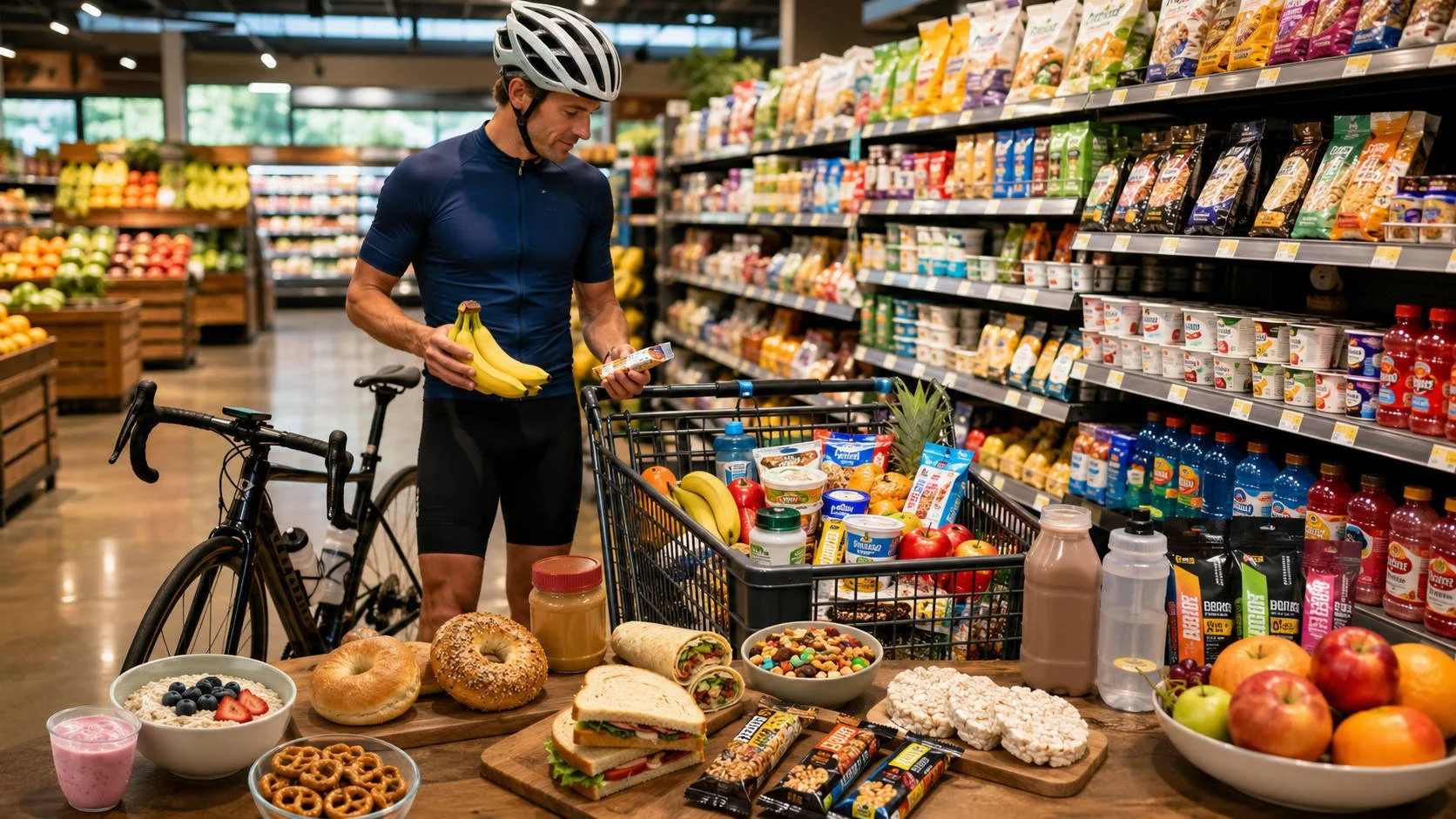
But normal cyclists do not need to finance an entire ride with space syrup. The grocery store already sells ride fuel. Bananas, fig bars, pretzels, dates, raisins, applesauce pouches, mini bagels, jam sandwiches, rice cakes, potatoes, cereal bars, sports drinks, soda, and gummy candy are all sitting there, quietly waiting for cyclists to stop pretending the only valid carbohydrate is one squeezed from a foil sachet called “Velocity Plasma.”
Research-backed fueling guidance does not require brand worship. A review of carbohydrate intake during exercise notes that carbohydrate can come from liquids, semisolids, or solids, and that common guidance ranges from about 30–60 grams per hour for prolonged exercise to around 90 grams per hour for ultra-endurance situations, with higher intakes requiring gut tolerance and mixed carbohydrate sources.
Translation: your body does not know whether the carb came from a mango-flavored gel or a grocery-store fig bar. Your ego might. Your stomach might. Your wallet definitely does.
The Normal Cyclist Carb Math, Without a Lab Coat and a Gravel Podcast
Here is the rough grocery-store version.
For rides under about an hour, you usually do not need a buffet in your jersey. Water is probably enough unless you started hungry, are riding hard, or enjoy carrying snacks because snacks provide emotional security. British Cycling says rides up to about 90 minutes usually do not require extra fuel because the body has enough carbohydrate stores.
For rides longer than 90 minutes, start eating early. Not when you are already hollow-eyed, riding sideways, and considering whether roadside grass contains macros. British Cycling recommends eating from the start on rides over 90 minutes and taking something every 20–30 minutes.
USA Cycling gives a useful range: for rides of 90 minutes to 3 hours, aim for roughly 30–60 grams of carbohydrate per hour; for longer rides, needs may rise toward 45–90 grams per hour depending on duration and intensity.
That is the plan. Not “eat one heroic bar at hour three and wonder why your soul left your body at the county line.” Eat early. Eat often. Eat normal food.
The Grocery Store Ride Fuel Rule: Carbs First, Drama Never
On the bike, carbohydrates are the star. Protein is not useless, fat is not evil, fiber is not a villain, and anyone who says otherwise probably owns too many shaker bottles. But during a ride, especially a longer or harder one, fast-ish, digestible carbohydrates are doing the main work.
The ideal grocery-store ride snack should be:
Easy to chew while breathing like a malfunctioning accordion.
Easy to open with sweaty hands.
Not too crumbly, because your handlebar bag is not a bird feeder.
Not too fatty, because peanut butter bricks at mile 48 are how stomachs file complaints.
Not too fibrous, because “gut health” is less charming during a tempo interval.
Familiar, because ride day is not the time to discover that your intestines reject artisanal sorghum clusters.
The snack does not need to look athletic. A banana is athletic enough. It comes in biodegradable packaging and has more race history than most people’s carbon wheels.
Bananas: The Yellow Team Car of Normal Cycling
Bananas are the obvious answer because sometimes obvious things are correct, which is rude to everyone trying to build a personality around niche nutrition. One medium banana has about 28 grams of carbohydrate, plus potassium and fiber.
A banana is cheap, portable, soft, and easy to eat at a stoplight. It is also structurally doomed in a jersey pocket. Put a banana in your pocket for three hours and it becomes pudding with a peel. That is not “whole food fueling.” That is fruit trauma.
Best use: eat one before the ride, at the first stop, or early in a long ride. Do not save it until it has become a warm banana crime scene.
Dates, Raisins, and Dried Fruit: Nature’s Chews, But Stickier and More Judgmental
Medjool dates are basically energy chews that went to a farmers market and learned self-esteem. One Medjool date provides about 18 grams of carbohydrate, while raisins are also mostly carbohydrate and pack a lot of energy into a small amount of space.
Dates are excellent for long rides because two or three can cover a decent chunk of an hour’s carb target. They are also sticky enough to bond with your gloves, bars, soul, and every piece of lint in your pocket. Wrap them. Bag them. Do not just throw them into a jersey pocket loose unless you want to spend the ride discovering raisin archaeology.
Best use: dates for dense fuel, raisins for nibbling, dried mango if you want your bike computer to judge you for chewing too long.
Fig Bars: The Grocery Store Gel for People With Teeth
Fig bars are elite grocery-store ride fuel because they are compact, soft, shelf-stable, and vaguely wholesome-looking, which helps when you are eating your fourth one in a parking lot. A Nature’s Bakery original fig bar package lists about 37 grams of carbohydrate per 57-gram package, though exact numbers vary by brand and flavor.
This makes fig bars easy math. One package per hour gets many riders into the lower end of the fueling range. Add a banana, dates, or sports drink, and suddenly you have a real plan instead of “I think there’s a granola bar in the glove box from 2021.”
Best use: medium-to-long rides, gravel rides, fondos, or any ride where the café stop is “maybe open,” which means “closed.”
Pretzels: Salted Carbs for Sweaty People With Standards
Pretzels are one of the most underrated ride foods because they bring carbohydrates and salt without pretending to be a lifestyle. A plain soft pretzel can have around 33 grams of carbohydrate, and hard pretzels are easy to portion into snack bags.
The downside is dryness. Eating pretzels while riding hard can feel like chewing beige gravel. Pair them with water. Also, do not bring pretzel rods unless you enjoy stabbing yourself in the ribs every time you reach into a pocket.
Best use: hot rides, long rides, lunch stops, or whenever sweet snacks start tasting like the inside of a birthday candle factory.
Applesauce Pouches: Baby Food, But Make It Aero
Yes, applesauce pouches look like toddler supplies. Congratulations, toddlers understand portable carbohydrates better than half the local group ride.
A standard applesauce container or pouch often lands around 10–13 grams of carbohydrate, depending on size and whether it has added sugar.
Are applesauce pouches enough by themselves? No, unless your ride goal is “arrive underfed but moisturized.” But they are easy to swallow, gentle for many stomachs, and helpful when solid food starts sounding as appealing as chewing a saddle rail.
Best use: late-ride backup, hot days, nervous stomachs, or riders who secretly want baby food but need a cycling excuse.
Mini Bagels, Jam Sandwiches, and PB&J: The Domestique Foods
A mini bagel with jam is simple, cheap, and carb-forward. A peanut butter and jelly sandwich is excellent for longer, easier rides, but it is more filling because fat and protein slow things down. That can be useful. It can also become a stomach dumbbell if eaten five minutes before attacking a climb named something like “Widowmaker Road,” because cyclists are very normal about hill names.
Use jam-heavy, peanut-butter-light sandwiches for on-bike fuel. Save the double-thick peanut butter cement block for after the ride unless your stomach has unionized and negotiated better conditions.
Best use: rides over two hours, bikepacking, all-day endurance, or grocery-store stops where you need actual food and not just sugar confetti.
Potatoes: The Poor Man’s Race Rice Cake, and Honestly Better Than Your Ego Deserves
Boiled salted potatoes are one of the finest ride foods ever invented by someone who looked at a root vegetable and said, “What if this were a gel, but humble?”
Potatoes are soft, salty, cheap, easy to digest for many riders, and aggressively unglamorous. The Tour has rice cakes. You have baby potatoes in a zip bag. Same concept, fewer team chefs and no European man handing it to you at 50 kilometers per hour.
Bake or boil small potatoes. Salt them. Wrap them in foil or put them in a bag. Eat them at stops unless you are very comfortable handling tiny starch grenades while riding.
Best use: longer rides, mixed sweet/salty fueling, riders who get sick of bars, and anyone whose body says, “Please stop sending only fruit leather.”
Soda and Sports Drinks: Grocery Store Rocket Fuel, Used Like an Adult
A 12-ounce can of Coca-Cola contains about 39 grams of carbohydrate, which is why it has been rescuing bonked cyclists since approximately the dawn of questionable decisions.
Cola is not a health halo. It is sugar, fluid, and caffeine in a can with nostalgia branding. During a long ride, that can be useful. On your couch at 10 p.m., it is less “performance nutrition” and more “why am I awake watching wheel bearing reviews?”
Sports drinks from the grocery store can also work because they combine fluid, carbohydrate, and sodium. For normal rides, water plus food is often enough. For hotter, longer, sweatier rides, sports drink can help keep fueling simple.
Best use: late ride, hot ride, big climb before home, emergency gas-station revival, or any moment when your legs feel like two unpaid interns.
Gummy Candy: Chews Without the Cycling Tax
Gummy bears, fruit snacks, Swedish Fish, sour gummies, and similar candy are basically budget chews. They are simple carbohydrates in a bag, and the grocery store does not charge extra because a cyclist is on the label looking constipated with determination.
The problem is portion control and heat. Gummies can melt into one giant sugar organism. Sour candy can shred your mouth. Some candies use sugar alcohols, which should not be invited into a long ride unless your route includes many private bathrooms and no dignity.
Best use: backup fuel, shared group ride snacks, late-ride morale, or “I need 25 grams of carbs and cannot face another oat bar.”
The Grocery Store Ride Fuel Plan by Duration
For a 60–90 minute ride, bring water. Eat normally beforehand. Maybe carry a banana or small bar if you are starting hungry or riding hard. Do not pack like you are crossing the Andes because your loop has one hill and a coffee shop.
For a two-hour ride, aim for roughly 30–60 grams of carbs per hour if the ride is steady or hard. Easy version: one banana and one fig bar package. Slightly more organized version: fig bar in hour one, raisins or dates in hour two, water throughout.
For a three-hour ride, bring 90–180 grams of carbs total depending on intensity and your tolerance. That could be two fig bar packs, a banana, a small bag of pretzels, and a bottle of sports drink. There. You are now “fueling,” not merely hoping your breakfast has a second career.
For a four-hour-plus ride, add variety or prepare to hate everything you packed. Sweet, salty, soft, chewy, drinkable, real food. Think fig bars, dates, pretzels, jam sandwich, potatoes, banana, soda stop, and sports drink. Long rides are not just a test of legs. They are a test of whether you can keep eating without becoming furious at rectangles.
Hydration: Drink Like a Cyclist, Not a Houseplant With Clipless Pedals
Hydration advice should not be stupidly rigid because riders vary. Sweat rate, heat, humidity, intensity, body size, clothing, altitude, and how much you leak like a human sprinkler all matter. The National Athletic Trainers’ Association recommends individualized fluid-replacement practices that avoid both dehydration and excessive hydration.
The grocery-store version is simple: start hydrated, carry enough fluid, plan refill stops, and do not wait until your mouth feels like a dusty saddlebag. In heat or on long rides, include sodium from sports drink, salty snacks, or electrolyte products if needed. ACSM notes sodium can help maintain fluid and electrolyte balance during exercise in the heat, including through salty foods before activity.
For most normal rides, one bottle per hour is a useful starting point, adjusted upward in heat and downward in cool easy conditions. This is not a commandment. It is a starting point. Your sweat glands are not legally required to match mine.
The Grocery Store Stop Formula
At a mid-ride grocery store stop, do not wander the aisles like a starving Victorian ghost and emerge with beef jerky, a protein cookie, and kombucha. That is not ride fuel. That is a podcast sponsor’s lunch.
Use this formula:
One drink, one carb, one salty thing, one backup.
Drink: water, sports drink, juice, soda, or chocolate milk if the hard part is done.
Carb: banana, fig bars, bagel, applesauce, gummies, rice cakes, cereal bar.
Salty thing: pretzels, crackers, salted potatoes if available, chips if you tolerate them.
Backup: dates, raisins, candy, or another bar for the pocket.
Avoid the hot buffet unless the ride is basically over. A chicken tender box at mile 35 of 70 is how you turn a group ride into a digestive hostage situation.
Food Safety: Your Jersey Pocket Is Not a Refrigerator
Grocery store food is great, but some of it should not spend four hours warming against your back like a deli meat sauna. The FDA says cold foods should be kept at 40°F or below in a cooler with ice or frozen gel packs to limit bacterial growth.
That means peanut butter and jam? Fine. Banana? Fine. Dates? Fine. Pretzels? Fine. Turkey sandwich in a black handlebar bag on a 94-degree day? That sandwich has entered its villain era.
If you want meat, dairy, or anything perishable, eat it soon after buying it or keep it cold. Do not become the person who learns food safety from a gas-station tuna wrap at mile 62.
What Not to Bring Unless You Enjoy Regret
Do not bring foods that fight the ride.
Protein bars can work after a ride, but many are too heavy, fatty, fibrous, or weirdly dense during one. Some chew like roofing material and taste like vanilla-flavored obligation.
Nuts are healthy, but they are high-fat and slow. Great for hiking. Less great when you need fast carbs before a climb. Trail mix is useful if it leans raisin-and-cereal, not if it is just almonds wearing three chocolate chips as a disguise.
Chocolate melts. Granola crumbles. Chips explode. Apples are bulky. Oranges require sticky hand management. Burritos are a post-ride food unless your route includes a nap and legal representation.
And anything labeled “keto” has no business being your main ride fuel unless your goal is to personally insult endurance metabolism.
Train Your Gut Before You Audition New Snacks
Pros are not casually ingesting 120 grams of carbohydrate per hour because they woke up spicy. They train their gut. EF Pro Cycling’s discussion of Tour fueling frames high-carb intake as something riders build tolerance for, not something a random cyclist should copy five minutes before a fondo.
Normal cyclists should do the same, minus the team bus and existential pressure. Practice fueling during training. Start with 30 grams per hour. Try 45. Try 60. Test fig bars, bananas, potatoes, sports drink, gummies, and sandwiches before the event you paid $140 to suffer in a commemorative T-shirt.
Your stomach is trainable, but it is also petty. Surprise it with six dates and a Coke during a hard ride and it may respond with interpretive cramping.
The Post-Ride Grocery Store Recovery Move
After a long or hard ride, eat like someone who wants to function later. British Cycling recommends a snack or meal containing carbohydrate and protein within two to three hours after an event, with examples like a tuna sandwich or chicken and pasta.
Grocery store recovery is easy: chocolate milk, yogurt drink, turkey sandwich, rice bowl, bagel with eggs, rotisserie chicken and rolls, sushi if it looks trustworthy, or a burrito if the ride is over and you are no longer asking your stomach to perform athletics.
Do not finish a four-hour ride and recover with only black coffee and vibes. That is not discipline. That is how adults become cranky furniture.
The Final Tour de France Lesson for Normal Cyclists
The Tour de France teaches normal cyclists one beautiful, humiliating truth: riding well requires eating before you become stupid.
The pros have chefs, soigneurs, team cars, apps, scales, dietitians, rice cakes, gels, and a small army dedicated to preventing them from turning into carbon-fiber skeletons in the Alps. You have a grocery store, a jersey pocket, two bottles, and a suspiciously warm banana. Fine. That is enough.
For most normal cyclists, the best ride fuel is not exotic. It is boring food used intelligently: bananas, dates, raisins, fig bars, pretzels, applesauce, jam sandwiches, mini bagels, potatoes, soda, sports drink, and water. Start eating early on rides over 90 minutes. Aim for the carb range that fits the duration and effort. Mix sweet and salty. Carry foods you can actually open. Practice before big rides. Hydrate without turning yourself into a rolling aquarium.
And please, stop waiting until you bonk to eat. Bonking is not noble. It is not character-building. It is what happens when a cyclist spends three hours ignoring basic math and then wonders why a gas-station muffin suddenly looks like a religious experience.
Eat the banana. Pack the pretzels. Respect the fig bar. The Tour de France riders may have musettes and team cars, but you have aisle seven, a zip-top bag, and just enough common sense to not fuel a century ride with one espresso and masculine denial.