
The “Protein Snack or Candy Bar?” Guide for Athletes Trying to Lose Weight
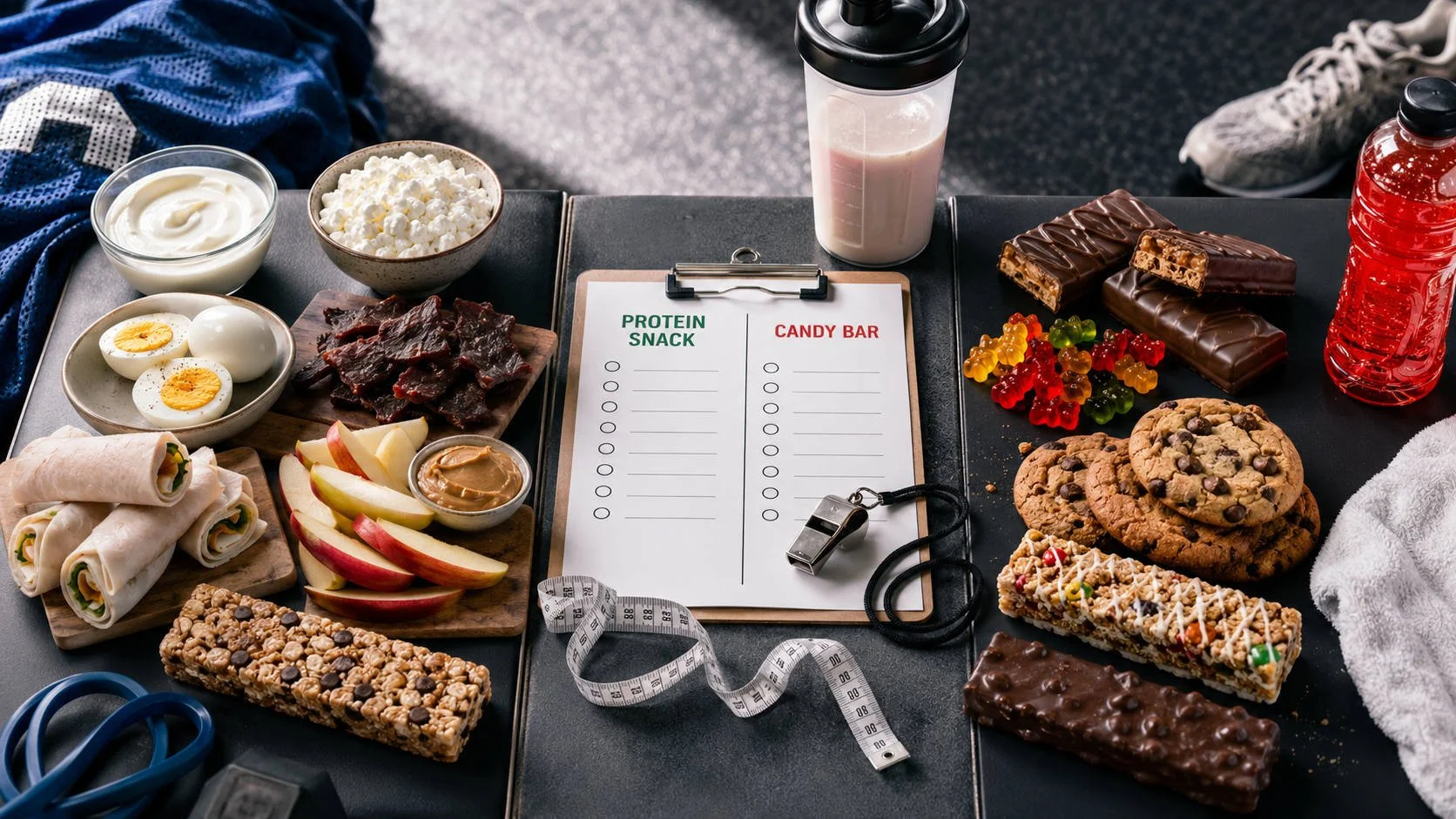
The locker room snack table is a psychological experiment with fluorescent lighting. On one side: protein bars with names like Combat Brick, Elite Macro Slab, and Cookie Dough Performance Rectangle, each promising to help you become a better version of yourself, preferably one with visible abs and a discount code. On the other side: candy bars, sitting there honestly, saying, “I am chocolate, sugar, and vibes. Do not involve me in your wellness journey.”
And yet the choice is not always as obvious as the fitness internet pretends. Athletes trying to lose weight need snacks that control hunger, support training, and do not quietly become a 500-calorie “mini-meal” eaten while standing by a vending machine like a raccoon with a gym bag. Protein can help with satiety and muscle retention during weight loss, but a protein label is not a magical force field. A candy bar can be fine sometimes, especially around hard training, but if your plan is “Snickers now, discipline later,” congratulations on inventing hunger roulette.
The real question is not protein snack or candy bar? The question is: What job does this snack need to do?
Protein Snacks for Weight Loss Athletes: The Snack Needs a Job
A snack is not automatically virtuous because it contains protein. A snack is not automatically evil because it contains sugar. Food does not wear a tiny moral hat, despite what the wellness goblins would like you to believe.
For athletes trying to lose weight, the snack usually has one of four jobs: prevent a hunger meltdown, fuel a workout, help recovery, or satisfy a craving without opening the gates of snack Mordor. Different jobs require different foods.
If you are about to train hard, a candy bar might not be the dumbest thing in the room. Quick carbohydrates can be useful near competition or during breaks, and Johns Hopkins lists simple carb snacks like applesauce pouches, pretzels, bananas, dried fruit, fruit gummies, and similar options for athletes close to competition or during competition breaks. The problem is that candy bars also bring fat, which slows digestion and may not feel great right before hard effort, because apparently sprinting with a stomach full of caramel cement is unpleasant.
If you are between meals and trying not to inhale dinner like a vacuum with hamstrings, a protein snack usually wins. Protein generally increases satiety more than carbohydrate or fat, and controlled energy intake with moderately higher protein can be a practical weight-management strategy. This does not mean protein is wizard dust. It means it can help you stay full enough to avoid making “dinner” out of seven handfuls of cereal and regret.
The Candy Bar Is Honest. The Protein Bar May Be Wearing a Lab Coat.
A standard candy bar is not pretending to be anything except dessert with portability. A 52-gram Snickers bar lists 250 calories, 32 grams of carbohydrate, 27 grams of sugar, and 4 grams of protein. That is not a protein snack. That is a candy bar that once saw a peanut.
Now compare that with a Snickers Hi Protein bar, which lists 240 calories, 20 grams of protein, 19 grams of carbohydrate, 6 grams of fiber, 4 grams of total sugars, and 3 grams of added sugars. Same general candy-bar cosplay, very different protein situation. Annoyingly, sometimes the protein-branded thing is actually doing a job.
But do not clap yet. Some protein bars are just candy bars that went to business school. They may be calorie-dense, high in sugar alcohols, weirdly low in actual satisfaction, or so chewy they feel like punishment for having fitness goals. One small crossover trial found that adding protein bars daily increased total energy intake over the week because participants did not fully compensate by eating less elsewhere. Translation: adding a protein bar on top of your normal intake is not “weight loss.” It is dessert with a gym membership.
The Hunger-Control Rule: Protein Plus Something That Makes You Chew
The best high-protein snacks for athletes trying to lose weight are usually not the sexiest snacks. Sorry. The answer is not always a caramel-drizzled protein cookie the size of a hockey puck. It is often Greek yogurt, cottage cheese, eggs, tuna, turkey, edamame, jerky, milk, tofu, beans, or a protein bar that does not require a forensic accountant to understand the label.
EatRight notes that snacks containing both carbohydrate and protein are good choices for keeping athletes fueled, and suggests options like apple with peanut butter, Greek yogurt, whole-grain cereal with low-fat milk, a protein bar, or vegetables with cheese. Very rude of them to recommend normal food instead of a triple-chocolate anabolic brownie, but the experts have spoken.
The chew factor matters too. A liquid protein shake may be useful after training or when you are short on time, but drinking calories can feel less satisfying for some people than eating actual food. Greek yogurt with berries forces you to slow down. Cottage cheese with pineapple or cucumber has texture. Turkey roll-ups with pickles require chewing. A protein shake disappears in 14 seconds and leaves you standing there asking whether the blender owes you closure.
The Locker-Room Label Test: Don’t Get Fooled by “Protein” in 72-Point Font
Here is the label test, because packaging lies with confidence.
First, check calories. If the “snack” has 360 calories, that is not automatically bad, but it is no longer a casual snack. It is a small meal wearing tight pants.
Second, check protein. A decent high-protein snack often lands around 10 to 25 grams of protein, depending on your body size, training, and where it fits in the day. The International Society of Sports Nutrition position stand says 1.4 to 2.0 grams of protein per kilogram of body weight per day is sufficient for most exercising individuals, with higher intakes sometimes used during hypocaloric periods to help retain lean mass.
Third, check added sugar. The FDA says the Dietary Guidelines recommend limiting added sugars to less than 10% of total calories, and for a 2,000-calorie diet that is 50 grams of added sugar per day. A snack with 18 grams of added sugar is not forbidden by the snack police, but it is spending a suspiciously large chunk of the daily sugar budget for something calling itself “performance.”
Fourth, check fiber and ingredients. Fiber can help satiety, but too much right before hard training can make your gut file a formal complaint. Johns Hopkins warns that high-fiber foods before competition can contribute to gas, bloating, cramping, or diarrhea for some athletes. This is not the type of “explosive performance” anyone wants.
When the Protein Snack Wins
The protein snack wins when you are actually hungry between meals and need the snack to last. This is its kingdom. This is where Greek yogurt beats a candy bar by a mile and then politely asks whether the candy bar needs a ride home.
Protein also matters when athletes are losing weight because the goal should not be “smaller at any cost.” The goal is usually to reduce fat while preserving as much lean mass and performance as possible. A review on protein recommendations for weight loss in elite athletes notes that protein intakes above the RDA can support lean-mass retention during energy restriction, with recommendations often around 1.6 to 2.4 grams per kilogram per day depending on deficit severity and training.
So, after strength training, during a long gap between lunch and practice, or when dinner is hours away, choose a protein-forward snack. Good options include Greek yogurt with berries, cottage cheese with fruit, eggs with toast, turkey roll-ups, tuna with crackers, edamame, milk with cereal, tofu cubes with sauce, or a protein bar that does not taste like a chocolate tire.
EatRight also emphasizes spreading protein throughout the day; for teen athletes, it recommends including protein at meals and snacks, and notes that whole foods can usually meet protein needs without defaulting to supplements. Adults can steal the same idea, because apparently teenagers are not the only ones who benefit from not eating all their protein in one heroic chicken dinner.
When the Candy Bar Wins, or at Least Doesn’t Lose in Public
The candy bar can win when the goal is quick energy, not hunger control. That is an important distinction, and one the vending machine lobby has tragically failed to explain.
If you are about to do a hard workout and you are underfed, simple carbohydrates may be useful. If you are in the middle of a long event and need quick calories, candy can work. If you just finished a brutal session and need something fast before a real meal, sugar is not automatically a crime scene.
But if you are trying to lose weight and the situation is “I am bored, slightly hungry, and walking past the locker room vending machine,” the candy bar is a trap with branding. It gives fast calories, often little protein, little fiber, and a short satisfaction window. That is fine if you planned it. It is less fine if it opens a second snack, then a third snack, then dinner becomes “whatever, I already blew it,” the official anthem of diet collapse.
Candy is best when it is intentional. Eat it because you want it, not because you are pretending it is recovery nutrition. A Snickers is not a post-workout meal. It is a Snickers. Let it be free from your delusions.
The Best High-Protein Snacks for Weight Loss Athletes
The best snack is the one you will actually eat, digest well, and fit into your total day without needing a spreadsheet blessed by a monk.
Greek yogurt is the reliable overachiever. Chobani’s plain nonfat Greek yogurt tub lists 90 calories and 16 grams of protein per serving, which is annoyingly efficient. Add berries, cinnamon, or a small amount of granola and suddenly you have a snack with protein, volume, and flavor, instead of another chalk rectangle from the bottom of a gym bag.
RXBAR’s Chocolate Sea Salt bar lists 200 calories, 12 grams of protein, 5 grams of fiber, and 0 grams of added sugar, with dates, egg whites, nuts, chocolate, cocoa, and sea salt as ingredients. It is not the highest-protein bar on Earth, but it is a reasonable portable option for people who enjoy chewing something with the texture of a determined brownie.
Eggs are cheap, portable if boiled, and not trying to sell you a lifestyle. One large egg provides about 6 grams of protein, according to EatRight’s protein chart. Pair two eggs with fruit or toast and you have a snack that looks like a tiny meal instead of a cry for help.
Milk and cereal is underrated because everyone got distracted by protein powders named after military hardware. EatRight lists milk at about 8 grams of protein per cup and recommends whole-grain cereals, dairy, fruits, and other carbohydrate sources for young athletes’ everyday fueling. For adults, the same basic snack can still work: cereal for carbs, milk for protein, bowl for civilization.
The Pre-Workout Trap: Protein Isn’t Always the Hero
There is a time and place for protein, and that place is not always 12 minutes before a sprint session. If practice or a workout is close, the snack should be lighter and more carb-focused. The closer you are to training, the less you want a dense protein bar sitting in your stomach like a brick with macros.
EatRight says a regular meal generally needs three to four hours before an athletic event, while a small snack can be eaten 30 minutes to an hour beforehand; it also advises keeping snacks light closer to game time. It recommends focusing on carbohydrates for energy and using caution with higher-fat foods because they slow digestion.
So before training, a banana, pretzels, applesauce pouch, graham crackers, dry cereal, or half a bagel may beat the protein bar. After training, or when the next meal is far away, protein becomes more useful. Shocking development: timing matters. Somebody alert the guy drinking a 50-gram protein shake before pickup basketball and wondering why he feels like a cement mixer.
The “Trying to Lose Weight” Part: Don’t Diet Like an Idiot With a Whistle
Athletes trying to lose weight need to be especially careful because under-fueling can wreck training, recovery, mood, and performance. The National Athletic Trainers’ Association warns that unsafe weight management practices can compromise performance and health, and its position statement recommends gradual body-composition changes rather than excessive restriction or unsafe products. It states that weight loss goals should generally be about 1 to 2 pounds per week and should not exceed 1.5% of body weight per week.
This is where snacks matter. Skipping snacks all day so you can “save calories” often ends with eating half the kitchen at night while calling it “refueling.” Very scientific. Extremely elite.
A good snack can prevent the rebound. It can make the deficit feel livable. It can help you arrive at dinner hungry but not deranged. EatRight specifically warns that snacks should top off the energy tank and offer nutrition, not take over the whole diet. That is the whole game: useful snack, not snack avalanche.
The Protein Snack Decision Tree
Use this before buying something from the vending machine that says “fit” because it contains almonds and moral manipulation.
Are you training hard within the next hour? Pick mostly carbs, keep fat and fiber moderate, and do not use a giant protein bar as stomach ballast.
Are you hungry between meals with no workout soon? Pick protein plus produce or a high-fiber carb.
Are you craving chocolate specifically? Eat a portion of chocolate or choose a protein bar that actually satisfies the craving. Do not eat three “healthy” things to avoid the candy bar and then eat the candy bar anyway. That is not discipline. That is a snack parade.
Are you post-workout and dinner is soon? You may not need a huge snack. Water, fruit, yogurt, milk, or a small protein-carb combo can work until the meal. EatRight says casual exercisers working out for an hour or less often do fine with a balanced diet, while strenuous workouts may call for carbohydrates within 30 minutes and a balanced meal within a couple of hours.
Are you post-workout and dinner is far away? Choose a real snack: Greek yogurt and fruit, turkey sandwich half, cottage cheese and crackers, protein smoothie, tuna and rice cakes, eggs and toast, edamame, or milk and cereal.
Candy Bar vs Protein Snack: The Final Verdict
For athletes trying to lose weight, the protein snack usually wins when the goal is hunger control. It gives your appetite something to work with besides hope and caffeine. It can help preserve lean mass when paired with training and an appropriate calorie deficit. It can make dieting less like a hostage negotiation with your own stomach.
The candy bar wins only when the job is quick energy, planned enjoyment, or emergency morale. It is not a villain. It is just not a very good hunger-management tool. Stop asking it to be one. That is like asking a golden retriever to do your taxes because it has a serious face.
The best strategy is painfully adult: plan snacks before hunger makes you stupid. Keep protein options around. Read labels. Watch calories. Use candy intentionally. Fuel workouts with carbs when needed. Spread protein through the day. Do not let snacks become meals unless that was the plan. Do not let protein bars become daily dessert with a fitness alibi.
And above all, remember this: a snack should solve a problem, not create a sequel.