The Crazy Rich Asians Date Night: How to Pick an Asian Restaurant That Feels Rich Without Being Ridiculous
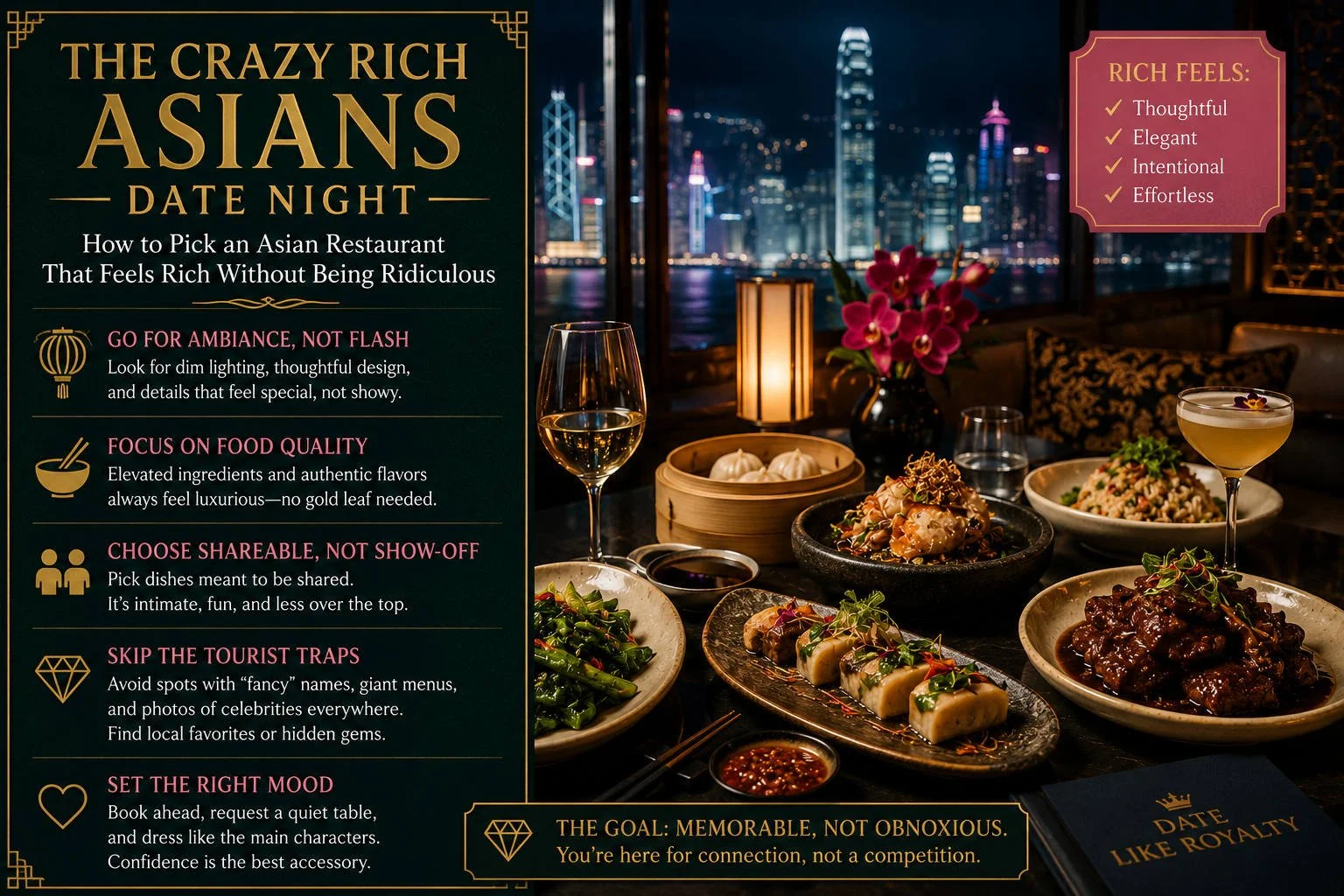
A Crazy Rich Asians date night sounds dangerous because people hear “rich” and immediately start making financially unwell decisions. Suddenly dinner is not dinner. It is a shareholder meeting with chopsticks. Someone is Googling “Asian tasting menu near me” with the wild-eyed confidence of a person about to pay $26 for one dumpling wearing caviar like a tiny hat.
Relax.
The goal is not to reenact Nick Young’s family wealth unless your family also owns half of Singapore and a grandmother who can emotionally vaporize people with one look. The goal is to choose an Asian restaurant that feels lush, special, cinematic, and date-worthy without becoming ridiculous. Rich atmosphere, not stupid spending. Elegance, not a receipt that looks like a ransom note.
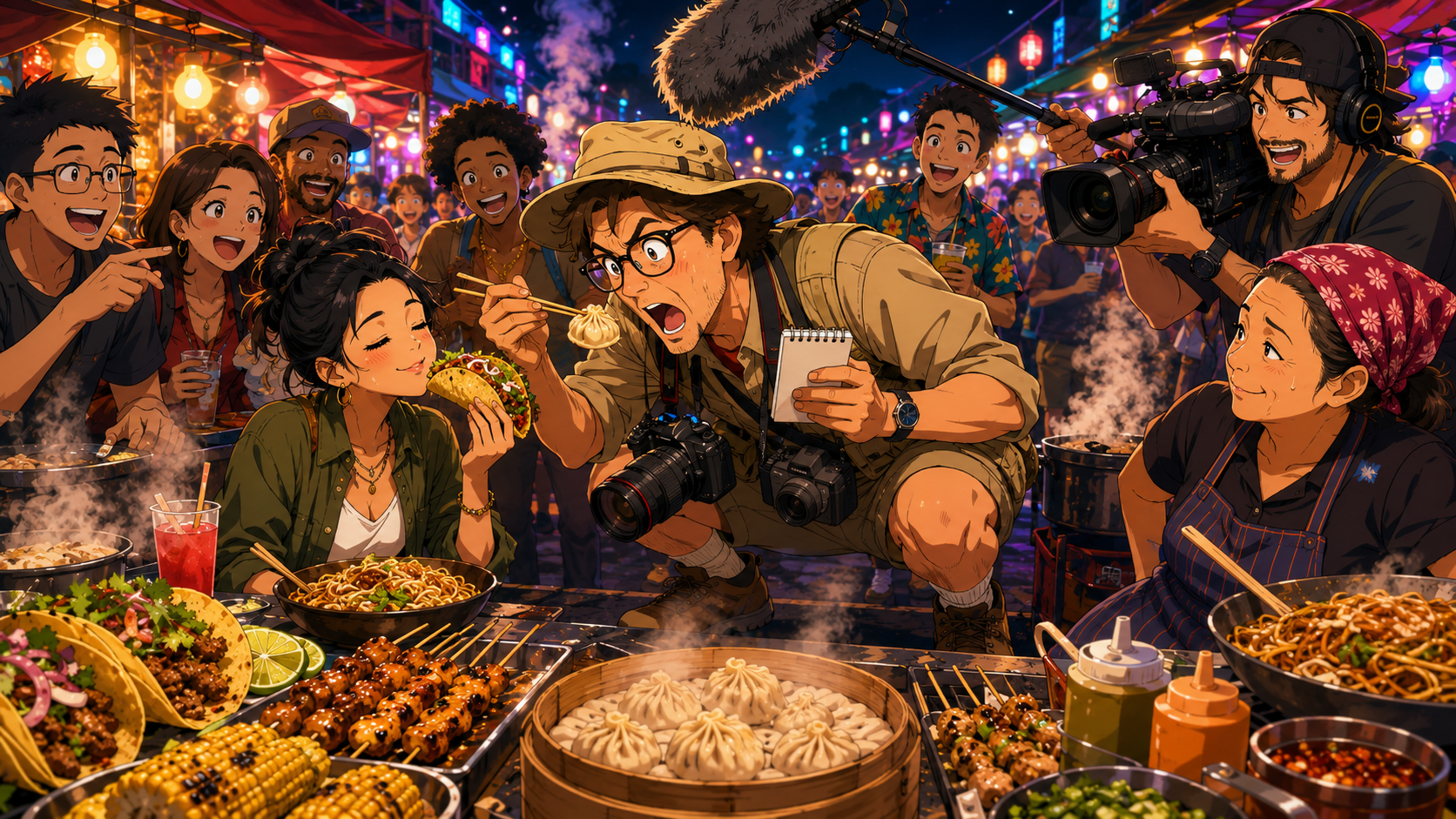
Crazy Rich Asians works because it understands that luxury is not only money. It is setting, ritual, food, confidence, lighting, family mythology, and the terrifying social power of a well-timed eyebrow. Rachel Chu discovers the scale of Nick Young’s wealth when she travels to Singapore for a wedding and is pulled into a world of family status, old money, and lavish social expectation. But one of the film’s smartest food moments is not some frozen jewel box of a restaurant where everyone whispers at foam. It is the Newton Food Centre scene, where Rachel and Nick eat satay, laksa, and hawker food with friends after landing in Singapore.
That is the lesson. The right Asian restaurant for a “rich” date night is not automatically the most expensive one. It is the one that makes the evening feel abundant, intentional, delicious, and slightly cinematic without forcing you to sell a kidney to pay for ornamental yuzu mist.
First, Understand What “Crazy Rich Asians” Actually Means for Food
The film’s food fantasy is not just wealth. It is contrast. Old-money mansions and hawker stalls. Wedding spectacle and family dumplings. Polished luxury and street-food swagger. That is why using Crazy Rich Asians as date-night inspiration should not mean “book the most expensive pan-Asian restaurant with a fake cherry blossom wall and a cocktail called The Emperor’s Bitcoin.”
The Newton Food Centre scene matters because director Jon M. Chu framed Asian food culture through street food, saying the idea of Asia often brings to mind people from all walks of life eating together. That is richer than a gold-painted dessert served in a fog machine by someone named Jasper.
Singapore’s hawker culture is even recognized by UNESCO as a living food culture where hawker centres serve as “community dining rooms” for people from diverse backgrounds. So yes, a date night can feel rich at a casual place if the food is alive, the room has energy, and the meal feels like an experience instead of a transaction with mood lighting.
Rule 1: Rich Does Not Mean Expensive. Rich Means Designed.
A restaurant can be expensive and still feel like a dentist’s waiting room for influencers. Conversely, a $16 bowl of noodles in the right room can feel like the opening scene of a romance where everyone has good coats.
“Rich” is about design. Lighting, pace, seating, sound, service, food rhythm, menu confidence, and whether the restaurant knows what it is. Research from the University of Denver’s Daniels College of Business found that consumers were more influenced by restaurant ambiance and service than food quality when it came to willingness to pay, especially in higher-priced restaurants. Another study found food quality, service quality, and ambience quality all had significant positive effects on customer satisfaction.
Translation: the date-night restaurant cannot just cook well. It needs to make you feel like you chose well. There is a difference. One feeds you. The other makes you look competent, which is one of romance’s least discussed but most critical food groups.
Rule 2: Avoid the “Pan-Asian Glamour Dump”
The worst date-night trap is the restaurant that tries to be every Asian country at once and succeeds at none of them. Sushi, pad Thai, dumplings, curry, bao, ramen, butter chicken, and Korean fried chicken all on one menu, as if Asia were a mall food court designed by a committee that recently discovered soy sauce.
This is not luxury. This is culinary airport behavior.
Look for focus. A restaurant can be broad if it has a clear point of view, but for a rich-feeling date, focus usually wins. A modern Thai restaurant with a tight menu. A Korean barbecue place with great banchan and proper ventilation. A Japanese izakaya with polished small plates. A regional Chinese restaurant that does not treat “Chinese food” as one giant soy-sauced continent. A Vietnamese spot with elegant cocktails and strong noodle soups. A South Asian restaurant with beautiful breads, deeply spiced mains, and a wine list that does not look like it was written during a printer malfunction.
A focused menu says, “We know who we are.” A bloated menu says, “Please enjoy our teriyaki butter chicken bao tacos, we have given up.”
Rule 3: Choose the Type of Rich You Want
Not all rich feels the same. This is where people get confused and accidentally book a place that looks like a nightclub married a sushi roll.
There are several useful versions of rich for an Asian restaurant date night.
Old-money rich means calm, elegant, and traditional. Think Chinese banquet energy, carved wood, proper tea service, seafood tanks, Peking duck, polished service, and the feeling that someone’s auntie is quietly judging your posture from across the room.
Modern rich means sleek interiors, cocktails, open kitchen, beautiful plates, and possibly a menu that includes words like charcoal, koji, uni, yuzu, pandan, or “market fish.” This can be great, unless the restaurant becomes a showroom for people who have mistaken cheekbones for taste.
Street-food rich means energetic, packed, aromatic, casual, and abundant. The table fills with dishes. The date has momentum. Nobody is trapped in a 12-minute explanation of a radish.
Luxury-but-not-insane rich means Bib Gourmand energy: high-quality food at good value. Michelin’s Bib Gourmand recognizes friendly restaurants serving good food at moderate prices, and the guide frames it as a value-seeking distinction rather than a consolation prize. This is the sweet spot for people who want date-night quality without letting a tasting menu mug them in an alley.
Pick the rich you want before choosing the restaurant. Otherwise, you will end up at a place with $19 edamame and the spiritual temperature of a hotel lobby.
Rule 4: Michelin Stars Are Not Automatically Date Night
Michelin can be useful. Michelin can also lead people into a room so quiet they become afraid of their own fork.
The Michelin Guide says stars are awarded for food quality based on criteria like ingredient quality, mastery of technique, chef personality, harmony of flavors, and consistency; inspectors do not consider interior decor, table setting, or service quality when awarding stars. That means a Michelin-starred restaurant may have spectacular food and still be a terrible date-night fit if it feels like taking an exam in edible form.
A Crazy Rich Asians date night should have pleasure, not just prestige. Do not book a restaurant solely because it has a star, unless the person you are dating genuinely enjoys fine dining and does not start internally screaming when a server says “our journey begins.”
For most dates, a Michelin Bib Gourmand, a Michelin-selected restaurant, a well-reviewed neighborhood gem, or a polished family-run place may be a better move than the starriest place in town. The goal is romance, not proving you can identify fermented things while sitting very upright.
Rule 5: The Room Should Flatter Both of You
This is basic, and yet humanity continues to fail.
Good date-night lighting should make people look alive, not interrogated. Avoid restaurants with fluorescent lighting unless the food is so good that physical attractiveness is temporarily irrelevant. Avoid rooms so dark you need a miner’s helmet to find the chili oil. You are planning a date, not smuggling documents.
Look at photos before booking, but do not get seduced by one Instagram wall. A restaurant can have one beautiful corner and 38 tragic tables beside the bathroom. Check review photos from normal diners, not just the restaurant’s professional shots. Professional restaurant photos are basically dating-app photos for businesses: technically real, emotionally misleading.
You want warm lighting, comfortable seating, decent spacing, and sound levels that allow conversation without shouting across the table like you are negotiating during a typhoon.
If the restaurant’s entire aesthetic is “neon dragon wall plus velvet chairs plus cocktails on fire,” proceed carefully. Fire is not ambiance. Fire is a cry for attention with a garnish.
Rule 6: Order Shareable Food, Because Date Night Needs Motion
Asian restaurants are often perfect for dates because many cuisines are built around sharing. Shared plates create rhythm. They give you something to talk about. They prevent the grim Western date format where two people silently defend their individual entrées like divorced nobles guarding territory.
Order variety. One crispy thing. One saucy thing. One vegetable. One noodle or rice dish. One signature item. One dish you both actually want, not one dish ordered because a review said it was “transportive,” a word food writers use when they need to justify a small plate costing $31.
At a Chinese restaurant, think dumplings, roast meats, greens, noodles, whole fish, or duck. At a Thai restaurant, balance curry, salad, stir-fry, and rice. At Korean barbecue, let the banchan do half the seduction work, because tiny side dishes are basically edible confetti. At Japanese izakaya, build a table of skewers, sashimi, fried dishes, pickles, and rice. At Vietnamese restaurants, spring rolls, shaking beef, clay pot fish, bánh xèo, or pho can create a table that feels generous without requiring ceremonial debt.
The rich feeling comes from abundance and pacing, not ordering the most expensive thing because you panic-saw lobster.
Rule 7: Look for Cultural Specificity, Not Generic “Asian Luxury”
Crazy Rich Asians looked rich partly because the design had cultural depth. Architectural Digest reported that the film’s production team drew from Peranakan style, mixing Chinese, English, Malaysian, and Victorian influences, with attention to details like lacquered chairs, glazed ceramic tiles, shutters, and culturally meaningful wedding design.
This matters for restaurants too. A rich-feeling Asian restaurant should not just throw gold dragons and lotus wallpaper at the wall like a panicked decorator with a gift card. It should have a point of view.
Look for regional identity. Sichuan, Hunan, Cantonese, Shanghainese, Peranakan, Hakka, Japanese kappo, Korean royal court, Isaan Thai, Hyderabadi, Goan, Sri Lankan, Filipino, Malaysian, Singaporean, Lao, Vietnamese French-influenced, and so on. Specificity is sexy. Generic “Asian fusion” often sounds like it was invented by someone whose main relationship to Asia is buying sesame oil once.
Specificity tells your date: I chose this place because it does something real. Generic glam tells your date: I panicked and picked the restaurant with gold chopsticks in the photos.
Rule 8: Use the Menu Price Pattern to Detect Ridiculousness
Here is the secret little math goblin test.
A restaurant can be expensive and fair. It can also be expensive and unserious. You can often tell by the menu.
Reasonable rich: higher prices because of seafood, technique, labor, quality ingredients, careful service, and a clear concept.
Ridiculous rich: $24 cucumber salad, $38 fried rice with “truffle essence,” $19 miso soup, $12 still water, and a cocktail list where every drink has a backstory longer than the Constitution.
Beware of gold leaf. Gold leaf is edible confetti for people who think wealth should taste like nothing and cost extra. Beware of “wagyu” everywhere. Not every date night needs beef with a résumé. Beware of dishes named after feelings. “Memory of the Sea” is not dinner. It is a warning.
A rich date-night restaurant should make you excited, not suspicious. If the menu reads like a luxury brand swallowed a thesaurus and fell into a soy reduction, flee.
Rule 9: The Best Seat Matters More Than the Best Dish
People obsess over what to order and ignore where they sit, because apparently humanity enjoys sabotaging romance with chair placement.
Book ahead. Ask for a quieter table, booth, corner seat, window seat, counter seat, or bar seat depending on the vibe. A great seat can make a mid-priced restaurant feel expensive. A bad seat can make an expensive restaurant feel like you are dining inside a coat-check apology.
Counter seating can be intimate at sushi bars, izakayas, ramen shops, or open-kitchen restaurants. Booths are better for conversation. Bar seating works if the cocktails and snacks are strong and the date is casual. Avoid the table beside the service station unless you want your romantic evening scored by clattering silverware and the phrase “table twelve needs water.”
A restaurant with good hospitality will understand a date-night request. A restaurant that ignores all seating notes and places you beside the bathroom might still be delicious, but congratulations, you are now dating under the supervision of foot traffic.
Rule 10: Choose a Place With a “Second Location” Nearby
This is advanced date-night strategy, so please try not to abuse this power.
Pick a restaurant near a good walk, dessert place, cocktail bar, tea house, night market, waterfront, bookstore, gallery, or hotel lobby bar. The restaurant is Act One. The after-dinner move is Act Two.
This is very Crazy Rich Asians, actually. The movie’s fantasy is built from movement through spaces: hawker stalls, parties, mansions, gardens, wedding venues. The date should not feel like being deposited into one expensive room, fed, billed, and released back into traffic like a confused raccoon.
A good Asian restaurant date might end with mango sticky rice somewhere else, late-night bubble tea, a walk through a lantern-lit street, Japanese whisky, Korean shaved ice, or a quiet coffee. The second location makes the night feel planned without becoming a military campaign.
The Best Types of Asian Restaurants for a Rich-But-Not-Ridiculous Date
A polished dim sum or Cantonese seafood restaurant is great if you want old-school abundance. Order dumplings, roast duck, greens, noodles, and tea. It says, “I know how to share food,” not “I watched one TikTok about soup dumplings and now I’m insufferable.”
A Japanese izakaya is ideal for early dating because small plates reduce pressure. You can order gradually, drink lightly, and decide whether this person is charming or just good at choosing yakitori.
Korean barbecue works if you want fun and activity, but do not choose it if you are wearing delicate fabrics or dating someone who hates smelling like grilled beef. Korean BBQ is romantic only if both people accept that smoke is part of the relationship.
A modern Thai restaurant is often a superb date choice because the flavors are big, the colors are beautiful, and the menu usually supports sharing. Just check spice tolerance before ordering like a hero. Nothing kills flirtation like someone sweating through their soul because you needed to prove yourself to a papaya salad.
A Vietnamese restaurant with good cocktails or elegant service can feel refined without being stiff. Fresh herbs, bright acidity, grilled meats, soups, and rice-paper textures make the table feel alive.
A regional Chinese restaurant with serious cooking is almost always better than a generic “upscale Asian” lounge. Give me mapo tofu, whole fish, hand-pulled noodles, clay pots, and tea over a $22 “dragon roll” wearing edible flowers like a confused pageant contestant.
A South Asian restaurant with strong breads, curries, grills, biryani, chaat, or modern tasting plates can be wildly romantic if the room is warm and the service pace is good. If the restaurant smells like toasted spices when you walk in, congratulations, the building is already flirting.
What to Avoid Unless You Enjoy Paying for Vibes in Installments
Avoid restaurants where the food is secondary to the photo wall. If every review says “great for pictures” and nobody mentions the food, that is not a restaurant. That is an edible selfie booth with rent.
Avoid places where the music is too loud for conversation. A date should not require subtitles.
Avoid menus with 900 items unless it is a very specific old-school place that has earned its chaos. A giant menu at a random fusion lounge usually means the kitchen is playing culinary whack-a-mole.
Avoid restaurants that call themselves “elevated Asian street food” and then charge $18 for three bites of something served in a tiny basket. Street food does not become elevated because someone put it on black ceramic and charged emotional damages.
Avoid ordering the tasting menu on a first or early date unless you already know the other person enjoys long meals. A three-hour tasting menu with a near-stranger is not romance. It is jury duty with tweezers.
The Perfect Order Formula
Here is the easiest way to order without looking like a panicked intern at a banquet.
Start with one light opener: dumplings, spring rolls, sashimi, chaat, salad, pickles, or grilled skewers.
Add one signature dish: duck, whole fish, curry, noodle dish, hot pot, barbecue set, chef’s special, biryani, crab, or house-made tofu.
Add one vegetable: greens, eggplant, mushrooms, cucumber salad, okra, bok choy, morning glory, or cabbage. Adults order vegetables. Children with credit cards order only meat and wonder why the table feels like a cholesterol tribunal.
Add rice or noodles if needed. Carbs make the meal feel complete. Also, sauce without rice is a tragedy.
End with one dessert or after-dinner drink. Pandan, mango, black sesame, matcha, ube, coconut, lychee, sesame balls, shaved ice, mochi, kulfi, or whatever the restaurant does well.
Do not over-order to show off. Excess food can be charming in family-style settings, but on a date it can also scream, “I confuse quantity with affection.” Order enough to feel generous, not enough to trigger a logistics meeting.
How to Make It Feel Rich on a Normal Budget
Book an earlier reservation. Prime-time slots are harder to get and often louder. Early dinner can feel calmer and more intentional, like you are classy instead of simply hungry at 6:00.
Skip the second cocktail and order better food. Cocktails are where budgets go to get mugged by glassware.
Share one expensive signature dish instead of ordering two expensive mains. One beautiful duck, fish, crab, steak, or seafood dish can carry the whole table like a dramatic auntie at a wedding.
Use lunch or Sunday dinner. Some restaurants offer the same room and quality with less price violence.
Look for Bib Gourmand or critic-recommended value restaurants. Michelin’s Bib Gourmand exists specifically to identify good food at moderate prices, which is basically the anti-ridiculous date-night flare gun.
Dress one level nicer than the restaurant requires. Half of feeling rich is not arriving like you were wrestled out of a laundry basket.
Rich Is a Feeling, Not a Bill
A Crazy Rich Asians date night should feel cinematic, warm, abundant, and chosen. It should not feel like you are being financially punished by a soy-glazed chandelier.
Pick an Asian restaurant with real identity, good lighting, comfortable sound, shareable food, graceful service, and a menu that knows what it is. Choose specificity over generic glam. Choose atmosphere over empty prestige. Choose one excellent signature dish over six overpriced accessories. Choose a place where you can actually talk, eat, laugh, and move into a second location if the night is working.
That is the sweet spot: rich without ridiculous.
Because the real fantasy of Crazy Rich Asians is not just private jets, wedding water aisles, and people with family homes that look like colonial botanical fever dreams. It is being swept into a world that feels alive.
Your date night can do that without requiring a billionaire grandmother, a couture wardrobe, or a dumpling that costs more than your phone bill.
Just pick the right room. Order the right table. Share the good dish. Tip well.
And please, for the love of satay, do not pay $18 for “deconstructed spring roll foam.”