Strongest Coffee at Tim Hortons: What I Order When I Need the Most Caffeine

When I need the strongest coffee at Tim Hortons, I do not order the drink with the fanciest name.
I do not order something with whipped cream. I do not order a frozen dessert wearing a coffee moustache. I do not walk in and ask for a French Vanilla like I’m trying to be gently tucked into a sugar blanket.
I order an Extra Large Original Blend Coffee.
That is the caffeine hammer. The hot brown emergency siren. The drink that says, “I have responsibilities, and unfortunately none of them respect my circadian rhythm.”
According to the best public caffeine chart I found, an Extra Large Tim Hortons Original Blend Coffee has about 330 mg of caffeine in Canada. A Large has about 270 mg, a Medium has 205 mg, and a Small has 140 mg. Tim Hortons’ own Canadian Help Centre says caffeine questions should be directed to Guest Care, so I’m treating these caffeine numbers as useful public estimates rather than carved-stone scripture from the Temple of Tims. Coffee caffeine can vary because coffee is a plant beverage, not a pharmaceutical wearing a lid.
The Strongest Tim Hortons Coffee Order Is Extra Large Original Blend
My pick for the strongest standard Tim Hortons coffee is:
Extra Large Original Blend Coffee, black.
That gets me the most caffeine without adding cream, sugar, syrup, whipped topping, drizzle, dairy drama, or whatever else turns coffee into a dessert with a commute.
The Extra Large Original Blend is listed at 330 mg of caffeine, which is a serious amount. Health Canada recommends a maximum daily caffeine intake of 400 mg for most adults, and 300 mg for people who are pregnant, breastfeeding, or planning to become pregnant. So one Extra Large Original Blend gets me most of the way to the adult daily limit before I’ve even had the emotional collapse that required the coffee in the first place.
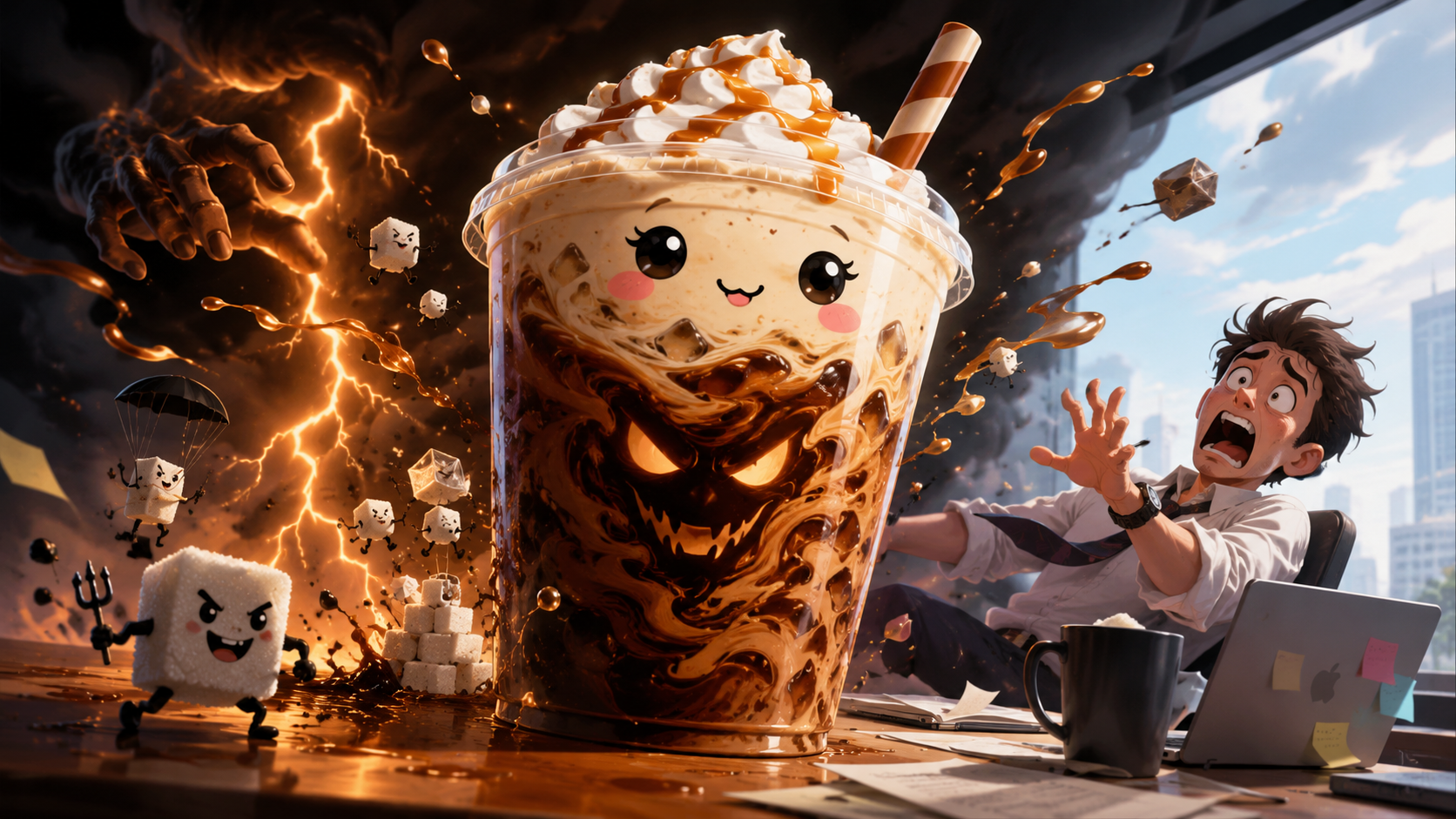
This is why I don’t treat the Extra Large like casual bean water. It is not “just coffee.” It is a caffeinated municipal project in a paper cup.
Do Not Order Dark Roast Thinking It Has More Caffeine
This is the classic trap.
Dark Roast sounds stronger. It tastes stronger. It walks into the room wearing a leather jacket and acting like it knows a guy.
But for caffeine, Original Blend beats Dark Roast.
The public caffeine chart lists Tim Hortons Canada Original Blend Coffee at 330 mg for an Extra Large, while Dark Roast Coffee is listed at 315 mg for an Extra Large. A Large Original Blend is listed at 270 mg, while a Large Dark Roast is listed at 260 mg.
Is the difference huge? No. Nobody is going to drink Original Blend instead of Dark Roast and suddenly start seeing through drywall.
But the point is simple: darker taste does not automatically mean more caffeine. Dark Roast is the better order when I want a bolder flavour. Original Blend is the better order when I want the most caffeine and my brain is operating like a damp receipt.
Espresso Sounds Stronger, But Brewed Coffee Wins
Espresso is concentrated. Espresso is intense. Espresso looks like coffee went to boot camp and came back with cheekbones.
But total caffeine is about the size and number of shots, not just how dramatic the drink looks.
In the Canada caffeine chart, a Tim Hortons espresso shot is listed at 125 mg of caffeine, while a Medium Americano, Cappuccino, Hot Latte, Caramel Latte, and Vanilla Latte are each listed around 205 mg. A Mocha Latte is listed slightly higher at 215 mg. Those are respectable numbers, but they still do not beat an Extra Large Original Blend at 330 mg.
So when I need the strongest Tim Hortons coffee, I do not get distracted by espresso’s tiny-cup Napoleon complex. I go brewed.
The only caveat is customization. Tim Hortons has promoted espresso beverages that can be customized, including double-shot Americanos, so espresso-based drinks can climb higher depending on what a location offers and what I add. But that is where things get dangerous, because adding a 125 mg espresso shot to a 330 mg Extra Large coffee would push the drink to roughly 455 mg, which is above Health Canada’s recommended daily maximum for most adults.
That is not a coffee order. That is turning my hands into hummingbirds.
The Best Hot Coffee Order for Maximum Caffeine
When I want maximum caffeine and minimum nonsense, I order:
Extra Large Original Blend Coffee, black.
When I want a strong coffee but do not want my nervous system to file a workplace complaint, I order:
Large Original Blend Coffee.
The Large still gives about 270 mg of caffeine, which is plenty. That is the order for days when I need to be functional, not spiritually pressure-washed.
When I want something espresso-based and still fairly strong, I order:
Medium Americano.
The Americano gives espresso flavour without turning the drink into a syrup carnival. In the Canada caffeine chart, the Americano is listed at 205 mg, which is the same caffeine estimate as a Medium Original Blend but with a different flavour profile.
The Best Cold Tim Hortons Order for Caffeine
Cold drinks are where Tim Hortons becomes a little more annoying, because some cold coffee drinks are caffeine-efficient and some are basically milkshakes in business casual.
For cold caffeine, I look first at iced espresso drinks or cold brew-style options, depending on what the location has. Tim Hortons says its Cold Brew is made with 100% Premium Arabica beans and steeped cold for 16 hours, which makes it one of the more serious cold coffee options on the menu.
But since Tim Hortons does not make caffeine information easy to find publicly and directs caffeine questions to Guest Care, I do not crown Cold Brew as the strongest without checking the app, location, or available nutrition details. That is the kind of responsible sentence that makes food writing less fun but more useful.
Based on the public Canada caffeine chart, the cold espresso-style drinks around 205–215 mg are stronger choices than a regular iced coffee. The chart lists Canada Iced Latte and Iced Cappuccino entries at 205 mg, a Mocha Iced Latte at 215 mg, and regular Iced Coffee at 60 mg small, 130 mg medium, and 160 mg large.
So when I need cold caffeine, I do not automatically grab the sweetest frozen thing on the menu like a raccoon with a rewards app. I look for the cold drink with actual coffee strength, then avoid burying it under sugar.
Drinks I Skip When I Need the Most Caffeine
I skip French Vanilla Cappuccino when caffeine is the mission. The public chart lists it at 60 mg small, 80 mg medium, 110 mg large, and 135 mg Extra Large in Canada. That is not nothing, but it is not the caffeine champion. It is a warm vanilla dessert beverage with a coffee cameo.
I skip Hot Chocolate, because obviously. It has some caffeine, but ordering hot chocolate for maximum caffeine is like bringing a decorative spoon to a sword fight.
I skip Decaf Coffee, not because I am a genius, but because words mean things. The chart lists decaf at 6 mg small, 9 mg medium, 12 mg large, and 15 mg Extra Large. Decaf is not caffeine-free, but it is absolutely not the move when I need my brain dragged back from the swamp.
I also skip anything where the calories are doing more work than the caffeine. Cream, sugar, flavoured syrup, whipped topping, and frozen bases can turn a coffee order into a dessert invoice. Delicious, yes. Efficient, no.
Original Blend vs Double-Double
A Double-Double does not give me more caffeine than the same size black coffee.
It gives me the same coffee plus cream and sugar. That is it. The caffeine does not look at the cream and say, “Ah yes, I shall multiply.”
So when I need the strongest coffee with the cleanest caffeine-to-calorie payoff, I order it black. When I want comfort, I order a Double-Double and accept that I have invited sugar and cream into the meeting like two consultants nobody budgeted for.
My Final Tim Hortons Caffeine Ranking
For the most caffeine overall, I order the Extra Large Original Blend Coffee. It has about 330 mg of caffeine.
For a strong but slightly less aggressive order, I get the Large Original Blend Coffee, at about 270 mg.
For bold flavour but slightly less caffeine than Original Blend, I choose Dark Roast.
For espresso flavour, I choose a Medium Americano, but I do not pretend it beats the Extra Large brewed coffee.
For cold caffeine, I look for iced espresso drinks or Cold Brew, and I check the app or ask the location when caffeine matters, because Tim Hortons does not make official caffeine numbers conveniently public.
Coffee time!
When I need the strongest coffee at Tim Hortons, I order an Extra Large Original Blend Coffee, black.
It beats Dark Roast for caffeine. It beats the standard espresso drinks for total caffeine. It beats the sweet specialty drinks because it does not waste time pretending whipped cream is a productivity tool.
The only thing stronger would be a customized drink with added espresso shots, and that is where I start paying attention to the caffeine limit instead of acting like my heart is a rental car.
So my rule is simple: Extra Large Original Blend when I need maximum caffeine. Large Original Blend when I want strong but not ridiculous. Americano when I want espresso flavour. French Vanilla when I want dessert in witness protection.
And if I add an espresso shot to an Extra Large coffee, I do so knowing I have stopped ordering breakfast and started conducting a small nervous-system experiment.