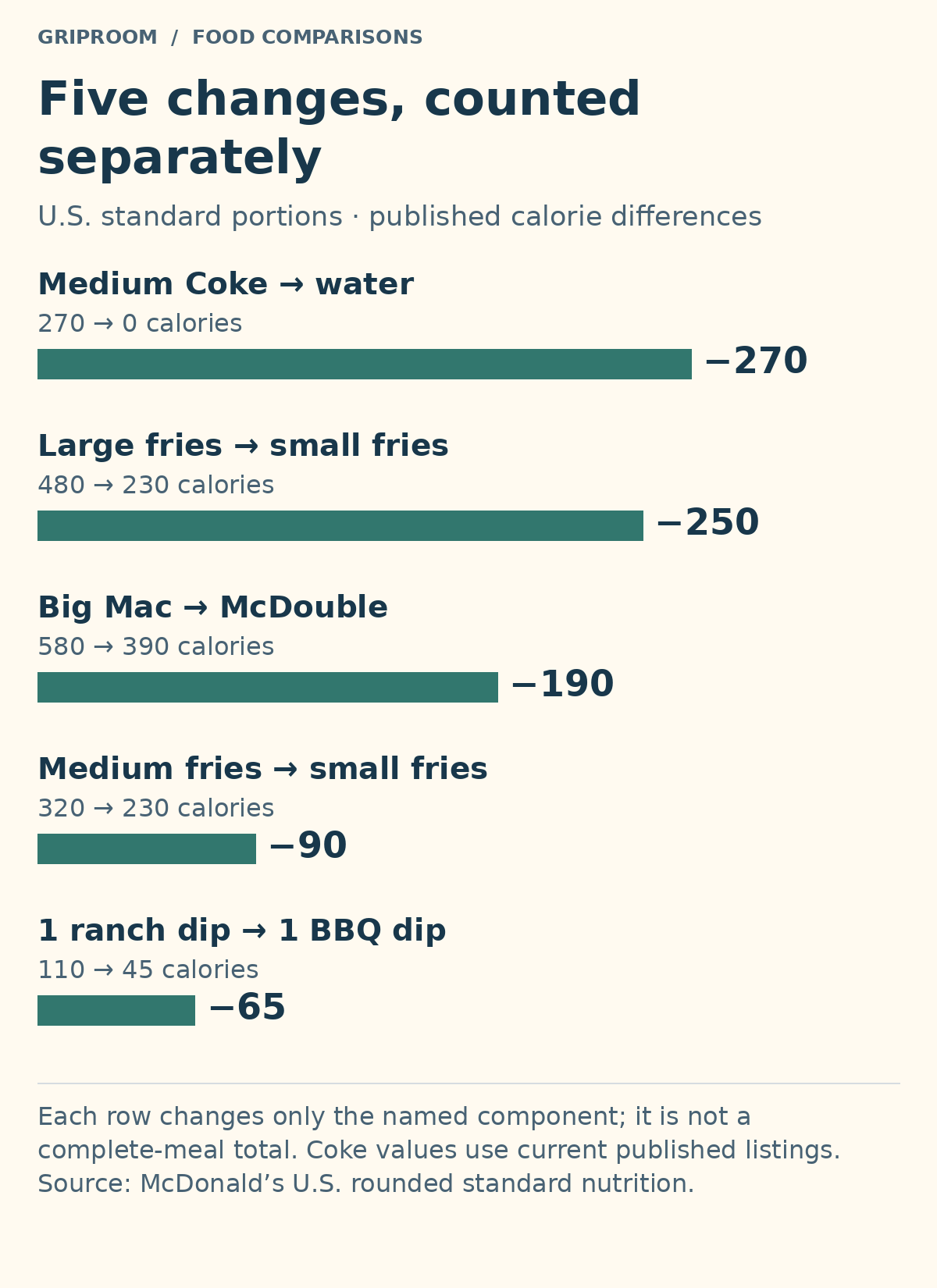
At McDonald’s, changing the drink can change the calorie total more than changing the burger. A published U.S. medium Coke adds 270 calories. Moving from a Big Mac to a McDouble changes the burger portion by 190 calories.
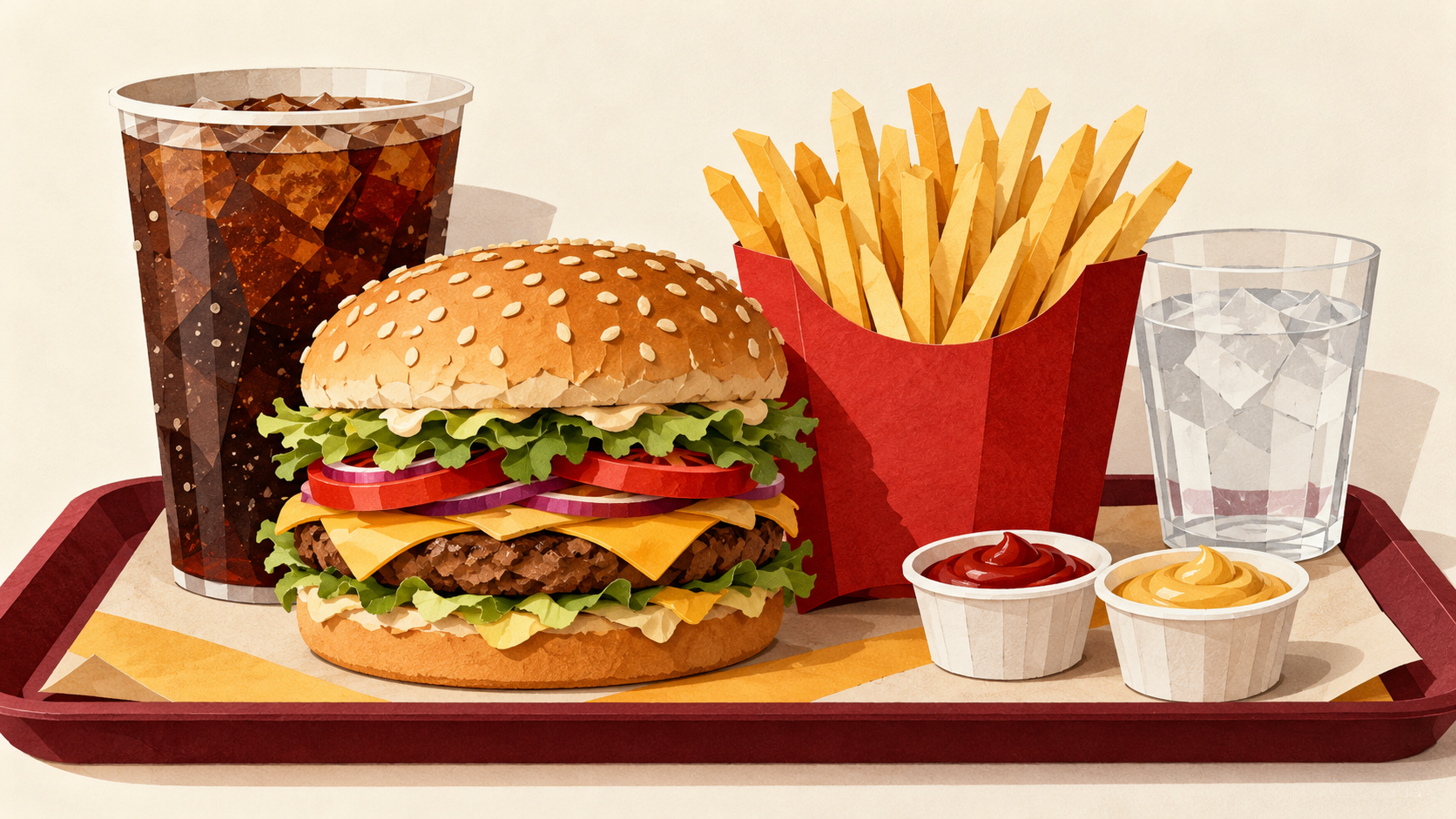
That makes the whole tray the useful unit of comparison. A Big Mac with medium fries and a medium Coke comes to 1,170 calories, the total on McDonald’s own meal page. Keep the burger and fries but choose water, and the component sum becomes 900 calories. Choose a McDouble, small fries and water, and it is 620 calories.
Those are different orders, with different portions. Their usefulness is that every component is named. “Burger meal” leaves too much of the meal unspecified.
The figures below use published U.S. standard portions checked in October 2026. They are rounded menu values, so an individual restaurant serving can vary. Canadian menu figures belong in a separate comparison.
Complete meals make the differences visible
Start with a main, add the actual fry size, add the drink, then count any extra dipping sauces. The examples below follow that sequence.
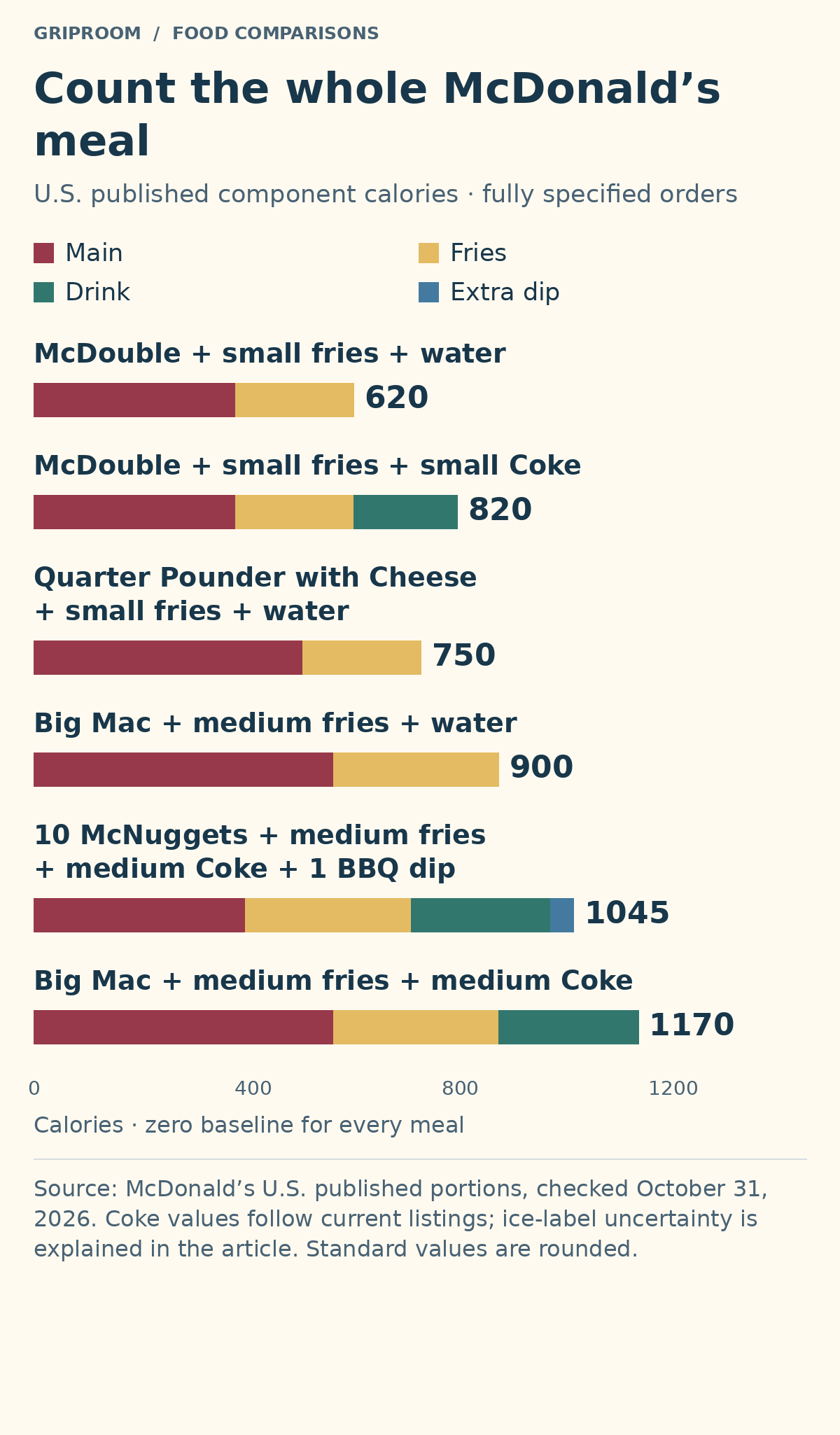
The 620-calorie McDouble example contains 25 grams of protein: 22 in the burger and 3 in the small fries. The Quarter Pounder with Cheese example has 33 grams of protein at 750 calories. Choosing between them changes the food portion as well as the calorie total.
The two Big Mac examples make a cleaner controlled comparison. Both keep the same 580-calorie burger and 320-calorie medium fries. Water contributes zero calories; the published medium Coke contributes 270. The food and its 30 grams of protein remain the same.
Nuggets need their own accounting. Ten McNuggets contribute 410 calories before dipping sauce. Add medium fries, the published medium Coke and one 45-calorie BBQ dip, and the sum is 1,045. A second dip would change that total again.
These examples are selected orders, rather than a ranking of every possible meal. Their main job is to make the additions visible.
Fries can outweigh a burger swap
Small fries are listed at 230 calories, medium at 320 and large at 480. The large-to-small difference is 250 calories. The medium-to-small difference is 90.
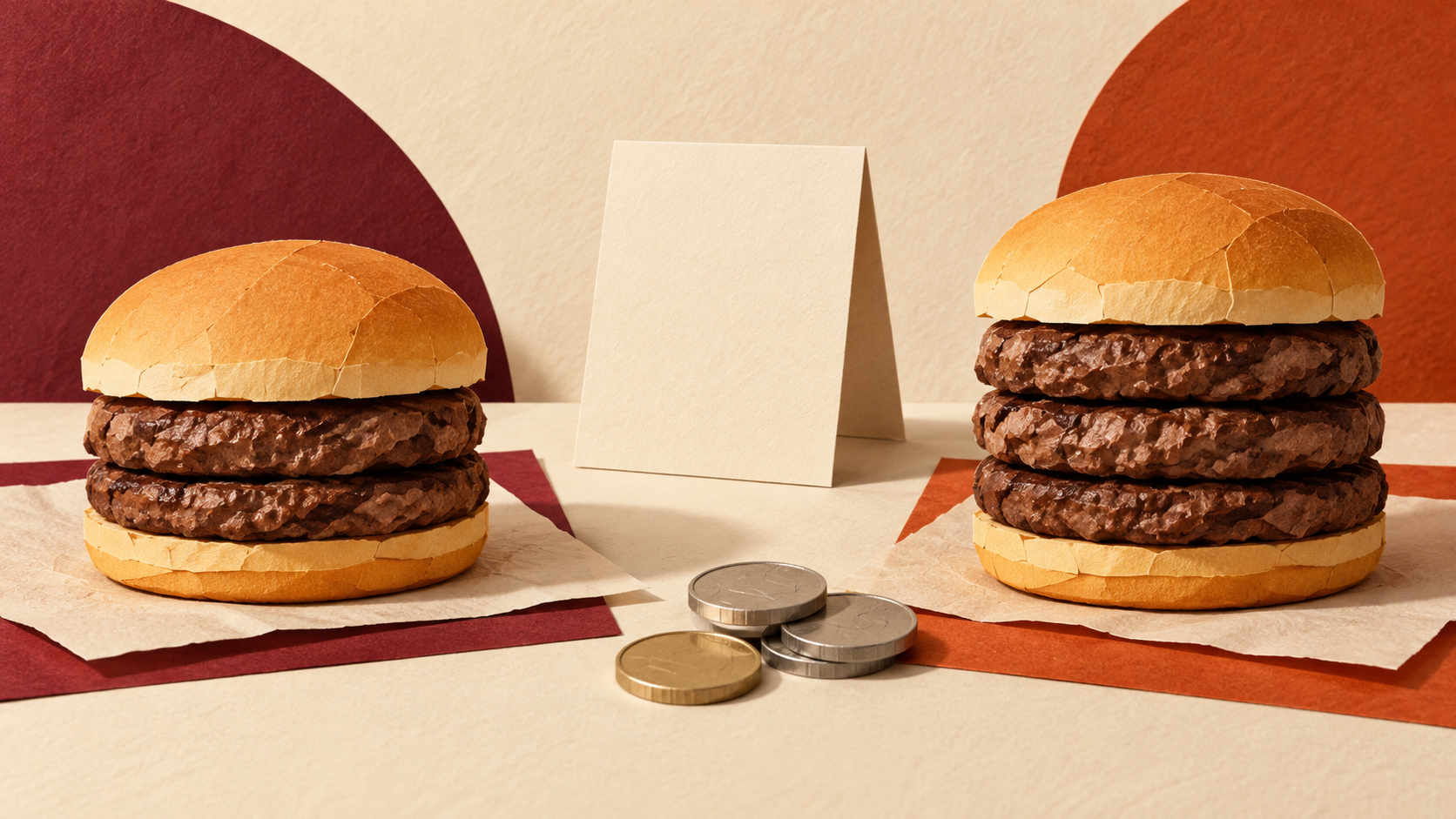
Compare that with the 190-calorie difference between a 580-calorie Big Mac and a 390-calorie McDouble. For these specific choices, changing the fry size moves the total more than changing the burger.
A large order of fries also contains more published calories than the McDouble itself. That is easy to miss when the burger is the item with its name in large type on the menu board.
The comparison does not make the food interchangeable. A smaller side is a smaller serving, and a different burger has a different recipe and protein amount. It simply identifies which part of this order makes the larger numerical change.
Count extra sauce packets once
The standard sauce on a burger is already included in that burger’s published nutrition. Adding another allowance for the Big Mac’s usual sauce would count it twice.
Separate dipping packets are different. The published portions used here list BBQ at 45 calories, Sweet ’N Sour at 50 and Creamy Ranch at 110. One ranch dip therefore adds more than twice the calories of one BBQ dip, although the recipes and packet portions differ.
Packet count matters as much as the name. Two ranch dips add 220 calories; two BBQ dips add 90. An order described only as “nuggets with sauce” hides both the sauce choice and how many packets were counted.
Our McDonald’s sauce comparison looks more closely at that part of the order. For a complete meal calculation, attach the exact dip and quantity to the actual main and sides.
Why Coke figures need a serving note
The current public U.S. Coke pages list 200 calories for small, 270 for medium and 380 for large. The medium product page and the Big Mac meal total agree on the 270-calorie medium value.
There is a labeling complication. McDonald’s general nutrition note describes fountain-drink calculations with standard fill levels and ice, while its product-data records label these Coke entries “No Ice.” The available records do not resolve that inconsistency.
This guide uses the published numbers. It does not invent a second, supposedly exact value for a cup with a particular amount of ice. For a self-service drink, McDonald’s directs customers to the calorie information posted at the beverage fountain. Refills and a different serving size would also need their own accounting.
That distinction matters when two online meal totals disagree. Before assuming one calculation is wrong, compare the country, drink size, stated preparation and date of the figures.
Separate the burger difference from the meal difference
The gap between the 620-calorie McDouble order and the 1,170-calorie Big Mac order is 550 calories. Only 190 of that gap comes from the burgers. Changing small fries to medium adds another 90, and changing water to the published medium Coke adds 270.
That breakdown matters when a menu comparison credits the entire difference to the main. It would be easy to conclude that replacing a Big Mac removes 550 calories, even though the calculation also changes the side and drink. Keep medium fries and Coke with the McDouble instead, and those additions still count.
Holding the rest of the order steady gives each individual choice its proper share of the total.
Build the comparison around the meal you want
An effective comparison keeps the main question steady. To compare two burgers, hold the fries, drink and extra sauces constant. To compare drinks, hold the food constant. Otherwise, several changes can get credited to the burger alone.
Then decide whether calories are the only number you need. The Quarter Pounder example provides more protein than the smaller McDouble order, but also has a different calorie total and portion. Calories alone do not settle the choice, and none of these sums measures how filling an individual diner will find the meal.
The most revealing change may be the least glamorous item on the tray. Before replacing a burger you actually want, check the fry size, the drink and the dip packets beside it. Their contribution can be larger than the burger swap you were considering.
Sources