
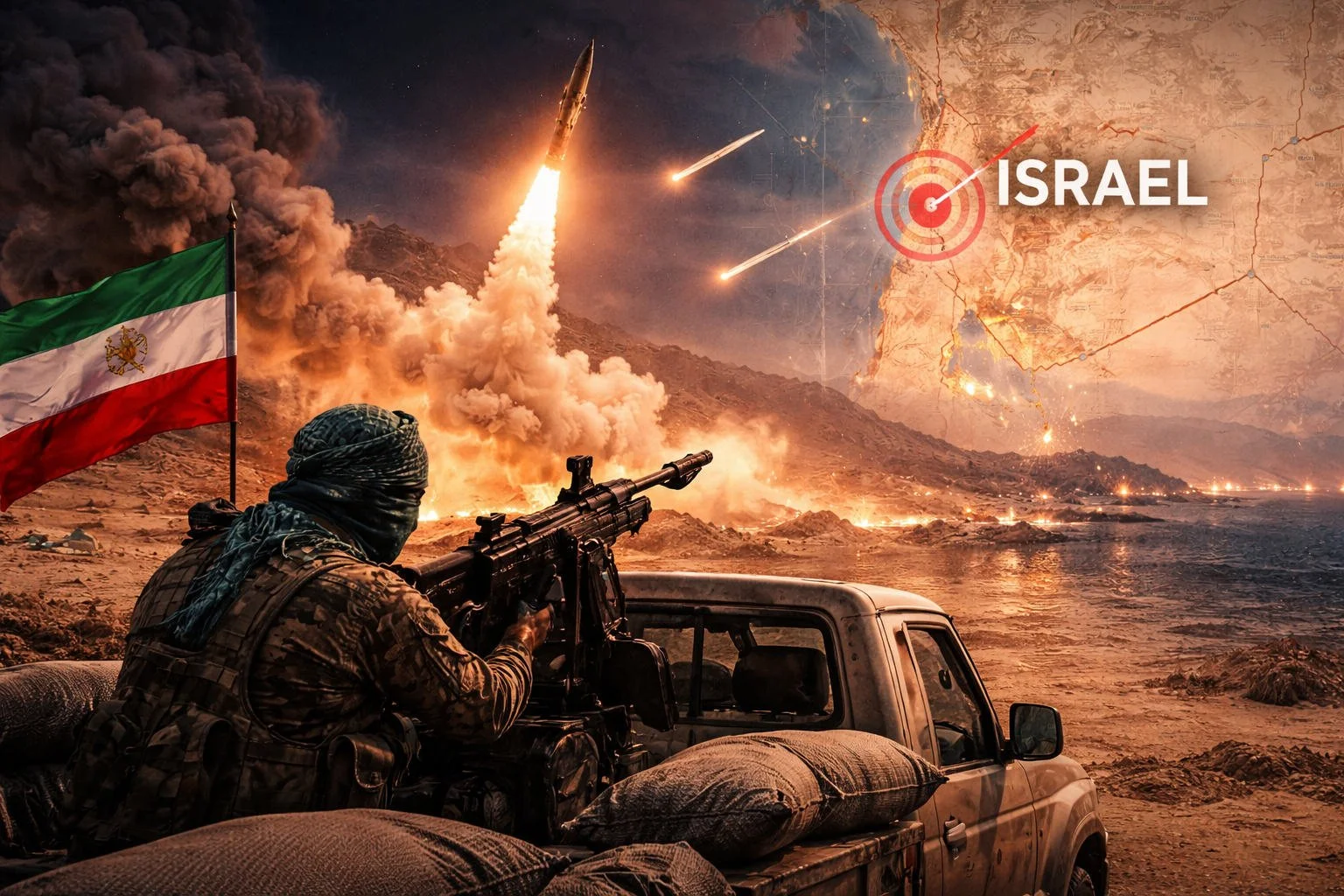
The Houthis may not look like the biggest actor in this war, but if they start launching at Israel again, they could become one of the most dangerous. Public reporting so far suggests the group has not significantly escalated since the U.S.-Israeli war on Iran began, even as other Iran-aligned actors have become more active. But analysts also warn the Houthis are still a live risk, and the consequences of their entry would be outsized because the Red Sea is now more strategically important than usual.
The first point to understand is that Houthi launches at Israel would not be some brand-new capability suddenly appearing out of nowhere. Reuters has previously reported multiple Yemen-to-Israel missile launches by the Houthis, including attacks they said were coordinated with Iran in 2025, and a longer pattern of missile and drone fire toward Israeli territory since the Gaza war began. In other words, if they resume or expand such launches now, it would be an escalation in timing and context, not in basic capability.
What would make it more serious this time is the broader battlefield. Israel is already dealing with direct Iranian fire and regional proxy threats. New Houthi launches from Yemen would force Israel to watch another axis at long range, consume more interceptor capacity, and increase pressure on its air-defense system and decision-makers. That matters because even if most launches are intercepted, they still create costs, disruption, and strategic stress. Reuters’ past reporting shows Houthi missiles have previously triggered sirens, flight diversions, and panic near major Israeli hubs, including Ben Gurion airport.
The second big ramification is that Israel would be far more likely to hit Yemen again. Reuters has reported previous Israeli strikes on Houthi-held Yemen in response to launches, including attacks on strategic sites in Sanaa after ballistic missile attacks. So a new Houthi missile campaign would not stay symbolic for long. It would raise the odds of Israeli retaliation on Yemeni infrastructure, military compounds, fuel sites, and leadership targets. Once that starts, the war is no longer just spreading geographically; it is adding a whole new cycle of attack and counterattack.
The third and probably most economically important issue is the Red Sea. Right now, that route matters more than usual because the Strait of Hormuz has been severely disrupted, and Saudi Arabia is trying to push more crude westward to the Red Sea port of Yanbu. Reuters reported that Yanbu loadings averaged 2.2 million barrels per day in the first nine days of March, up sharply from February, as Saudi Arabia tried to compensate for lost Hormuz flows. But Reuters also noted that this Red Sea route carries its own security risk: Yemen’s Houthi forces.
That means a Houthi decision to start launching at Israel would worry oil markets even if the missiles themselves never land near an oil installation. Traders would immediately ask whether Israel would hit Yemen harder, whether the Houthis would reopen maritime attacks, and whether the Red Sea fallback route for Gulf energy exports was about to become less usable too. Reuters reported there have been no Red Sea attacks reported since the Iran war began, but threats persist, according to the West’s navy information center JMIC. That calm could disappear quickly if the Houthis decide they are in the war now.
That is why this is not just an Israel-security story. It is an oil story. The Red Sea and Bab el-Mandeb had already been badly damaged as commercial corridors by earlier Houthi attacks. The U.S. Energy Information Administration reported that oil flows through the Bab el-Mandeb Strait averaged 4.0 million barrels per day in the first eight months of 2024, down from 8.7 million barrels per day in 2023, while volumes rerouted around the Cape of Good Hope rose from 6.0 million to 9.2 million barrels per day. In plain English: the Houthis have already shown they can reshape global shipping patterns.
Shipping companies clearly remember that. Reuters reported on March 1 that Maersk, Hapag-Lloyd, and CMA CGM were already rerouting vessels around Africa and away from the Suez Canal and Bab el-Mandeb after the Iran war escalated. Maersk said it was pausing future trans-Suez sailings through Bab el-Mandeb because of the deteriorating security situation. That means the shipping system is already fragile. If Houthi launches at Israel are followed by even limited maritime threats, freight costs, delays, and route changes could jump again.
So what could this do to the price of oil? The short answer is that it would probably push prices up by making an already-bad supply situation look even more structurally unstable. Reuters reported on March 11 that Brent was trading around $91.68 and that energy prices were already up more than 25% since the war began, with shipping through Hormuz near a standstill and around a fifth of the world’s oil supply affected. Reuters also said Wood Mackenzie sees current Gulf supply disruption of about 15 million barrels per day as severe enough to potentially push crude to $150 if the crisis persists.
A Houthi move against Israel would not, by itself, erase millions of barrels overnight. The more realistic mechanism is indirect but still powerful. It would tell the market that the Iran-aligned front is widening again, that Israel may have to fight in Yemen as well as elsewhere, and that the Red Sea route Saudi Arabia is relying on could become riskier. When markets lose confidence in both Hormuz and the Red Sea/Suez corridor at the same time, they stop pricing a temporary scare and start pricing a more durable transport crisis.
There is also a regional-political risk here. Atlantic Council analysts argue that Red Sea attacks would be more impactful and riskier for the Houthis now than in past rounds because Saudi Arabia is leaning more heavily on Red Sea export infrastructure while Hormuz is disrupted. They also warn that Houthi attacks on the Red Sea, Saudi Arabia, or the UAE could break the current détente and effectively reignite the Yemen war. That matters because once Saudi Arabia or the UAE are pulled back into a direct fight with the Houthis, the crisis stops being a narrow Israel-Yemen exchange and becomes a much wider Gulf security shock.
That is the bigger strategic takeaway. If the Houthis start launching at Israel, the immediate headlines will focus on sirens, interceptions, and retaliation. But the deeper significance is that it would signal another piece of Iran’s regional network coming alive at a moment when oil markets, shipping companies, and governments are already stretched. It would raise the odds of Israeli strikes in Yemen, the odds of renewed Red Sea disruption, and the odds that traders start treating the whole region’s energy map as one interconnected war zone rather than a set of isolated flare-ups.
In summary: Houthi launches against Israel would matter less because of the physical damage from any one missile and more because of what they would imply. They would imply that another front is opening, that the Red Sea may no longer be a reliable relief valve while Hormuz is under strain, and that the war is becoming harder to contain both militarily and economically. That is the kind of development oil markets do not shrug off.