
How to Make Sushi Rice with Regular Rice (2025)
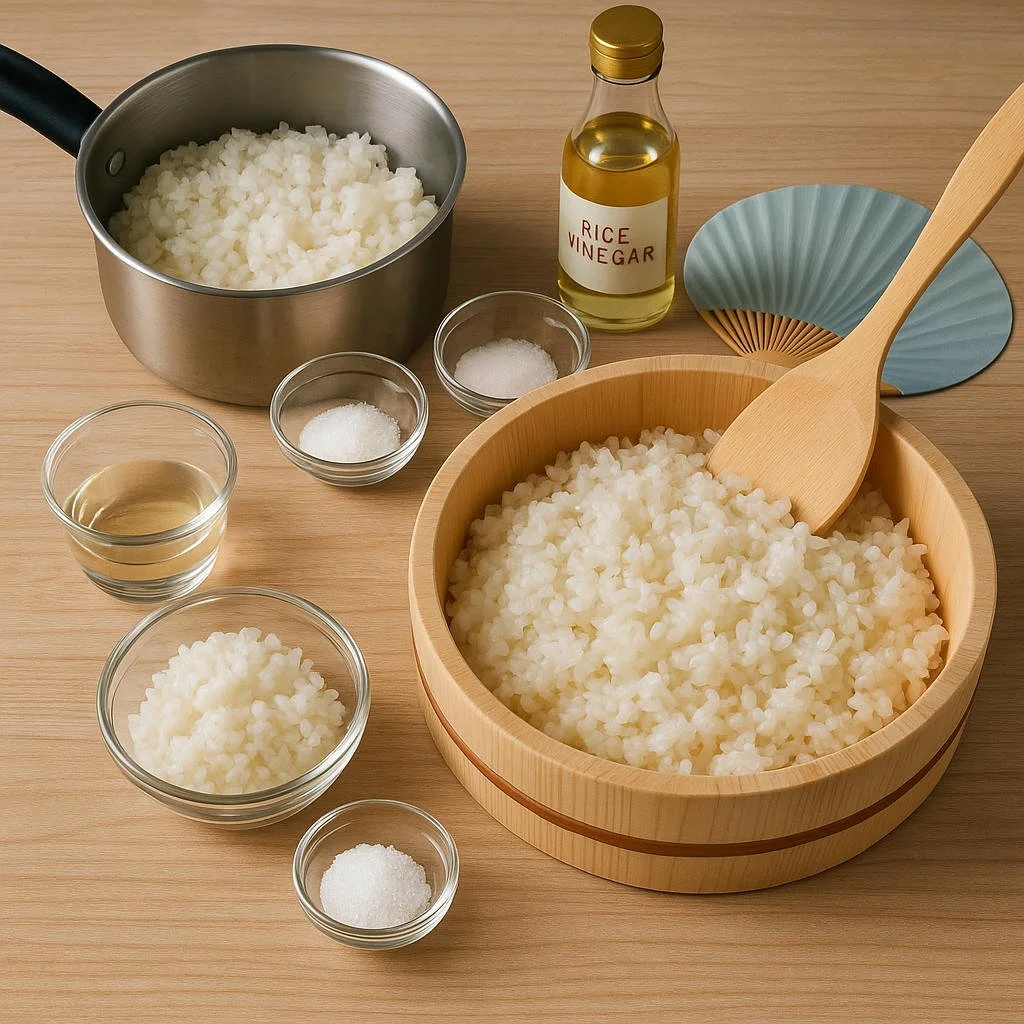
November 2025 update
First, what “regular rice” do you have?
Best match: Short- or medium-grain white rice (often labeled Calrose, Japanese rice, or simply medium grain). This behaves almost exactly like sushi rice.
Works with tweaks: Long-grain (jasmine or basmati). It won’t get quite as sticky, but you can simulate the texture and sheen with a few adjustments.
Avoid: Glutinous/sweet (mochi) rice as the main rice. It’s too sticky on its own. (A tiny pinch of glutinous rice flour as a booster is optional—see Tips.)
Core Formula (Sushi Vinegar a.k.a. sushi-zu)
For every 1 cup (180–200 g) uncooked rice:
Rice vinegar: 2 Tbsp (30 ml)
Sugar: 1 Tbsp (12 g)
Fine salt: 1 tsp (5–6 g)
Optional: a small piece of kombu (5–7 cm) to cook with the rice for subtle umami.
Scale this 1:2:1:0.5 (rice cup : vinegar Tbsp : sugar Tbsp : salt tsp). For a more traditional, slightly subtler profile, reduce sugar to 2 tsp and salt to ¾ tsp.
Step-by-Step: Short/Medium-Grain “Regular” Rice
1) Rinse & soak
Put rice in a bowl, cover with cold water, swish, drain. Repeat until water is mostly clear (2–4 rinses).
Soak 20–30 minutes in fresh cold water, then drain well.
2) Water ratio
Rice cooker / Instant Pot: 1 : 1 (rice : water by volume).
Stovetop: 1 : 1.1 (e.g., 1 cup rice + 1 cup + 2 Tbsp water).
3) Cook
Rice cooker: standard white cycle, kombu on top if using.
Instant Pot: High pressure 3 minutes, 10 minutes natural release, then vent; remove kombu.
Stovetop: Bring to a gentle boil, cover, immediately lower to low; cook 12 minutes. Rest 10 minutes covered off heat.
4) Make sushi-zu
Warm vinegar + sugar + salt (microwave or low heat) just until dissolved. Don’t boil.
5) Season & cool (the “glossy” step)
Tip hot rice into a wide bowl (wooden hangiri if you have it, otherwise a glass or stainless bowl or a rimmed baking sheet).
Drizzle the sushi-zu over the rice, then fold with a flat spatula or rice paddle using slicing/turning motions. Don’t mash.
Fan while folding (a piece of cardboard works) for 1–2 minutes. This sets the shine and prevents sogginess.
Cover with a barely damp towel. Use warm (body-temp) within 30–60 minutes for rolling or bowls.
Long-Grain Fallback (Jasmine/Basmati)
You can get a surprisingly good result—just manage stickiness and moisture.
Key tweaks
Rinsing: Rinse briefly (1–2 quick changes) to keep a little surface starch.
Soak: 10 minutes (jasmine) or 15 minutes (basmati), then drain.
Water ratio: Aim slightly higher:
Rice cooker/Instant Pot: 1 : 1.1
Stovetop: 1 : 1.25
Cook & rest: Same as above, but let it rest 15 minutes covered before seasoning.
Season a touch stronger
Long-grain has a drier bite, so use ~10–15% more sushi-zu:
Per 1 cup uncooked long-grain: 2 Tbsp + 1 tsp vinegar, 1 Tbsp + 1 tsp sugar, 1 tsp salt.
Optional “cling” boosters (pick one)
Steam trap: After cooking, don’t fluff—trap steam 5 extra minutes before seasoning.
Tiny starch boost: Stir ½–1 tsp glutinous rice flour (mochiko) into the warm sushi-zu; dissolve fully, then fold in.
Blend trick: If you can, mix 70% long-grain + 30% medium-grain before cooking. This improves stickiness naturally.
Quick Methods by Appliance
Rice cooker (easiest):
Rinse/soak → water ratio → optional kombu → cook.
Rest 10 min → fold in sushi-zu → fan → cover with damp towel.
Instant Pot (fast & consistent):
Short/medium grain: 1 : 1, 3 min high pressure, 10 min natural release.
Long-grain: 1 : 1.1, 3 min high pressure, 10 min natural release.
Season and cool as above.
Microwave (last-minute):
Rinse/soak. Combine 1 cup rice + 1 cup water (short/medium) or 1 + 1.2 (long-grain) in a microwave-safe bowl.
Microwave covered on high 10–12 minutes (watch for boil-overs), rest 10 minutes. Season and fold.
Texture Targets (so you know it’s right)
Grains are plump with a gentle “pop,” not mushy.
Rice looks glossy, not wet.
A ball of rice holds together but doesn’t smear.
If it’s wet, you added too much water or vinegar—or didn’t fan enough.
If it’s dry/crumbly, you under-hydrated, didn’t rest, or used too little sushi-zu.
Troubleshooting & Fixes
Too soft/mushy: Next time reduce cooking water by 1–2 Tbsp per cup; fan longer; drizzle only 80–90% of the sushi-zu, then add the rest if needed.
Too firm/dry: Sprinkle 1–2 Tbsp hot water over the hot rice, cover 5 minutes, then season. For long-grain, bump sushi-zu by 10%.
Not sticky enough (long-grain): Try the blend trick (add 25–30% medium-grain), or use the mochiko pinch in sushi-zu.
Vinegar too sharp: Warm sushi-zu more (acidity tastes rounder warm), add ½–1 tsp extra sugar per cup rice.
Dull, not shiny: You likely skipped fanning; fold more decisively and fan as you go.
Flavor Options (still sushi-appropriate)
Kombu-infused: Lay kombu on the rice while cooking; remove after.
Yuzu or lemon zest: Add a pinch of zest to sushi-zu for citrus aroma.
Mirin-style note: Add ½–1 tsp mirin or a pinch more sugar for a softer sweetness if you like.
Make-Ahead, Holding & Food Safety
Sushi rice is best warm the first hour.
If you need to hold it, keep it at room temp covered with a barely damp towel and plastic wrap for up to 4 hours.
Do not refrigerate before forming—it firms and dulls the texture.
For next-day non-sushi uses (bowls, onigiri): gently rewarm covered with a few drops of water in the microwave to soften.
Acidified rice is safer than plain rice, but still avoid leaving it out all day.
Quick Reference (per 2 cups uncooked short/medium-grain)
Water (rice cooker): 2 cups
Water (stovetop): 2 cups + ¼ cup
Sushi-zu: 4 Tbsp vinegar + 2 Tbsp sugar + 2 tsp salt
Yields ~5–6 cups cooked rice (enough for 4–5 large rolls or 8–10 nigiri portions).
“I Only Have Jasmine/Basmati—Give Me the Short Version”
Rinse quickly; soak 10–15 min; drain.
Cook 1 : 1.1–1.25 (appliance-dependent), rest 15 min.
Use 10–15% more sushi-zu than normal; fold and fan well.
Let it sit 10 minutes under a damp towel to “set” before rolling.
Keep expectations realistic: flavor and sheen will be great; stickiness will be “good enough” for rolls and bowls.
Pro Tips (small things, big payoff)
Use a wide surface (bowl or sheet pan). The more surface area, the faster moisture equalizes.
Fold, don’t stir. Think of lifting and turning the rice to avoid crushing grains.
Weigh when you can. Consistency skyrockets if you measure rice, water, and vinegar by grams.
Season while hot. If the rice cools before seasoning, it won’t absorb the sushi-zu properly.
Hands in water, not oil. When shaping, dip fingers in water with a splash of vinegar to prevent sticking.
With the method above, Calrose/medium-grain will taste indistinguishable from specialty sushi rice—and long-grain will get close enough for beautiful rolls and bowls with that signature glossy finish.