Why Remy From Ratatouille Is the Best Food Critic Disney Ever Made
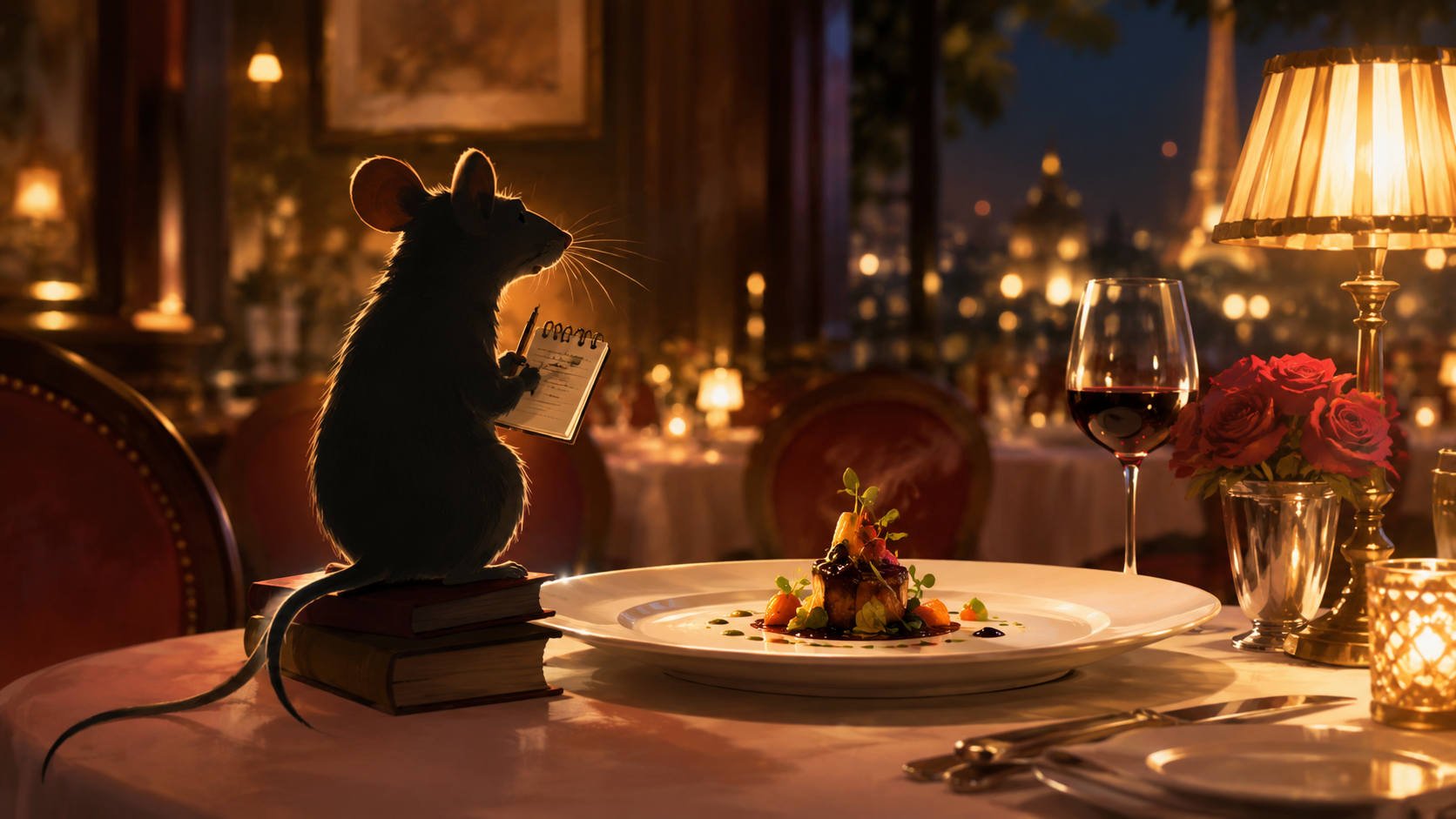
Remy from Ratatouille is not officially a food critic, which is exactly why he is the best food critic Disney ever made. Actual food critics, both real and fictional, often arrive wrapped in dread, adjectives, and the spiritual dampness of someone who has decided a lukewarm amuse-bouche is a human rights violation. Remy, meanwhile, is a rat. A tiny blue-gray sewer mammal with a genius palate, a dangerous dream, and absolutely no business being near a saucepan unless we are discussing a health-code documentary from hell.
And yet he understands food better than almost every credentialed snob in the movie.
Disney and Pixar describe Ratatouille as the story of Remy, a rat who dreams of becoming a great chef despite his family’s wishes and the “obvious problem” of being a rat in a rodent-hating profession. They also describe him as having a remarkable sense of smell and a genius for combining flavors that puts him above most human chefs. So yes, the most sophisticated palate in Paris belongs to a creature whose species is normally associated with chewing wires and ruining basements. Nature is rude like that.
But Remy’s greatness is not just that he can cook. It is that he can judge food properly. He can taste deeply. He can diagnose a dish. He can feel when something is missing. He can recognize pleasure, balance, technique, memory, and fraud. He does not need a coffin-shaped office, a skull typewriter, or a face like a disappointed funeral program. He just needs a spoon.
Remy Is a Critic Before He Is a Chef
The first thing Remy does with his talent is not make a soufflé, write a manifesto, or open a pop-up charging $19 for foam that tastes like lawn grief. He uses his nose to detect poison.
Pixar’s character description says Remy is stuck in the rat world as the “poison sniffer,” using his unique talent to identify safe garbage for his family. That is criticism in its most primitive, useful form: this will nourish you, this will kill you, and this one smells like a landlord’s refrigerator during an electrical outage.
Before criticism became a profession where people say things like “textural dialogue” about soup, it was about discernment. Can you tell good from bad? Can you protect people from garbage? Can you find value where others see only scraps?
Remy can. He is not reviewing for status. He is reviewing for survival. The little rat’s first critical audience is not a reservation-only dining room full of jacketed tax attorneys; it is a colony of trash-eaters who need someone to say, “Maybe don’t eat the glowing thing.” Honestly, that is more practical than half of restaurant criticism.
Anton Ego Has Power. Remy Has Taste.
Disney did make an actual food critic in Ratatouille: Anton Ego, the Grim Eater, a man who looks like he was assembled from ink, cheekbones, and unresolved childhood soup trauma. Pixar describes Ego as the most powerful food critic in Paris, someone who can make or break a restaurant with one review and whose approval is so feared that chefs will not change menus without his blessing.
That is power. It is not the same thing as taste.
Power lets Ego terrify restaurants. Taste lets Remy fix soup.
This is the crucial difference. Ego arrives after the work is done, sits in judgment, and releases a review that can flatten a restaurant like a piano dropped from a balcony. Remy works inside the food. He tastes while something is becoming itself. He criticizes through adjustment: more seasoning, better balance, less stupidity, please stop treating soup like a beige puddle with career aspirations.
Ego is the critic as executioner. Remy is the critic as rescue animal. Unfortunately, also literally an animal, which complicates the metaphor in a way the health department would not enjoy.
Remy Understands Flavor as Experience, Not Vocabulary
A terrible food critic can describe flavor without understanding it. That is how you get writing that reads like a wine bottle mated with a philosophy minor: “notes of wet stone, antique pear, and restrained longing.” Congratulations, Derek, your Riesling has a LinkedIn profile.
Remy does not do that. He experiences flavor visually, emotionally, physically. The film shows his taste imagination through color, movement, and abstract sensory bursts. Pixar’s RenderMan site even labels one Ratatouille image as “Remy conveying deliciousness,” which is a wonderfully polite way of saying the rat has a better internal food cinema than most cable cooking shows.
That is why Remy feels like a critic, not just a chef. He can translate taste into meaning before he ever has the language for it. He knows what pairing strawberry and cheese does. He understands contrast, harmony, surprise, and pleasure. He does not need to call it “a playful dairy-fruit conversation with pastoral undertones” because he is not an insufferable restaurant-menu printer.
He tastes. He knows. He reacts. Then he builds.
The Soup Scene Is Better Criticism Than a One-Star Review
Remy’s first major act in Gusteau’s kitchen is not rebellion for rebellion’s sake. It is quality control. Linguini ruins a soup, because Linguini at that point has the culinary authority of a damp broom. Remy sees the disaster forming and cannot tolerate it. He intervenes.
This is what makes him better than Ego. Ego would taste bad soup and sharpen a paragraph until it could open mail. Remy fixes the soup.
That is real criticism: not merely pointing at failure, but understanding what failure needed in order to become success. Negative criticism is easy. You can train a parrot to say “overcooked” and it will sound like half the internet. Constructive criticism requires taste, imagination, and the ability to picture the better version hiding inside the bad one like a terrified little leek.
Remy does not just know that the soup is wrong. He knows how to make it right. That is the difference between a critic and a complaint appliance.
Remy Has Standards Without Becoming a Miserable Little Throne Goblin
The joke of many critics is that their standards become their personality, then their prison, then their whole sad little haunted mansion. They start by loving food and end by loving their own disappointment. Anton Ego is the movie’s perfect example: he has made discernment so severe that joy can barely get through the door without being strip-searched.
A.O. Scott, discussing Ratatouille for On Being, said the film becomes intellectually exciting because it is about art, creativity, and criticism under the disguise of a rat learning to cook. He also noted that Anton Ego realizes it has become harder for him to find food that moves him, though he is still searching.
Remy avoids that trap. He has high standards, but he is not dead inside. He loves food too much to become bored by it. He is discerning without becoming joyless. He can reject garbage while still being delighted by discovery. This is apparently difficult for humans, who receive one credential and immediately begin acting like toast personally betrayed them.
Remy’s taste is exacting, but alive. He is the rare critic whose standards sharpen his wonder instead of embalming it.
Remy Critiques Status, Not Just Food
One of the smartest things Ratatouille does is show that bad food culture is not only about bad cooking. It is about branding, hierarchy, fear, and hollow reputation wearing a chef’s coat it has not earned.
Skinner, the villainous head chef, turns Gusteau’s legacy into a brand swamp. Pixar describes him as exploiting Gusteau’s reputation with mercenary products like pizzas and frozen burritos, driving the restaurant from a temple of culinary art into a profitable but soulless luxury meal machine.
That is food criticism sitting right there, wearing a tiny villain hat. The restaurant’s problem is not simply one bad dish. It is spiritual rot. Gusteau’s has become a content mill with sauces. A ghost kitchen with better lighting. A fine-dining corpse wearing a money belt.
Remy sees through that because he cares about the work. Not the brand. Not the name. Not the frozen burrito empire. The food.
That makes him a better critic than anyone who confuses prestige with quality. Remy does not respect a dish because it came from a famous kitchen. He respects it when it deserves respect. A shocking concept. Someone tell the reservation apps.
The Movie Earned Remy’s Palate by Respecting Real Food
Part of why Remy works as a food critic is that the movie actually gives food weight. Pixar did not just animate random glossy vegetables and hope children would clap. The filmmakers treated cuisine like a real discipline, which is extremely annoying because it means the rat movie has more culinary integrity than several celebrity restaurants at airports.
SFGate reported that Pixar turned to chef Thomas Keller for inspiration and authenticity; Keller tutored the filmmakers on the inner workings of a French kitchen, acted as a key cooking consultant, and producer Brad Lewis interned in The French Laundry kitchen as part of the film’s research. Keller also helped shape the climactic ratatouille into a refined confit byaldi-style showstopper rather than a sad vegetable pile sulking in a casserole dish.
That research matters. Remy’s criticism feels believable because the movie’s food world has rules. Kitchens have hierarchy. Dishes have technique. Plating matters. Heat matters. Timing matters. The film knows that “anyone can cook” does not mean “anyone can slap wet eggplant on a plate and demand applause.”
Remy is not magically good because the plot needs a miracle rodent. He is good because he pays attention.
Remy Understands That Food Memory Can Destroy a Man
The climactic ratatouille scene is one of the best food-criticism scenes ever made, and yes, it involves a rat serving vegetables to a skeletal critic who looks like he sleeps in a bookmark.
The dish works on Ego because it bypasses performance and hits memory. It does not impress him by shouting. It does not arrive with dry ice, edible gold, or a server explaining the concept for nine minutes like a TED Talk trapped in an appetizer. It brings him back to childhood. It reminds him why food mattered before criticism hardened into a job with stationery.
This is Remy’s ultimate critical act: he understands what Ego actually needs to taste. Not the most expensive dish. Not the rarest. Not the cleverest little architectural seafood prank. Something honest, precise, humble, and emotionally loaded.
That is great criticism in edible form. Remy reads the diner. He reads the restaurant. He reads the history of the dish. Then he makes the choice no status-obsessed chef would make: peasant food, elevated with care, aimed directly at the critic’s buried humanity like a vegetable missile.
Anton Ego Becomes Great Only After Remy Feeds Him
There is a case that Anton Ego is a great food critic by the end of Ratatouille. Eater has even argued that Ego is not the villain but one of the film’s unlikely heroes, because criticism itself helps save the restaurant and validate Remy’s talent.
Fair. Ego’s final review is magnificent. He finally understands that criticism is not just punishment. It can be discovery. It can be defense. It can be a public act of courage when the thing worth praising comes from somewhere embarrassing, uncredentialed, or, in this case, covered in fur and legally catastrophic.
But notice what gets him there.
Remy.
Ego needs Remy’s food to become the critic he should have been all along. Remy restores Ego’s sense of wonder. Remy breaks the critic’s calcified expectations. Remy forces him to risk his reputation on the new, the weird, the impossible, the rodent-based.
That means Remy is not just a better cook. He is the better critic because he turns another critic back into a human being. Well, a very gaunt human being. A haunted umbrella with taste buds. But still.
Remy Risks More Than Any Critic in the Film
Anton Ego risks reputation. Remy risks extermination.
This is not a minor distinction. Ego can write a bad review and go home to his coffin-office, presumably to drink black coffee from a goblet and stare at a wall until a waiter cries somewhere. Remy operates in a world where discovery means panic, disgust, and possibly death by broom.
That risk changes the moral weight of his judgment. He cannot afford empty snobbery. His criticism has stakes. Every choice he makes in the kitchen could expose him. Every dish he improves could destroy the illusion keeping him alive.
The Academy apparently noticed the movie’s craft even if it did not give Remy a tiny Oscar made of cheese; Ratatouille won Best Animated Feature at the 80th Academy Awards and received five nominations overall, including Original Screenplay.
That recognition matters because Ratatouille is not just a charming animal comedy. It is a story about artistic risk. Remy embodies that better than anyone. He critiques by creating under impossible conditions. Ego critiques from a chair.
A very dramatic chair, but still.
Remy Respects Technique Without Worshipping Gatekeepers
The great lie of elite food culture is that technique belongs only to institutions. Restaurants, schools, stars, titles, approved kitchens, approved uniforms, approved humans. Remy is an insult to all of that, which is probably why he remains so satisfying.
He studies. He observes. He practices. He reveres Gusteau. He learns the language of cuisine. But he does not accept that gatekeepers own taste. He proves that talent can exist outside the approved system, which is upsetting for people whose entire personality is being allowed into the approved system.
This is the genius of “anyone can cook” when the movie finally clarifies it. It does not mean everyone is secretly a genius chef. It means genius can come from anywhere. Even from under the floorboards. Even from the garbage world. Even from the little creature you would normally chase out with a broom while screaming like a Victorian widow.
Remy is the best food critic Disney made because his taste is democratic without being sloppy. He believes excellence is real. He just refuses to believe pedigree is the same thing.
Remy Is the Anti-Influencer Food Critic
Remy would be terrible on TikTok, which is one of his strongest qualifications.
He does not eat for the thumbnail. He does not scream “ten out of ten” at a cheese pull like he has discovered penicillin. He does not review food by shoving half of it into his mouth and staring into the camera with the dead-eyed intensity of a man being paid in affiliate links.
Remy’s criticism is quiet, sensory, specific, and useful. He is not trying to become bigger than the food. He is trying to understand it.
Modern food commentary often confuses reaction with criticism. A reaction is “this slaps.” Criticism is “this works because the acidity cuts the richness, the texture carries the sauce, and the finish lands clean instead of collapsing into buttery mud.” Remy understands the second one. He just expresses it by making fireworks happen in his brain because he is a cartoon rat and, frankly, better equipped than most of us.
What Real Food Critics Could Learn From Remy
Real food critics do not need to become rats. In most jurisdictions this would complicate employment. But they could learn a few things from him.
Taste before status. Remy does not care whether a dish comes from a famous chef, a garbage boy, or his own tiny illegal paws. He cares whether it is good.
Diagnose, do not posture. The point is not to sound clever while something fails. The point is to understand why it fails.
Protect wonder. The worst critics become professional disappointment machines. Remy never loses the thrill of flavor.
Respect craft. His joy is not anti-technique. He loves food enough to learn how it works.
Defend the new. Remy is new, impossible, and ridiculous. Ego’s final greatness comes from recognizing him anyway.
That is the whole job. Not to be feared. Not to decorate cruelty with adjectives. Not to turn dinner into a hostage note. To find what is alive in the work and tell the truth about it.
Why Remy Is Disney’s Best Food Critic
Remy is Disney’s best food critic because he combines everything criticism should be and almost nothing it should not be.
He has a superior palate. He has standards. He understands technique. He loves pleasure. He can identify trash, fix mistakes, challenge empty prestige, and recognize greatness in unexpected places. He is hard to impress but easy to move. He knows food can be survival, art, memory, craft, comfort, rebellion, and proof that the world is not entirely made of garbage, even when you literally live in it.
Anton Ego is the official critic. Remy is the truer one.
Ego judges from above until a dish humbles him. Remy judges from below and builds upward. Ego’s criticism becomes noble only after Remy gives him something worth risking his ego for. Remy does not write reviews. He makes the argument on the plate, which is frankly rude to everyone who has ever tried to sound important using the phrase “mouthfeel.”
So yes, Disney’s greatest food critic is a rat.
Not the gaunt man with the pen. Not the chefs with titles. Not the restaurant empire. The rat.
A tiny, brilliant, impossible kitchen goblin who understands that the highest form of criticism is not tearing something down. It is knowing exactly what something could become, then having the nerve to make it better.