Why MrBeast-Style Food Challenges Are Basically the Opposite of Weight Loss
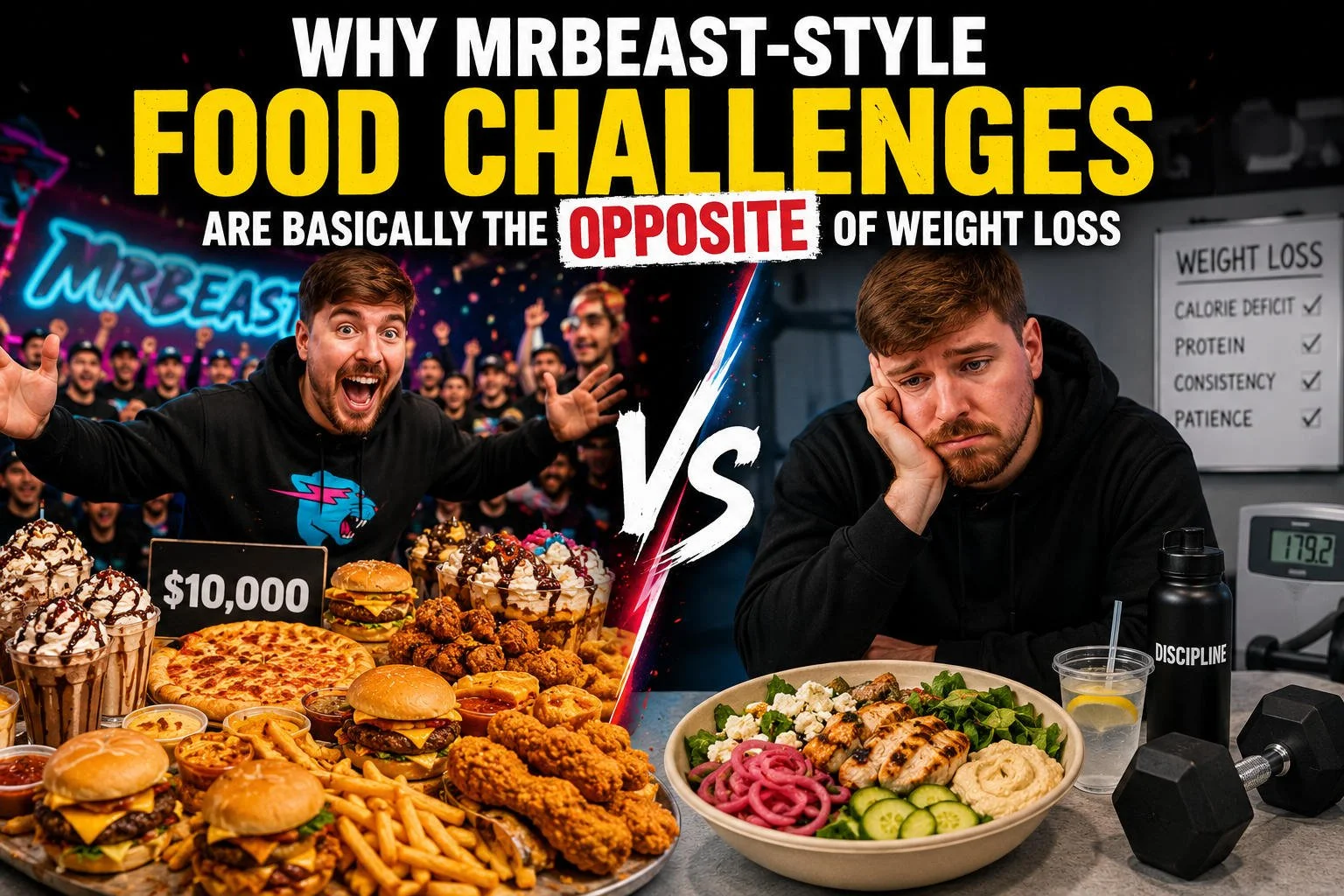
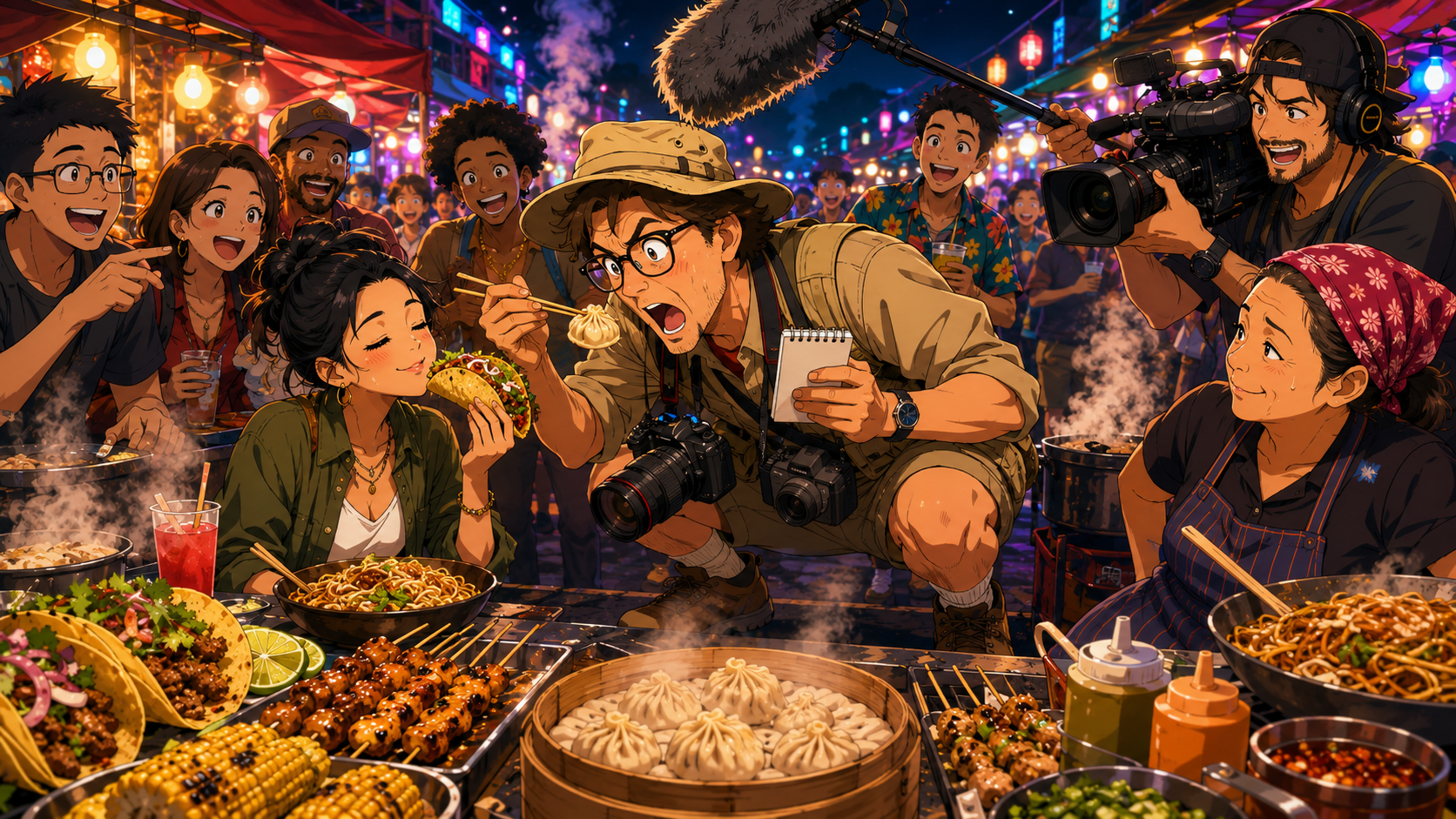
A MrBeast-style food challenge is what happens when lunch gets trapped inside a casino, a carnival, and a YouTube thumbnail with a man screaming next to a pizza the size of a garage door.
The formula is simple: take a normal food, make it enormous, expensive, rare, impossible, disgusting, timed, competitive, or financially irresponsible, then film people trying to defeat it while the algorithm sits nearby rubbing its little goblin hands together.
MrBeast has made videos around food spectacle like eating the world’s largest slice of pizza and a $70,000 golden pizza, because apparently pizza was suffering from insufficient narrative stakes. And the broader challenge-video ecosystem is even worse: grocery-store survival, giant meals, speed eating, “last to stop eating,” “finish this and win money,” and other formats where digestion is treated as an obstacle course designed by a frat house and a hedge fund.
Entertaining? Sure.
Good for weight loss? Absolutely not.
MrBeast-style food challenges are basically the opposite of weight loss because they take every boring principle that works—portion control, consistency, slower eating, planning, satiety, moderation—and launch it into the sun with a branded T-shirt cannon.
Food Challenges Reward Volume, Which Is Exactly the Problem
Weight loss is not mysterious. Annoying, yes. Emotionally rude, absolutely. But not mysterious.
The CDC says weight loss requires a plan built around healthy eating patterns, physical activity, sleep, and stress management. It also explains that using calories through physical activity, combined with reducing calories eaten, creates the calorie deficit needed for weight loss.
Food challenges do the opposite. They reward the person who can eat the most, the fastest, with the least visible regret.
A weight-loss-friendly environment says: “Maybe use a smaller plate.”
A food challenge says: “Here is a 14-pound burrito. Finish it and we’ll put your photo on the wall next to other victims.”
One is habit design. The other is a stomach-based circus contract.
Giant Portions Break Your Brain, Because Your Brain Is a Raccoon With Wi-Fi
Large portions make people eat more. This is not a moral failing. It is not because everyone lacks discipline. It is because humans are deeply vulnerable meat calculators who see more food and often consume more food.
A 2022 systematic review and meta-analysis found that larger portion sizes were associated with higher daily energy intake, averaging about 295 extra calories per day. A USDA Nutrition Evidence Systematic Review also concluded that serving larger portions increases food and energy intake in adults and older adults, with strong evidence.
So when a food challenge presents a table full of burgers, pizza, fries, shakes, nuggets, tacos, or whatever else has been assembled into a tower of regret, it is not “just fun.” It is a perfect laboratory for overeating.
The entire format says: more food is more impressive.
Weight loss says: less food, repeatedly, without making it weird.
Guess which one is less exciting on camera. Exactly. Nobody gets 40 million views for “Man Eats Reasonable Portion Slowly and Goes for a Walk.”
Speed Eating Is Also a Disaster, Shocking Absolutely No One
Food challenges usually have urgency. There is a timer. A countdown. A competitor. A prize. A crowd. A thumbnail. A man yelling, “You have five minutes left!” as if the human digestive system is a NASCAR pit crew.
This is bad news because eating faster is linked with higher intake and weight problems. A 2014 systematic review and meta-analysis found that slower eating was associated with lower energy intake than faster eating. Another systematic review found that children and adults with faster eating speed may have higher risk of adiposity and metabolic syndrome components.
Weight loss loves boring eating behaviors: chew, pause, notice fullness, stop before you feel like furniture.
Food challenges love the opposite: chew rarely, inhale constantly, ignore every signal your body sends until your stomach begins drafting a resignation letter.
Ultra-Processed Foods Are the Challenge-Video House Band
Most food challenges are not built around grilled salmon, lentils, and a respectful side salad. Nobody is screaming, “Can he finish 19 pounds of steamed broccoli?” because humanity has not yet fallen that far.
The challenge-video staples are usually pizza, burgers, fries, candy, fast food, milkshakes, doughnuts, wings, cereal, snack foods, sauces, and other hyper-palatable items engineered to make moderation look like a personal insult.
In a controlled NIH study, people eating ultra-processed foods consumed about 500 more calories per day, ate faster, and gained about 2 pounds over two weeks compared with when they ate minimally processed foods.
That is the food challenge problem in one depressing little lab coat: ultra-processed food is easy to overeat, and challenge videos turn overeating into the entire point.
It is not just calories. It is calories wrapped in salt, fat, sugar, softness, crunch, novelty, and social pressure. A perfect little trap, now with jump cuts.
“Cheat Day” Culture Got a Camera Crew and Became Even Dumber
A planned indulgence can be fine. A slice of pizza does not destroy progress. A burger does not erase your gym membership. Dessert is not a felony unless you call it “guilt-free,” in which case language jail may be appropriate.
But challenge culture turns indulgence into performance. It says food is either boring restriction or total collapse. Chicken breast Monday, 20,000-calorie “cheat day” Saturday. Very normal. Definitely not a psychological pendulum wearing a tank top.
The weight-loss problem is not one big meal by itself. The problem is the mindset: be “good,” then explode; restrict, then compensate; diet, then challenge; pretend the weekly average does not exist because the thumbnail was fun.
Your body does not care that you called it a cheat day. Your body heard “calorie surplus festival” and filed the paperwork.
Exercise Cannot Magically Delete a Food Challenge
Food challenge culture often borrows the language of fitness: “I’ll burn it off,” “I trained for this,” “It’s one day,” “I earned it.”
Calm down, Spartan Nacho.
Exercise is important. It helps health, weight maintenance, strength, mood, and metabolic fitness. But the CDC notes that most weight loss occurs from decreasing calories, while physical activity is especially important for maintaining weight loss.
This is where food challenges become hilarious in the bleakest possible way. It can take minutes to eat 2,000 extra calories and hours to meaningfully burn that off through activity. The fork is a faster machine than the treadmill. Tragic. Unfair. Deeply on brand for Earth.
A person can train hard and still out-eat their training. Many have. Entire gym parking lots are haunted by this truth.
Food Challenges Make Fullness Look Like Weakness
Weight loss usually works better when people respect satiety. Eat enough protein. Eat enough fiber. Choose foods that fill you up. Stop when satisfied. Do not treat fullness like a dare from a man holding a stopwatch.
Food challenges do the reverse. They make fullness the enemy. The winner is the person who can override discomfort. The hero is the person who keeps eating after their body has clearly begun sending smoke signals.
That is not fitness. That is turning appetite regulation into a hostage negotiation.
Real health says: listen to your body.
Food challenges say: ignore your body until a crowd applauds.
Beautiful. Very sustainable. Somebody hand the pancreas a helmet.
Watching Food Challenges Can Mess With What “Normal” Looks Like
Not everyone who watches giant eating videos will copy them. Most people understand that a man eating 100 burgers on camera is not offering a meal plan, just as a magician sawing someone in half is not proposing a surgical technique.
Still, repeated exposure can distort what normal eating looks like, especially for younger viewers or people with complicated relationships with food.
Research on mukbang and eating-video content has found associations between problematic viewing and disordered eating symptoms, especially binge eating and purging. A 2025 study also discussed problematic mukbang viewing as a potentially negative coping behavior linked to offline social needs and eating attitudes.
That does not mean every food challenge video causes disordered eating. That would be lazy panic-mongering, and the internet already has a surplus. It does mean the format is not neutral. When overeating becomes entertainment and the consequences are edited out, the viewer gets the spectacle without the aftermath.
You see the giant meal.
You do not see the bloating, sleep disruption, reflux, bathroom negotiations, or the next week of trying to pretend this was “content.”
MrBeast-Style Challenges Are Built for the Algorithm, Not Your Metabolism
The algorithm wants novelty, scale, stakes, emotion, and retention.
Your metabolism wants consistency, adequate protein, sleep, movement, and not being attacked by a 9-pound pizza.
These are different departments.
MrBeast became famous by mastering high-stakes, high-budget, extreme challenge content; The Guardian described him as a dominant figure in the attention economy with hundreds of millions of subscribers and videos built around giant stunts, endurance, prizes, and spectacle. That format works because it escalates. Bigger prize. Bigger object. Bigger challenge. Bigger thumbnail. Bigger scream.
Weight loss does not escalate well. It de-escalates. Smaller portions. Repeated meals. Boring walks. Earlier bedtime. Protein. Vegetables. Less liquid sugar. More boring adult competence.
This is why nobody wants to watch I Meal Prepped Sensibly for 12 Weeks and Lost 18 Pounds Without Making It My Entire Personality.
Would it work? Probably.
Would it trend? Only if someone set the Tupperware on fire.
The “But Skinny People Do These Challenges” Trap
Yes, some lean influencers do giant food challenges and stay lean.
This proves less than people think.
They may compensate before or after. They may train a lot. They may have unusually high activity levels. They may do challenges rarely. They may not show their full week of eating. They may be young. They may have genetics doing unpaid labor. They may feel awful afterward and just not include that part because “man lies on couch regretting nacho tower” is less brand-friendly.
A viral food challenge is not a normal day. It is a staged event.
Weight loss depends on the boring average. The week. The month. The routine. The repeated decisions nobody claps for.
Influencer challenge eating is a highlight reel of excess. Using it as nutrition guidance is like using a car commercial to learn safe driving because the vehicle looked cool jumping over a canyon.
The Foods Are Designed to Be Easy to Keep Eating
Food challenge meals usually have what nutrition people call high palatability and what normal people call “oh no, I ate the whole thing.”
Pizza is easy. Burgers are easy. Fries are easy. Doughnuts are easy. Candy is easy. Shakes are easy. Wings are easy until the sauce starts looking back at you.
These foods combine fat, refined carbs, salt, sugar, and soft textures in ways that reduce friction. They go down fast. They require less chewing. They are energy-dense. They are delicious, because evil often is.
Compare that to eating 3,000 calories of plain boiled potatoes, chicken breast, apples, and broccoli. Suddenly everyone has discovered “satiety.” Miraculous. The stomach has a union after all.
Food Challenges Train the Wrong Skill
Weight loss is a skill set:
Planning meals.
Managing hunger.
Building routines.
Eating enough protein.
Choosing filling foods.
Reducing liquid calories.
Eating slowly.
Handling social situations.
Recovering from overeating without turning it into a three-day shame opera.
Food challenges train a different skill:
Can you override fullness while people yell?
That is not the same skill. It is barely the same species.
A person trying to lose weight does not need practice eating more under pressure. They need practice eating enough, stopping, moving on, and not treating every craving like a royal decree.
The “One Big Meal” Myth Is Sneaky
Some people defend giant food challenges by saying, “It’s just one meal.”
And yes, one meal does not ruin a body. Thank you, moderation lawyer. But one giant meal can still matter if it repeats, triggers all-or-nothing thinking, leads to compensation, distorts hunger, becomes a weekly ritual, or trains the brain to associate food with spectacle instead of nourishment.
Also, “one meal” can be enormous. A food challenge meal can contain enough calories to wipe out several days of deficit. Weight loss math may not be perfectly precise, but it is also not imaginary. A weekend food explosion can absolutely erase a weekday deficit if the numbers are rude enough.
Your body does not say, “Oh, this was filmed for content, never mind.”
What a Weight-Loss-Friendly Challenge Would Actually Look Like
A useful food challenge would be boring enough to make YouTube cry.
Can you eat 30 grams of protein at breakfast for 30 days?
Can you stop eating lunch in front of your inbox?
Can you walk after dinner for two weeks?
Can you drink water before ordering your second soda?
Can you eat slowly enough that your brain has time to receive the “please stop” memo?
Can you build a satisfying 600-calorie dinner that does not taste like punishment in a bowl?
Can you keep ice cream in the house without treating it like a hostage situation?
That is the real challenge. Not eating the biggest burger. Eating the normal burger, enjoying it, and not letting the fries become a personality crisis.
How to Watch Food Challenges Without Letting Them Infect Your Lunch
Food challenge videos are entertainment. Treat them like entertainment.
Do not watch them while starving.
Do not use them as permission to turn dinner into a demolition derby.
Do not compare your normal appetite to a professional content eater’s edited performance.
Do not copy “cheat day” culture if it makes your week worse.
Do not let a thumbnail reset your idea of a portion size.
And if food challenge videos trigger binge urges, guilt, restriction, purging thoughts, or obsessive food behavior, stop watching and talk to a qualified professional. Your brain is not weak; the content is built to hijack attention. Some videos are basically nacho hypnosis with jump cuts.
What MrBeast-Style Food Challenges Accidentally Teach
They do teach something, just not what they think.
They show how powerful food environment is.
They show how volume, novelty, speed, money, competition, and social pressure can override normal hunger.
They show how easy it is to make overeating entertaining.
They show why weight loss is not just “willpower.” Willpower sitting across from a giant pizza, a timer, friends yelling, a prize, and a camera is not willpower. It is a doomed intern in a corporate meeting.
The best lesson is not “eat like this.”
The best lesson is: design your environment so you do not have to fight this hard.
Smaller portions. Better defaults. Less ultra-processed food at home. Protein and fiber. Planned treats. Eating slower. Sleep. Movement. Less chaos.
Not sexy. Effective. Tragic for thumbnails.
The Food Challenge Is the Anti-Diet
MrBeast-style food challenges are basically the opposite of weight loss because they worship everything weight loss usually asks you to manage.
Huge portions.
Fast eating.
Ultra-processed foods.
Competitive overeating.
All-or-nothing thinking.
Spectacle over satiety.
Novelty over consistency.
Content over consequences.
They are fun to watch because they are extreme. They are terrible to imitate for the exact same reason.
Weight loss is not built from one heroic act. It is built from dozens of small, boring, repeatable decisions that would make a terrible thumbnail. Nobody wants to click on “I Ate a Reasonable Dinner and Went to Bed.” But that is probably a better plan than “I Ate 40,000 Calories and Called It Beast Mode.”
So enjoy the food challenges as absurd entertainment.
Just do not confuse a viral stunt with a nutrition strategy.
The algorithm wants you shocked.
Your body would prefer lunch.