What Top Chef Portion Sizes Teach About Eating Less Without Feeling Cheated
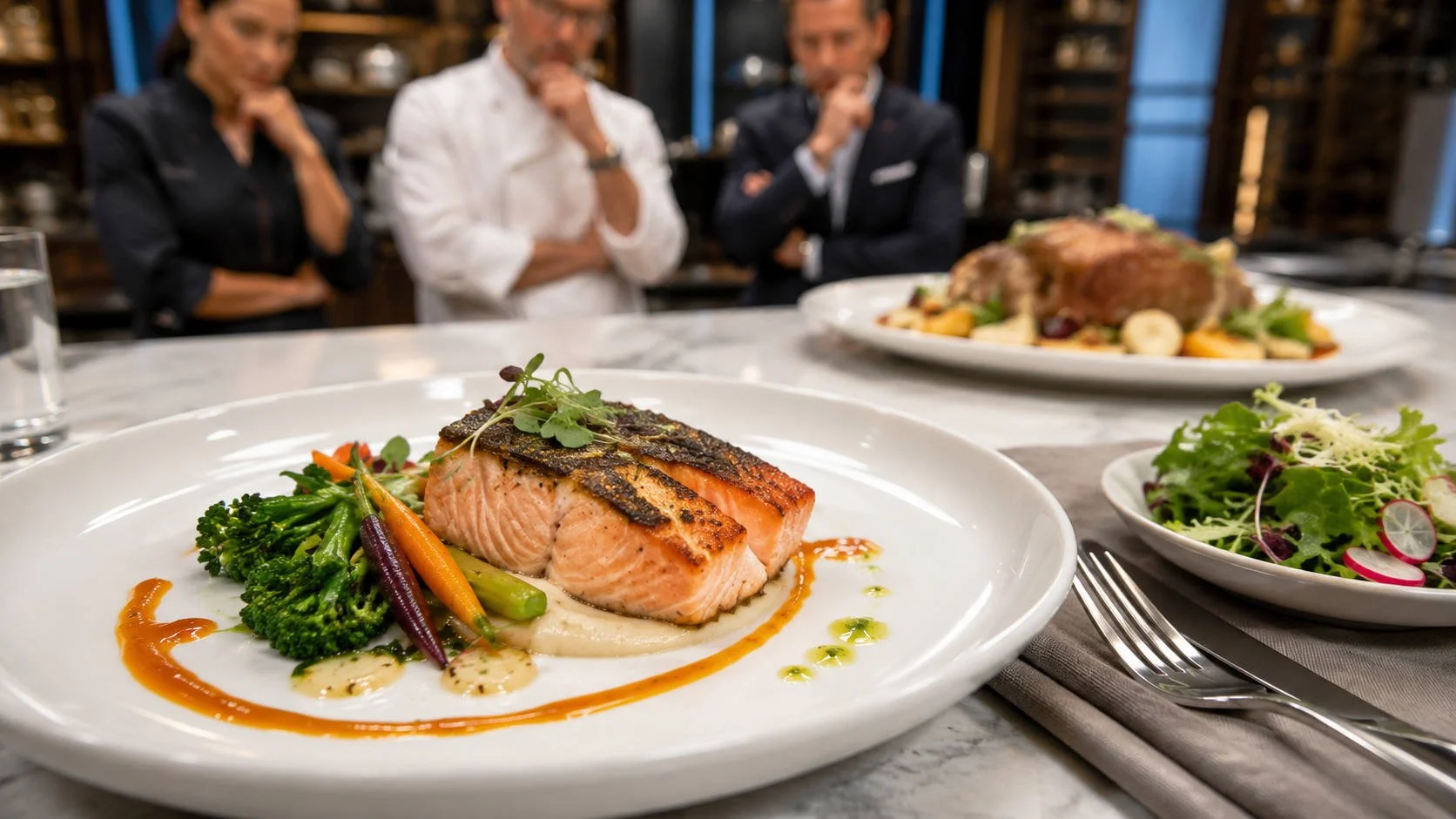
Top Chef is a show where grown adults risk their professional dignity over scallops, foam, under-seasoned purée, and whether a radish was shaved with enough emotional conviction. It is also one of television’s great accidental lessons in portion control, because the judges do not sit down to a lumberjack trough of pasta and call it refined. They taste. They evaluate. They notice texture, acidity, seasoning, balance, temperature, plating, and whether someone has once again decided that “rustic” means “I panicked.”
Bravo’s current Top Chef page describes Season 23 as hosted by Kristen Kish, with Tom Colicchio as head judge and Gail Simmons as perennial judge, following 15 chefs through pressure-filled culinary challenges in the Carolinas. The winner gets $250,000, a Food & Wine feature, and other career-launching prizes, which is a lot of pressure for people holding tweezers near microgreens.
But the most useful thing normal eaters can steal from Top Chef is not the tweezer behavior. Please do not start tweezering parsley onto Tuesday meatloaf unless your family has wronged you.
The Top Chef Rule: Small Food Must Taste Loud
The reason Top Chef portions work is not because tiny food is morally superior. Tiny bland food is just sadness with plating. A small dish has to earn its size by being concentrated: sharper acid, better seasoning, crunch, aroma, sauce, temperature contrast, and enough confidence to make the diner think, “That was complete,” not “Did the rest fall behind the stove?”
Tom Colicchio has said his judging starts with basics: whether a dish is cooked properly and seasoned properly, then whether it meets the challenge and is interesting. That is a useful home-cooking hierarchy, too. Before you worry about “portion control,” make sure dinner is not a beige apology served on ceramic.
This is where diet food usually fails. People make portions smaller and flavor smaller at the same time, because apparently suffering needed a garnish. They remove fat, salt, crunch, sauce, and joy, then wonder why they are eating cereal over the sink at 9:42 p.m. like a raccoon with unresolved childhood issues.
A smaller portion has to be more deliberate, not more miserable.
Top Chef Judges Don’t Eat Full Plates, and Somehow Survive
Bravo interviewed the Top Chef judges about filming, and Tom Colicchio said people overestimate how much they eat on the show because they are not eating full plates; they are eating tasting portions. Gail Simmons also framed eating well and in moderation as part of their professional food lives, not some guilt-soaked emergency.
This is the first practical lesson: you do not need a full restaurant portion to experience a dish. You need enough bites to register the idea.
That sounds obvious until you remember that modern restaurant portions often arrive looking like they were designed for someone recovering from famine and training for a powerlifting meet. We have normalized massive plates so thoroughly that a reasonable portion now looks like the restaurant hates us personally.
Research backs up the basic problem: a review of portion-size studies found that larger portions tend to increase consumption, and that effect has appeared across different individual characteristics. Translation: when served more, people often eat more, because apparently humans remain vulnerable to the ancient survival cue known as “plate has food.”
So Top Chef portions offer a counterspell. They say: here is enough to taste, judge, enjoy, and move on. No one needs a mixing bowl of risotto to understand risotto, especially if the risotto is undercooked and about to send someone home.
Plating Is Portion Control Wearing a Nice Jacket
A small portion on a giant plate can look insulting. A small portion arranged with intention can look expensive. That is the entire fine-dining magic trick, and yes, it is ridiculous, but it works because humans are visual little fools.
The goal at home is not to plate dinner like a chef who owns tweezers and unresolved competitive trauma. The goal is to make less food look complete. Put the protein, vegetable, starch, sauce, and garnish where they belong. Use a smaller bowl for soups, stews, pastas, and grain bowls. Slice the protein. Fan it. Add sauce under it or beside it. Finish with herbs, lemon zest, toasted seeds, chopped pickles, yogurt, chili crisp, or something crunchy.
This is not decoration. It is psychological structure.
But do not fall for the lazy “just use a smaller plate” gospel as if dishware has magical powers. One study by Rolls and colleagues found that plate size itself did not significantly reduce energy intake when people self-served from a buffet. Smaller plates can help some people visually, but they are not a spell you cast over lasagna.
The better lesson is: make the portion look finished before it hits the table. A small serving that looks composed feels like a dish. A small serving dumped in the middle of a plate feels like an accusation.
Multiple Bites Beat One Sad Lump
One of the best Top Chef tricks is segmentation. A chef does not serve “meat.” A chef serves three slices of duck, two dots of purée, pickled cherries, crispy skin, herbs, and a sauce. Same basic amount of food, but now the diner has little events to experience instead of one brown slab staring back like a court summons.
A study on food presentation found that equal-calorie portions presented as multiple smaller units were expected to deliver more satiety than the same food presented as a single unit. In plain English: food broken into several bites can look and feel more substantial than one lonely lump.
This is extremely useful at home. Cut sandwiches in halves or quarters. Slice apples. Cube roasted potatoes. Serve a small piece of salmon over vegetables instead of alone. Turn one chicken breast into sliced pieces over rice, salad, or beans. Make snack plates instead of one snack brick. Put yogurt, fruit, nuts, and cinnamon in layers instead of eating yogurt from the tub like a person who has given up on chairs.
The food has not multiplied. The experience has.
Flavor Contrast Makes Smaller Portions Feel Bigger
A huge portion can get away with being monotonous because brute quantity does some of the work. A smaller portion cannot. A small plate of plain chicken and plain vegetables is not “clean eating.” It is a parole meal.
Top Chef dishes work because they stack contrasts: crispy and creamy, hot and cold, rich and acidic, sweet and salty, soft and crunchy. That variety inside a controlled portion creates satisfaction without requiring the plate to look like it came from a buffet designed by a Viking.
There is a catch, because food is annoying. Research on food variety shows that greater variety can increase intake, partly because new sensory qualities keep food interesting. This is why dessert appears after you are “full” and suddenly your stomach finds a hidden room with sconces.
So the home-cook version is not “serve 19 different foods and call it portion control.” That is tapas math, and tapas math is how adults spend $87 and leave hungry but somehow full of fried cheese. The smarter version is controlled contrast: one main food, one crunchy thing, one acidic thing, one sauce, one fresh thing.
A small portion of chili becomes satisfying with Greek yogurt, scallions, pickled onions, and crushed tortilla chips. A small pasta becomes more complete with roasted vegetables, Parmesan, lemon, and chili flakes. A small steak becomes dinner with potatoes, greens, mustard sauce, and something sharp.
The plate should have variety. Your table does not need to become a cruise buffet with trust issues.
Protein and Fiber Are the Unsexy Stage Crew
Fine dining plating is cute, but hunger is not impressed by a basil leaf. If you want to eat less without feeling cheated, the meal still needs structure. Protein and fiber are the unsexy stage crew holding up the illusion while the sauce takes bows.
Harvard’s Nutrition Source notes that protein is an essential macronutrient, and its fiber guidance explains that soluble fiber attracts water in the gut and can slow digestion, which may help reduce hunger. In normal-person terms: chicken, fish, eggs, tofu, beans, lentils, yogurt, oats, vegetables, fruit, and whole grains are doing more long-term fullness work than a decorative drizzle of balsamic cosplay.
This is where a lot of “eat less” advice becomes useless. A tiny plate of low-protein, low-fiber food is not elegant restraint. It is a countdown to snack violence.
The Top Chef version of eating less would never be “three lettuce leaves and a prayer.” It would be a small but complete plate: seared fish, beans, greens, sauce, crunch, acid. Or chicken, roasted carrots, lentils, yogurt, herbs. Or tofu, rice, vegetables, sesame, chili, pickles. Less food than a giant takeout bowl, yes. But still a meal, not a hostage note.
Slow Eating Is the Cheapest Luxury Trick
A Top Chef judge cannot inhale the dish in five seconds and say, “Needs acid.” They taste. They pause. They compare. They notice. Meanwhile, normal people eat lunch while answering email, driving, standing, scrolling, or watching a video of a stranger reorganizing a refrigerator with the intensity of a hostage negotiator.
Eating slower helps the smaller portion feel like an actual event. Harvard’s mindful eating guidance recommends savoring small bites, chewing thoroughly, and eating slowly so you are more likely to recognize satisfaction before you overshoot into “why did I do this?” territory.
Research also supports eating-rate strategies. A feasibility study found that slowing eating rate reduced food intake in a controlled meal setting, while other work has shown that slower eating and more chewing can reduce ad libitum intake without necessarily making people feel less satisfied.
This is not a command to chew each bite 47 times while staring spiritually into lentils. That is how wellness becomes a hostage situation. The practical version is simple: put the fork down sometimes. Drink water. Cut food into smaller bites. Sit down. Stop treating dinner like a timed event hosted by a prison cafeteria.
Sauce Is Portion Control’s Best Friend, Within Reason
A dry small portion feels cheap. A sauced small portion feels designed. This is why chefs worship sauces and home cooks keep trying to make chicken breast exciting with “more paprika,” which is less a strategy than a cry for help.
The trick is high-impact sauce, not a bucket of cream. Use salsa verde, chimichurri, yogurt with lemon, tahini sauce, miso glaze, mustard vinaigrette, pan sauce, pesto, hot honey, tomato chutney, or spicy peanut sauce. A spoonful can make a small amount of protein or vegetables feel complete.
This is the part diet culture often ruins. It removes sauces, then wonders why people feel punished. A little fat and acid can make smaller portions sustainable because the meal tastes finished. The danger is turning “a little sauce” into “alfredo floodplain.” Congratulations, your portion is smaller but your plate is now a dairy swamp.
Top Chef portion logic says: sauce with purpose. Not sauce as emotional compensation.
Don’t Serve Less. Serve Edited.
The word “less” makes people defensive. It sounds like loss. It sounds like someone took your pasta and left a motivational quote. The better word is edited.
A good Top Chef dish is edited. The chef decides what belongs, what repeats, what distracts, what overpowers, what needs crunch, and what needs acid. At home, editing means serving enough of the best parts and cutting the filler nobody even enjoys.
Do you need a mountain of rice, or would a smaller scoop plus beans, vegetables, salsa, and avocado feel better? Do you need half a box of pasta, or would a smaller portion with shrimp, vegetables, lemon, herbs, and Parmesan be more satisfying? Do you need three slices of pizza, or would two slices plus a big salad and a good dressing feel like an actual meal instead of a bread-and-cheese landslide?
Editing is not deprivation. Editing is refusing to let bulk impersonate satisfaction.
The First Bite and Last Bite Matter Most
Chefs understand something home eaters forget: the first bite creates excitement, and the last bite creates memory. Everything in between is maintenance.
If a portion is smaller, the first bite needs to be strong. Salt properly. Add aroma. Serve it hot if it should be hot. Finish with acid. Put crunch on top at the last second. Do not serve a small portion of lukewarm, under-seasoned food and then act betrayed when everyone wants seconds.
The last bite should not be the sad remains of plain starch. Build the plate so the final forkful still has sauce, texture, and flavor. That is how smaller portions avoid feeling like the meal quietly abandoned you.
This is why composed bowls work better than random piles. If all the sauce sits on top and all the rice sits underneath, the final bites are flavorless filler. Mix some sauce through. Layer. Distribute. Think like a chef, not like someone unloading groceries into a bowl.
Restaurant Portions Have Broken Our Eyes
One reason people feel cheated by smaller portions is that our visual expectations are warped. Research has found that exposure to larger portion sizes can make people consider larger portions more normal and increase ideal portion size. In other words, if you keep seeing giant servings, your brain starts thinking giant is standard. Very helpful, food environment. Great work turning “normal lunch” into “edible landscaping.”
Top Chef resets the eye in the opposite direction. The plate is not judged by mass. It is judged by balance, technique, and whether the idea lands. Nobody wins because they served the judges 3 pounds of short rib, unless the challenge was “Cater a lumberyard after a blizzard.”
At home, retraining the eye takes repetition. Smaller plates can help visually, but the stronger tool is consistent plating. Make portions look intentional every time. Serve from the kitchen instead of family-style if the table turns into a refill carnival. Use bowls that fit the meal. Plate vegetables generously. Put protein where it is visible. Make starch present but not the entire emotional landscape.
Your eyes can learn. Slowly. They are dramatic, but trainable.
The Top Chef Home Plate Formula
Here is the practical formula, minus the chef ego and the dramatic music.
Start with a reasonable protein portion: chicken, fish, tofu, eggs, beans, lentils, yogurt, seafood, lean meat, or whatever fits your meal. Add a generous vegetable or fruit element. Add a smaller starch or grain if you want it: rice, potatoes, pasta, bread, tortillas, oats, noodles. Add sauce. Add crunch. Add acid. Plate it like it is finished.
That might look like salmon with lentils, cucumber salad, yogurt sauce, dill, and toasted seeds. Or chicken tacos with pickled onions, cabbage, salsa, avocado, and lime. Or a smaller pasta with roasted broccoli, sausage slices, lemon, chile, and Parmesan. Or a rice bowl with tofu, edamame, carrots, kimchi, sesame, and spicy mayo. Or eggs with potatoes, greens, salsa, and a little cheese.
The portion is controlled, but the plate still has story. Yes, “story” is an annoying chef word, but it is better than “here is a small piece of chicken, please clap.”
What Not to Learn From Top Chef Portions
Do not learn that tiny equals virtuous. Some tasting-menu portions are tiny because there are many courses. One tiny course alone is not dinner. That is a teaser trailer with sauce.
Do not learn that garnish fixes hunger. A pea tendril cannot save a meal unless you are feeding a decorative rabbit.
Do not learn that every meal needs complexity. Top Chef chefs are competing for national television glory. You are trying to eat dinner before the dishwasher gains sentience. Keep it sane.
Do not learn that hunger is refinement. Feeling hungry after dinner is not sophistication. It is poor planning wearing a black apron.
The correct lesson is not “eat like a judge.” It is “build portions that respect attention, flavor, and fullness.”
Smaller Portions Need Better Design
Top Chef portion sizes teach that eating less without feeling cheated is not about shrinking food until your plate looks like a museum exhibit for ants. It is about making the portion feel complete.
The judges can eat tasting portions because the food is designed to deliver a clear experience in a few bites, and because they are tasting many dishes rather than demolishing full plates. Bravo’s own behind-the-scenes interview confirms the judges are usually eating small tasting portions, not full plates like competitive buffet goblins.
At home, the same idea works only if you keep the important parts: seasoning, contrast, protein, fiber, pacing, plating, and satisfaction. Smaller portions fail when they are bland, dry, rushed, and visually pathetic. They succeed when they are edited, flavorful, structured, and eaten slowly enough for your brain to notice dinner happened.
So steal the Top Chef method, not the tweezers. Plate with intention. Use sauce intelligently. Add crunch and acid. Slice food so it becomes multiple bites. Build meals around protein and fiber. Slow down. Stop letting restaurant portions convince you that dinner needs to arrive by forklift.
Eating less should not feel like being robbed.
It should feel like someone finally edited the plate before the plate edited your waistband.