What The Last of Us Says About Canned Food and Survival Appetite
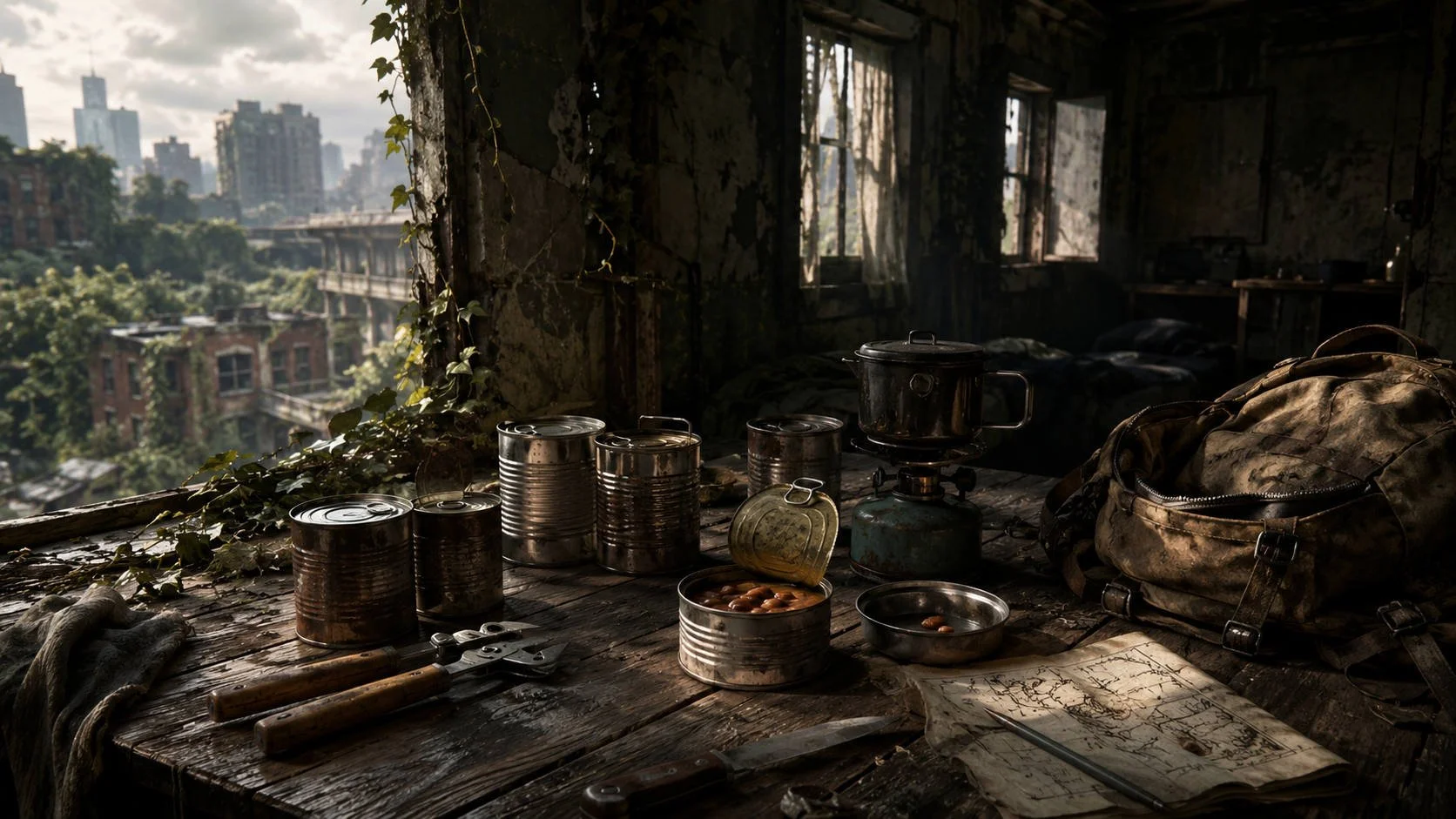
Now, before anyone starts proudly serving twenty-year-old pantry archaeology at dinner, please allow reality to trudge in wearing a clipboard. Canned food can last a long time, but cans are not magical immortality coffins.
CDC guidance says not to eat canned food if the container is leaking, bulging, swollen, damaged, cracked, abnormal, spurts liquid or foam when opened, or if the food is discolored, moldy, or smells bad. The CDC’s official advice is the brutally unpoetic “throw it out” when contamination signs appear. Finally, a food rule simple enough to survive the apocalypse and your uncle’s basement pantry.
Emergency-food guidance also says canned supplies should be inspected for rusty, leaking, bulging, badly dented containers, broken seals, or dents involving seams and ends, because those can compromise the seal. In other words, apocalypse Joel may be willing to gamble on ancient ravioli, but you, living in a world with urgent care and grocery delivery, do not need to cosplay intestinal roulette.
The show uses canned food symbolically. Your digestive tract uses food literally. Try not to confuse the two unless your survival plan is “become a cautionary pamphlet.”
Survival Appetite Is Not Hunger. It Is Hunger With a Philosophy Degree and a Knife
The brilliance of The Last of Us is that it shows appetite changing under scarcity. Hunger in the show is never just stomach growling. Hunger decides where people go, who they trust, what they trade, what they steal, and eventually what lines they cross while pretending there were no other options.
Research on scarcity and food behavior backs up the basic psychology here. A study in Appetite found that scarcity manipulations affected the relative reinforcing value of snack food, and that people reporting food insecurity responded to scarcity by increasing the reward value of snack food. Translation for humans not trapped in journal language: when food feels scarce, food becomes louder in your brain. It stops being background and starts banging a pan like a goblin with tenure.
That is exactly what The Last of Us dramatizes. Appetite becomes attention. Food becomes strategy. The can is not just a can. It is one more day, one more mile, one more reason not to turn on each other before sunset.
This is why the show makes simple food feel enormous. A sandwich. A bowl of soup. A can of ravioli. A strawberry. The smaller the food, the bigger the meaning gets, because scarcity inflates everything except your calorie supply. Very considerate.
Bill and Frank Show the Difference Between Surviving and Living
Bill is the fantasy survivalist: armed, prepared, paranoid, mechanically competent, emotionally upholstered in barbed wire. He stocks his town, builds traps, gathers supplies, grows vegetables, raises animals, cooks well, drinks good wine, and generally turns the apocalypse into a libertarian bed-and-breakfast with perimeter defenses.
But Bill and Frank’s story reveals the important difference between having food and having a life.
Episode 3 shows Bill collecting supplies, growing vegetables, cooking meat, and later feeding Frank a carefully prepared meal. Frank eventually trades one of Bill’s guns for strawberry seeds, grows them, and surprises Bill with fresh strawberries; the two eat them with almost absurd joy. Food Network calls the strawberry moment a symbol of something intangible worth living for.
That is the show’s entire food argument in one berry. Canned food keeps the body running. Fresh strawberries remind the body why running might be worth the trouble.
The strawberry is ridiculous because it is useless in the hard survivalist sense. You cannot fortify a town with strawberries. You cannot shoot raiders with strawberries. You cannot stop Infected with a lovely little garden berry unless the Infected have unusually strong opinions about seasonal produce.
But it matters because pleasure matters. Beauty matters. Taste matters. Bill has calories before Frank. He has meals before Frank. What Frank gives him is appetite as joy instead of merely appetite as maintenance. This is very inconvenient for grim survival bros whose entire worldview depends on pretending canned beans and suspicion are enough to live on.
Henry and Sam Turn Food Into a Countdown
Then the show gives us Henry and Sam, and suddenly food is not romance or nostalgia. It is arithmetic.
In Episode 5, Henry has twenty cans and six pounds of jerky for three people. He estimates that if they stick to the minimum, they can make it 11 days. Then hunger drives their doctor companion out looking for food, and he does not return. Henry eventually tells Sam they have no more food and need to leave.
That is canned food as countdown. Not dinner. Not comfort. Countdown.
This is where survival appetite becomes horrifyingly practical. You stop asking, “What do I want?” and start asking, “How many days of not dying does this represent?” A can is not soup. It is 0.6 days. A strip of jerky is not a snack. It is another hour before a child panics. The pantry becomes a clock, and every meal is time disappearing with chewing noises.
And because this is The Last of Us, sharing food also becomes a trust test. Joel shares food with Henry and Sam, which is basically the post-apocalyptic version of handing someone your bank password and half a kidney. In a world like this, food is not hospitality. It is risk.
Jackson’s “Proper Meal” Is the Real Fantasy
For all the violence and infected mushroom people, one of the most unreal moments in The Last of Us is Jackson giving Joel and Ellie a proper meal. Not a can. Not a ration. Not jerky chewed with the emotional enthusiasm of a boot sole. A real meal. A dining hall. Seconds. Pie.
In Episode 6, Joel says it has been a while since he had a proper meal, and Ellie says she does not think she has ever had one. That line is brutal because it compresses an entire childhood into one plate. Ellie has had food. She has had calories. She has had survival. But she has not had the social ritual of being fed properly by a stable community.
That is what survival appetite eventually wants most: not just food, but reliability. The fantasy is not a gourmet dinner. It is knowing dinner will happen again tomorrow. The real luxury is seconds without suspicion.
This is why Jackson feels almost suspiciously beautiful. Livestock, electricity, shared meals, children, routines. It is not just a settlement. It is appetite with a calendar. People can plan. People can cook. People can argue about normal stupid things again, like seating arrangements and whether someone took too much pie, civilization’s most sacred conflict.
David’s Community Shows What Happens When Appetite Loses Its Guardrails
Then there is David’s group, where hunger turns into the kind of moral swamp that makes canned goods look like saints.
In Episode 8, Food Network notes that venison, rabbit, elk, and dwindling canned goods are not all David’s community is eating. The show does not need to turn the camera into a butcher’s inventory spreadsheet. The implication does enough damage on its own.
This is the nightmare endpoint of survival appetite. When the cans run out, the body still wants. Hunger does not care about your ethics. It does not attend seminars. It does not say, “Let’s maintain community values.” Hunger kicks the door open and asks what is edible.
The show’s question is not “Would you eat canned ravioli after 20 years?” That is the cute question. The real question is: what happens when the canned ravioli is gone?
David’s community is what happens when scarcity gets religious, authoritarian, and predatory. Food becomes control. The person who controls the pantry controls the story. And when the pantry empties, the story starts rewriting people into ingredients. Subtle? No. Effective? Absolutely. About as subtle as a meat cleaver in a sermon.
Why Canned Food Feels So Comforting in The Last of Us
Canned food comforts because it comes from before. Every label is a ghost of functioning society. Brand names, recipes, nutrition panels, expiration codes, barcodes, tiny corporate promises written for a world where the biggest threat was forgetting a can opener.
That is why Ellie’s Chef Boyardee reaction lands. She is not nostalgic, because she never had the original world. Joel is the nostalgic one. He knows what the old world tasted like. Ellie experiences it as discovery. For her, canned ravioli is archaeology with sauce.
The can also flattens class. Before the outbreak, canned ravioli might be cheap food, lazy food, kid food, dorm food, “I refuse to wash a pan” food. After the outbreak, it is treasure. The apocalypse does not care whether your old pantry was curated by a nutritionist or assembled during a 2 a.m. convenience store crisis. Shelf-stable calories win. Congratulations, canned pasta. You finally defeated microgreens.
Why Canned Food Feels So Gross in The Last of Us
And yet canned food is also gross, because it is a reminder that survival can become repetition without pleasure. Cans preserve food by removing freshness, seasonality, and often joy. They are miracle containers, yes, but also little metal admissions that life has narrowed.
Eat enough canned food and the world starts tasting like storage.
That is why the show keeps contrasting canned goods with fresh food. Bill’s garden. Frank’s strawberries. The old couple’s soup. Jackson’s meal. These scenes matter because canned food alone cannot carry a full human life. It can preserve the body. It cannot replace culture.
Emergency guidance even includes “comfort/stress foods” like cookies, hard candy, sweetened cereals, instant coffee, and tea bags in disaster supplies, because apparently even sober preparedness experts understand that humans cannot live by canned beans alone without becoming emotionally flammable.
Food is not only fuel. It is morale. And morale is not a luxury when the world is trying to eat your face.
The Last of Us Emergency Food Lessons, Minus the Bunker Goblin Energy
The show is fiction, but it accidentally gives decent preparedness advice once you scrape off the fungal screaming.
Store foods you already eat. Emergency planning should start with normal staples and non-perishable foods your household would actually use, not a panic-haul of dehydrated astronaut stew you will avoid until the package becomes legally historical. UGA Extension says short-term emergency planning can be as simple as increasing quantities of staple and non-perishable foods you normally use.
Include ready-to-eat canned meats, fruits, vegetables, soups, peanut butter, crackers, dried fruits, nuts, granola, jerky, and similar foods. Also keep a can opener, because starving beside sealed beans is not survival; it is slapstick with consequences.
Rotate your supplies. Label dates. Inspect cans. Avoid rusty, leaking, bulging, badly dented containers, and broken seals. Do not make “but Joel ate it” your food safety policy unless you also have Joel’s fictional immune system to plot armor.
And maybe include something that makes life feel less like a punishment spreadsheet. Coffee. Candy. Tea. A comfort food. Something small that reminds people they are not merely biological appliances converting beans into another day of bleak functionality.
The Last of Us Says Appetite Is the Last Culture Standing
The Last of Us uses canned food because canned food is the perfect survival symbol. It is practical and pathetic. Comforting and depressing. Safe-looking and suspicious. A relic of abundance eaten in a world of scarcity.
Canned ravioli tells Ellie that the old world had flavors. Henry’s cans tell Sam how long they can hide. Bill’s pantry tells us preparation can preserve life but not necessarily meaning. Frank’s strawberries tell us meaning is the thing people survive for. Jackson’s dining hall tells us civilization returns when food becomes predictable again. David’s community tells us appetite without ethics turns people into menu planning from hell.
That is what The Last of Us says about survival appetite: hunger does not just make people eat. It changes what food means. It turns cans into currency, meals into trust, fresh fruit into poetry, and empty pantries into moral collapse wearing a human face.
So yes, canned food matters. Stock some. Rotate it. Inspect it. Keep a can opener. Do not eat anything swollen, leaking, foaming, or behaving like it has secrets.
And maybe plant strawberries, too.
Because surviving on cans is one thing. Living long enough to care about sweetness is the actual miracle.