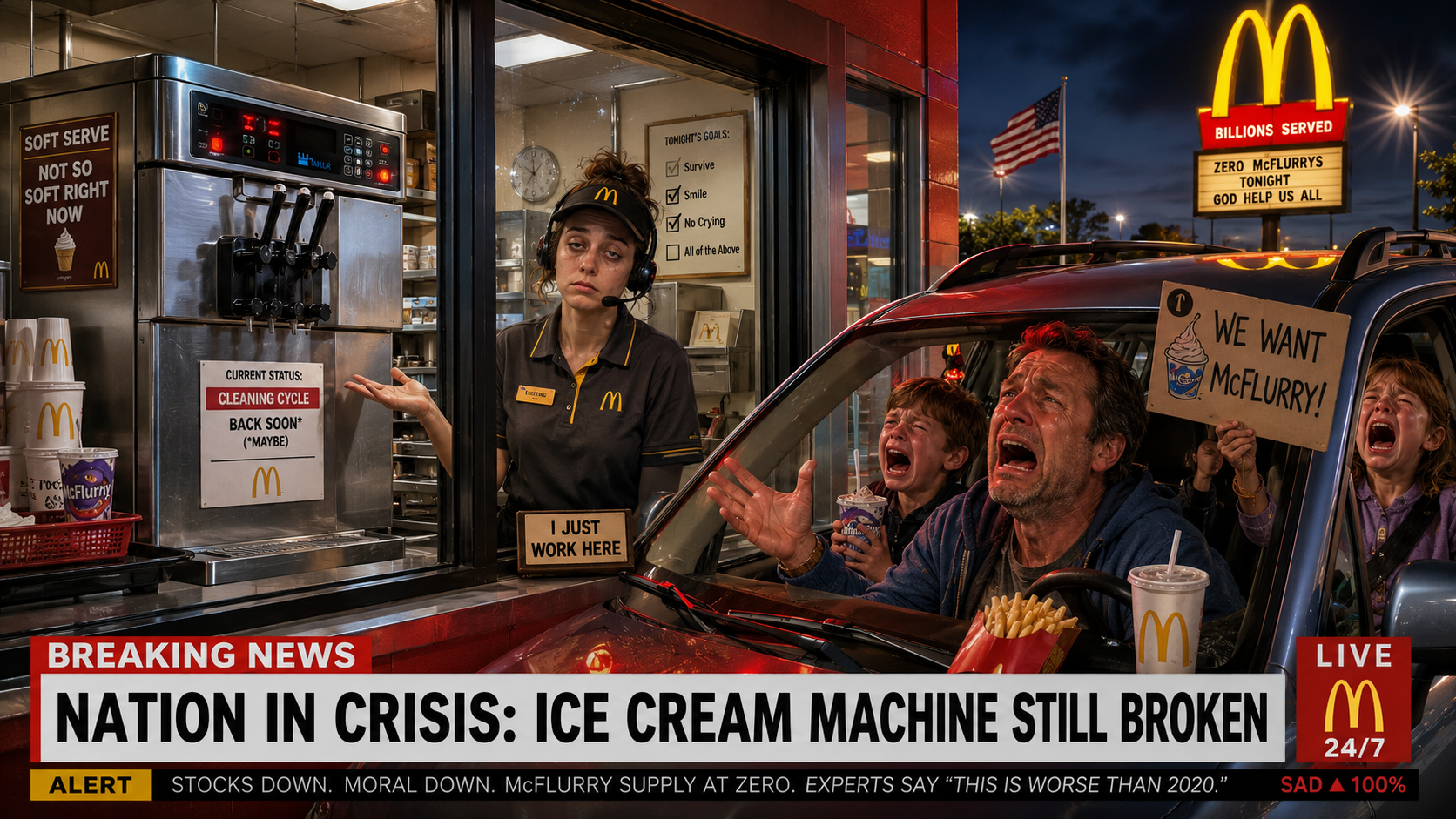
What Rich People Eat While You’re Waiting in Line at Chick-fil-A
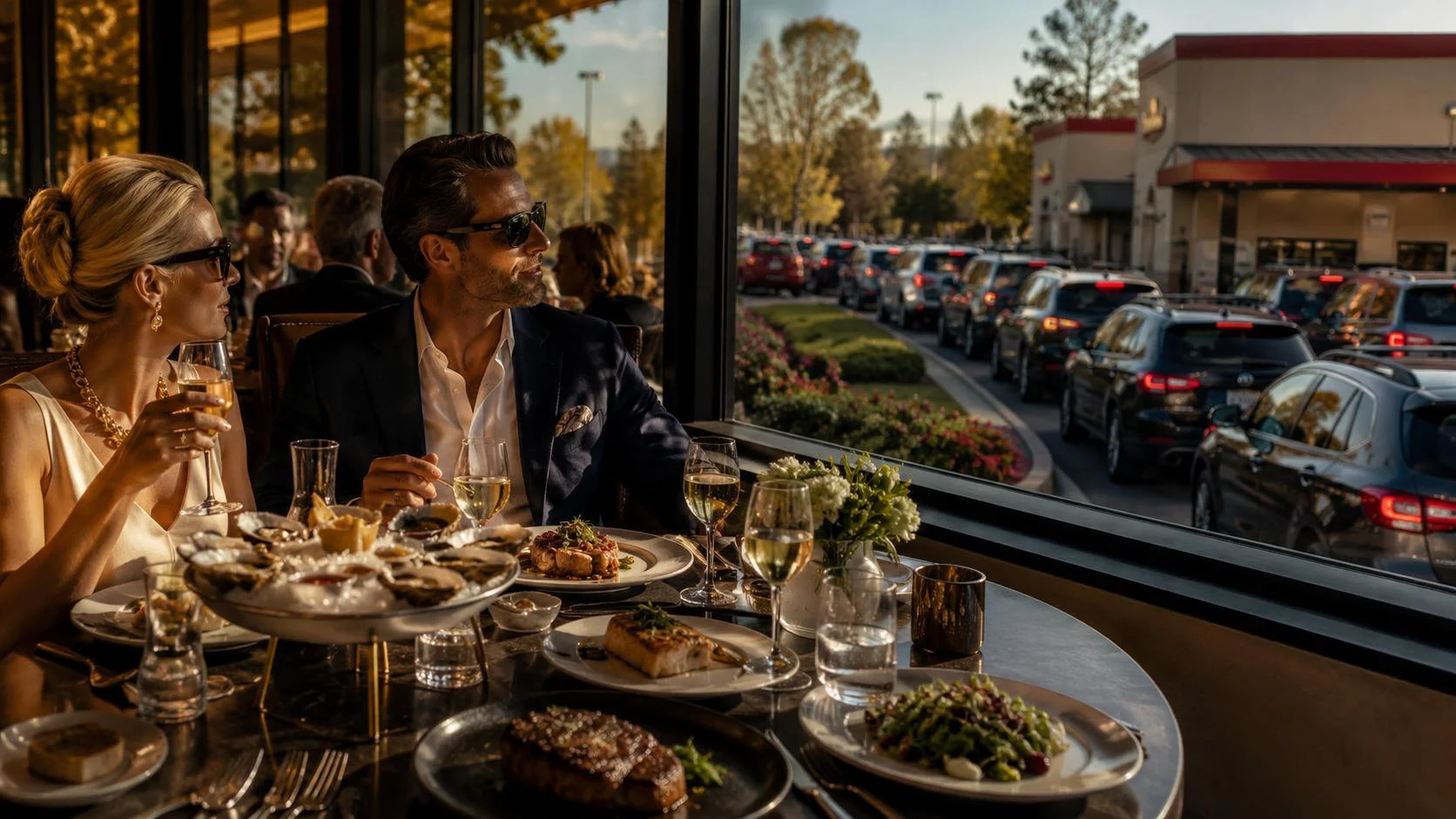
Chick-fil-A is absurdly popular. QSR Magazine reported that Chick-fil-A hit about $23.9 billion in systemwide sales in 2025, up from $22.7 billion in 2024, with domestic freestanding and drive-thru-only restaurants posting median annual sales above $9 million. That is not a chicken chain. That is a poultry-powered financial institution with honey mustard.
And yes, the line is real. A 2025 Intouch Insight drive-thru study found Chick-fil-A led major QSR chains in customer satisfaction at 98%, despite drive-thru wait times exceeding seven minutes, the longest in the study. Adjusted for the number of cars in line, though, Chick-fil-A performed extremely well, because apparently the chain has discovered how to make congestion feel like hospitality.
This is the bargain of Chick-fil-A: you wait, but you wait inside a machine that feels competent. Someone says “my pleasure.” Someone takes your order outside with a tablet. Someone delivers your bag with military efficiency and suspicious kindness. It is fast food with choreography.
Rich people do not need choreography. They have staff.
Rich People Eat Time
The biggest difference between your Chick-fil-A order and rich-person food is not chicken quality. It is time.
You wait in line.
They outsource the line.
You open an app.
They have someone text a chef.
You decide between nuggets and a sandwich.
They decide whether today’s lunch should be “Mediterranean but not too Mediterranean” and then make that someone else’s problem.
That is the dirty little secret of luxury food: it is not always about taste. Sometimes it is about deleting friction. The global personal chef services market was valued at $16.62 billion in 2024 and is expected to keep growing, driven by demand for customized meal plans, dietary restrictions, busy lifestyles, and the desire for restaurant-quality food without shopping, cooking, or cleaning.
There it is. While you are deciding whether a 12-count nugget is too much or somehow not enough, rich people are eating the absence of errands.
They are not buying lunch. They are buying back the 42 minutes you lost to traffic, sauce decisions, and the emotional tax of hearing someone in front of you ask whether the grilled nuggets are “like, really grilled.”
The Private Chef Meal: Food Without Consequences, At Least Logistically
A private chef meal is what happens when dinner stops being a chore and becomes a managed asset.
The rich-person version of lunch is not “what do we have in the fridge?” It is “what did the chef prepare according to the family’s preferences, macro targets, supplement weirdness, seasonal allergies, moral anxieties, and desire to feel rustic without touching a pan?”
Maybe it is grilled branzino with fennel.
Maybe it is chicken paillard with arugula.
Maybe it is Japanese sweet potatoes, wild salmon, tahini sauce, and microgreens that were misted like they have legal representation.
Maybe it is a “simple salad,” which means 19 ingredients, three imported oils, and the emotional energy of a museum.
The point is not that the food is always better. Sometimes it is. Sometimes it is just quinoa wearing a richer hat. The point is that someone else handled the planning, shopping, cooking, portioning, plating, cleaning, and remembering that one person in the house is currently “off nightshades,” because apparently tomatoes have become a political enemy.
You are waiting for Polynesian Sauce.
They are waiting for nothing.
Chick-fil-A Gives You Sauce Packets. Rich People Get Personalization.
Fast food personalization is choosing your sauce.
Rich people personalization is having someone design your entire weekly menu around inflammation, glucose stability, jet lag, gut health, training schedules, and whichever doctor in Los Angeles recently convinced them olive oil has a personality.
At Chick-fil-A, the question is: “Chick-fil-A Sauce, Polynesian, Ranch, Honey Mustard, or Buffalo?”
In rich-person dining, the question is: “Would you prefer the wild-caught salmon with the miso glaze, or should we keep it cleaner today because of the red-eye to Aspen?”
Same species. Different planet.
This is where food becomes class warfare with garnish. The average person customizes within a system. The rich customize the system itself.
The High-End Smoothie: A Milkshake With a Publicist
While you are waiting for a chicken sandwich, rich people may be drinking a smoothie that costs more than your entire combo and has the texture of moral superiority.
Erewhon’s smoothie menu has listed drinks like a custom smoothie starting around $10 and several standard smoothies around $16, while celebrity smoothie culture has made the $20 wellness smoothie a symbol of Los Angeles luxury consumption.
Let us be clear: a $20 smoothie is not a beverage. It is a status update with banana.
It says: “I have transcended lunch. I now consume collagen, adaptogens, sea moss, blue spirulina, coconut cream, and the economic confidence of someone who does not check parking meters.”
Your Chick-fil-A lemonade is a drink.
Their smoothie is a lifestyle thesis.
And somehow the smoothie will be described as “clean,” despite tasting like fruit was forced through a venture-capital deck.
Fine Dining: Chicken Nuggets, But Emotionally Complicated and $365
Another thing rich people eat while you are waiting in line: tasting menus.
A tasting menu is what happens when dinner becomes a theatrical production and the plate arrives looking like it contains three bites and a secret. The server explains the dish for 90 seconds. You nod like you understand the relationship between smoked eel, preserved plum, and “the memory of winter.” Everyone pretends this is normal because the reservation required a credit card and a minor act of faith.
In New York, for example, Eater’s 2025 Michelin-starred restaurant guide listed Eleven Madison Park’s full tasting menu at $365, with a bar tasting menu at $225.
That is before wine, tax, tip, transportation, and the spiritual cost of eating one carrot prepared eight ways while a server watches you discover foam.
And yet, rich people love this because tasting menus remove decision-making. You do not order. You submit. The restaurant says, “Here is what you will eat,” and you say, “Wonderful,” because apparently being told what to do is luxurious when the person doing it owns tweezers.
You waited in line to choose between spicy and regular.
They paid $365 to not choose at all.
Caviar: Rich-Person Pop Rocks
Rich people also eat caviar, because sometimes wealth needs to look like fish eggs on a tiny spoon.
Caviar is the funniest luxury food because it is simultaneously ancient, expensive, salty, and visually similar to something you would scrape off a boat. But call it caviar, put it on mother-of-pearl, and suddenly everyone behaves like the ocean has sent a telegram of refinement.
Caviar is not eaten because people are starving. It is eaten because someone wants the meal to announce, very quietly, “There is money in this room, and it has decided to be slippery.”
At Chick-fil-A, the luxury topping is extra pickles.
At rich-person dinner, the luxury topping is unborn sturgeon prestige served on blini by someone trained not to make eye contact with billionaires unless invited.
Rich People Eat Ingredients With Backstories
You eat chicken.
They eat chicken “from a regenerative farm in the Hudson Valley.”
You eat lettuce.
They eat “little gems.”
You eat bread.
They eat “heritage grain levain.”
You eat beans.
They eat “Rancho Gordo beans,” and honestly those are good, but still, calm down, everyone.
Wealth changes food vocabulary. The ingredients get biographies. The carrots have provenance. The olive oil has a region, a harvest date, and enough personality to ruin a first date. The salt is no longer salt; it is flaky sea salt harvested by someone named Etienne who may or may not be real.
This is not always fake. Better sourcing can matter. Small farms matter. Seasonal food matters. Quality matters.
But rich people have an extraordinary gift for making lunch sound like it has been peer-reviewed.
The Real Luxury Is Not the Food. It Is Not Caring What It Costs.
The USDA reported that in 2024, households in the lowest income quintile spent an average of $5,498 on food, representing 33% of before-tax income. Households in the highest income quintile spent $16,989 on food, but that was only 6.4% of before-tax income.
That is the whole food-class nightmare in two sentences. Lower-income households spend less money on food but feel it more. Higher-income households spend dramatically more and barely notice.
The same pattern shows up in food away from home. Federal Reserve data from the BLS Consumer Expenditure Survey shows the lowest income quintile spent about $1,655 on food away from home in 2024, while the highest income quintile spent about $7,652.
So yes, rich people eat more expensive food. Shocking. Alert the Committee on Obvious Wealth Behavior.
But the more important point is that they can spend more casually. The price of food is not just a number. It is pressure. For one person, a $14 lunch is a decision. For another, a $140 lunch is an anecdote.
Chick-fil-A Is Affordable Comfort. Rich Food Is Frictionless Comfort.
Chick-fil-A comfort is warm, salty, familiar, and efficient. It says: “You have had a day. Here is chicken in a bag. Someone was polite to you. The fries are waffle-shaped because America still believes in small miracles.”
Rich-person comfort is different. It says: “You did not have to leave the house. Your chef remembered the dressing on the side. Your assistant booked the table. Your driver is waiting. Your dietary restrictions were honored without you repeating them to a teenager wearing a headset.”
Both are comfort.
One is mass-produced.
The other is customized.
One comes with a receipt.
The other comes with staff.
The Chick-fil-A Line Is a Class Indicator Disguised as a Traffic Pattern
Waiting in line for food is normal. Waiting in line for food with everyone else is one of the last semi-democratic rituals in America, which is a bleak sentence and I apologize for it.
At Chick-fil-A, the tech worker, nurse, contractor, student, exhausted parent, youth pastor, and guy in a lifted truck all wait in the same snaking lane for the same chicken. There is something almost civic about it. Everyone must approach the sauce altar in order.
But rich people often do not wait in visible lines. Their lines are hidden, delegated, or priced away.
They have reservations.
They have memberships.
They have assistants.
They have delivery windows.
They have private rooms.
They have clubs.
They have someone who knows someone.
The line still exists. They just are not standing in it.
That is class in America: not the absence of inconvenience, but the ability to make inconvenience happen to someone else.
What Rich People Eat for Breakfast While You’re Getting a Chicken Biscuit
You get a chicken biscuit because it is fast, hot, portable, and tastes like breakfast made a deal with lunch in a parking lot.
Rich people get:
Soft scrambled eggs with chives.
Smoked salmon.
Greek yogurt with berries arranged like a wellness brochure.
Sourdough toast with imported butter.
Green juice that tastes like a lawn was financially successful.
Matcha made by someone who says “ceremonial grade” without irony.
Or nothing, because someone told them fasting improves metabolic flexibility, and now breakfast has been fired from the household.
The rich-person breakfast is either artisanal or absent. There is no middle ground. It is either $38 eggs or the disciplined consumption of air.
What Rich People Eat for Lunch While You’re Getting Nuggets
You get nuggets because they are dependable, dippable, and make adulthood feel briefly less fraudulent.
Rich people get:
A chopped salad so refined it has no joy left.
Sushi delivered from a place that does not appear on delivery apps.
A grain bowl with eight textures and the emotional posture of a private school.
Grilled chicken, but somehow French.
A private-club Cobb salad.
A lunch meeting where nobody looks at the prices because that would introduce mortality into the room.
A “light bite” that costs $72 and includes tuna tartare.
Lunch for normal people solves hunger.
Lunch for rich people solves networking, aesthetics, biological optimization, and the urgent need to be seen not caring.
What Rich People Eat for Dinner While You’re Still Thinking About Waffle Fries
Dinner is where the gulf becomes a canyon wearing linen.
You may eat leftovers, delivery, drive-thru, a rotisserie chicken, pasta, or whatever can be assembled before your willpower files a missing-person report.
Rich people eat:
A chef-prepared family meal.
A tasting menu.
Omakase.
Private dining.
A reservation secured by a concierge.
A charity gala meal where the chicken breast costs $1,200 because it comes with “access.”
Farm-to-table dishes from a farm they may partially own emotionally.
Or room service, which is fast food for people whose rooms have marble bathrooms.
Luxury experiences continued to outperform luxury products in 2025, according to Bain, driven by spending on wellness, self-pampering, and social connection. Food fits perfectly into that shift because dining is no longer just dining; it is experience, status, intimacy, control, and proof that your life has less waiting in it.
Rich People Eat “Wellness,” Which Is Food With a Halo and a Price Tag
Wellness food is the rich-person version of comfort food, except instead of admitting you want comfort, you claim you are supporting your mitochondria.
It is not soup. It is bone broth.
It is not tea. It is an adaptogenic infusion.
It is not a smoothie. It is a skin-support collagen blend.
It is not salad. It is a detoxifying cruciferous bowl.
It is not being hungry. It is metabolic discipline.
This is the genius of rich wellness food: it lets indulgence disguise itself as improvement. A $20 smoothie is not “expensive.” It is an investment. A $34 salad is not “lunch.” It is self-care. A tiny jar of probiotic something-or-other is not “weird.” It is gut optimization.
Meanwhile, you ordered waffle fries and at least had the decency to know what was happening.
The Sauce Packet Is the Working-Class Condiment Ritual
Chick-fil-A sauce packets are democratic luxury. Small, free-ish, abundant, collectable, and emotionally overvalued.
You ask for sauces. They give you sauces. Maybe extra sauces. Maybe enough sauces to stock a bunker. You place them in your glove compartment like financial assets. This is normal behavior. Everyone is fine.
Rich people do not hoard sauce packets. They have sauces made.
Aioli.
Reduction.
Emulsion.
Vinaigrette.
Toum.
Chimichurri.
A “bright herb sauce.”
A “green goddess situation.”
A “house fermented chili condiment.”
At Chick-fil-A, sauce is a packet.
In rich dining, sauce is a paragraph.
The Rich Eat Less Randomly
One painful truth: rich people often eat with more control because money buys planning.
Not discipline. Planning.
A private chef makes healthy eating easier.
A stocked fridge makes healthy eating easier.
A flexible schedule makes healthy eating easier.
A personal trainer saying “eat more protein” while someone else cooks the protein makes healthy eating easier.
Having money does not make someone morally better at food. It removes obstacles. It turns “I should eat well” into a staffed project.
For everyone else, food happens in the cracks: between shifts, after school pickup, before a meeting, in a car, at a desk, while tired, while broke, while out of groceries, while remembering the chicken in the fridge expired yesterday and now dinner is a lawsuit.
This is why fast food wins. It solves the actual problem: hunger plus time plus exhaustion plus money.
Chick-fil-A does not need to be the best food. It needs to be available, predictable, and good enough to rescue Tuesday.
The Poor Wait for Food. The Rich Wait for Tables, And Even That Is Optional.
This is an important distinction.
Regular people wait in lines because food access is built around throughput.
Rich people wait for restaurants because exclusivity is part of the product.
One wait says: “There are many of us and one register.”
The other says: “This restaurant is desirable enough to make you feel special when you finally get in.”
But even that second wait can be defeated with money, status, connections, hotel concierges, private rooms, charity commitments, or being the kind of person whose assistant sends emails with frightening calm.
A normal person waits because demand exceeds capacity.
A rich person waits because scarcity improves the flavor of being chosen.
What This Says About Food in America
The Chick-fil-A line and the private chef kitchen are not opposites. They are part of the same food economy.
One side mass-produces convenience for people who are tired, busy, budget-conscious, and willing to wait a few minutes for reliable comfort.
The other side custom-produces convenience for people who can pay to make waiting, cooking, planning, and cleaning disappear.
One sells speed.
One sells control.
One sells consistency.
One sells personalization.
One gives you a bag.
One gives you a narrative.
The funny thing is that both are responding to the same human problem: feeding yourself is annoying. Everyone, rich or not, wants food to appear. The difference is whether it appears through a drive-thru window or through a chef who already knows you hate cilantro.
The Actual Best Rich-Person Meal Is Not Caviar. It Is Leftovers You Did Not Cook.
Forget caviar. Forget tasting menus. Forget $20 smoothies with collagen and a backstory.
The true rich-person meal is opening the fridge and finding something delicious, healthy, labeled, ready, and made by someone else.
That is power.
Not the yacht. Not the watch. Not the reservation.
The quiet container of perfect leftovers sitting there like the future has been handled.
Normal people call that meal prep.
Rich people call that Tuesday.
The Line Is the Point
What do rich people eat while you are waiting in line at Chick-fil-A?
They eat private-chef salmon.
They eat tasting menus.
They eat caviar.
They eat Erewhon smoothies that cost as much as a small appliance repair.
They eat salads that have more stakeholders than your workplace.
They eat food with provenance, access, wellness language, and someone else’s labor folded quietly underneath.
But mostly, they eat freedom from the line.
That is the real menu item. Not the fish, not the foam, not the imported butter shaped like a tiny hay bale. The luxury is not having to wait, not having to choose under pressure, not having to cook, not having to clean, not having to care whether the combo is creeping toward $15.
Meanwhile, you are in the Chick-fil-A line, staring at the glowing menu, inching forward toward your chicken sandwich like a citizen of a collapsing empire who still believes in waffle fries.
And honestly? Fair.
Because rich people may have the private chef, the caviar, the tasting menu, and the smoothie with a skincare partnership.
But they do not have the specific spiritual clarity of finally receiving a warm bag of Chick-fil-A after waiting long enough to question the structure of society.