What Dragon Ball Z Gets Right About Eating After Training
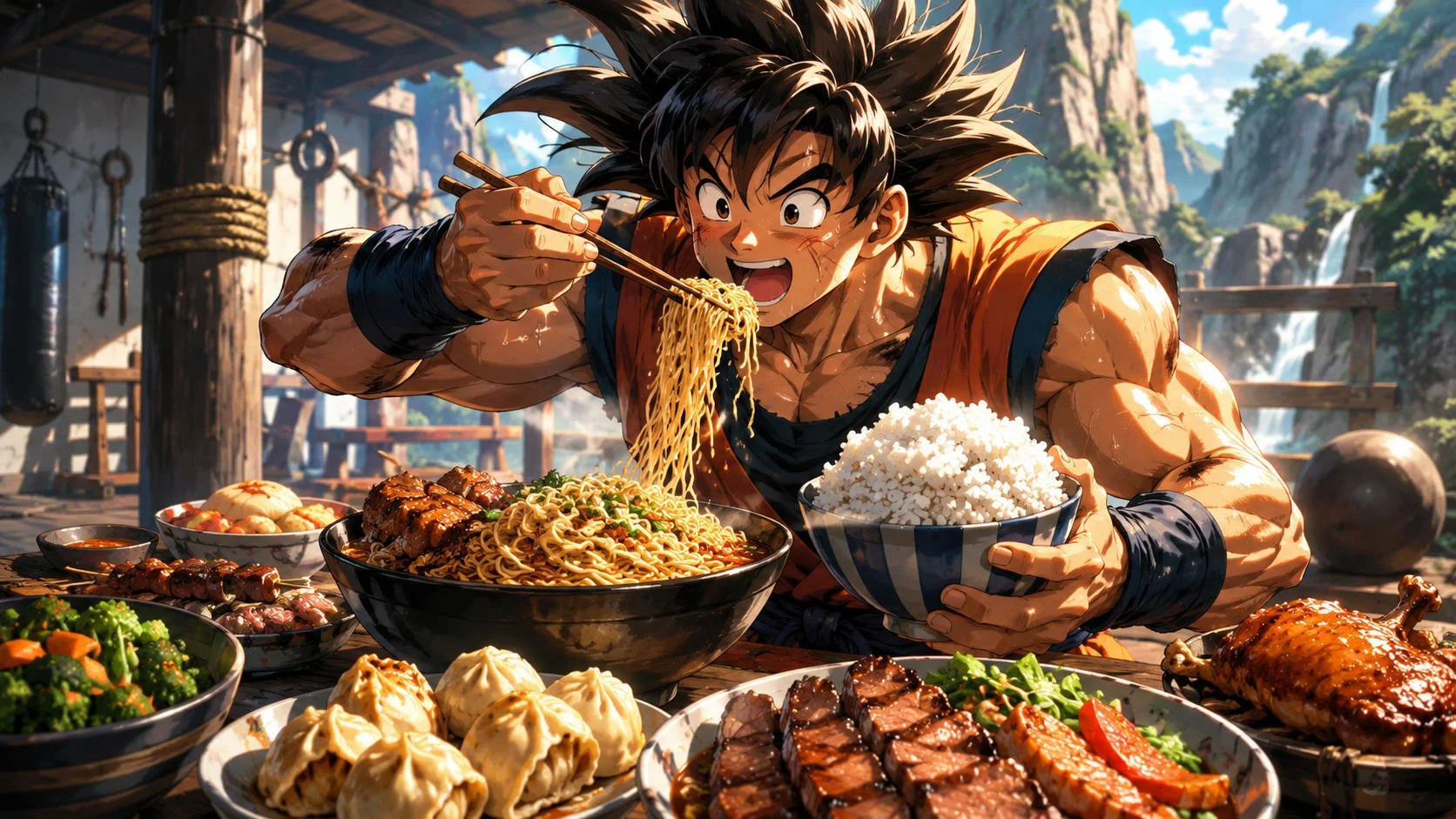
Dragon Ball Z understands something the modern fitness internet keeps trying to bury under shaker bottles and shirtless men selling discount creatine codes: after hard training, you need to eat.
Not “sip a sad little green juice and thank your mitochondria.” Not “fast for clarity while your legs feel like wet laundry.” Eat. Food. Actual food. Rice, noodles, meat, fish, vegetables, soup, whatever Chi-Chi can slam onto the table before Goku inhales it like a farm animal with abs.
This is one of the funniest things Dragon Ball Z gets right. The show is obviously insane. People scream until their hair changes color. Training rooms bend time. Children fight bioengineered nightmares. A bean can fix what would normally require nine orthopedic surgeons and a priest. But when the warriors finish training, the show often remembers the most practical athletic truth of all: the body does not recover from punishment by admiring its own discipline. It recovers with fuel.
Goku Eats Like Recovery Has a Deadline
Goku’s eating scenes are ridiculous, of course. The man does not eat dinner. He clears a table like a natural disaster with chopsticks. If you invited Goku to brunch, the restaurant would close early and file an insurance claim.
But underneath the anime buffet violence is a real point: intense training burns through energy, and recovery requires replacing it. The official Dragon Ball site notes that staples across the series include rice, bread, and noodles, which is exactly the kind of carbohydrate-heavy food a hard-training athlete would actually need after long or intense work.
Sports nutrition agrees, annoyingly. The Academy of Nutrition and Dietetics, Dietitians of Canada, and the American College of Sports Medicine state that energy and macronutrient needs, especially carbohydrates and protein, must be met during high physical activity to maintain body weight, replenish glycogen, and repair tissue.
So yes, Goku eating a mountain of rice after training is not just a gag. It is recovery nutrition with the portion control of a forklift.
The Hyperbolic Time Chamber Is Basically the Worst CrossFit Box Ever Invented
The Hyperbolic Time Chamber is one of the most deranged training concepts in anime: a room where a year of training can pass while only a day goes by outside. Goku and Gohan train there before the Cell Games, because apparently regular father-son bonding was too pedestrian and did not involve enough screaming in white void space. Crunchyroll’s Dragon Ball guide places their chamber training in the Cell saga, while episode summaries describe Goku requesting a meal after he and Gohan finish training.
And that is correct. After that level of work, the first priority is not “optimize your brand.” It is eat, drink, recover, and stop pretending the body is a machine that runs on vengeance and dubstep.
The International Society of Sports Nutrition says nutrient timing and the ratio of macronutrients can support recovery, tissue repair, muscle protein synthesis, and mood after high-volume or intense exercise. It also notes that carbohydrate timing can influence glycogen resynthesis after training.
Translation for non-Saiyans: after you obliterate yourself in training, carbs are not the enemy. The enemy is acting like a lettuce wrap is going to rebuild your quads.
DBZ Gets Carbs Right, Which Will Upset the Fitness Goblins
Modern fitness culture has spent years treating carbohydrates like tiny edible criminals. Meanwhile, Dragon Ball Z characters are over here eating rice bowls like adults who understand basic fuel storage.
Carbs matter because hard training depletes glycogen, the stored carbohydrate your muscles use during high-intensity work. The ISSN position stand says high-carbohydrate diets maximize glycogen stores, and if fast glycogen restoration is needed, aggressive carbohydrate refeeding or carbs combined with protein can help.
This is where Goku’s post-training table-clearing becomes weirdly educational. He does not finish a brutal training session and say, “Actually, I’m doing keto because a guy on a podcast said glucose is betrayal.” He eats the rice. He eats the noodles. He eats the meat. He probably eats the bowl if nobody stops him.
The lesson is simple: if your training is intense, your recovery meal should include carbs. Not because carbs are magical. Because your muscles have been using them, and now they would like a refill instead of a lecture from someone named Chad who sells electrolytes on Instagram.
Protein Matters Too, Because Muscles Do Not Rebuild Themselves Out of Motivational Quotes
DBZ also gets the protein part right, mostly by accident and giant platters of meat.
After training, the body needs amino acids to repair and build muscle tissue. The ISSN protein position stand recommends about 0.25 grams of high-quality protein per kilogram of body weight per serving, or generally 20 to 40 grams, with protein distributed every three to four hours across the day.
This does not mean you need to eat like Vegeta after losing an argument with gravity. It means a real post-workout meal should include a good protein source: eggs, chicken, fish, beef, tofu, Greek yogurt, beans, lentils, protein-rich dairy, whatever fits your life and budget.
Goku’s version is “all of it.” Your version can be a rice bowl with chicken and vegetables. Very sad that you are not a Saiyan. We all make sacrifices.
DBZ Understands Appetite After Training Better Than Most Meal Plans
One reason Dragon Ball Z eating scenes feel satisfying is that they respect appetite. The characters train hard, fight hard, and then eat like food is not a moral failing.
This is refreshing because so much modern meal planning treats hunger like a character defect. You finish training and your body says, “Hello, we require energy,” and some app says, “Have 11 almonds and sparkling water.” Wonderful. A snack for a haunted squirrel.
After difficult training, hunger is often information. It may mean you under-fueled before the workout, trained longer than usual, depleted glycogen, or simply need a larger meal. Ignoring that because you want to appear disciplined is not heroic. It is just cosplay as a low-battery phone.
DBZ gets this right: big output requires big input. The show just expresses it through a man eating enough noodles to destabilize a village economy.
Senzu Beans Are the Fantasy Version of Recovery Culture
Senzu Beans are hilarious because they are basically the ultimate recovery supplement: instant healing, restored energy, no blender bottle, no “proprietary matrix,” no subscription, no influencer discount code. One bean and you are back from being folded like a lawn chair.
Real life does not have Senzu Beans. Unfortunately, the supplement industry has decided to pretend it does.
The actual boring recovery stack is food, fluids, sleep, and time. Protein supports repair. Carbs refill glycogen. Fluids replace sweat losses. Sleep lets adaptation happen. This is not sexy, which is why people keep buying powders named like military operations.
ACSM’s sports nutrition guidance emphasizes that building muscle requires resistance training, energy balance, nutrient distribution, adequate sleep, and carbohydrate plus protein in the right amounts and timing.
There you go. The real Senzu Bean is dinner and going to bed. Disgusting. Effective.
DBZ Gets Rest Right, Even When It Pretends Not To
The show is famous for training montages, but the better moments happen when characters actually stop. Goku and Gohan train in the Hyperbolic Time Chamber, then eat, recover, and spend the remaining days before the Cell Games outside the chamber instead of grinding themselves into blond dust forever. Episode summaries describe Goku choosing not to go back into the chamber after he and Gohan finish their training.
That is shockingly sensible.
More training is not always better. Better training plus recovery is better. The body adapts after stress, not during the most dramatic screaming part. Training is the stimulus. Recovery is where the upgrade installs. Sorry, Vegeta, but your muscles do not care about your pride if you refuse to eat and sleep.
What DBZ Gets Wrong, Because Please Do Not Eat Like Goku
Now, before anyone uses this article to justify eating twelve entrées after 30 minutes on the elliptical: no.
Goku is a fictional alien martial artist whose daily activities include gravity training, flying, energy blasts, planetary combat, and dying more often than most people renew their driver’s license. You are a person who did push day and then sat in traffic.
You do not need a Saiyan feast after every workout. You need a meal proportional to what you actually did.
After a normal gym session, a reasonable recovery meal might be rice, potatoes, pasta, oats, or bread for carbs; chicken, eggs, tofu, fish, beans, or yogurt for protein; vegetables or fruit for micronutrients; and water or an electrolyte drink if you sweat like a broken sprinkler.
After a truly long or intense session, you may need more carbs, more fluid, and more total calories. After a light workout, you may just need your normal next meal. Revolutionary, I know: context matters. Somebody alert the supplement goblins.
What a DBZ-Inspired Post-Training Meal Should Look Like
The best DBZ-style recovery meal is not “eat until your furniture looks nervous.” It is a normal human version of the anime feast.
A good version: rice bowl with chicken or tofu, vegetables, egg, sauce, and fruit.
Another good version: noodles with beef, shrimp, tofu, or edamame, plus vegetables and broth.
Another: potatoes, eggs, beans, salsa, avocado, and yogurt.
Another: chocolate milk and a turkey sandwich if you are tired and want recovery without turning the kitchen into a battlefield.
The formula is simple: carbs plus protein plus fluids plus enough total food to match the work. Add vegetables because even Saiyans probably need fiber, though Goku would treat broccoli like a side quest.
The Real Lesson
What Dragon Ball Z gets right about eating after training is that food is part of training, not a reward you earn after proving you are pure enough.
The characters train, fight, recover, and eat. They do not pretend hunger is weakness. They do not fear rice. They do not try to rebuild muscle using only caffeine and self-hatred. The show’s portions are absurd, but the instinct is correct: after serious effort, the body needs serious recovery.
So yes, learn from Goku. Eat after training. Get carbs. Get protein. Hydrate. Rest. Repeat.
Just maybe stop before the meal requires a second dining table and a formal apology to the grocery budget.