
What Bobby Flay’s Grilling Style Teaches About Cheap Protein
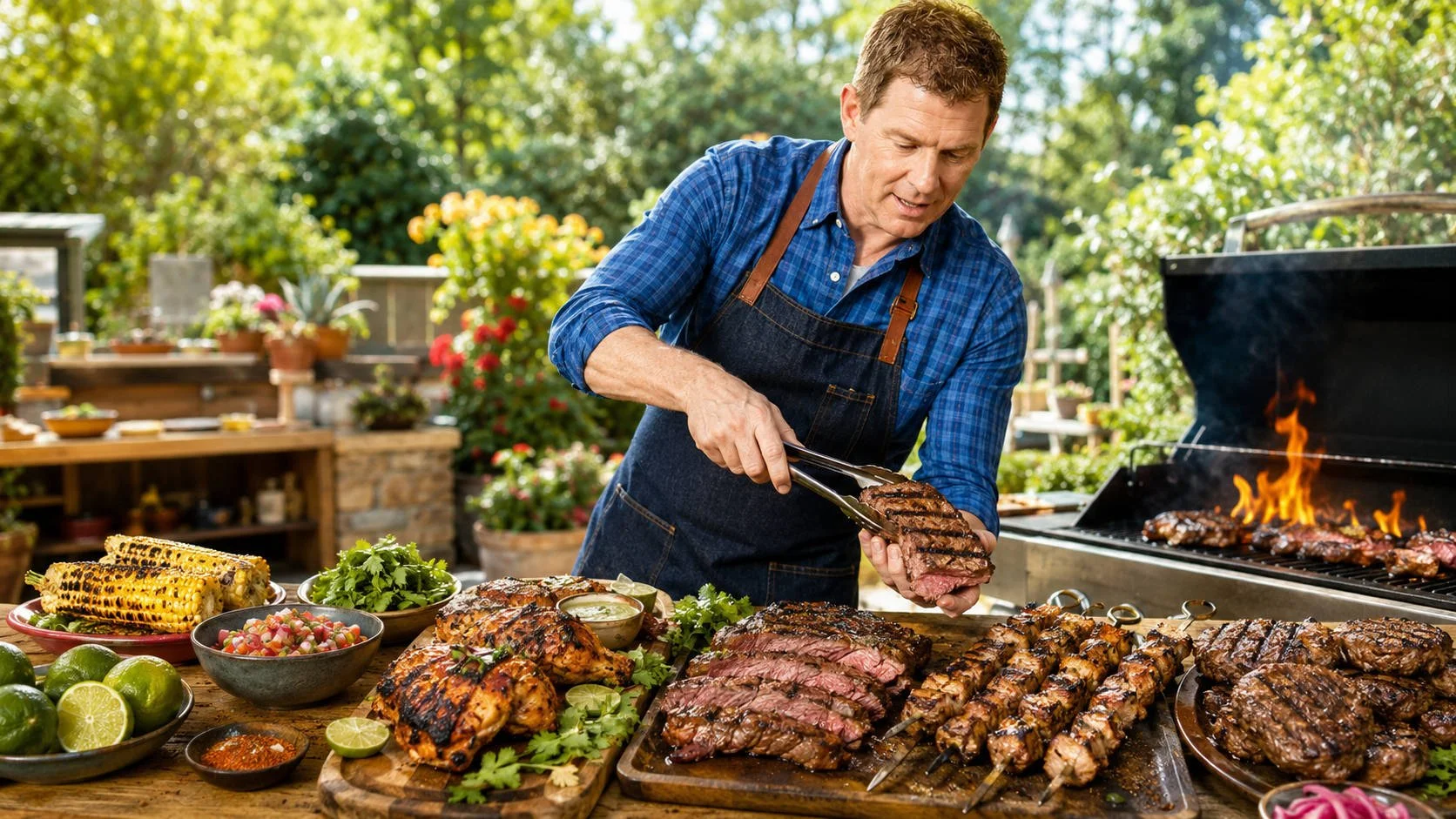
Cheap protein has a reputation problem. Chicken thighs, pork tenderloin, canned beans, skirt steak, tofu, ground meat, and the lonely pack of sausages in the discount case all sit there looking less like dinner and more like a financial confession. Meanwhile, expensive steaks get the glamour treatment, because apparently if beef costs enough per pound, everyone suddenly remembers how to use salt.
Bobby Flay’s grilling style is a useful antidote to this nonsense. Not because he is secretly a budget chef hiding behind restaurant lighting. He is Bobby Flay. The man has built an entire career on big flames, bigger flavors, Southwestern swagger, and the sort of grill confidence that makes a chicken breast feel underdressed. Food Network describes him as an award-winning chef, restaurateur, cookbook author, and media personality whose first restaurant, Mesa Grill, opened in 1991. Very subtle résumé. Just a casual three decades of making chile powder look employable.
But the real lesson is simple: cheap protein does not need pity. It needs technique.
Cheap Protein Needs Heat, Not a Pep Talk
Bobby Flay’s food often starts with one thing home cooks fear: serious heat.
Bon Appétit’s old but still painfully useful Flay cooking tips include letting pans get smoking hot for proper searing, avoiding overcrowding, seasoning more generously, understanding residual heat, and using vinaigrettes as sauces. That is basically a whole cooking school compressed into “please stop steaming meat in a crowded pan like a confused apartment raccoon.”
This matters for cheap protein because browning is the great equalizer. A pale pork chop tastes like budget anxiety. A seared pork chop with charred edges tastes like someone had a plan. Chicken thighs with crisp skin taste luxurious. Chicken thighs cooked timidly until gray taste like cafeteria policy.
The grill helps because it gives cheap protein what money usually buys: drama. Fire, smoke, char, grill marks, sizzling fat, caramelized edges. These are not expensive ingredients. These are controlled violence.
The Two-Zone Grill Is Budget Insurance
Food Network’s “Bobby’s 10 Commandments of Grilling” recommends setting up a grill with direct and indirect heat: use the hot side to sear meats and vegetables, then move food to the cooler side to finish without overcooking. It also gives the simple lid rule: lid off for quick-cooking items like shrimp and vegetables, lid on for longer-cooking items like poultry and steak so the grill works like an oven.
This is exactly what cheap protein needs. Cheap cuts often get blamed for being tough or dry when the real culprit is the cook treating the grill like a fire pit with dinner on top.
Chicken thighs need rendering and gentle finishing. Pork tenderloin needs searing and not being cooked into beige rope. Skirt steak needs fast heat and a rest. Bone-in chicken needs indirect heat so the outside does not burn while the inside remains a public-health cliffhanger.
The two-zone grill is not fancy. It is the difference between “wow, this is juicy” and “why does this chicken chew like a folding chair?”
Marinades Are Cheaper Than Premium Meat
Bobby Flay’s recipe archive is basically a museum of “make the cheap protein interesting before it hits the grill.” His Korean-style marinated skirt steak uses soy sauce, sugar, sake, garlic, scallions, ginger, and sesame oil; the steak is grilled quickly, rested, and sliced thinly against the grain. His grilled pork tenderloin recipes lean into citrus, garlic, oregano, chiles, coconut milk, curry, vinegar, mustard, and other pantry troublemakers.
This is the budget lesson: marinades let you buy cheaper protein without serving it like a punishment.
A good marinade usually needs salt, acid, fat, aromatics, and maybe sweetness. Soy sauce, lime juice, garlic, ginger, brown sugar, oil. Yogurt, lemon, garlic, cumin. Vinegar, mustard, chile powder, honey. Coconut milk, curry paste, lime, garlic. None of this requires selling a kidney to the butcher.
The marinade does not need to tenderize meat into a new species. It needs to season the surface, add aroma, help browning, and make dinner taste intentional.
Skirt Steak Is the Bobby Flay Budget Steak Move
Steak is expensive right now because the universe has decided even grilling needs financial suspense. USDA’s May 2026 Food Price Outlook reported that wholesale beef prices were 14.2% higher in April 2026 than in April 2025, and recent reporting has noted that high beef prices are pushing some shoppers toward chicken, pork, and turkey for grilling.
So no, the answer is not always “buy ribeye.” Thank you, imaginary man in linen apron. Very helpful.
The Bobby Flay answer is often skirt steak, flank steak, or another thinner, more flavorful cut that rewards technique. His grilled skirt steak with chimichurri uses herbs, oil, vinegar, garlic, and red pepper flakes. That is the whole trick: cook the meat hot and fast, slice it against the grain, then use sauce to make a smaller amount feel exciting.
Skirt steak is not always cheap-cheap anymore because everyone discovered tacos and ruined everything. But it still teaches the right lesson: buy flavor, not just tenderness. Then slice correctly. Against the grain. Thin. Like you have seen a knife before.
A pound and a half of skirt steak sliced over grilled vegetables, tortillas, beans, rice, or salad feeds more people than one giant steak slapped in the middle of a plate like a cowboy tax bill.
Chicken Thighs Are Not the Backup Plan. They Are the Plan.
Chicken thighs are the budget cook’s best friend, mostly because they forgive human incompetence better than chicken breast does. Breast meat dries out if you look at it wrong. Thighs have fat, flavor, and the calm resilience of someone who has survived family holidays.
Flay recipes regularly use chicken parts and thighs in ways that make them feel deliberate, not discount-bin. His sticky glazed chicken thighs use a sweet-tangy glaze with orange juice, ketchup, brown sugar, vinegar, Worcestershire, and red pepper flakes, then serve the chicken in lettuce leaves. His BBQ chicken Cobb recipe uses grilled chicken thighs as the protein anchor, turning the grilled meat into salad instead of pretending “salad” means sadness with dressing nearby.
That is the move: grill cheap chicken, then change the format.
Chicken thighs become tacos, lettuce wraps, rice bowls, grain bowls, sandwiches, salads, skewers, chopped platters, or meal-prep protein that does not taste like it needs therapy. Grill once. Eat several ways. Congratulations, you have become dangerously close to competent.
Pork Tenderloin Is the Budget Protein Wearing a Blazer
Pork tenderloin is often overlooked because it is not steak and not ribs, so it lacks the masculine barbecue poetry people insist on attaching to meat. Shame. It is lean, quick-cooking, usually more affordable than premium beef, and very willing to absorb flavor.
Flay’s grilled pork tenderloin recipes treat pork like a canvas for assertive sauces: spicy orange vinaigrette, garlic-lemon-oregano marinade, coconut curry marinade, guava glaze, orange-habanero mojo, hoisin, pineapple, grilled green onion relish. The lesson is not that you need all these exact ingredients. The lesson is that pork tenderloin loves acid, sweetness, heat, herbs, and smoke.
Do not overcook it. That is the whole sermon. Pork tenderloin goes from juicy to sawdust with ambition if you wander away to discuss lawn furniture.
Grill it, rest it, slice it thin, and serve with a sauce that tastes like it has a passport. Cheap protein instantly stops looking cheap when it is sliced on a platter with charred onions, beans, rice, herbs, and a bright sauce.
Sauce Is How Cheap Protein Gets Promoted
Bobby Flay’s grilling style is really a sauce economy. Chimichurri. Vinaigrette. BBQ sauce. Mojo. Glaze. Relish. Aioli. Yogurt sauce. Chile oil. These are not accessories. They are how a modest protein becomes dinner.
His flank steak with balsamic barbecue sauce builds flavor from balsamic vinegar, onion, garlic, ketchup, ancho chile powder, paprika, mustard, chipotle, brown sugar, honey, molasses, and Worcestershire. His pork tenderloin with orange-habanero mojo uses citrus, chile, garlic, cilantro, and cumin. This is not protein relying on price. This is protein leaning on contrast like it has a union contract.
A sauce can make one pound of meat feed four people because the plate becomes more than meat. Sauce spreads flavor into rice, beans, vegetables, tortillas, greens, potatoes, and bread.
This is how restaurants make margins, by the way. They do not always give you a mountain of expensive protein. They give you enough protein, then surround it with starch, vegetables, sauce, texture, garnish, and confidence. Steal this. It is legal.
Beans Belong on the Grill Table
Cheap protein does not have to mean meat. I know, very shocking. Please revive the guy in the “real barbecue requires brisket” shirt.
USDA MyPlate includes protein foods such as seafood, meat, poultry, eggs, beans, peas, lentils, nuts, seeds, and soy products. Beans and lentils are not consolation prizes. They are protein foods with fiber and actual usefulness.
Flay-style grilling does not mean every plate needs to be a steak with a side of more steak. His recipes often pair grilled proteins with beans, rice, salads, vegetables, and bold dressings. His marinated grilled pork tenderloin with spicy orange vinaigrette comes with black beans and rice, which is exactly the budget move: expensive flavor, inexpensive bulk.
The smart cheap-protein plate is not “giant meat slab.” It is grilled chicken or pork or steak plus beans, rice, corn, slaw, grilled onions, salsa, and sauce. The meat becomes the flavor driver. The beans and grains do the filling. Everyone eats. Nobody has to take out a loan for tri-tip.
Ground Meat Needs Fire and Texture, Not Shame
Ground turkey, ground chicken, ground pork, and ground beef can all become boring little patties if handled like cafeteria meat discs. Bobby Flay’s burger logic is not “buy the most expensive grind and pray.” It is high heat, good seasoning, proper shaping, and toppings that do real work.
A cheaper ground protein needs fat, moisture, and flavor. Turkey burgers need oil, seasoning, maybe grated onion, herbs, chile, mustard, or a sauce. Ground chicken needs help from garlic, ginger, scallions, soy, sesame, or yogurt. Ground pork loves fennel, garlic, chile, vinegar, and char.
Then add crunch and acid: pickles, slaw, onions, salsa, jalapeños, chimichurri, yogurt sauce, mustard, grilled peppers. A burger without contrast is just a meat puck in bread jail.
The Grill Makes Vegetables Part of the Protein Strategy
Cheap protein gets expensive when you expect protein to do all the work. A grilled chicken thigh beside a sad pile of nothing is just one piece of chicken. A grilled chicken thigh sliced over charred zucchini, peppers, onions, beans, rice, herbs, and sauce is dinner.
Food Network’s grilling tips from Flay include using direct heat to sear vegetables and quicker items, and his wider grilling recipes regularly use grilled vegetables, salads, relishes, and vinaigrettes as the flavor infrastructure. Bon Appétit also highlights his use of vinaigrettes as sauces and his habit of seasoning boldly.
Grilled vegetables are cheap volume with expensive flavor. Charred onions make everything taste deeper. Grilled corn turns beans into a real side. Zucchini stops being watery sadness when it gets grill marks and lemon. Peppers become sweet. Eggplant becomes smoky and dramatic, as eggplant prefers.
The grill turns the side dishes into actual participants instead of vegetables serving probation.
Cheap Protein Needs Resting Time, Because Juices Are Not Decorative
One of the dumbest ways to ruin cheap protein is slicing it immediately off the grill because everyone is hungry and apparently knives have no impulse control. Rest the meat. Let the juices redistribute. This costs zero dollars and saves dinner.
Resting is especially important for pork tenderloin, skirt steak, flank steak, chicken, and anything cooked hot. Cut too soon and the cutting board gets dinner. Very generous of you to feed the wood.
Cheap protein cannot afford careless technique. If you bought premium steak and mistreated it, you wasted money. If you bought cheap protein and mistreated it, you confirmed your own worst prejudice and then ordered pizza. Neither is ideal.
The Bobby Flay Cheap Protein Formula
Here is the whole system, minus the television lighting:
Choose a cheaper protein: chicken thighs, drumsticks, pork tenderloin, skirt steak, flank steak, ground meat, tofu, beans, shrimp when on sale, sausages, or whole chicken.
Add a bold marinade or rub: chile, garlic, citrus, vinegar, mustard, soy sauce, ginger, cumin, coriander, paprika, brown sugar, herbs, yogurt, coconut milk, or hot sauce.
Use the grill correctly: sear over direct heat, finish over indirect heat when needed, use the lid like an oven, and stop overcooking food as if dryness is a family tradition.
Slice or portion smartly: thin slices, skewers, chopped meat, tacos, lettuce cups, bowls, salads, sandwiches, platters.
Serve with cheap support: beans, rice, potatoes, tortillas, slaw, grilled vegetables, corn, bread, lentils.
Finish with sauce: chimichurri, salsa, vinaigrette, yogurt sauce, BBQ sauce, mojo, chile oil, mustard sauce, relish.
That is it. That is the budget grilling miracle. Not cheaper food pretending to be expensive food. Cheaper food cooked with enough skill that nobody feels financially punished.
What Bobby Flay’s Style Really Teaches
Bobby Flay’s grilling style teaches that cheap protein is not cheap because it lacks potential. It is cheap because most people do not know how to make it feel like the main event.
High heat gives it crust. Marinades give it identity. Sauces give it finish. Slicing gives it tenderness. Beans and vegetables stretch it. Smoke gives it drama. Acid gives it lift. Herbs make it look like someone with standards was involved.
The expensive part of grilling is not always the meat. Sometimes it is the ignorance.
A person who can grill chicken thighs with chile-lime marinade, pork tenderloin with orange vinaigrette, skirt steak with chimichurri, or beans and corn with smoky salsa does not need to worship at the ribeye altar every weekend. They can feed people well without turning the grocery receipt into a hostage note.
Cheap protein does not need to be hidden. It needs to be handled.
And if Bobby Flay’s whole career has taught home cooks anything, it is this: put cheap protein over fire, season it like you mean it, finish it with a sauce that does not apologize, and suddenly dinner stops looking like a budget compromise and starts looking like you did all of this on purpose.