
Tehran Oil Refinery Bombed as Fears Grow of a New Oil Shock
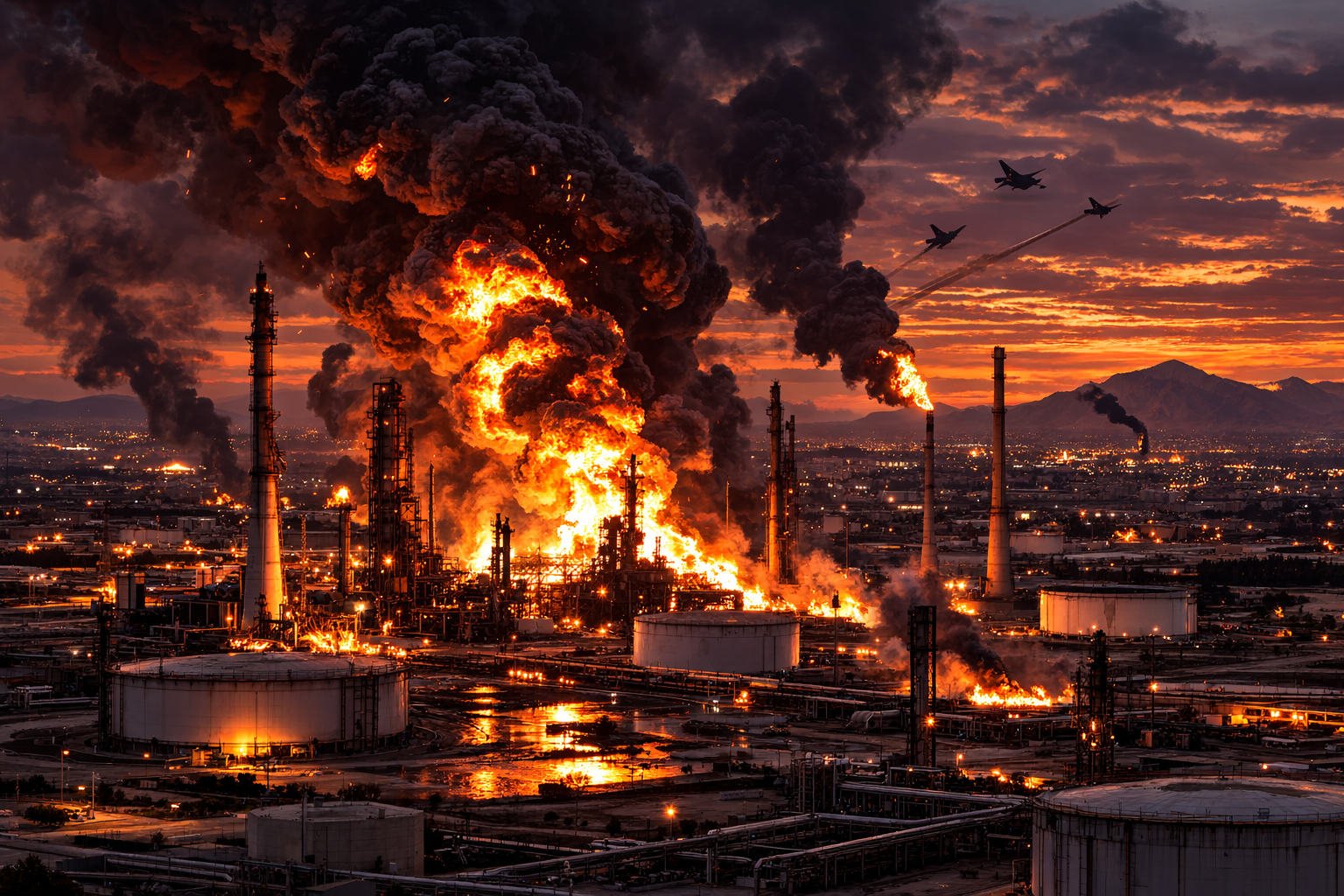
For most of this war, the scariest oil scenario lived in the realm of “what if.” What if the fighting spread to refineries? What if storage tanks started burning near major cities? What if the oil market stopped treating this as a military crisis and started pricing it as a real energy war?
Tonight, that line appears to have been crossed.
The clearest public reporting so far says Iranian state media reported that strikes hit an oil storage facility in Tehran, which the Associated Press described as the first strike on a civilian industrial site in the week-old war. Bloomberg separately reported that an oil depot near the Tehran oil refinery was hit. That means the exact asset description is still emerging in real time, but the broad market message is already clear: oil-linked infrastructure near the Iranian capital is now in the firing line.
That matters because oil markets do not wait for perfect forensic detail. They move on signals, trajectory, and fear. A strike near Tehran’s refinery complex is not just another explosion on another night of war. It tells traders, governments, insurers, and tanker operators that the conflict may be moving from military targets into the energy system itself. Once that happens, the question stops being “was this site important?” and becomes “what site gets hit next?”
The immediate effect of a Tehran-area refinery or storage strike may be more important for Iran’s domestic fuel system than for crude exports. Reuters’ overview of Iran’s energy infrastructure says Iran produces about 3.3 million barrels per day of crude plus 1.3 million barrels per day of condensate and other liquids, while domestic refineries have capacity of about 2.6 million barrels per day. The same Reuters overview says roughly 90% of Iran’s crude exports pass through Kharg Island, not Tehran. That suggests a hit near Tehran is more likely to squeeze internal fuel supply, storage, or refining operations than to instantly wipe out the bulk of Iran’s seaborne crude exports.
But that does not make it small. In some ways it makes it more unnerving. A strike on a Tehran oil depot or refinery-linked site signals that the war is widening from the outer edges of Iran’s military system into the economic machinery that keeps the state functioning day to day. It raises the odds of fuel shortages, panic buying, distribution bottlenecks, and political pressure inside Iran. Just as importantly, it tells the market that future targets could include bigger refineries, product terminals, pipelines, or export-critical assets if the conflict keeps escalating. That is an inference, but it is a straightforward one based on where the targeting pattern now appears to be headed.
The oil market is already on edge before fully digesting this latest strike. Reuters reported Saturday that global oil prices have surged more than 25% since the war began and that around a fifth of global crude and natural-gas supply has already been suspended by damaged facilities, disrupted logistics, and the near-shutdown of shipping through the Strait of Hormuz. Reuters also reported that Gulf producers have had to suspend huge volumes of shipments, while refineries and terminals across the region are being forced offline or constrained by risk.
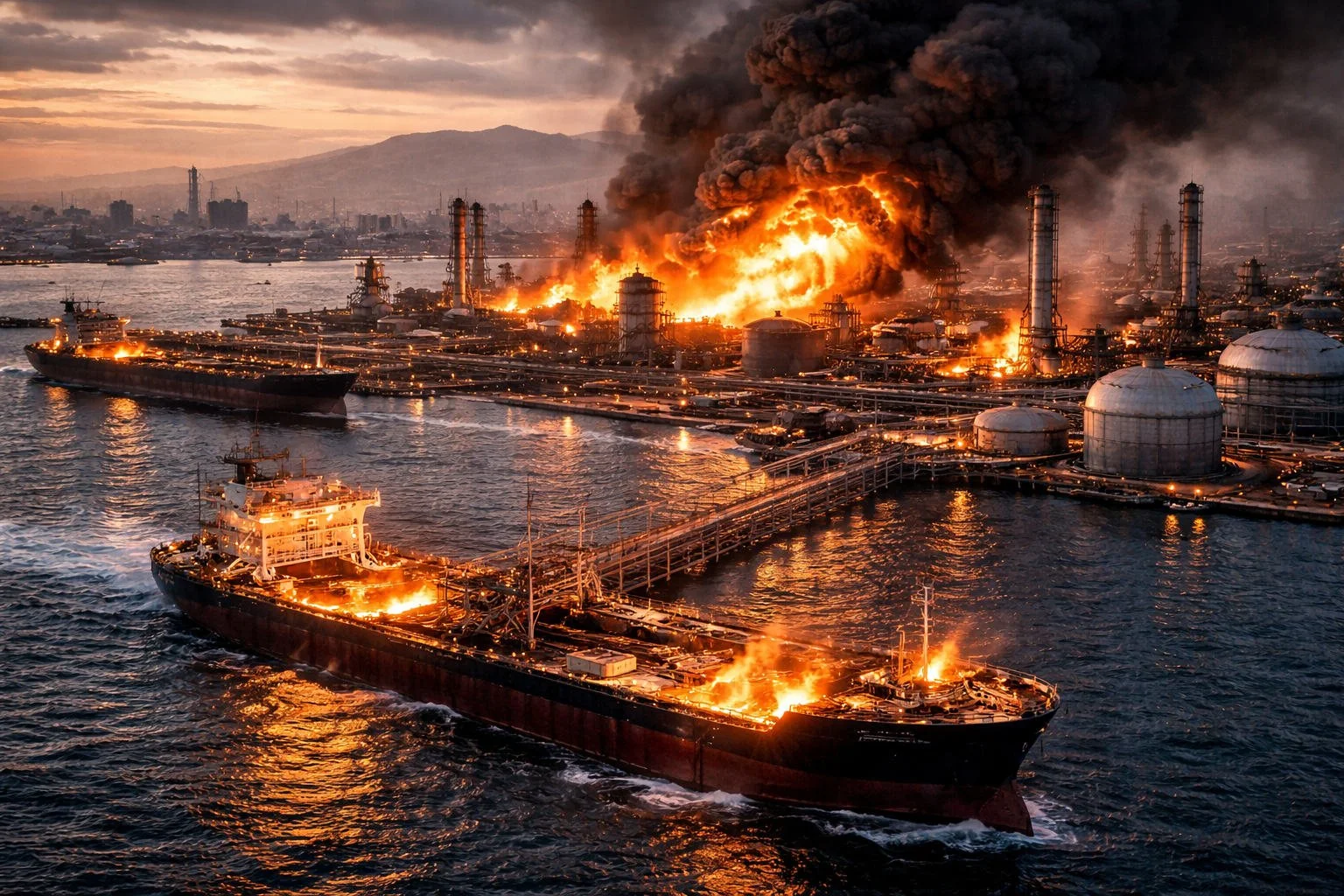
That is why even a strike that does not immediately erase export barrels can still push prices higher. Oil is not priced only on today’s lost supply. It is priced on expected future disruption. And right now the market has every reason to fear that the attack on Tehran-area oil infrastructure is not an isolated incident but a sign that the war is shifting toward a broader campaign against energy assets. That interpretation fits with the wider regional picture Reuters has been describing: Qatar’s gas exports disrupted, Saudi infrastructure hit, Kuwaiti output now being cut, and a shipping system through Hormuz that remains deeply impaired.
The broader backdrop makes this even more combustible. Reuters reported that Kuwait Petroleum Corporation declared force majeure and began cutting oil output on Saturday, adding to earlier oil and gas reductions from Iraq and Qatar, with the war blocking shipments through Hormuz for an eighth straight day. Reuters also says Hormuz is responsible for about 20% of global oil and LNG supply. Once that artery is badly constrained, every new strike on refinery or storage infrastructure anywhere in the region starts compounding an already severe supply shock.
This is how oil shocks become self-reinforcing. First, traders panic over physical disruption. Then insurers raise costs. Then tanker owners hesitate. Then refiners scramble for alternative barrels. Then governments start worrying about strategic stockpiles, rationing, and retail fuel prices. A fire at one storage site may not be enough on its own to create a global shortage, but it can help tip the market into a mindset where every additional threat is priced aggressively. Reuters quoted JP Morgan analysts saying the market is shifting from pricing pure geopolitical risk to grappling with tangible operational disruption. That is a major change in tone.
This is also why the Tehran refinery bombing matters more than the typical “headline spike” story. If the market decides that refineries, depots, and product infrastructure are now deliberate targets on both sides of this war, refined fuels could move even more violently than crude. That is not just an oil-trader problem. It is a diesel problem, a jet fuel problem, a shipping problem, and eventually an inflation problem. Higher diesel pushes up freight costs. Higher freight costs raise the price of food, goods, and industrial inputs. A war that starts with missile maps ends up showing itself in grocery bills and pump prices.
And the upside risk to crude is no longer theoretical. Reuters reported Friday that Goldman Sachs said oil prices are likely to exceed $100 per barrel next week if there are still no signs of a solution to the Hormuz disruption. Reuters also reported that Barclays said Brent could test $120 a barrel if the conflict persists for another couple of weeks. Goldman added that refined products could even exceed the peaks seen in 2008 and 2022 if Hormuz flows remain depressed through March. In other words, the market was already perched near a ledge before tonight’s refinery-related strike report even hit the tape.
That is what makes this moment so dangerous. A single strike near Tehran does not need to destroy millions of barrels per day to change the psychology of the oil market. It just needs to convince enough traders that the war’s next phase will be fought against energy infrastructure more openly and more systematically than before. And tonight’s reporting does exactly that. AP’s description of the hit as the first strike on a civilian industrial site in the war is especially important, because it suggests a widening target set rather than more of the same.
The most important takeaway is not that one refinery-adjacent target near Tehran was hit. It is that the war now appears to be touching the infrastructure that turns crude into usable fuel, stores that fuel, and keeps a modern economy moving. Markets can survive a rumor. They can survive one damaged depot. What they struggle with is the realization that the war map and the energy map are starting to become the same map.