
Korean BBQ Looks Like the Perfect Protein Meal — Until You Order It Wrong
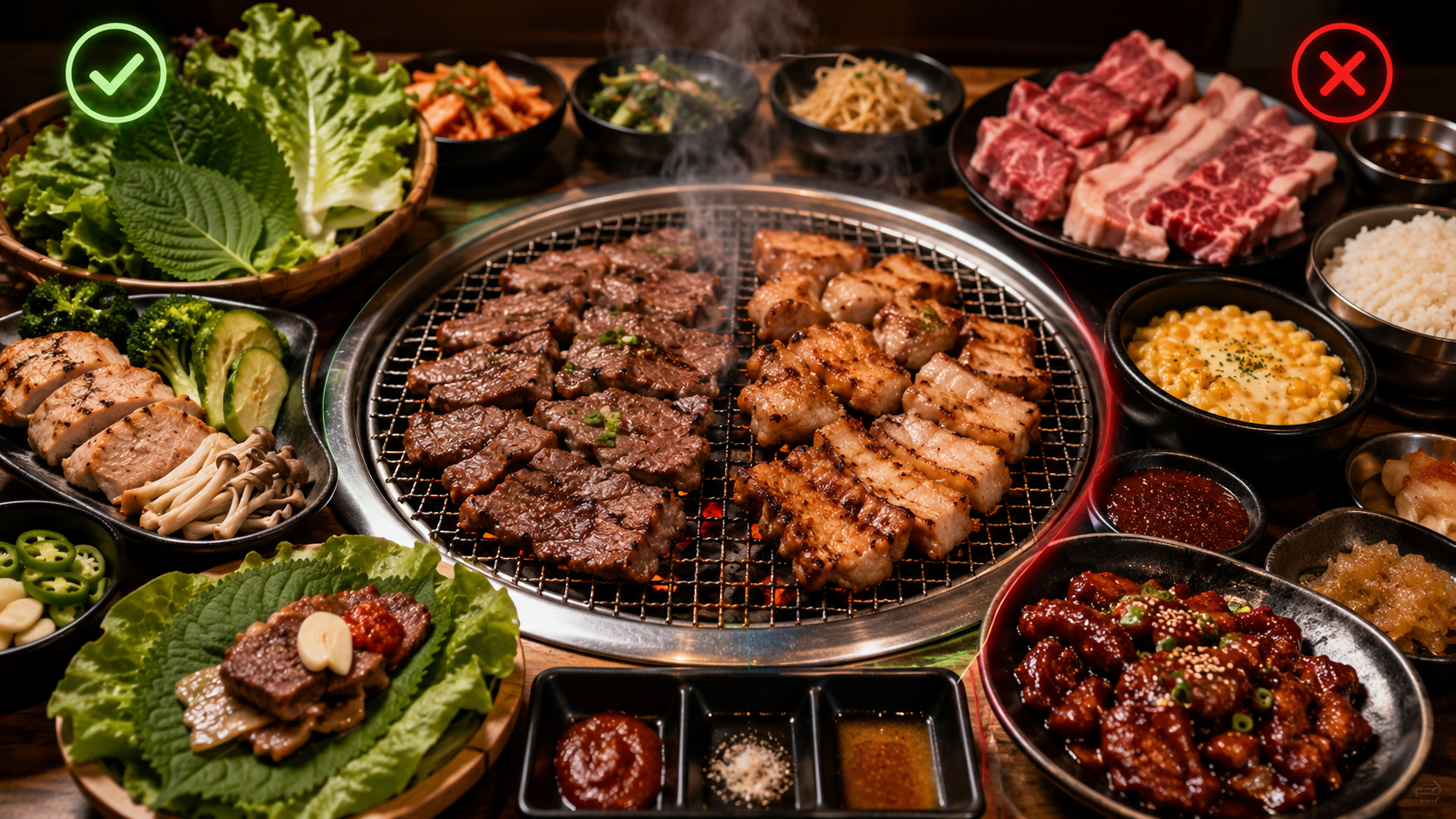
Korean BBQ looks like the perfect protein meal because, on paper, it is basically a gym bro’s dream wearing better lighting.
There is meat. There is fire. There are tongs. There are sizzling slices of beef and pork arriving like tiny edible trophies. There are lettuce wraps, kimchi, pickled vegetables, dipping sauces, and enough communal grilling drama to make dinner feel like a cooking show where everyone is slightly underqualified.
So yes, Korean BBQ can be a great high-protein meal.
It can also become a 2,000-calorie meat parade with rice, noodles, pork belly, sweet marinades, corn cheese, sauces, and “just one more round” doing synchronized sabotage in the corner.
The problem is not Korean BBQ. The problem is ordering like the grill is a bottomless protein portal and calories are a rumor invented by cowards.
The Big Korean BBQ Mistake: Thinking All Meat Is the Same
This is where people immediately drive the protein bus into a ditch.
They see meat and think, “Protein.” Lovely. Technically not wrong. But also dangerously incomplete, like calling a swimming pool “a cup of water.”
Some Korean BBQ meats are leaner and protein-heavy. Others are delicious strips of fat wearing a meat costume. Both can belong in the meal, but pretending they are nutritionally identical is how pork belly becomes your personal financial advisor and convinces you to invest in pants with elastic.
The clearest example is samgyeopsal, or pork belly. Pork belly is beloved for a reason. It grills beautifully. It crisps. It melts. It makes lettuce wraps taste like they went to private school. But it is also extremely fatty. A study on pork belly consumption in South Korea notes that 100 grams of fresh pork belly is about 48% fat and contains 441 calories. That is not “lean protein.” That is a bacon-adjacent oil slick with charisma.
So yes, order pork belly if you love it. Just don’t build the whole meal around it and then call it a protein strategy. That is like calling frosting a dairy plan.
Best Korean BBQ Meats for Protein
If your goal is a better protein meal, start with leaner meats first.
Good protein-forward Korean BBQ choices usually include brisket, sirloin, lean bulgogi, chicken, shrimp, pork loin, and other less fatty cuts. These give you the satisfying grill experience without making the entire table feel like it was catered by a stick of butter wearing sunglasses.
Bulgogi can be a solid choice, especially when the cut is leaner and the portion is reasonable. The American Heart Association’s bulgogi recipe lists one serving at 234 calories and 22 grams of protein, which gives you a useful benchmark for how beef bulgogi can fit into a protein-focused meal.
But there is a catch, because of course there is. This is food, not a fairy tale.
Bulgogi is usually marinated. Marinades can include soy sauce, sugar, sesame oil, garlic, fruit, and other flavor agents. Delicious? Absolutely. Sneaky? Also yes. Marinaded meats can bring added sugar and sodium, so they are not automatically the lean little angel the menu wants you to imagine.
The smarter move is to order a mix: one lean, un-marinated meat; one flavorful marinated meat; and one fun fatty cut if you actually want it. That way your meal has protein, flavor, and joy without turning into a grilled fat symposium.
Worst Korean BBQ Order for Protein Goals
The worst Korean BBQ order for protein goals is not one specific item. It is a pattern.
It looks like this: pork belly, marinated short ribs, more pork belly, white rice, japchae, corn cheese, extra ssamjang, beer, soju, another round of pork belly, and then someone says, “But it’s mostly meat,” as if meat has legally erased the side dishes.
This is how Korean BBQ tricks people. The meal feels protein-heavy because there is meat everywhere. But the total order can easily become high-fat, high-sodium, high-carb, and high-calorie if you stack fatty cuts, sweet marinades, rice, noodles, creamy sides, and alcohol.
The food did not betray you. You assembled a tiny barbecue empire and then acted shocked when it had consequences.
The Rice Trap
Rice is not evil. Let’s stop making every carbohydrate stand trial like it robbed a bank.
Rice is useful. It balances salty grilled meat, helps build lettuce wraps, and keeps the meal from becoming an all-meat fever dream. But rice is also easy to overdo because it sits there politely doing nothing while the meat gets all the attention.
A bowl of rice plus fatty meat plus sauce plus noodles is not “just Korean BBQ.” It is a full meal wearing three smaller meals stacked on its shoulders.
If you want a better protein-to-calorie ratio, treat rice like an accessory, not a mattress. Use a small amount in wraps. Skip the refill unless you actually need it. Do not let rice quietly become the fourth person at your table.
The Sauce Problem: Ssamjang Is Delicious, Not Invisible
Korean BBQ sauces are powerful little gremlins.
Ssamjang, the thick savory paste often used in lettuce wraps, is a classic Korean BBQ condiment. It is commonly made with doenjang, gochujang, sesame oil, garlic, sesame seeds, and sweeteners, which explains why it tastes amazing and also why treating it like calorie-free magic paste is a terrible plan.
Use it. Enjoy it. Respect it.
But don’t shovel it into every wrap like you are patching drywall. A little ssamjang goes a long way. So does sesame oil. So does salt. So does that little dish of sauce you keep “just dipping into” until it mysteriously disappears and files for residency in your bloodstream.
The better move: use sauces for flavor, not lubrication. One small dab in a lettuce wrap is plenty. If the wrap needs half a spoonful of sauce to taste good, the meat was probably not doing its job.
Banchan: Mostly Helpful, Occasionally Sneaky
Banchan, the little Korean side dishes that arrive before you even fully understand what is happening, are one of the best parts of Korean BBQ. Kimchi, pickled radish, bean sprouts, cucumbers, spinach, seaweed, potato salad, fish cakes, and various tiny bowls of “I don’t know what this is but I’m eating it” make the meal more interesting.
A lot of banchan are low in calories and add crunch, acidity, fiber, and freshness. That is good. That is useful. That is the table giving you backup singers.
But some banchan can be salty, sweet, oily, or carb-heavy. Kimchi is low-calorie, but it can carry sodium. A half-cup serving of kimchi is commonly listed around 20 calories and 290 milligrams of sodium, which is not terrifying, but it does remind us that fermented vegetables are not made of air and moral purity.
The FDA recommends limiting sodium to less than 2,300 milligrams per day, and says 20% Daily Value or more per serving is considered high. Korean BBQ can stack sodium quickly through marinades, sauces, kimchi, soups, and seasoned sides, because apparently salt also wanted to attend dinner.
So yes, eat the banchan. Just don’t let the salty ones become your emotional support system.
Lettuce Wraps Are the Move
If Korean BBQ has a built-in cheat code, it is the lettuce wrap.
Ssam, or wrapped bites, often use lettuce or perilla leaves with grilled meat, rice, sauce, garlic, kimchi, and other toppings. Korean BBQ guides regularly point to banchan, ssam leaves, and ssamjang as part of the classic experience.
For menu decision help, lettuce wraps are brilliant because they slow you down, add volume, add freshness, and keep you from eating meat and rice like a shovel-powered raccoon.
The best protein-focused wrap looks like this: lettuce, grilled lean meat, a tiny bit of rice if you want it, kimchi or pickled radish, one dab of ssamjang, maybe garlic or scallion salad, then done.
The worst wrap looks like this: fatty pork belly, rice mountain, sauce landslide, extra oil, noodles somehow, and a second piece of meat because the first one looked lonely.
One is dinner. The other is a burrito assembled by a committee of drunk wolves.
All-You-Can-Eat Korean BBQ Is Where Good Intentions Go to Get Grilled
All-you-can-eat Korean BBQ is dangerous because the pricing structure whispers, “Get your money’s worth,” which is one of the dumbest phrases in modern dining.
You know how you get your money’s worth? By enjoying the meal. Not by eating until your organs begin sending resignation letters.
AYCE turns ordering into combat. People start ordering rounds like they are provisioning a ship for winter. Brisket. Bulgogi. Pork belly. Short rib. Spicy chicken. More pork belly. Then someone panics and orders shrimp because “seafood is lighter,” while still chewing through enough beef to alarm a rancher.
The smarter AYCE strategy is simple: order in small rounds.
Start lean. Add flavor. Finish with the rich stuff.
Do not start with pork belly and short rib unless your plan is to be full before the meal has developed a plot. Fatty meats are delicious, but they are heavy. They are the recliner chairs of the grill. Sit in them too early and nobody is getting up.
Best Korean BBQ Order for Protein
The best Korean BBQ order for protein is balanced, not joyless.
Start with one lean beef option, like brisket or sirloin.
Add one chicken or seafood option, like chicken breast, chicken thigh, or shrimp.
Add one flavorful marinated meat, like bulgogi or spicy chicken.
Add one fatty favorite only if you really want it, like pork belly or short rib.
Use lettuce wraps heavily.
Keep rice modest.
Use sauce lightly.
Load up on vegetable banchan.
Skip or share corn cheese, japchae, pancakes, fried dumplings, and alcohol if protein and calories are the actual goal.
That is the order. Not sad. Not sterile. Not “fitness influencer eating plain turkey in a rental car.” Just controlled. A meal with a steering wheel.
Best Korean BBQ Order for Weight Loss
For weight loss, the best Korean BBQ order is lean meat plus vegetables plus lettuce wraps.
Choose grilled chicken, shrimp, lean beef, or pork loin when available. Add kimchi, cucumber salad, pickled radish, bean sprouts, and leafy wraps. Use rice sparingly. Limit pork belly, short rib, corn cheese, japchae, and sugary marinades.
The key is not avoiding fun. The key is not letting every category become the fun category. Pick one indulgence. One. Not seven tiny indulgences stacked in a trench coat pretending to be one meal.
Want pork belly? Great. Keep rice smaller and skip corn cheese.
Want short rib? Fine. Go lighter on sauces and noodles.
Want beer or soju? Enjoy it. But maybe don’t also order every sweet, fatty, fried, cheesy side on the menu like your stomach is running a festival.
Best Korean BBQ Order for Muscle
For muscle and protein goals, Korean BBQ can be excellent if you stop treating pork belly as a supplement.
Prioritize lean beef, chicken, shrimp, and egg-based sides if available. Add bulgogi for flavor. Use lettuce wraps to control carb intake without making the meal boring. Keep rice if you need carbs, especially after training, but don’t let it become the whole personality of the plate.
Adults generally need at least 0.8 grams of protein per kilogram of body weight per day, though needs vary by age, activity level, and goals. The American Heart Association notes that protein should generally make up 10% to 35% of daily calories.
So yes, Korean BBQ can help you hit protein. But your body does not need unlimited pork belly to repair muscle. That is not recovery. That is a delicious misunderstanding.
Korean BBQ Is a Great Protein Meal If You Stop Ordering Like a Maniac
Korean BBQ looks like the perfect protein meal because it can be one.
The grill is right there. The meats are plentiful. The vegetables and lettuce wraps are built into the experience. You can build a plate with lean protein, fermented sides, crunchy vegetables, and enough flavor to make plain chicken breast look like a punishment from a joyless government agency.
But Korean BBQ goes wrong when you confuse “meat-heavy” with “protein-efficient.”
Pork belly is not the same as lean beef. Short rib is not the same as chicken. Sweet marinades are not invisible. Rice is not air. Sauce is not a personality trait. Corn cheese is not a vegetable, no matter how hard the corn applies for the job.
The best Korean BBQ order is simple: choose lean proteins first, add one rich meat for fun, use lettuce wraps, go easy on rice and sauce, eat the vegetable banchan, and avoid turning all-you-can-eat into an Olympic event for people with no exit strategy.
Korean BBQ can absolutely be a protein win.
But order it wrong, and your “high-protein dinner” becomes a grilled fat-and-sodium parade with lettuce confetti.