
High Protein Peanut Butter Cookie Recipe

Peanut butter cookies are dangerous.
Not dangerous like a shark. Dangerous like “I’ll just have one” and then suddenly you are standing in the kitchen wondering why the cookie tray looks like it was attacked by raccoons.
The problem is that regular peanut butter cookies are delicious, but they are not exactly designed to help you hit your protein goals. They are usually built from peanut butter, sugar, butter, flour, and the kind of optimism that says calories do not count if the cookies are still warm.
This high protein peanut butter cookie recipe fixes that without turning the cookies into dry gym pucks.
These cookies are soft, chewy, peanut buttery, and actually satisfying. They use real peanut butter for flavor, protein powder for the macro boost, Greek yogurt for moisture, oat flour for structure, and just enough sweetness to make them taste like dessert instead of a protein bar wearing a cookie costume.
They are perfect for meal prep, post-workout snacks, high-protein desserts, late-night cravings, or anytime your brain says, “I require peanut butter immediately.”
And honestly?
The brain has a point.
Why High Protein Peanut Butter Cookies Are Tricky
Peanut butter seems like it should automatically make something high-protein.
And it does help. But peanut butter is not pure protein. It is mostly fat, which is why it tastes amazing and why eating it directly from the jar feels like making a legally binding agreement with chaos.
A standard 2-tablespoon serving of smooth peanut butter has about 188 calories, 7 grams of protein, and 15.9 grams of fat, according to nutrition data sourced from USDA FoodData Central. That means peanut butter contributes protein, but most of its calories come from fat.
That is not bad. Fat is not evil. Peanut butter is a perfectly useful food.
But if your goal is a high protein peanut butter cookie, you need more than just peanut butter. Otherwise, you are mostly making a regular peanut butter cookie and giving it a gym membership.
The trick is to use peanut butter for flavor, then add protein from other places.
That is where protein powder and Greek yogurt come in.
Nonfat Greek yogurt is especially useful because it adds moisture and protein without making the cookie greasy. A 170-gram container of nonfat Greek yogurt has about 100 calories and 17.3 grams of protein, based on USDA-derived nutrition data.
Oat flour also helps because it gives the cookie structure without making it taste too “healthy.” Oats are mostly carbs, but they still contribute some protein and fiber, which helps the cookie feel more substantial.
So this recipe uses a smarter formula:
Real peanut butter for flavor.
Protein powder for protein.
Greek yogurt for softness.
Oat flour for cookie texture.
Sweetener for joy.
Because joy is important. Otherwise, what are we even doing here?
High Protein Peanut Butter Cookie Ingredients
This recipe makes about 14 cookies.
You will need:
3/4 cup creamy peanut butter
1/2 cup vanilla protein powder
1/2 cup oat flour
1/3 cup plain Greek yogurt
1 large egg
1/3 cup brown sugar substitute, coconut sugar, or regular brown sugar
2 tablespoons milk of choice
1 teaspoon vanilla extract
1/2 teaspoon baking soda
1/4 teaspoon salt
Optional: 2 tablespoons powdered peanut butter
Optional: 2 tablespoons mini chocolate chips
Optional: chopped peanuts for topping
Best Protein Powder to Use
Vanilla whey protein powder is the easiest choice for this recipe.
It gives the cookies a sweet, bakery-style flavor and usually blends better than plant-based protein. Chocolate protein powder also works if you want chocolate peanut butter cookies.
A whey-casein blend can make the cookies thicker and softer, but it may also make the dough more absorbent. If the dough looks dry, add another tablespoon of milk.
Plant-based protein powder can work, but it usually makes cookies denser. Pea protein especially loves to absorb moisture like it is preparing for winter. If you use plant protein, expect to add more milk or Greek yogurt.
The most important rule is this:
Use a protein powder you already like.
If your protein powder tastes like vanilla chalk in a shake, it will taste like vanilla chalk in a cookie. Baking is powerful, but it is not wizardry.
How to Make High Protein Peanut Butter Cookies
Preheat your oven to 175°C / 350°F.
Line a baking sheet with parchment paper.
In a large bowl, mix the peanut butter, Greek yogurt, egg, milk, vanilla, and sweetener. Stir until smooth.
In a separate bowl, mix the protein powder, oat flour, baking soda, salt, and powdered peanut butter if using.
Add the dry ingredients to the wet ingredients. Stir until a thick dough forms.
If the dough looks too dry or crumbly, add 1 tablespoon of milk at a time until it comes together. Protein powder can vary a lot by brand, so do not panic if your dough needs a small adjustment.
If you are using mini chocolate chips, fold them in now.
Let the dough rest for 5 to 10 minutes. This gives the oat flour and protein powder a chance to absorb moisture.
Scoop the dough into 14 small balls and place them on the baking sheet.
Gently press each cookie down with a fork to make the classic peanut butter cookie pattern. This also helps them bake evenly.
Bake for 8 to 10 minutes.
Do not overbake them. This is the most important part of the whole recipe. Protein cookies can go from soft and chewy to “fitness coaster” very quickly.
The cookies should look slightly underdone when you pull them out. They will firm up as they cool.
Let them rest on the baking sheet for 10 minutes before moving them.
Yes, this is annoying.
No, you should not skip it.
Warm protein cookies are fragile. Give them a minute to become cookies instead of emotional dough circles.
Estimated Nutrition
This will vary depending on the protein powder, peanut butter, sweetener, and add-ins you use.
If you make 14 cookies, each cookie will be roughly:
130 to 170 calories
8 to 11 grams of protein
8 to 14 grams of carbs
7 to 10 grams of fat
If you use regular brown sugar and chocolate chips, the calories and carbs will be higher.
If you use a zero-calorie brown sugar substitute and skip the chocolate chips, the cookies will be lighter.
For context, the FDA lists the Daily Value for protein as 50 grams and says 20% Daily Value or more is considered “high” for a nutrient. A cookie with around 10 grams of protein gets you close to that 20% mark.
That is pretty good for something that still tastes like a peanut butter cookie.
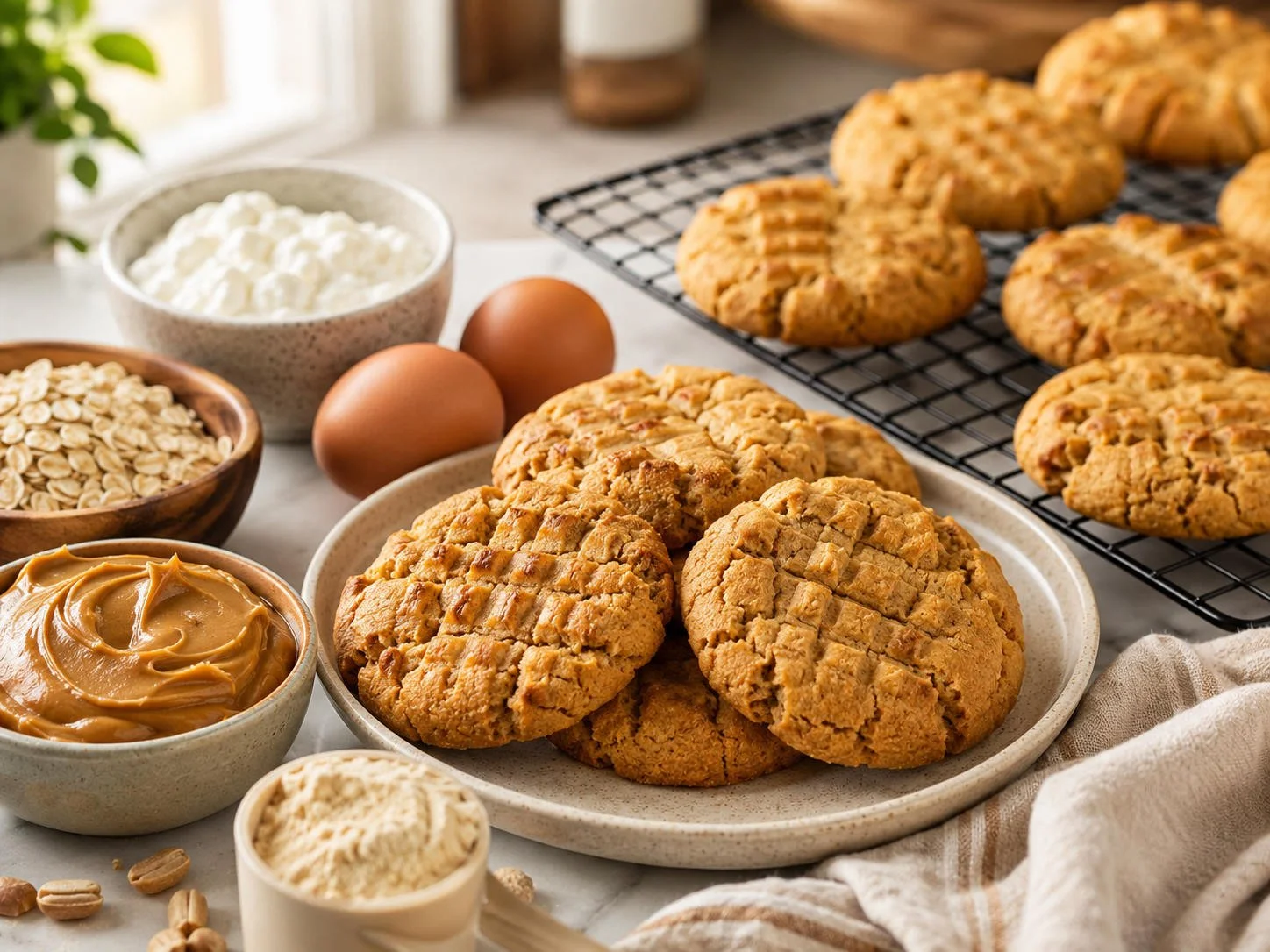
How to Make These Cookies Higher Protein
The easiest way to make these cookies higher protein is to add powdered peanut butter.
Powdered peanut butter gives you more peanut flavor with less fat than regular peanut butter. It is not as rich as the real stuff, which is why this recipe still uses actual peanut butter. But as a booster, it works really well.
You can also increase the protein by using a higher-protein Greek yogurt or using a protein powder with 25 grams of protein per scoop.
Another option is to make smaller cookies. This does not magically create more protein, but it gives you better portion control and lets you eat two cookies without feeling like you accidentally entered a food challenge.
How to Make Them Lower Calorie
Use a brown sugar substitute instead of regular sugar.
Use powdered peanut butter in the dough.
Skip the chocolate chips.
Use a lower-calorie peanut butter spread if you already like one.
Make the cookies smaller.
But do not remove all the fat and sweetness. Peanut butter cookies need some richness. If you strip them down too far, they become dry protein discs, and nobody needs that kind of negativity in their life.
Texture Tips
For softer cookies, slightly underbake them and let them cool on the tray.
For thicker cookies, chill the dough for 20 minutes before baking.
For flatter cookies, press them down more before baking.
For sweeter cookies, use vanilla protein powder and brown sugar.
For more peanut flavor, add powdered peanut butter or chopped peanuts.
For a more dessert-like cookie, add mini chocolate chips. Mini chips are better than regular chocolate chips here because they spread through the dough more evenly, giving you little chocolate hits without needing a ton of chocolate.
That is what professionals call “strategic joy distribution.”
Probably.
Common Mistakes to Avoid
The biggest mistake is baking them too long.
Protein cookies continue to firm up after they come out of the oven. If they look fully done in the oven, they may be dry once they cool.
The second mistake is using too much protein powder. More protein powder does not always mean a better cookie. Sometimes it just means a cookie that tastes like someone compressed a protein shake into a beige puck.
The third mistake is not adjusting the liquid. Protein powders vary. Some are smooth and forgiving. Some absorb moisture like a desert goblin. If your dough is dry, add milk.
The fourth mistake is using natural peanut butter that is too oily or too dry. Stir it very well before measuring. If the peanut butter is separated, your dough can turn greasy in one part and dry in another.
The fifth mistake is moving the cookies too early. Let them cool on the baking sheet first. They need time to set.
Storage and Meal Prep
Store these cookies in an airtight container at room temperature for about 2 days, or in the fridge for up to 5 days.
Because this recipe contains Greek yogurt and egg, refrigeration is the safer choice if you are not eating them quickly. The FDA recommends following the two-hour rule for perishable foods that require refrigeration: do not leave them at room temperature for more than two hours, or more than one hour if the air temperature is above 32°C / 90°F.
You can also freeze them.
Freeze the cookies in a single layer first, then move them to a freezer bag or container. They should keep well for up to 2 months.
To eat, thaw in the fridge or microwave for 10 to 15 seconds.
A warm peanut butter protein cookie with a cold glass of milk is dangerously close to happiness.
Easy Variations
For chocolate peanut butter cookies, use chocolate protein powder and add 1 tablespoon of cocoa powder.
For peanut butter banana cookies, replace the Greek yogurt with mashed banana. The cookies will be sweeter and more banana-flavored.
For peanut butter chocolate chip cookies, add 2 to 3 tablespoons of mini chocolate chips.
For crunchy peanut butter cookies, use crunchy peanut butter or add chopped peanuts.
For peanut butter and jelly cookies, press a small thumbprint into each cookie before baking, then add a tiny spoonful of jam after baking.
For dessert-style cookies, drizzle melted dark chocolate over the cooled cookies.
For a post-workout cookie, keep the recipe simple and pair one or two cookies with Greek yogurt or a protein shake.
Are High Protein Peanut Butter Cookies Healthy?
They can be.
They are still cookies. Let’s not pretend we discovered broccoli with a fork pattern.
But compared with regular peanut butter cookies, this version gives you more protein and a more balanced ingredient list. You get peanut butter, Greek yogurt, oat flour, egg, and protein powder instead of just butter, sugar, and flour doing a three-person crime spree.
These cookies can fit well into a high-protein diet, especially if they help you avoid feeling deprived.
That matters.
A lot of people fail at healthy eating because they try to live like dessert is illegal. Then one bad day happens and suddenly they are eating grocery-store cookies in the car like a raccoon who got approved for financing.
A better strategy is to make versions of your favorite foods that actually fit your goals.
That is what this recipe does.
Happy baking!
This high protein peanut butter cookie recipe is soft, chewy, simple, and actually useful.
It tastes like peanut butter.
It feels like dessert.
It has enough protein to make sense.
It does not taste like a protein bar pretending to be fun.
That is the goal.
You are not making these cookies because they are the lowest-calorie food on earth. You are making them because you want a better peanut butter cookie. One that satisfies the craving, gives you more protein, and does not make you feel like you just launched your diet into a lake.
Make a batch. Keep them in the fridge. Eat one after dinner, after the gym, or whenever you need something sweet that still feels like it belongs in the plan.
Because sometimes the difference between staying on track and going completely feral is having a good cookie ready.