
High Protein Chocolate Cake Recipe
Chocolate cake has a reputation problem.
It is treated like the villain of healthy eating. The forbidden square. The birthday-party landmine. The thing you eat at 11 p.m. while standing in front of the fridge, promising yourself this is “just a small piece” before cutting a slice that could legally qualify as architecture.
But chocolate cake does not have to be a full nutritional disaster.
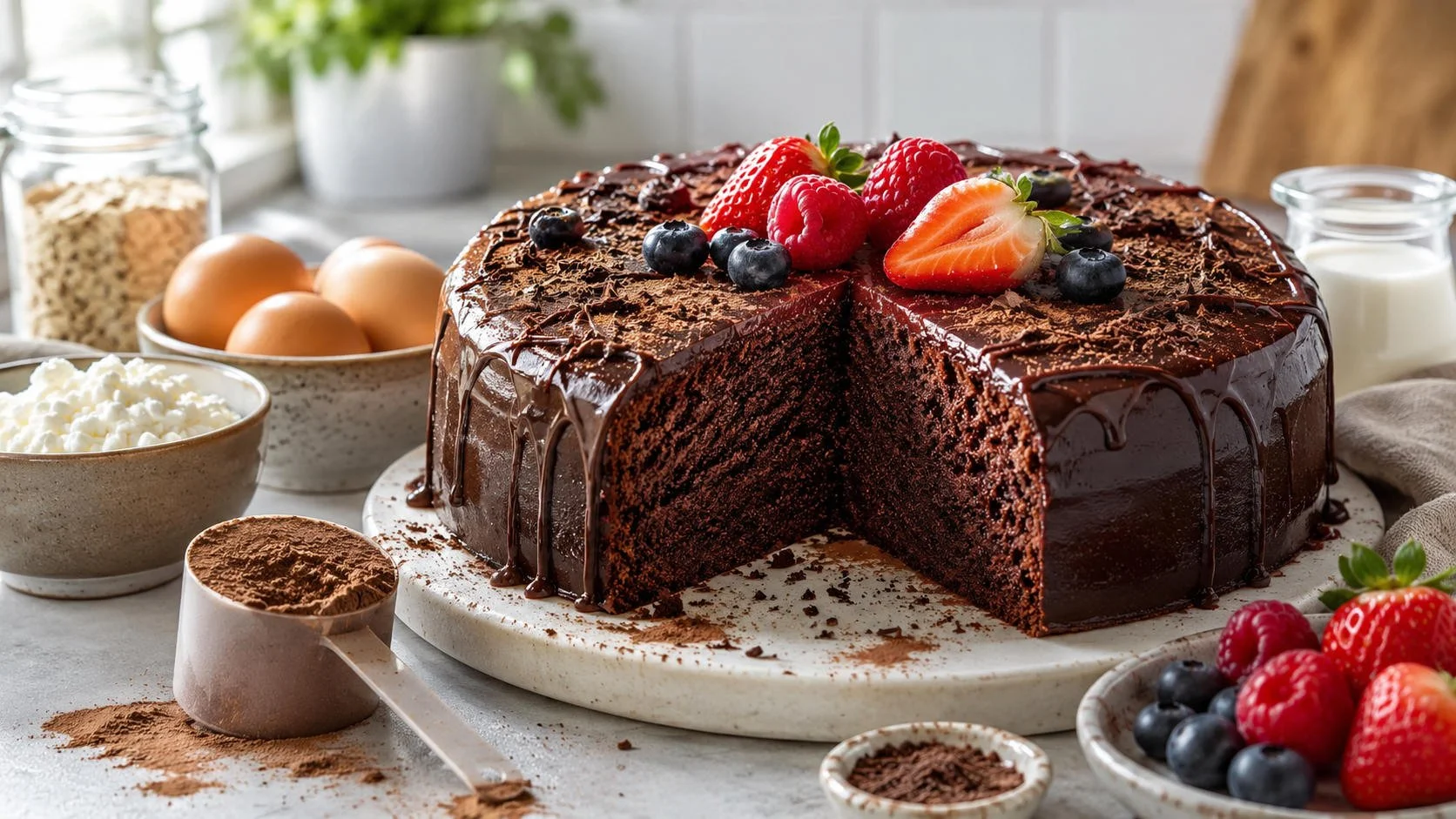
This high protein chocolate cake recipe is for people who want dessert, but also want their dessert to pull a little weight. It is rich, soft, chocolatey, and satisfying, but it uses Greek yogurt, eggs, oat flour, cocoa powder, and protein powder to improve the macro profile.
Is it chicken breast? No.
Is it a much smarter dessert than a grocery-store sheet cake covered in frosting thick enough to patch drywall? Yes.
This is the kind of cake you make when you want something sweet after dinner, a higher-protein meal prep dessert, a post-workout chocolate snack, or a healthier birthday cake that does not taste like a punishment invented by someone who hates joy.
Why Make a High Protein Chocolate Cake?
The point of this recipe is not to turn chocolate cake into a salad.
That is where a lot of “healthy dessert” recipes go wrong. They try to remove every calorie, every gram of sugar, every trace of fat, and every sign that dessert was ever supposed to be fun. Then you end up with a dry brown square that technically contains cocoa but spiritually belongs in a moving box.
This recipe has a better goal: make chocolate cake more filling, more balanced, and more useful for people who care about protein.
Protein matters because it helps make meals and snacks more satisfying. Research has found that higher-protein diets tend to increase satiety compared with lower-protein diets, which is one reason high-protein meals are so popular for weight management and fitness goals.
For label context, the FDA lists the Daily Value for protein as 50 grams, and considers 20% DV or more of a nutrient per serving to be “high.” A slice of this cake can land around 12 to 18 grams of protein depending on your protein powder and serving size, which makes it a legitimately useful dessert instead of just a chocolate-flavored emotional support object.
Why This Recipe Works
The secret is balance.
Protein powder can improve the protein content of baked goods, but too much can make cakes dry, rubbery, or weirdly squeaky when you chew them. That is not cake. That is a gym sponge.
This recipe avoids that by combining several protein sources instead of relying only on powder.
Greek yogurt adds protein, moisture, and a slight tang that works well with chocolate. Low-fat plain Greek yogurt contains about 9.9 grams of protein per 100 grams, based on USDA-derived nutrition data. Eggs add structure and more protein; a large egg has about 6.3 grams of protein. Oat flour adds a softer, heartier texture than straight protein powder, and oat flour itself contributes some protein too. Cocoa powder brings the chocolate flavor, and unsweetened cocoa powder also contains fiber and minerals, which is a nice little bonus for something that tastes like dessert.
In normal-person terms: this cake works because it is not trying to be made of protein powder alone.
It is cake first. Protein cake second.
That matters.
Ingredients
For the cake:
1 cup plain Greek yogurt
2 large eggs
1/2 cup unsweetened applesauce
1/4 cup milk of choice
1/4 cup maple syrup, honey, or sugar-free syrup
1 teaspoon vanilla extract
3/4 cup oat flour
1/2 cup chocolate protein powder
1/3 cup unsweetened cocoa powder
1/3 cup granulated sweetener or sugar
1 teaspoon baking powder
1/2 teaspoon baking soda
1/4 teaspoon salt
1/3 cup dark chocolate chips, optional but highly recommended
For the optional high-protein chocolate frosting:
1/2 cup plain Greek yogurt
2 tablespoons cocoa powder
1/2 scoop chocolate protein powder
1 to 2 tablespoons maple syrup, honey, or sweetener
1 teaspoon vanilla extract
Pinch of salt
Best Protein Powder for Chocolate Cake
Chocolate whey protein powder is usually the easiest option for this recipe. It mixes well, tastes familiar, and tends to work nicely in cake batter.
A whey-casein blend can also work. Casein is thicker, so it can make the cake feel more substantial, but it may also require a little extra milk.
Plant-based protein powder can work, but it is usually more absorbent. If you use pea protein, soy protein, or a vegan blend, expect a denser cake. Add one or two extra tablespoons of milk if the batter looks too thick.
The most important rule is simple: use a protein powder you actually like.
If your protein powder tastes like chocolate sadness in a shake, baking it into cake will not magically fix it. You will just have chocolate sadness with baking powder.
How to Make High Protein Chocolate Cake
Preheat your oven to 350°F, or about 175°C.
Grease an 8x8 baking dish or line it with parchment paper. An 8x8 pan gives you thicker slices, which is what you want here. Thin protein cake can dry out faster.
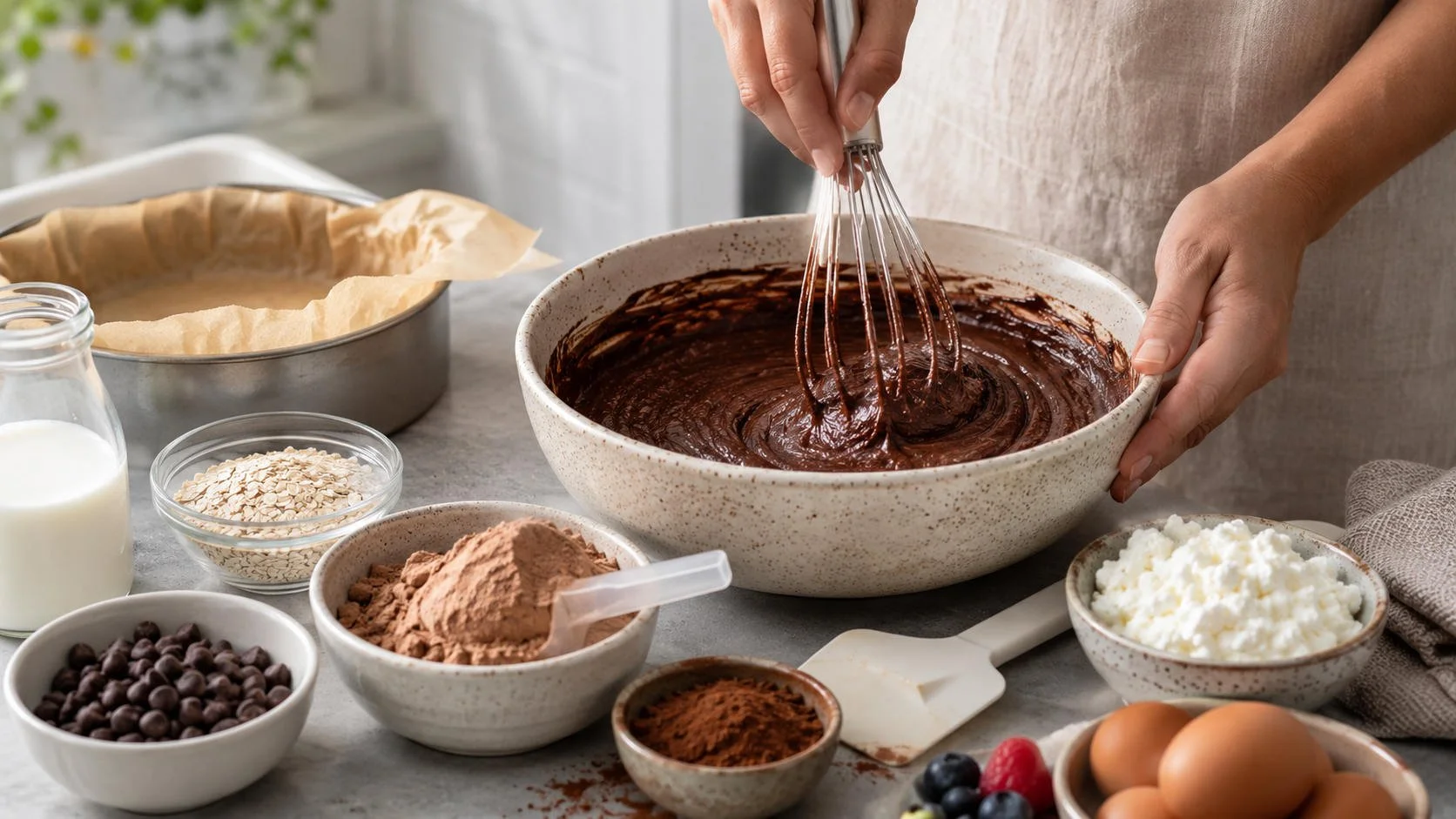
In a large bowl, whisk together the Greek yogurt, eggs, applesauce, milk, maple syrup, and vanilla extract. Mix until smooth.
In another bowl, stir together the oat flour, protein powder, cocoa powder, sweetener, baking powder, baking soda, and salt.
Add the dry ingredients to the wet ingredients. Stir gently until combined.
Do not overmix. This is not a stress ball. Once the batter comes together, stop.
Fold in the chocolate chips if using.
Pour the batter into the prepared baking dish and spread it evenly.
Bake for 22 to 28 minutes, or until the center is set and a toothpick inserted into the middle comes out with a few moist crumbs. You do not want wet batter, but you also do not want the toothpick to come out bone-dry.
Let the cake cool for at least 20 minutes before frosting or slicing.
This part is annoying but important. Protein cakes often seem a little fragile when warm, then firm up as they cool. Give the cake time to get its life together.
How to Make the High-Protein Chocolate Frosting
In a bowl, mix Greek yogurt, cocoa powder, protein powder, sweetener, vanilla, and a pinch of salt.
Stir until smooth.
If it is too thick, add a splash of milk. If it is too thin, add a little more cocoa powder or protein powder.
Spread the frosting over the cooled cake.
This frosting is not buttercream. It is tangier, lighter, and more protein-focused. Think chocolate cheesecake frosting, not grocery-store birthday frosting.
If you want it sweeter, make it sweeter. There is no prize for pretending you enjoy under-sweetened dessert.
Estimated Nutrition
Nutrition will vary depending on your protein powder, yogurt, sweetener, syrup, milk, and whether you use chocolate chips.
If you cut the cake into 9 slices, each slice is roughly:
160 to 230 calories
12 to 18 grams of protein
18 to 28 grams of carbs
4 to 9 grams of fat
If you use sugar-free syrup and a zero-calorie granulated sweetener, the calories will be lower.
If you use maple syrup, regular sugar, and chocolate chips, the calories will be higher, but the cake will taste more like actual cake. This is the eternal dessert negotiation.
For most people, the best version is the middle version: keep the Greek yogurt, eggs, cocoa, oat flour, and protein powder, then use a modest amount of real sweetness so the cake still feels satisfying.
How to Make It Higher Protein
To increase the protein, you can make a few easy changes.
Use a higher-protein Greek yogurt or skyr.
Use a protein powder with at least 20 to 25 grams of protein per scoop.
Add the high-protein frosting instead of skipping it.
Serve each slice with a spoonful of Greek yogurt on top.
You can also crumble a slice into a bowl and turn it into a high-protein dessert bowl with Greek yogurt, berries, and a drizzle of melted dark chocolate. That version feels like something you would pay $14 for at a wellness café with plants hanging from the ceiling.
How to Make It Lower Calorie
To make this cake lighter, skip the chocolate chips or use mini chocolate chips. Mini chips spread through the batter better, so you still get chocolate in more bites.
Use unsweetened almond milk or skim milk.
Use sugar-free syrup instead of maple syrup or honey.
Use a zero-calorie granulated sweetener instead of sugar.
Use fat-free Greek yogurt.
Just do not remove everything good at once.
A cake with no sugar, no fat, no chocolate chips, and too much protein powder is technically food, but emotionally it is a hostage situation.
Common Mistakes
The biggest mistake is overbaking.
Protein cakes dry out faster than regular cakes. Pull the cake when the center is just set and the toothpick has a few moist crumbs. If you wait until it looks completely dry, congratulations, you have made chocolate gym foam.
The second mistake is using too much protein powder.
More protein is not always better in baking. At a certain point, protein powder stops helping and starts ruining the texture. If you want more protein, it is usually better to add Greek yogurt frosting or serve the cake with yogurt instead of cramming another scoop into the batter.
The third mistake is using bad protein powder.
This recipe depends heavily on the flavor of your powder. If the powder has a bitter aftertaste, the cake will too.
The fourth mistake is slicing it too early.
Let the cake cool. Warm cake is delicious, but warm protein cake can be delicate. Give it 20 minutes before you judge it.
Storage and Meal Prep Tips
Store the cake in an airtight container in the fridge for up to 4 days.
If you use the Greek yogurt frosting, keep it refrigerated. Perishable foods should not be left at room temperature for more than 2 hours, according to food safety guidance.
You can also freeze individual slices. Wrap them tightly and freeze them for up to 2 months for best texture. Thaw in the fridge overnight, or microwave briefly when you want a warm slice.
A slightly warm slice with cold Greek yogurt on top is extremely dangerous in the best way.
Easy Variations
For peanut butter chocolate cake, swirl 2 tablespoons of peanut butter into the batter before baking.
For mocha chocolate cake, add 1 teaspoon of instant coffee or espresso powder to the dry ingredients. It makes the chocolate flavor deeper without turning the cake into a coffee dessert.
For double chocolate cake, use chocolate milk as the liquid and keep the chocolate chips.
For raspberry chocolate cake, fold in 1/2 cup raspberries before baking.
For banana chocolate cake, replace the applesauce with mashed banana. This adds more banana flavor, obviously, but it works well if you like banana bread and chocolate cake living in the same apartment.
For birthday protein cake, add sprinkles on top of the frosting. Are sprinkles high-protein? No. Are they spiritually important? Sometimes.
Is This Cake Good for Weight Loss?
It can be.
No single dessert causes weight loss, and no single dessert ruins your diet. What matters is the overall pattern.
This cake can help because it gives you a more filling dessert with more protein than regular chocolate cake. That may make it easier to enjoy something sweet without turning dessert into a full kitchen incident.
If you are trying to lose weight, the best version is probably the lower-calorie version with sugar-free syrup, Greek yogurt frosting, and either no chocolate chips or a smaller amount of mini chocolate chips.
If you are trying to gain muscle or just eat more protein, keep the chocolate chips and add the frosting.
The goal is not perfection. The goal is making dessert fit your life instead of making your life revolve around avoiding dessert.
That never works for long.
Is This Cake Good After a Workout?
Yes, especially if you want something sweet after training.
A slice gives you protein, carbs, and chocolate, which is a pretty strong post-workout emotional support team. It is not a complete meal by itself, but it can fit nicely after dinner or alongside something like Greek yogurt, milk, or a protein shake.
If you are eating it after a hard workout, do not be afraid of the carbs. Oat flour, applesauce, and a little sweetener can actually make the cake more satisfying and useful than a dessert made entirely from protein powder and regret.
Frequently Asked Questions
Can I make this without protein powder?
Yes, but it will no longer be as high in protein. Replace the protein powder with extra oat flour and add a little more cocoa powder if you want a stronger chocolate flavor. The texture may actually be softer, but the protein will drop.
Can I use flour instead of oat flour?
Yes. All-purpose flour works, though the cake may taste a little more traditional and less hearty. Whole wheat flour can also work, but it may make the cake denser.
Can I make this gluten-free?
Yes, if you use certified gluten-free oat flour and make sure your protein powder and other ingredients are gluten-free.
Can I make this dairy-free?
Yes, but you will need to make swaps. Use dairy-free yogurt, plant-based milk, and a plant-based protein powder. The texture may be denser, so add a little extra liquid if the batter is too thick.
Can I make cupcakes with this batter?
Yes. Divide the batter into a lined muffin tin and bake for about 14 to 18 minutes. Start checking early because smaller portions dry out faster.
Can I eat this every day?
You can, if it fits your overall diet. It is still cake, but it is a more balanced cake. If having a slice helps you avoid feeling deprived, that is a win.
Enjoy your cake!
This high protein chocolate cake recipe is exactly what a good healthy dessert should be: practical, satisfying, and not depressing.
It gives you real chocolate cake energy, but with more protein and better ingredients than a standard slice. It uses Greek yogurt for moisture, eggs for structure, oat flour for texture, cocoa powder for deep chocolate flavor, and protein powder for the macro upgrade.
It is not a miracle food.
It is not a magic fat-loss cake.
It is not going to whisper motivational quotes while you do squats.
But it is a rich, moist, high-protein chocolate cake that makes healthy eating feel a little less annoying.
And honestly, that is enough.
Because the best diet is not the one where you never eat cake.
It is the one where you can eat cake, enjoy it, and still feel like you are moving in the right direction.