The Firefighter Diet: What Firefighters Eat to Stay Fit for High-Demand Jobs
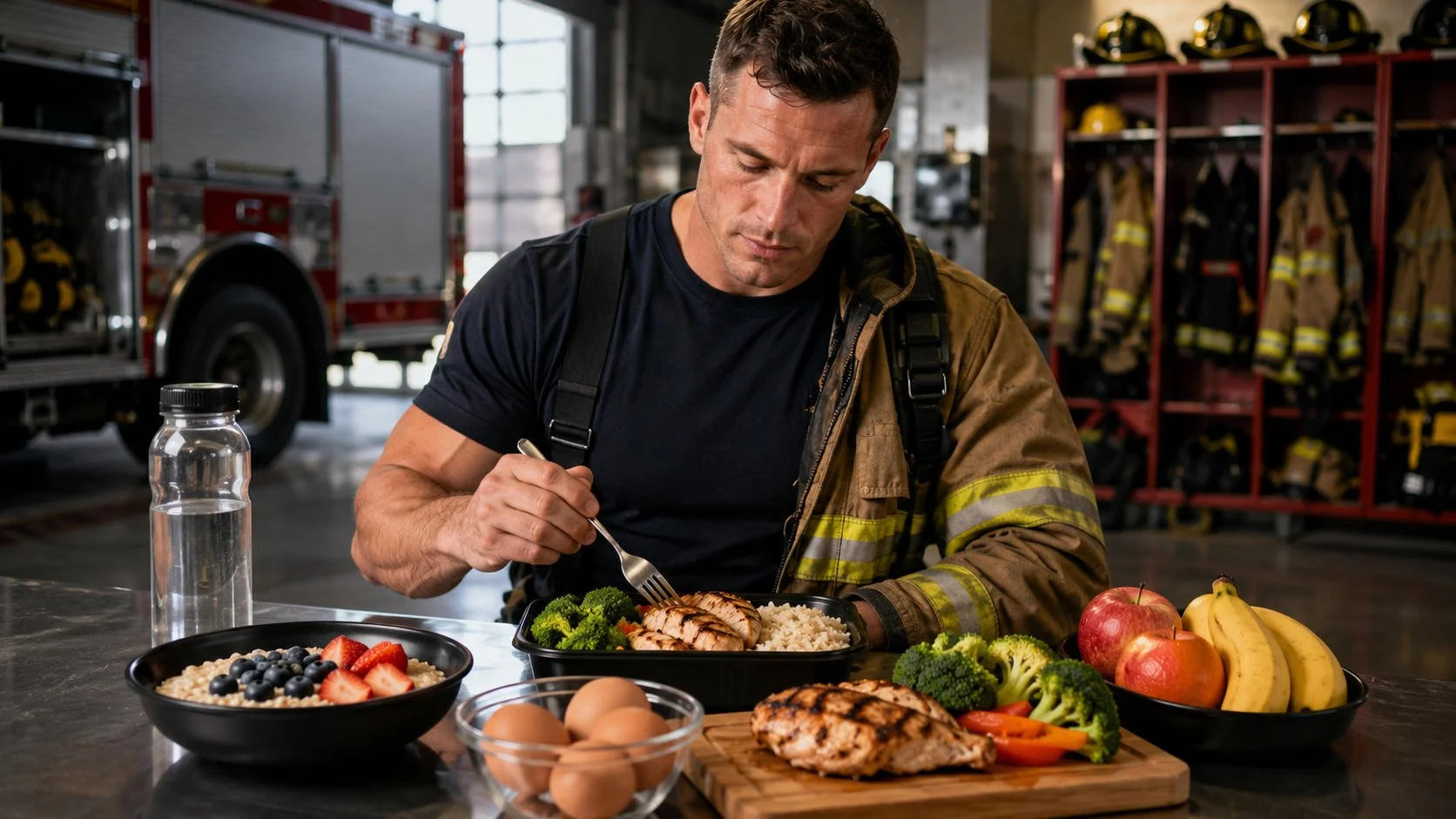
Firefighters are not just “people who work out.”
They are tactical workers who may go from sitting at the station to carrying heavy gear, climbing stairs, forcing doors, dragging hose, lifting patients, cutting vehicles open, hiking uneven terrain, working in heat, and making fast decisions under stress.
That means the best firefighter diet is not a crash diet, a bodybuilding diet, or a random “eat clean” plan.
It is a performance diet.
It needs to support:
Strength
Endurance
Recovery
Heart health
Hydration
Sleep disruption
Shift work
Heat exposure
Long calls
Sudden bursts of extreme effort
Long-term health
The important caveat: not every firefighter eats perfectly, and not every firefighter is automatically fit. Firefighters face serious cardiovascular risks. A 2024 U.S. Fire Administration workgroup report says roughly 50% of on-duty firefighter deaths are cardiovascular-related, including heart attacks, sudden cardiac arrests, and strokes, and that sudden cardiac death causes about seven times as many firefighter deaths as burn injuries. The same report notes concerning rates of hypertension, elevated cholesterol, and obesity in firefighter evaluation data.
So the real article is not:
“Firefighters are fit because they eat this secret diet.”
The real article is:
“Here is the diet firefighters should use to stay ready, healthy, and strong in a high-demand job.”
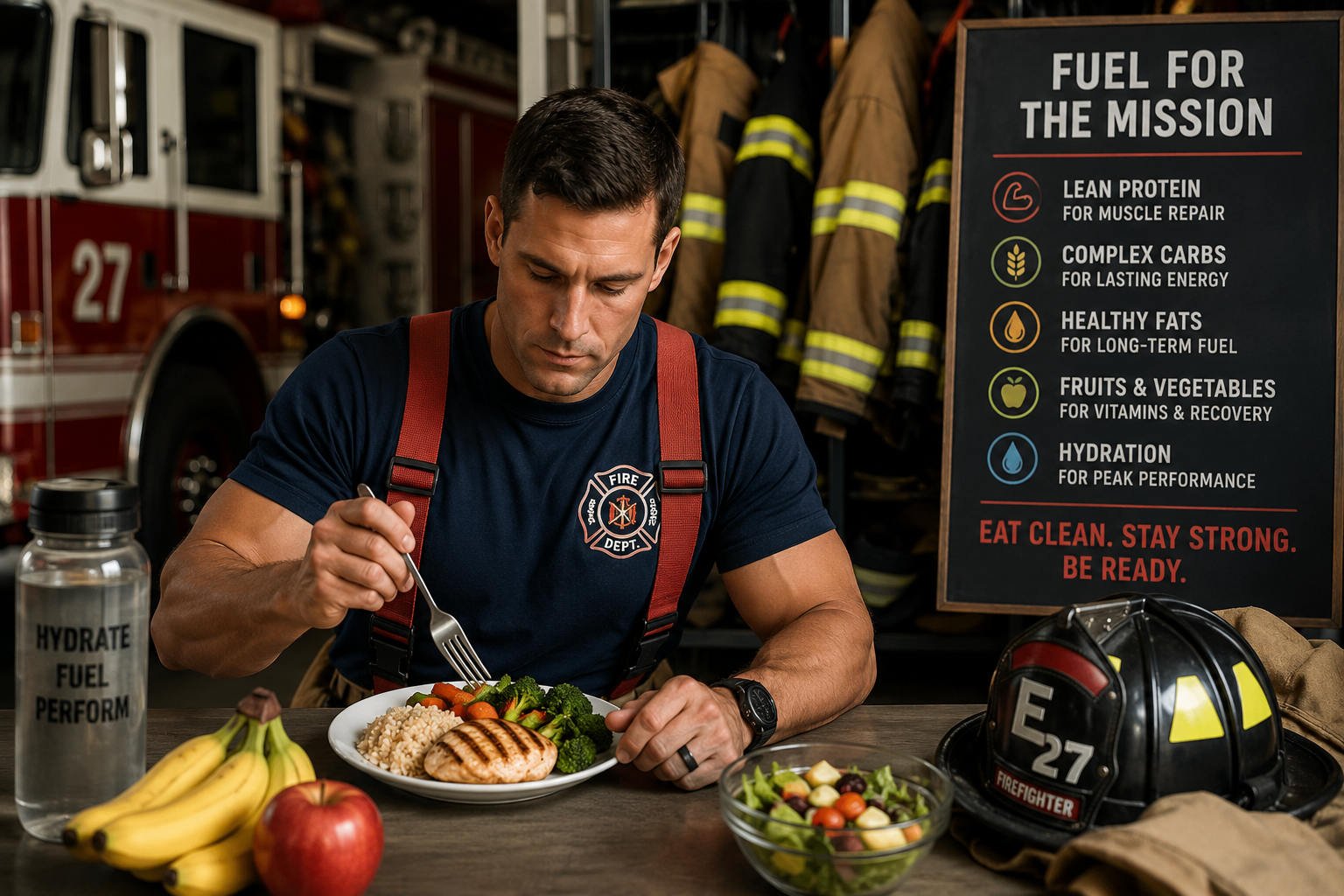
That diet is built around real food, protein at each meal, smart carbohydrates, fruits and vegetables, healthy fats, hydration, and planning ahead for shift work. The IAFF’s firefighter nutrition campaign explicitly emphasizes eating real food, planning ahead, adding healthier foods rather than trying to overhaul everything at once, and building meals around protein, vegetables, carbohydrates, and healthy fats.
Quick answer: what do fit firefighters eat?
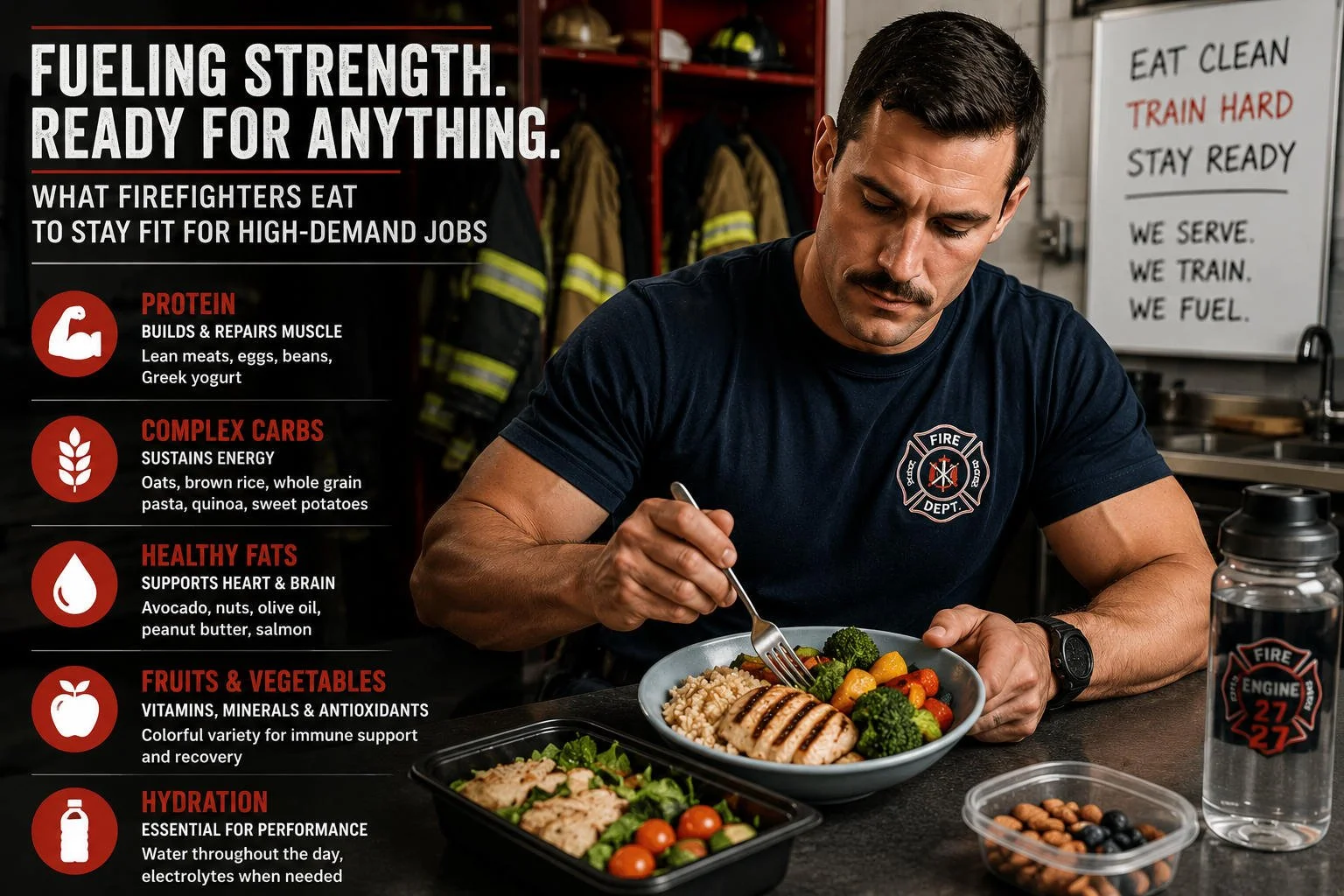
The best firefighter-style diet looks like this:
Breakfast
Eggs or Greek yogurt
Oats, whole grain toast, potatoes, or fruit
Coffee or water
Optional protein smoothie
Lunch
Chicken, turkey, fish, lean beef, tofu, beans, or eggs
Rice, potatoes, whole grain wrap, quinoa, or beans
Big salad or cooked vegetables
Olive oil, avocado, nuts, or other healthy fats
Dinner at the firehouse
Chili
Turkey burgers
Tacos with vegetables
Chicken burrito bowls
Salmon or grilled chicken
Pasta with lean protein and salad
Stir-fry with rice
Sheet-pan chicken and potatoes
Soup or stew with protein and vegetables
Snacks
Greek yogurt
Fruit
Nuts
Jerky occasionally
Tuna or chicken packets
Protein bars
Applesauce pouches
Smoothies
Whole grain cereal
Hard-boiled eggs
Cottage cheese
Hummus and vegetables
Hydration
Water throughout the day
Electrolytes during heat, heavy training, long calls, or major sweat loss
Sports drinks or carbohydrate-electrolyte drinks when the work is long and intense, especially for wildland-style activity
The firefighter diet is not low-carb by default. For hard physical work, carbohydrates matter. USDA wildland firefighter guidance says moderate work may require 5–7g carbohydrate per kilogram of body weight per day, hard work may require 7–10g/kg/day, and firefighters may need about 40g carbohydrate per hour during work from snacks and sports drinks to help maintain work output, immune function, blood glucose, thinking, and mood.
The firefighter diet in one sentence
Eat like a tactical athlete: protein at every meal, smart carbs for work output, vegetables for health, healthy fats in measured portions, hydration before the call, and emergency snacks ready before hunger makes the decision for you.
That is the whole idea.
What firefighters actually need from food
1. Protein for recovery and strength
Firefighters train, lift, climb, crawl, drag, carry, and recover from hard calls. Protein helps repair and maintain muscle.
The IAFF nutrition guide recommends 1–2 palm-sized portions of protein per meal, roughly 4–8 ounces, with examples including beans, pork, chicken, fish, and beef. It also notes that protein is not only found in meat and eggs; vegetables, nuts, beans, and grains contribute too.
For everyday high-demand work, the goal is not necessarily “as much protein as possible.” It is consistent protein spread across the day.
Good firefighter proteins:
Eggs
Greek yogurt
Cottage cheese
Chicken
Turkey
Fish
Lean beef
Beans
Lentils
Tofu
Tempeh
Tuna or salmon packets
Protein shakes when real food is not practical
A general adult baseline is about 0.8g protein per kilogram of body weight per day, but active workers, older adults, strength-training firefighters, and wildland firefighters may need more depending on body size, workload, and goals. HealthLinkBC lists 0.8g/kg/day as the general adult need, while USDA wildland firefighter guidance lists 1.2–1.8g/kg/day for athletes and wildland firefighters depending on work intensity.
2. Carbs for calls, training, and long shifts
Carbs are not the enemy in a firefighter diet.
They are fuel.
The wrong kind of carb pattern is the problem: soda, pastries, candy, fried sides, giant late-night fast-food meals, and constant refined snacks.
The better carb pattern is:
Oats
Potatoes
Sweet potatoes
Rice
Beans
Lentils
Fruit
Whole grain bread
Whole grain wraps
Quinoa
Pasta with protein and vegetables
Cereal or bars during long, physically demanding calls
The IAFF nutrition guide recommends choosing carbohydrate sources “as close to the earth as possible,” listing vegetables, fruits, beans, legumes, potatoes, and whole grains as better options.
For high-output work, especially wildland firefighting, carbs become even more important. USDA guidance says firefighters may need 40g carbohydrate per hour during work, and that eating carbs during work helps maintain blood glucose, work output, thinking, mood, and immune function.
The practical version:
Carbs before and during high-output work.
Higher-fiber carbs during normal station meals.
Less sugar when you are just tired and bored.
3. Healthy fats for hormones, satiety, and long-term health
Firefighters need fat, but not unlimited firehouse fat.
Healthy fats can come from:
Olive oil
Avocado
Nuts
Seeds
Nut butters
Fatty fish
Eggs
Olives
The IAFF guide says dietary fats support energy, cell growth, organ protection, hormone production, and absorption of fat-soluble vitamins, but also warns that fat is calorie-dense and serving sizes matter. It lists cold-water fish, avocados, nuts, seeds, nut and seed butters, and extra virgin olive oil as ideal fat sources.
The mistake is not eating fat.
The mistake is getting most fat from:
Bacon
Sausage
Fried food
Heavy cheese
Creamy sauces
Fast food
Deep-fried station meals
Constant butter and mayo
Donuts and desserts
For firefighter health, the best pattern is Mediterranean-style: olive oil, nuts, fish, legumes, vegetables, fruit, whole grains, and less processed meat. A 2023 JAMA Network Open firefighter trial found that a 12-month workplace-based Mediterranean nutrition intervention significantly improved Mediterranean diet adherence among U.S. career firefighters.
4. Vegetables and fruit for cardiovascular health
A firefighter diet cannot just be meat and rice.
Firefighters need vegetables and fruit for potassium, fiber, antioxidants, hydration, digestion, and long-term cardiovascular health.
The IAFF guide recommends 1–2 fist-sized portions of vegetables per meal, and the Dietary Guidelines for Americans emphasize vegetables, fruits, whole grains, protein foods, oils, and limits on added sugars, saturated fat, and sodium.
Good firehouse vegetables:
Salad kits
Frozen mixed vegetables
Broccoli
Bell peppers
Spinach
Cauliflower
Carrots
Cucumbers
Tomatoes
Zucchini
Cabbage
Sweet potatoes
Onions
Mushrooms
Pre-cut vegetable trays
Good firehouse fruit:
Bananas
Apples
Oranges
Grapes
Berries
Fruit cups in juice
Applesauce pouches
Frozen berries for smoothies
The simple station rule:
Put fruit on the counter before donuts show up.
Put vegetables into whatever the crew already eats.
This matches the IAFF’s “add, don’t subtract” principle: make normal meals healthier by adding vegetables or a salad instead of trying to ban every familiar food.
5. Hydration and electrolytes
Hydration is not optional in firefighting.
Gear, heat, stress, exertion, and long calls can drive major sweat losses. A firefighter fact sheet from the Collegiate and Professional Sports Dietitians Association notes that firefighters can lose up to 40 ounces of sweat in 30 minutes of fire suppression activity, and that firefighters working in heat may need more than baseline fluid intake.
USDA wildland guidance recommends hydrating before work, drinking about 1 cup every 15 minutes during work, and rehydrating after work based on weight lost. It also says firefighters may need about 1 quart of fluid per hour during work in heat, with some fluid coming from carbohydrate-electrolyte beverages during prolonged work.
A practical firefighter hydration plan:
Normal station day
Water bottle nearby
Water with meals
Limit sugary drinks
Coffee is fine, but not as the only fluid
Training day
Water before training
Electrolytes if sweating heavily
Carbs if training is long or intense
Fireground / hot call
Water plus electrolytes
Carbohydrate-electrolyte drink for prolonged work
Rehab nutrition after major exertion
After hard work
Fluids
Carbs
Protein
Electrolytes if sweat loss was high
The best firefighter diet pattern: Mediterranean plus performance fuel
The best evidence-backed firefighter diet is not keto, carnivore, juice cleanses, or bodybuilding chicken-and-rice forever.
The strongest long-term pattern is a firefighter-adapted Mediterranean-style diet.
That means:
More vegetables
More fruit
More beans and lentils
More whole grains
More fish
More olive oil
More nuts and seeds
More lean poultry
Less processed meat
Less fried food
Less sugary drink intake
Less constant dessert and junk food
More planning around shift work
Oklahoma State University Extension summarizes the Mediterranean diet for firefighters as emphasizing daily fruits, vegetables, whole grains, legumes, nuts, and olive oil; fish and seafood twice weekly; poultry, eggs, and dairy in moderation; and red and processed meats only a few times per month. It also lists firefighter-specific tips like using olive oil, choosing lean proteins, drinking water instead of sugary drinks, choosing whole grains, keeping healthy snacks on hand, and filling half the plate with fruits and vegetables.
Harvard’s firefighter-focused “Feeding America’s Bravest” project also uses Mediterranean diet principles at work and home, with the purpose of lowering firefighters’ risks for cardiovascular disease and cancer.
The best firefighter diet is basically:
Mediterranean diet for heart health
plus tactical-athlete fueling for calls, training, and heat.
What firefighters eat at the firehouse
Firehouse meals vary a lot.
Some crews eat extremely well. Some rely heavily on takeout, pasta, red meat, desserts, soda, and whatever one person cooks for the group. Firehouse culture matters because firefighters often eat together, pool money, and build meals around crew preferences.
The JAMA firefighter nutrition trial notes that fire station culture and environment strongly influence career firefighters’ lifestyles because they may spend long blocks of time at the station eating, sleeping, and responding to emergencies together. It also cites a systematic review finding poor dietary habits, poor food environments, and low physical activity among U.S. firefighters.
The better firehouse meal is not a “diet meal.”
It is a normal crew meal upgraded.
Better firehouse dinners
Tacos
Use:
Lean beef, turkey, chicken, beans, or fish
Corn or whole grain tortillas
Lettuce
Salsa
Grilled peppers and onions
Greek yogurt instead of sour cream
Avocado in measured portions
Chili
Use:
Lean ground turkey or beef
Beans
Tomatoes
Peppers
Corn
Spices
Side salad
Pasta night
Use:
Lean ground meat or chicken
Marinara
Whole grain or regular pasta in reasonable portions
Salad
Vegetables in the sauce
Less garlic bread or one piece only
Burgers
Use:
Lean beef or turkey
Whole grain buns
Salad or roasted potatoes
Grilled onions and mushrooms
Less bacon and mayo
Fruit instead of fries when possible
Burrito bowls
Use:
Chicken, turkey, tofu, beans, or steak
Rice
Lettuce
Salsa
Fajita vegetables
Beans
Avocado
Greek yogurt
Portion-controlled cheese
Breakfast-for-dinner
Use:
Eggs
Egg whites
Turkey sausage
Oats
Fruit
Whole grain toast
Smoothies
This is the most important firehouse strategy:
Do not make the healthy option separate. Make the crew meal healthier.
The firefighter plate method
The easiest firefighter meal formula:
1–2 palms protein
1–2 fists vegetables
1 cupped hand carbs
1 thumb healthy fat
This comes directly from the IAFF nutrition guide’s portion-sizing framework: protein as a palm, vegetables as a fist, carbohydrates as a cupped hand, and fats as a thumb. It also recommends adjusting portions up or down depending on goals, size, body type, and training.
For fat loss
Use:
1 palm protein
2 fists vegetables
1 cupped hand carbs
1 thumb fat
For maintenance
Use:
1–2 palms protein
1–2 fists vegetables
1–2 cupped hands carbs
1–2 thumbs fat
For heavy training or long calls
Use:
1–2 palms protein
1–2 fists vegetables
2 cupped hands carbs
1–2 thumbs fat
Extra carb/electrolyte snacks during work
For wildland or extended operations
Use:
More total calories
More carbs
More fluids
More electrolytes
Portable snacks
Recovery food after work
Wildland firefighters may need far more energy than a normal station day. USDA guidance describes daily energy sources for arduous wildland work as meals plus solid and liquid supplements totaling more than 6,000 kcal in some conditions, and a firefighter performance fact sheet says wildland firefighters on tour may require about 4,400–6,000 calories per day.
What fit firefighters eat for breakfast
A firefighter breakfast needs to work whether the day is calm or interrupted by calls.
Best breakfast formula
Protein + slow carb + fruit or vegetable + fluid
Good options:
Eggs, toast, fruit
Eggs or egg whites
Whole grain toast
Berries or banana
Coffee and water
Greek yogurt bowl
Greek yogurt
Berries
Oats or granola
Nuts or chia
Water
Oatmeal protein bowl
Oats
Protein powder or Greek yogurt
Banana
Chia or flax
Peanut butter in a measured amount
Breakfast burrito
Eggs
Turkey sausage or beans
Vegetables
Salsa
Whole grain tortilla
Smoothie
Greek yogurt or protein powder
Frozen berries
Banana
Spinach
Milk or water
A firefighter performance fact sheet includes examples such as eggs with whole grain bread, oats with whey protein and chia, Greek yogurt with protein powder, grapes, bananas, wraps, turkey burgers, and burrito bowls in a sample 24-hour shift meal plan.
What fit firefighters eat for lunch
Lunch should be filling but not so heavy that it destroys energy for the rest of the shift.
Best lunch formula
Lean protein + vegetables + smart carbs + moderate fat
Good options:
Chicken burrito bowl
Chicken
Rice
Beans
Fajita vegetables
Lettuce
Salsa
Avocado
Turkey burger plate
Turkey burger
Whole grain bun
Salad
Fruit
Roasted potatoes
Chicken wrap
Chicken
Whole grain wrap
Slaw or lettuce
Yogurt-based sauce
Fruit
Salmon rice bowl
Salmon
Rice
Cucumber
Edamame
Greens
Light sauce
Big salad with protein
Chicken, tuna, salmon, eggs, tofu, or beans
Greens
Vegetables
Olive oil vinaigrette
Whole grain side
The common mistake is eating a lunch that is all carbs and fat: pizza, fries, giant pasta, fast food, soda. That may taste good, but it can leave a firefighter sluggish before the next call.
What fit firefighters eat for dinner
Firehouse dinner needs to satisfy the whole crew.
The best firefighter dinner is not “salad and sadness.”
It is a normal dinner with better structure.
Good firehouse dinner ideas
Turkey chili
Lean turkey
Beans
Tomatoes
Peppers
Spices
Side salad
Sheet-pan chicken
Chicken thighs or breasts
Potatoes
Broccoli
Peppers
Olive oil
Seasoning
Taco night
Chicken, turkey, fish, beans, or lean beef
Salsa
Lettuce
Peppers
Onions
Corn tortillas
Greek yogurt
Stir-fry
Chicken, beef, shrimp, or tofu
Vegetables
Rice
Soy-ginger sauce
Sesame oil in small amounts
Pasta upgrade
Marinara
Lean ground meat or lentils
Vegetables
Salad
Reasonable pasta portion
Mediterranean plate
Chicken or fish
Rice or potatoes
Greek salad
Hummus
Vegetables
Olive oil in measured portions
Breakfast-for-dinner
Omelets
Oats
Turkey bacon
Fruit
Whole grain toast
The OSU firefighter fact sheet recommends using olive oil, choosing lean proteins like chicken, turkey, and fish, choosing whole grains, staying hydrated, and keeping healthy snacks available during shifts.
What firefighters pack in a go bag
A firefighter go bag is basically a nutrition insurance policy.
The best snacks are portable, shelf-stable, easy to eat, and useful during calls or long shifts.
A firefighter performance fact sheet recommends a go or rehab bag at busier stations for long or back-to-back calls, including high-protein, carbohydrate replacement, and hydration products. Its sample go-bag list includes applesauce or smoothie pouches, dried fruit, carb-based bars, whole grain cereal, nuts and seeds, jerky, protein bars, tuna or chicken packets, and electrolyte replacement.
Best firefighter go-bag snacks
Quick carbs
Applesauce pouches
Fig bars
Dried fruit
Granola bars
Whole grain cereal
Bananas
Pretzels
Protein
Tuna packets
Chicken packets
Protein bars
Jerky occasionally
Protein powder packets
Shelf-stable protein shakes
Hydration
Electrolyte packets
Oral rehydration solution packets
Water
Sports drink powder for long or hot operations
Balanced snacks
Trail mix
Nuts and fruit
Whole grain crackers and tuna
Oat bars
Peanut butter packets with crackers
Best rule for high-demand jobs
Do not wait until you are starving to decide what to eat.
The IAFF guide says relying on willpower when hungry is a “sure-fire way to fail,” and recommends planning meals ahead of shift so food is on hand and ready.
Hydration for firefighters and high-demand jobs
Hydration is one of the biggest differences between a normal office diet and a firefighter diet.
A firefighter may be wearing gear, working in heat, sweating heavily, and performing near-maximal physical work. Water matters, but electrolytes may matter too.
Normal day
Use:
Water
Coffee in moderation
Unsweetened tea
Low-sugar electrolyte drink when needed
Limit:
Soda
Energy drinks
Constant sugary sports drinks when not sweating
Training day
Use:
Water before training
Electrolytes during heavy sweating
Carbs during longer sessions
Protein plus carbs after training
Fireground or heat exposure
Use:
Water
Electrolytes
Carbohydrate-electrolyte drink during prolonged work
Rehab nutrition afterward
USDA guidance says sports beverages can help maintain hydration, blood sugar, and electrolyte balance during prolonged work; it recommends a 3–5% carbohydrate solution during work in heat and regular water intake as well. It also warns that many energy drinks are not suitable for hydration because they can contain too much carbohydrate, caffeine, guarana, ephedra, or other stimulants that may interfere with heat stress tolerance.
What firefighters should limit
This does not mean never.
It means these foods should not be the foundation of the diet.
1. Sugary drinks
Sugary drinks are easy calories with little fullness.
Better:
Water
Sparkling water
Unsweetened tea
Electrolytes when needed
Sports drink only when the work justifies it
2. Constant fast food
Fast food can work occasionally, but it becomes a problem when it is the default shift meal.
Better:
Burrito bowl
Grilled chicken sandwich
Chili
Turkey burger
Chicken wrap
Salad with protein
Protein plus fruit
3. Processed meat overload
Bacon, sausage, hot dogs, deli meats, and jerky can be convenient, but they should not be the entire protein plan.
A firefighter performance fact sheet specifically cautions that jerky is processed meat and suggests saving it for occasions rather than making it a constant staple.
4. Firehouse desserts every shift
Dessert is not forbidden.
But routine cookies, donuts, ice cream, and cakes can quietly become hundreds of calories per shift.
Better:
Fruit on the counter
Greek yogurt
Dark chocolate in small amounts
Protein smoothie
Homemade oatmeal bars
Planned treat instead of constant grazing
5. Huge late-night meals
Firefighters and shift workers often eat at odd hours.
A large, greasy meal at 2 a.m. may feel comforting, but it can worsen sleep quality, reflux, and weight gain patterns.
Better:
Greek yogurt
Protein shake
Eggs and toast
Tuna crackers
Soup
Turkey wrap
Fruit and nuts
Smaller leftovers
The “ultimate diet” for high-demand jobs
This is not only for firefighters.
The same structure works for:
EMTs and paramedics
Police officers
Nurses
Military personnel
Construction workers
Warehouse workers
Pilots and flight crews
Chefs and restaurant workers
Corrections officers
Security workers
Delivery drivers
Utility workers
Wildland crews
Outdoor laborers
Anyone working long shifts with unpredictable breaks
The principle is:
Fuel the job you actually have.
A high-demand job diet needs four layers.
Layer 1: Real meals
Build meals around:
Protein
Vegetables
Smart carbs
Healthy fats
Water
Examples:
Chicken rice bowl
Turkey chili
Salmon potatoes and salad
Greek yogurt oats
Tofu stir-fry
Burrito bowl
Chicken soup
Egg wrap
Lean burger with salad
Layer 2: Shift snacks
Keep:
Protein bars
Fruit
Greek yogurt
Tuna packets
Nuts
Applesauce
Jerky occasionally
Crackers
Electrolyte packets
Protein powder
Layer 3: Emergency fuel
For hard calls, field work, or long activity:
Carb bars
Sports drink powder
Electrolytes
Dried fruit
Bananas
Applesauce pouches
Ready-to-eat snacks
This is especially important for wildland-style work, where calorie needs can be dramatically higher than a normal day. USDA wildland guidance describes meals plus solid and liquid supplements adding up to more than 6,000 calories during long shifts and extended assignments.
Layer 4: Recovery food
After hard work:
Protein
Carbs
Fluids
Electrolytes
Examples:
Chicken and rice
Protein smoothie with banana
Greek yogurt and granola
Turkey sandwich
Burrito bowl
Chili
Eggs and toast
Salmon and potatoes
USDA wildland guidance says carbohydrate replacement is most rapid during the first two hours after work and that adding protein in a 1:4 protein-to-carbohydrate ratio may reduce muscle stress and accelerate glycogen replacement.
Sample firefighter-style 24-hour shift meal plan
This is a practical model, not a prescription.
Before shift
Breakfast
Oats with Greek yogurt or protein powder
Banana or berries
Coffee
Water
Or:
Eggs
Whole grain toast
Fruit
Water
Mid-morning
Snack
Greek yogurt
Fruit
Nuts in a small portion
Or:
Protein bar
Apple
Water
Lunch
Main meal
Chicken wrap with vegetables
Side salad
Fruit
Or:
Turkey burger
Roasted potatoes
Salad
Afternoon
Snack
Tuna packet and crackers
Electrolytes if training or sweating
Or:
Smoothie
Whole grain cereal
Protein powder
Dinner
Firehouse meal
Turkey chili
Rice or potatoes
Salad
Water
Or:
Tacos with lean protein, beans, vegetables, salsa, and controlled cheese
Overnight call backup
Small snack
Applesauce pouch
Protein bar
Tuna packet
Electrolyte packet
Crackers
After a hard call
Recovery
Protein plus carbs
Water plus electrolytes if needed
Examples:
Greek yogurt and granola
Chicken rice bowl
Protein smoothie with banana
Chili
Firefighter meal prep ideas
1. Turkey chili
Why it works:
High protein
Beans for fiber
Freezer-friendly
Easy for a crew
Good reheated
2. Chicken burrito bowls
Why it works:
Protein
Rice
Beans
Vegetables
Easy toppings
Good for groups
3. Egg breakfast burritos
Why it works:
Portable
Good after calls
Easy to freeze
Works for breakfast or late-night shift food
4. Sheet-pan chicken and potatoes
Why it works:
Simple
Crew-friendly
Protein plus carbs
Easy cleanup
5. Greek yogurt snack packs
Why it works:
Protein
Easy snack
Works before training
Better than donuts
6. Firehouse taco bar
Why it works:
Everyone can customize
Easy to add vegetables
Beans increase fiber
Lean protein options work well
7. Protein smoothie station
Why it works:
Fast
Good for low appetite
Good after training
Easy to include fruit and spinach
8. Tuna and chicken go-bag kits
Why it works:
Shelf-stable
High protein
Works during long calls
Good emergency lunch
The best firefighter grocery list
Proteins
Eggs
Greek yogurt
Cottage cheese
Chicken breast
Chicken thighs
Turkey
Lean beef
Salmon
Tuna packets
Chicken packets
Beans
Lentils
Tofu
Protein powder
Turkey burgers
Rotisserie chicken
Carbs
Oats
Rice
Potatoes
Sweet potatoes
Whole grain bread
Whole grain wraps
Beans
Quinoa
Pasta
Fruit
Cereal
Fig bars
Applesauce pouches
Vegetables and fruit
Salad kits
Spinach
Broccoli
Peppers
Onions
Mushrooms
Cucumbers
Carrots
Tomatoes
Frozen vegetables
Bananas
Apples
Oranges
Berries
Grapes
Healthy fats
Olive oil
Avocado
Nuts
Seeds
Nut butter
Salmon
Olives
Hydration
Water
Electrolyte packets
Oral rehydration solution packets
Sports drink powder for long/hot calls
Coffee
Unsweetened tea
Emergency snacks
Protein bars
Tuna packets
Chicken packets
Jerky occasionally
Dried fruit
Applesauce
Crackers
Whole grain cereal
Nut packs
Smoothie pouches
Common mistakes firefighters and high-demand workers make
Mistake 1: Eating like every shift is a fireground shift
Not every day needs 4,000 to 6,000 calories.
Wildland firefighters on tour or crews working long, hard operations may need very high energy intake. A structural firefighter on a quiet shift may not. A performance nutrition fact sheet notes that structural firefighters may have very different call activity, while wildland firefighters have more high-intensity exposure and tours lasting 14 days or more.
Better:
Fuel for the shift you are actually having.
Mistake 2: Going too low-carb
Low-carb may work for some personal goals, but it can be a bad fit for hard calls, training, heat, and long shifts.
Better:
Use smart carbs around work.
Mistake 3: Relying on station willpower
When the crew is hungry, tired, and deciding dinner at the last second, the easiest food usually wins.
Better:
Plan before shift.
The IAFF guide makes this exact point: planning ahead helps food choices become automatic, while relying on willpower when hungry is a “sure-fire way to fail.”
Mistake 4: Making the healthy food separate
Nobody wants to be the one eating a dry chicken breast while the crew has tacos.
Better:
Make tacos healthier. Make pasta healthier. Make burgers healthier.
Mistake 5: Treating hydration as just water
During normal days, water is usually enough. During heat, sweat, long calls, or heavy training, electrolytes and carbohydrates may matter.
Better:
Match fluids to sweat and work demands.
Mistake 6: Eating too much processed meat
Bacon, sausage, pepperoni, jerky, and hot dogs can become a station habit.
Better:
Rotate in chicken, fish, turkey, beans, lentils, tofu, eggs, Greek yogurt, and lean beef.
Mistake 7: Ignoring heart health
Firefighting is not only about muscles.
It is about cardiovascular survival.
The USFA report emphasizes cardiovascular events as a major cause of firefighter fatalities, and the IAFF nutrition campaign connects nutrition with long-term health, training demands, fitness goals, and disease prevention.
What this does not mean
This article does not mean:
Every firefighter eats this way.
Every firefighter is fit.
Firefighters need one universal diet.
High protein alone makes someone healthy.
Carbs are bad.
Fat is bad.
Firefighters should avoid all treats.
Wildland and structural firefighters have the same calorie needs.
Station culture is easy to change overnight.
Nutrition replaces medical screening, fitness, sleep, rehab, or PPE.
This is medical advice.
It means this:
The best firefighter diet is a practical performance diet: real food, protein, smart carbs, vegetables, healthy fats, hydration, and planning for unpredictable high-demand work.
FAQ
What do firefighters eat to stay fit?
Fit firefighters usually build meals around protein, vegetables, smart carbs, healthy fats, and hydration. Good examples include eggs and oats, Greek yogurt, chicken burrito bowls, turkey chili, salmon with potatoes, tacos with vegetables, tuna packets, protein smoothies, and electrolyte-supported hydration during hard work.
Do firefighters eat a high-protein diet?
They should get consistent protein, but not every firefighter needs an extreme high-protein diet. The IAFF recommends 1–2 palm-sized protein portions per meal, and USDA wildland firefighter guidance lists 1.2–1.8g protein per kilogram of body weight per day for moderate to prolonged hard work.
Do firefighters eat carbs?
Yes. Carbs are important for firefighters, especially during training, long calls, heat exposure, and wildland work. USDA wildland guidance recommends high carbohydrate intake during hard work and about 40g carbohydrate per hour during work from snacks and sports drinks.
What is the best diet for firefighters?
The best long-term pattern is probably a firefighter-adapted Mediterranean-style diet with added performance fueling when needed. Research in firefighters has tested Mediterranean nutrition interventions, and a JAMA Network Open trial found that a multicomponent workplace Mediterranean diet intervention improved Mediterranean diet adherence among U.S. career firefighters.
What should firefighters eat at the station?
Good station meals include turkey chili, chicken burrito bowls, tacos with vegetables, lean burgers with salad, pasta with lean protein and salad, stir-fry, salmon, sheet-pan chicken and potatoes, egg breakfasts, and Greek yogurt snack packs.
What should firefighters pack in a go bag?
Good go-bag foods include applesauce pouches, dried fruit, carb-based bars, whole grain cereal, nuts and seeds, protein bars, tuna or chicken packets, jerky occasionally, and electrolyte replacement. A firefighter performance fact sheet recommends go bags with high-protein, carbohydrate replacement, and hydration products for long or back-to-back calls.
How much water should firefighters drink?
Needs vary by body size, heat, workload, and sweat rate. USDA wildland guidance recommends drinking before work, about one cup every 15 minutes during work, and replacing fluid after work based on weight lost. A firefighter performance fact sheet notes baseline fluid recommendations of 2.7L/day for women and 3.7L/day for men, with more needed in heat and high sweat conditions.
Should firefighters drink sports drinks?
Sports drinks or carbohydrate-electrolyte drinks can help during prolonged hot or high-output work, but they are not necessary for every normal station day. USDA wildland guidance recommends carbohydrate-electrolyte beverages during prolonged work in heat, while also warning that many energy drinks are not suitable hydration tools.
What should firefighters avoid eating too often?
Firefighters should limit frequent sugary drinks, fried food, processed meat, constant fast food, oversized late-night meals, desserts every shift, and meals high in saturated fat and sodium. The goal is not perfection; it is making these occasional rather than the foundation.
Is the firefighter diet good for other high-demand jobs?
Yes. The same structure works for EMTs, police, nurses, construction workers, warehouse workers, military personnel, chefs, delivery drivers, and shift workers: protein, vegetables, smart carbs, healthy fats, hydration, and emergency snacks.
Are all firefighters healthy?
No. Firefighters can be extremely fit, but the profession also has major cardiovascular risk. The USFA workgroup report highlights cardiovascular events as a major cause of firefighter on-duty deaths and reports concerning levels of hypertension, elevated cholesterol, and obesity in firefighter evaluation data.
Final takeaway
The best firefighter diet is not a gimmick.
It is not carnivore.
It is not keto by default.
It is not chicken and rice forever.
It is a high-demand job diet built around:
Protein at each meal
Smart carbs for work and training
Vegetables and fruit every day
Healthy fats in controlled portions
Hydration before, during, and after hard work
Electrolytes when heat and sweat demand them
Emergency snacks for unpredictable shifts
Firehouse meals upgraded, not banned
Mediterranean-style eating for long-term heart health
The simplest firefighter meal formula:
Protein + vegetables + smart carb + healthy fat + water.
The simplest firefighter shift formula:
Plan the meal before hunger makes the decision.
For firefighters and anyone else in a high-demand job, that is the real “ultimate diet.”
Not perfect eating.
Operational eating