
High Protein Carrot Cake Recipe
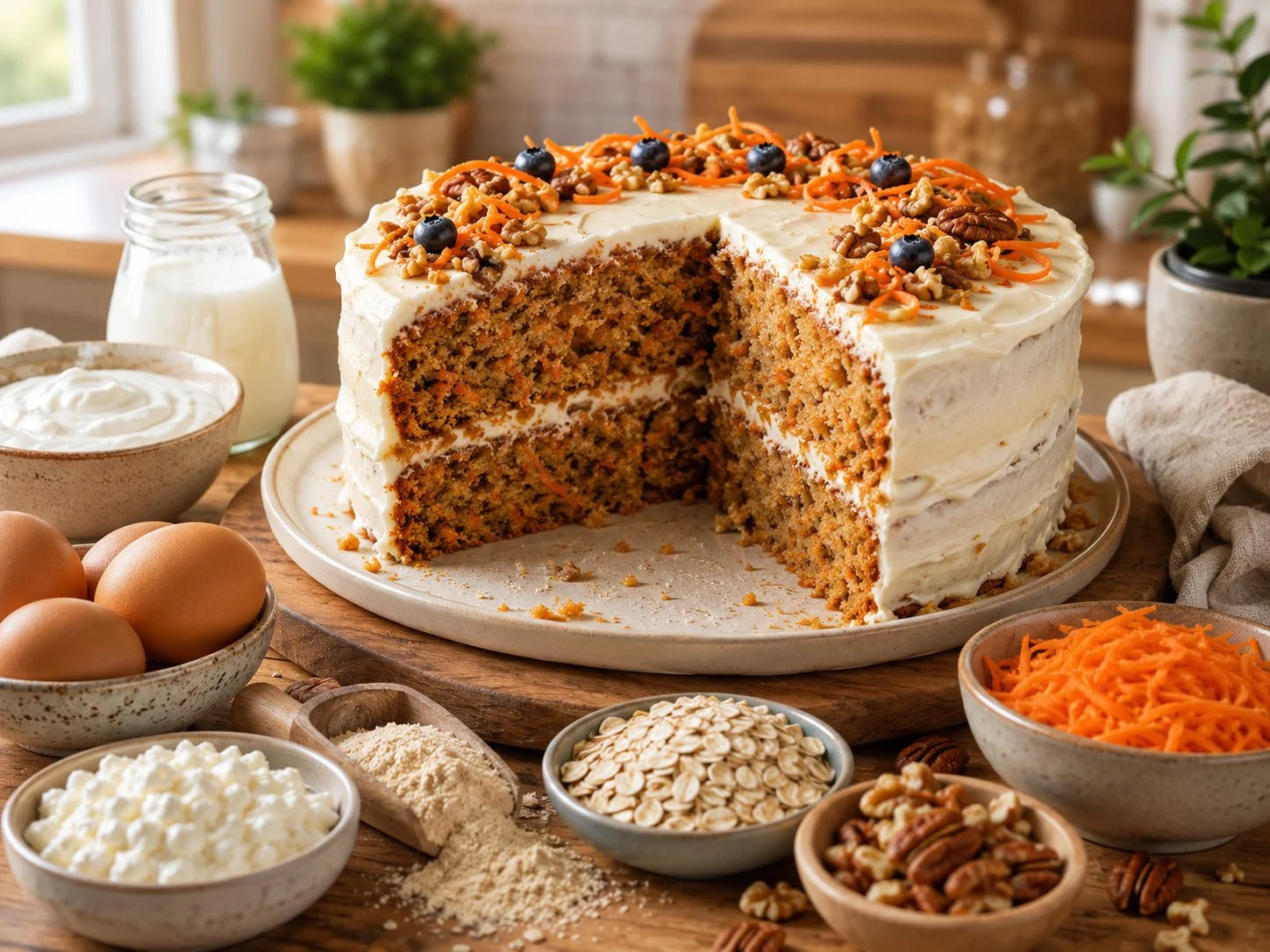
arrot cake is one of those desserts that sounds healthier than it is.
It has carrots. It has spices. It has rustic, wholesome energy. It feels like something a very fit person would eat after hiking near a lake and saying things like, “I just love being outside.”
Then you look at the recipe and realize it often contains enough oil, sugar, and cream cheese frosting to knock a horse into a nap.
Delicious? Yes.
Secretly a vegetable side dish? Absolutely not.
This high protein carrot cake recipe keeps the best parts of carrot cake: the moist crumb, warm cinnamon spice, grated carrots, tangy cream cheese frosting, and “I could eat this for breakfast” energy. But it also upgrades the protein with Greek yogurt, eggs, cottage cheese, and vanilla protein powder.
The goal is not to make a sad diet cake.
The goal is to make a carrot cake that tastes like carrot cake, but gives you more protein per slice and feels a little more useful than a standard bakery wedge covered in frosting thick enough to survive re-entry from space.
Why Make a High Protein Carrot Cake?
Carrot cake is actually a great candidate for a high-protein dessert because it already has built-in moisture.
That matters.
Protein powder can dry out baked goods very quickly. If you dump protein powder into a normal cake recipe without adjusting the moisture, you usually end up with something that looks like cake but chews like a yoga mat.
Carrot cake gives you a head start because grated carrots add moisture, texture, and natural sweetness. A medium raw carrot, about 72 grams, has only around 30 calories, plus about 2 grams of fiber and a strong amount of vitamin A activity from carotenoids. It is not a protein food, but it does help make the cake softer and more interesting.
The protein comes from smarter places: Greek yogurt, eggs, cottage cheese, protein powder, and the optional high-protein frosting.
For context, the FDA lists the Daily Value for protein as 50 grams, and says 20% Daily Value or more of a nutrient per serving is considered “high.” A slice of this cake can land around 14 to 20 grams of protein depending on your ingredients and serving size, which makes it a much more useful dessert than regular carrot cake.
And protein is not just a gym-bro word people yell while shaking a blender bottle. Research reviews have found that protein generally increases satiety more than carbohydrate or fat, which is one reason higher-protein meals and snacks can help people feel more satisfied.
In normal language: a higher-protein dessert may actually help you stop at one slice.
May.
No promises if you frost it aggressively.
Recipe Snapshot
Prep time: 15 minutes
Cook time: 25 to 32 minutes
Cooling time: 30 minutes
Total time: About 1 hour
Yield: 9 large slices or 12 smaller slices
Best for: Dessert, meal prep, post-workout sweet snack, higher-protein breakfast cake, healthier birthday cake
Ingredients
For the carrot cake:
1 1/2 cups finely grated carrots
1 cup plain Greek yogurt
1/2 cup low-fat cottage cheese, blended smooth
2 large eggs
1/3 cup unsweetened applesauce
1/4 cup maple syrup, honey, or sugar-free syrup
2 tablespoons neutral oil or melted butter
2 teaspoons vanilla extract
1 cup oat flour
2 scoops vanilla protein powder
1/4 cup almond flour, or extra oat flour
1/3 cup brown sugar substitute, coconut sugar, or regular brown sugar
1 1/2 teaspoons cinnamon
1/2 teaspoon ground ginger
1/4 teaspoon nutmeg
1 teaspoon baking powder
1/2 teaspoon baking soda
1/4 teaspoon salt
Optional: 1/4 cup chopped walnuts
Optional: 2 tablespoons raisins
For the high-protein cream cheese frosting:
4 oz light cream cheese, softened
1/2 cup plain Greek yogurt
1/2 scoop vanilla protein powder
1 to 2 tablespoons maple syrup, honey, or powdered sweetener
1 teaspoon vanilla extract
Pinch of salt
Optional: squeeze of lemon juice
Why These Ingredients Work
The Greek yogurt is doing a lot of heavy lifting here. A 170-gram container of plain nonfat Greek yogurt has about 100 calories and 17.3 grams of protein, according to USDA-sourced nutrition data. It also keeps the cake moist, which is critical when baking with protein powder.
Eggs add structure and more protein. One large 50-gram egg has about 6.3 grams of protein. In this recipe, the eggs help the cake hold together instead of collapsing into a pile of carrot sadness.
Cottage cheese sounds weird, but it works. Once blended, it disappears into the batter and adds moisture, protein, and tenderness. Nobody needs to know it is there. This is between you and the cake.
Oat flour gives the cake a soft, hearty texture. It works better here than all-purpose flour if you want a slightly more filling, breakfast-friendly carrot cake.
Almond flour adds tenderness and a little richness. You can skip it and use more oat flour, but the cake will be slightly less soft.
Protein powder boosts the protein, obviously, but it also makes the recipe trickier. That is why this cake uses yogurt, applesauce, carrots, and a little oil. Those ingredients protect the texture from becoming dry.
The oil is optional, but I recommend keeping it. Two tablespoons across the whole cake is not a disaster. It helps the cake taste like cake instead of a protein experiment conducted by someone who owns too many shaker cups.
Best Protein Powder for Carrot Cake
Vanilla whey protein powder is the easiest choice.
It blends well, tastes dessert-like, and works with the cinnamon, ginger, nutmeg, and cream cheese frosting. A whey-casein blend can also work, though it may make the batter thicker.
Plant-based protein powder can work, but it is more likely to make the cake dense. If you use pea protein or a vegan blend, add an extra 2 to 4 tablespoons of milk if the batter looks too thick.
The rule is simple: use a protein powder you already like.
If it tastes weird in a shake, it will taste weird in carrot cake. Baking does not turn bad protein powder into magic. It just makes the problem cinnamon-flavored.
How to Make High Protein Carrot Cake
Preheat your oven to 175°C / 350°F.
Grease an 8x8 baking dish or line it with parchment paper.
Grate the carrots finely. Do not use huge thick shreds unless you want the cake to feel like it has orange shoelaces in it. Fine shreds melt into the batter better and create a softer texture.
If your cottage cheese is chunky, blend it until smooth. This only takes a few seconds, but it makes a huge difference.
In a large bowl, whisk together the Greek yogurt, blended cottage cheese, eggs, applesauce, maple syrup, oil, and vanilla.
In another bowl, mix the oat flour, protein powder, almond flour, brown sugar substitute, cinnamon, ginger, nutmeg, baking powder, baking soda, and salt.
Add the dry ingredients to the wet ingredients and stir gently.
Do not overmix. Protein powder and oat flour can get dense if you beat them like they owe you money.
Fold in the grated carrots.
If using walnuts or raisins, fold them in now.
Spread the batter into the prepared baking dish.
Bake for 25 to 32 minutes, or until the center is set and a toothpick comes out with a few moist crumbs.
Do not wait until the toothpick is bone-dry. That is how protein cake becomes a household object.
Let the cake cool completely before frosting.
This is annoying, but important. If you frost warm cake, the frosting will slide around like it is trying to escape.

How to Make the High-Protein Cream Cheese Frosting
In a bowl, beat the softened light cream cheese until smooth.
Add the Greek yogurt, protein powder, sweetener, vanilla, salt, and optional lemon juice.
Mix until smooth and creamy.
If the frosting is too thick, add a tiny splash of milk. If it is too thin, add a little more protein powder or chill it for 20 minutes.
Spread the frosting over the cooled cake.
This frosting gives you the classic carrot cake flavor without needing a mountain of powdered sugar. It is tangy, sweet, creamy, and much more useful than regular frosting from a protein perspective.
Is it exactly the same as full-fat cream cheese frosting with a snowstorm of sugar?
No.
Is it good enough that you will still want to lick the spoon?
Yes. And that is the standard that matters.
Estimated Nutrition
The exact nutrition depends on your protein powder, yogurt, cottage cheese, sweetener, and whether you add walnuts, raisins, or frosting.
If you cut the cake into 9 large slices, each frosted slice will be roughly:
220 to 310 calories
14 to 20 grams of protein
22 to 35 grams of carbs
7 to 13 grams of fat
If you cut it into 12 smaller slices, each slice will be lighter, usually around:
165 to 240 calories
11 to 16 grams of protein
Use sugar-free syrup and a brown sugar substitute if you want the lower-calorie version.
Use maple syrup, walnuts, raisins, and real brown sugar if you want the more classic carrot cake version.
Both are valid. One is just more “fitness dessert,” and the other is more “I want cake, but I’m being smarter about it.”
How to Make It Higher Protein
Use a protein powder with at least 20 to 25 grams of protein per scoop.
Keep the high-protein frosting. Do not skip it if protein is the goal.
Use nonfat Greek yogurt or skyr.
Use blended cottage cheese instead of replacing it with more applesauce.
Cut the cake into 9 slices instead of 12 if you want each serving to carry more protein.
You can also serve a slice with extra Greek yogurt on the side. This turns it into something that feels like a carrot cake breakfast bowl, which is dangerously easy to justify.
How to Make It Lower Calorie
Use a brown sugar substitute instead of regular brown sugar.
Use sugar-free syrup instead of maple syrup or honey.
Skip the walnuts.
Skip the raisins.
Use light cream cheese instead of full-fat cream cheese.
Use nonfat Greek yogurt.
You can also reduce the oil to 1 tablespoon, but I would not remove it completely unless you are truly committed to the bit. Carrot cake needs some richness. Without it, you may end up with a spiced protein rectangle, and nobody asked for that.
Should You Add Walnuts or Raisins?
This is a personal and emotional issue.
Walnuts are classic in carrot cake. They add crunch, richness, and healthy fat, but they also add calories quickly.
Raisins add sweetness and chew, but some people believe raisins in dessert are a betrayal. I am not here to moderate that conflict.
For the most macro-friendly version, skip both.
For the best carrot cake experience, add walnuts.
For the full old-school carrot cake experience, add walnuts and raisins.
For maximum household controversy, add raisins and tell nobody until after they compliment the cake.
Common Mistakes to Avoid
The biggest mistake is using too much protein powder.
More protein powder does not automatically mean a better high-protein cake. At a certain point, it just means dry cake. This recipe uses enough protein powder to matter, but not so much that the cake turns into cinnamon insulation.
The second mistake is using thick carrot shreds.
Finely grated carrots are better. They blend into the cake, release moisture, and give you a smoother texture.
The third mistake is overbaking.
Protein baked goods continue to firm up as they cool. Pull the cake when it is set but still moist.
The fourth mistake is frosting too early.
Cool the cake first. Warm cake plus yogurt cream cheese frosting equals a delicious landslide.
The fifth mistake is using a bad protein powder.
This cake has warm spices, vanilla, carrot, and cream cheese frosting. It can hide some protein powder flavor, but it cannot hide protein powder that tastes like expired chalk.
How to Store High Protein Carrot Cake
Because this cake uses Greek yogurt, cottage cheese, eggs, and cream cheese frosting, store it in the fridge.
Keep it in an airtight container for up to 4 days.
The FDA recommends refrigerating perishable foods promptly and following the two-hour rule: foods that need refrigeration should not sit at room temperature for more than two hours, or more than one hour if the air temperature is above 32°C / 90°F.
You can also freeze the unfrosted cake.
Slice it, wrap the pieces tightly, and freeze for up to 2 months. Thaw in the fridge overnight, then frost after thawing if you want the best texture.
You can freeze it frosted too, but the frosting may change texture slightly. Still edible. Just less glamorous.
Easy Variations
For carrot cake muffins, divide the batter into a lined muffin tin and bake for 16 to 20 minutes.
For carrot cake breakfast bars, bake the cake in a slightly larger pan so it comes out thinner, then cut it into bars.
For pineapple carrot cake, replace the applesauce with crushed pineapple. Drain it lightly first so the batter does not get too wet.
For chocolate chip carrot cake, add 2 to 3 tablespoons of mini white chocolate chips or dark chocolate chips.
For extra spice, increase the cinnamon and add a pinch of cloves.
For a nut-free version, skip the almond flour and walnuts. Use extra oat flour instead.
For a dairy-free version, use dairy-free Greek-style yogurt, dairy-free cream cheese, and a plant-based protein powder. Expect a denser cake, and add extra milk if needed.
Is High Protein Carrot Cake Healthy?
It depends what you compare it to.
Compared with regular carrot cake, this version is usually higher in protein, lower in sugar, and more filling. It uses Greek yogurt, cottage cheese, eggs, carrots, oat flour, and protein powder instead of relying only on oil, sugar, white flour, and frosting.
Compared with grilled chicken and steamed vegetables, no, it is not “health food.”
But that is not the point.
The point is that this recipe gives you a better dessert option. It helps you keep cake in your life without turning every craving into a full dietary emergency.
That is how people actually stick to healthier eating.
Not by pretending dessert does not exist.
Not by eating sad snacks and calling them “treats.”
By making smarter versions of foods they already love.
Can You Eat This for Breakfast?
Honestly, yes.
This cake has protein, carrots, eggs, Greek yogurt, oat flour, and a reasonable amount of sweetness depending on how you make it. That puts it closer to a baked oatmeal/protein muffin situation than a traditional sugar bomb.
If you want to make it more breakfast-friendly, cut back on the frosting or use a thinner layer. You can also serve it with Greek yogurt and fruit.
A slice of high protein carrot cake with coffee is a strong move.
A little chaotic, maybe.
But strong.
Cake time!
This high protein carrot cake recipe is moist, spiced, creamy, and actually satisfying.
It has the classic carrot cake flavor, but with a much better protein profile. The Greek yogurt keeps it soft. The cottage cheese disappears into the batter. The eggs help it hold together. The protein powder boosts the macros. The carrots make it moist. The cream cheese frosting makes it feel like real carrot cake instead of a wellness compromise.
It is not a magic cake.
It will not do your taxes.
It will not build your biceps while you sleep.
But it is a better-for-you carrot cake that tastes good, stores well, and gives you a dessert you can actually fit into a high-protein diet.
And sometimes that is exactly what you need.
Because the best healthy dessert is not the one you force yourself to tolerate.
It is the one you genuinely want to eat again tomorrow.