Why Twitch Streamers Eating on Camera Makes People Snack More
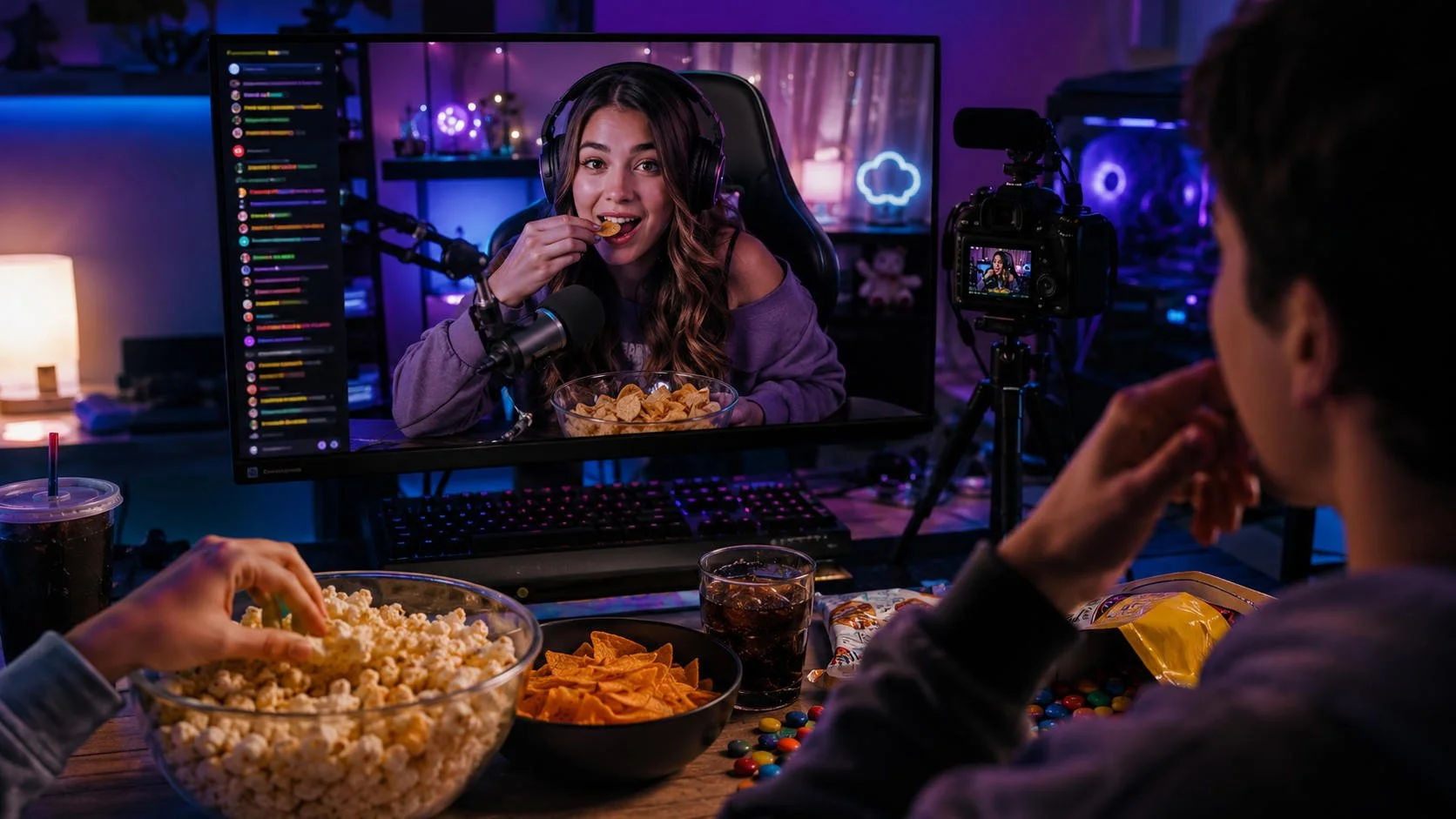
First, let us admit the obvious: watching a Twitch streamer eat on camera is a weirdly powerful little goblin ritual. A person you do not know personally takes a bite of noodles between matches, says “chat, this is fire,” and suddenly you are standing in your kitchen at 12:43 a.m. holding shredded cheese like a raccoon with student debt. Humanity conquered fire, agriculture, and global communications so we could watch a 24-year-old in a gaming chair chew into a condenser mic and accidentally summon the snack demon.
But this is not just “lol, gamers like chips.” The evidence points to a real cluster of effects: food cues trigger cravings, eating is socially contagious, livestreamers feel like companions, and Twitch is already packed with food and beverage marketing. The direct research on “Twitch streamer takes bite, viewer eats Doritos” is still limited, because science has standards and apparently will not yet let us name a study The Cheeto Parasociality Index. But adjacent research is strong enough to explain why eating on camera can make viewers snack more.
Twitch Eating on Camera Turns Food Into a Live Cue
Food on Twitch does not behave like food in your fridge. Your fridge is private, cold, and judgmental. Twitch food is animated, social, branded, narrated, and glowing inside an entertainment feed designed to keep you watching until your chair fuses with your skeleton.
A 2024 content analysis of Twitch videos found 133 food cues across 52 hours of livestreamed content, or 2.56 cues per hour. Most cues were high in fat, salt, or sugar; most were branded; and the average food cue lasted more than 20 minutes per hour. Only 2.3% had an advertising disclosure, because apparently subtlety now means “a logo quietly living on-screen like a sponsored fungus.”
That matters because food cues are not neutral. A meta-analysis of 45 reports involving 3,292 participants found that food cue reactivity and craving predicted eating and weight-related outcomes, with visual food cues such as pictures and videos showing meaningful effects. In other words, seeing food can make you want food. Astonishing development. Next, scientists may confirm that being hit with a brick encourages frowning.
Streamers Make Snacking Feel Social, Not Random
The key trick is that Twitch does not feel like television. Television talks at you. Twitch talks near you, around you, and sometimes directly to you if you donate $5 and ask a question no one should answer publicly.
Eating is already socially contagious. A systematic review and meta-analysis of 42 studies found strong evidence that people eat more with friends than when eating alone, especially with familiar co-eaters. Familiarity matters, which is exactly where streamers sneak in wearing a hoodie and a headset. After watching someone for weeks, months, or years, the viewer’s brain may file them under “known human,” despite the relationship being mostly pixels, chat emotes, and the streamer saying “what’s up, gang” to 9,000 people simultaneously.
Digital eating can also mimic company. A review on “digital commensality” describes how people use technology to create the feeling of eating with others, including mukbang-style broadcasts. The same review notes the downside: technology can distract people from internal fullness cues, making overconsumption more likely. So yes, the screen can be both your dinner companion and the tiny glowing wizard convincing you that you are “still hungry” because the stream just got interesting.
Watching Someone Eat Can Make Food Taste Better
There is also evidence that remote eating companions can increase intake. One study found that watching a remote-video confederate eat made participants rate food as tastier and eat more than when they watched non-eating videos. That is the human brain at its finest: “I saw a stranger eat potato chips, and now my popcorn has become cinema-grade cuisine.”
Another study found that a human voice, even apart from a visible human image, played an important role in making people perceive food as tastier and eat more while dining alone. This is especially relevant to Twitch, where the streamer’s voice is the campfire, the restaurant server, the friend at the table, and the unlicensed snack shaman all at once.
This helps explain why streamer eating is different from seeing a still image of a burger. The streamer is not just displaying food. They are reacting to it. They are chewing, praising, complaining, crunching, narrating, and inviting chat to participate in the holy sacrament of “bro, this sauce is insane.”
Parasocial Hunger: The Viewer Feels Included
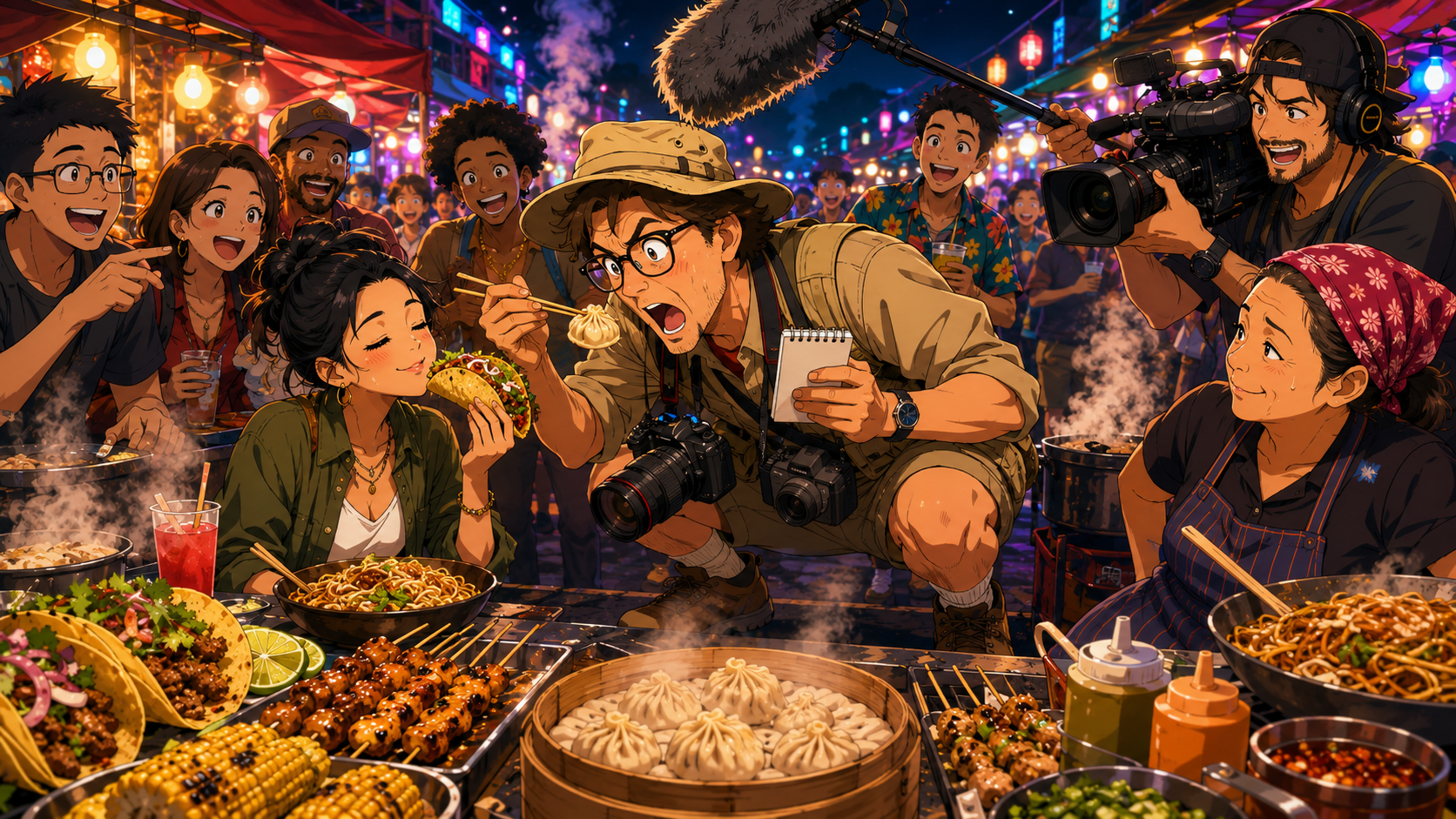
Mukbang research is useful here because it is basically Twitch eating’s loud cousin who brought a ring light and 4,000 calories of fried chicken. A scoping review found that people watch mukbang for social connection, vicarious pleasure, entertainment, and relief from loneliness. It also notes that viewers often experience a sense of digital commensality, or the feeling of eating with someone despite being physically alone.
A 2024 study of Korean adolescents found that 70.6% watched mukbang or cookbang content, and frequent viewing was associated with higher likelihood of consuming fast food, late-night snacks, sugary drinks, and caffeinated drinks. The study was cross-sectional, so it cannot prove the videos caused the eating habits; people who already snack at midnight may simply enjoy watching someone else do it professionally, like a sport. Still, the association is not exactly subtle.
Twitch adds another layer: live chat. A YouTube mukbang viewer may feel like they are eating with a creator. A Twitch viewer can feel like they are eating with a creator, a crowd, and a slot machine that occasionally says their username out loud. That is not dinner. That is a casino buffet with broadband.
Twitch Food Marketing Makes Snacking Feel Normal
Twitch also blurs the line between “this creator is hungry” and “this creator is a walking vending machine with opinions.” Research on food marketing in livestreaming environments found that Twitch users’ responsiveness to external food cues was associated with higher brand recall, product craving, and purchasing behavior. The study also points out that viewers may see streamers talk about, consume, or display products live while chat reacts in real time.
A 2025 randomized controlled trial tested exposure to a static unhealthy-food banner ad in a mock Twitch stream. The ad did not significantly increase immediate snack intake compared with a non-food ad, which is important because not every exposure turns viewers into helpless chip goblins. But the same study found that greater weekly use of video game livestreaming platforms was significantly associated with greater intake of the marketed snack, suggesting sustained exposure may matter more than one lonely banner sitting there like a corporate Post-it note.
So the problem is not one streamer eating one burrito. The problem is repetition. A snack appears on stream. A logo appears on overlay. Chat talks about it. The streamer praises it. You watch for three hours. Then tomorrow it happens again. Eventually, “I want chips” feels like your own idea, which is adorable, because marketing loves wearing a fake mustache and calling itself free will.
Why Gaming Makes It Worse
Gaming streams are built for sustained attention. Viewers settle in. The stream becomes background company. The streamer eats because streams are long, humans require fuel, and apparently taking a 15-minute off-camera meal break is now considered a betrayal of the content economy.
The viewer may also be eating distractedly. Research on screens and eating suggests that digital distraction can increase food intake by pulling attention away from hunger, satiety, and memory of what was eaten. Translation: when your brain is busy watching someone clutch a ranked match, it is not carefully logging each handful of pretzels like a tiny accountant with a visor.
This is why snack creep happens. You do not decide, “Tonight I shall consume 900 calories of crunchy desk gravel.” You decide, “I’ll have a few.” Then the streamer queues another match, chat becomes funny, your hand keeps operating the snack crane, and suddenly the bag is empty and everyone involved is pretending to be surprised.
Why Streamers Eating Feels More Persuasive Than Ads
A normal ad says, “Buy this snack.” Pathetic. Primitive. Basically a caveman with a coupon.
A streamer eating says, “I am currently enjoying this while doing the thing you also enjoy, in the same digital room where you hang out, with people you recognize from chat, during an experience that already feels casual and intimate.” That is not an ad. That is lifestyle osmosis.
Food becomes part of the stream’s world. The streamer’s meal is not separate from the entertainment; it is woven into it. The crunch happens during commentary. The drink appears beside the keyboard. The delivery order becomes a conversation. Chat asks where it came from. Someone says they just ordered the same thing. Congratulations, everyone, we invented a restaurant with no walls and worse posture.
How to Watch Twitch Without Becoming a Snack NPC
The solution is not to ban streamers from eating. They are people, not ornamental esports candles. The better move is to stop letting the stream make every snack decision for you.
Pre-portion snacks before the stream starts. Do not bring the whole bag unless your goal is to conduct a private archaeological dig to the bottom.
Eat an actual meal before long streams. A body running on vibes and iced coffee will eventually vote for nachos, and democracy will fail.
Keep lower-effort alternatives nearby: fruit, yogurt, popcorn, cut vegetables, tea, sparkling water. Yes, vegetables. I know. Horrifying. Civilization requires sacrifice.
Notice the trigger moment. Is it the streamer eating? A food ad? Chat talking about delivery? A loading screen? Your own boredom wearing a fake mustache? Naming the cue makes it less magical.
Mute or step away during eating segments if they hit you hard. Not forever. Just long enough to remind your brain that another person’s ramen is not a personal emergency.
The Real Reason Twitch Streamers Make People Snack More
Twitch eating works because it combines four powerful things: visible food, social presence, distraction, and repetition. The streamer’s snack is a cue. Their voice is company. Chat is social proof. The long stream is a runway. The viewer’s pantry is unfortunately nearby, waiting like a poorly supervised accomplice.
So no, Twitch streamers are not personally responsible for every pretzel you have ever eaten while watching someone fail a raid. But eating on camera turns snacking into part of the show. It makes food visible, social, normal, and weirdly contagious. It transforms a private craving into a group activity with emotes.
And that is how you end up snacking more: not because you are weak, not because streamers are evil, but because your ancient social-eating brain is now trapped inside a livestream economy where a person chewing noodles can become entertainment, marketing, companionship, and dinner bell all at once.
Beautiful system. Very normal. No notes.