Why TikTok Made Dubai Chocolate the Perfect Viral Dessert
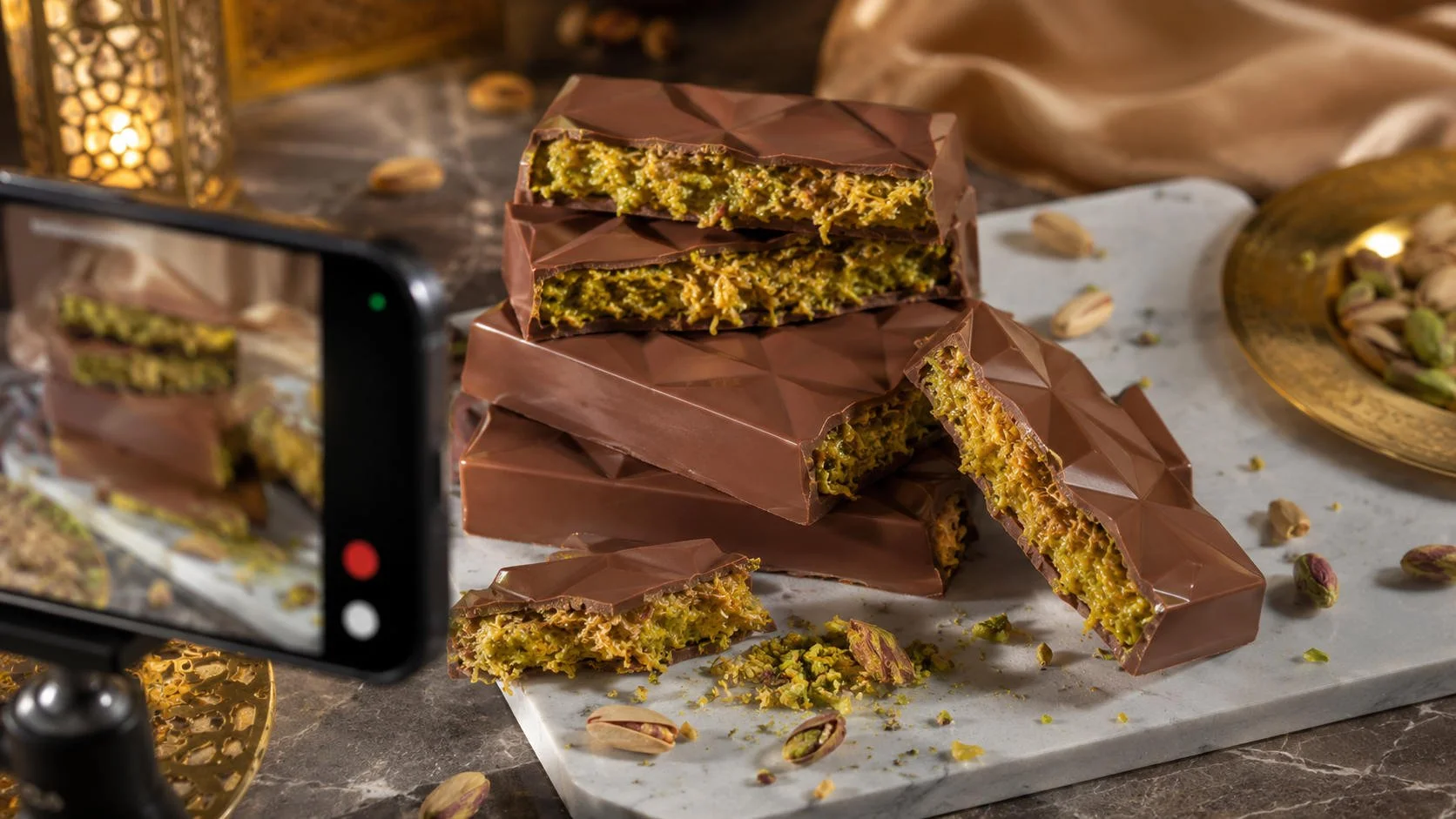
Dubai chocolate is not merely chocolate. Chocolate is what you buy at a gas station because your blood sugar is acting like a hostage negotiator. Dubai chocolate is a luxury brick of milk chocolate stuffed with pistachio cream, tahini, and crunchy knafeh pastry, then cracked open on camera like someone discovered treasure inside a sofa cushion.
It is dessert engineered for the worst parts of the modern internet and, annoyingly, also the best ones. It is pretty. It is crunchy. It is expensive. It is hard to get. It has a geographic name that sounds rich even before anyone explains what is inside. It has a glowing green filling that looks like pistachio pudding got promoted to creative director. It makes a noise when you bite it. It oozes. It snaps. It photographs like it has a ring light and a crisis manager.
Of course TikTok made it viral. TikTok did not find Dubai chocolate. TikTok recognized one of its own.
What Is Dubai Chocolate, Besides a Pistachio Goblin Trap?
The original viral bar came from Fix Dessert Chocolatier in Dubai. The now-famous flavor is generally known as “Can’t Get Knafeh of It,” because apparently no viral dessert is complete without a pun that makes copywriters feel briefly employed. The bar combines milk chocolate with a filling of pistachio, tahini, and crispy knafeh or kataifi pastry strands, drawing on the Middle Eastern dessert knafeh. People and Food & Wine both identified Fix Dessert Chocolatier as the source of the viral bar and described the filling as pistachio plus knafeh inside a thick chocolate shell.
The story gets even more internet-perfect because the bar was not originally some multinational snack committee’s brainstorm called “Project Green Crunch.” Founder Sarah Hamouda started Fix in 2021, and reporting has traced the idea to pregnancy cravings and a desire to create a nostalgic, culture-blending chocolate bar. Lindt’s own release about its Dubai chocolate version credited Hamouda and Fix Dessert Chocolatier with creating the first recipe in 2021.
So the product already had the holy trinity of viral food backstory: personal origin, cultural reference, and a filling that looks illegal in twelve states.
The Viral Dubai Chocolate Video Had the One Thing FoodTok Worships: The Crunch
The bar’s rise is usually linked to a December 2023 TikTok video by Dubai-based food influencer Maria Vehera. People reported in August 2024 that the clip had 74.2 million views and 4.8 million likes; by April 2025, The Guardian reported that early footage praising Dubai chocolate had passed 120 million views. That is not a dessert review. That is a small nation watching someone bite chocolate and collectively losing access to reason.
The video worked because it gave TikTok exactly what TikTok wants: immediate sensory payoff. There is no 14-minute preamble about someone’s grandmother, no sepia-toned childhood memory involving a field and a measuring spoon, no recipe blog hostage situation where you scroll past a family tree to find “add flour.” There is a hand, a bar, a snap, a green interior, a crunch, and everyone’s brain turns into a shopping cart with feelings.
Food & Wine nailed the mechanics: the bar’s gooey-nutty-crunchy filling creates ASMR-style sounds when it breaks, and the soft interior gives it the visual drama needed for TikTok and Instagram. In other words, it does not merely taste good. It performs good. This is dessert as stunt casting.
Dubai Chocolate Was Built Like a TikTok Object, Whether It Meant To Be or Not
TikTok’s own 2024 trend report described the platform’s trend signals as Curiosity Peaked, Storytelling Unhinged, and Bridging the Trust Gap. It also said users come to TikTok looking for more than one “right answer,” and that discovery leads to new interests and real-world action.
Dubai chocolate checked those boxes like it had been raised by the algorithm in a lab.
Curiosity? The viewer sees a giant chocolate bar with a neon-green middle and immediately asks, “What in the luxury swamp is that?”
Storytelling? It is not just candy; it is a Dubai-only bar, inspired by knafeh, made by a small chocolatier, discovered by a creator, copied by everyone with a silicone mold and a dream.
Real-world action? People hunted it, remade it, overpaid for it, reviewed it, complained about it, defended it, and turned pistachio cream into the new edible personality test.
The platform’s report also describes “serendipitous scrolling,” where people discover hyper-specific interests and shareable obsessions. Dubai chocolate is exactly that: a hyper-specific obsession that somehow became globally legible. It is not just “a chocolate bar.” It is that chocolate bar. The one with the green stuff. The one that crunches. The one TikTok made you crave despite you having lived peacefully for decades without needing shredded pastry in a candy shell.
The Filling Looks Like Content, Which Is Sadly a Compliment Now
A normal chocolate bar has a terrible viral handicap: you bite it, and the inside looks like more chocolate. Congratulations, brown rectangle. Riveting. Alert the Academy.
Dubai chocolate, by contrast, has a reveal. The outside is often decorated with colorful splatter, but the inside is the actual trap: pistachio-green cream tangled with crispy pastry. People noted that the bar is colorful inside and out, while Le Monde described the original as a milk chocolate bar with an artsy exterior and a pistachio-tahini-crispy pastry filling.
That reveal matters because TikTok food does not merely need to be delicious. It needs to be understandable in half a second to someone half-watching on a phone while avoiding laundry. The green filling does all the work. It screams flavor, texture, novelty, and “film me before I collapse.”
This is why Dubai chocolate spread faster than a polite little truffle ever could. A truffle says, “I am elegant.” Dubai chocolate says, “BREAK ME OPEN, YOU COWARD.”
The Scarcity Made Everyone More Annoying, Which Means It Worked
The original Fix bars were famously hard to get outside Dubai. Food & Wine reported that Fix’s pistachio-knafeh candy was only available via delivery in Dubai, and that the brand stated it had no website, physical store, or authorized resellers.
That kind of scarcity is jet fuel for TikTok. The internet does not want what is available. The internet wants what is unavailable, overpriced, possibly fake, and described by strangers using phrases like “worth the hype.” Human beings see “only available in Dubai” and immediately start behaving like Victorian treasure hunters, except the treasure is sugar wrapped around nut paste.
Scarcity also made the copycat economy inevitable. If people cannot buy the real thing, they will either try a dupe or make it at home, because TikTok users see a global supply constraint and think, “I have a saucepan and unresolved ambition.” Food & Wine reported that copycat versions appeared on Amazon and Etsy, while candy shops across the U.S. began selling their own takes.
That is the genius and stupidity of viral dessert culture: not being able to buy the thing becomes part of the marketing for the thing.
Copycat Recipes Made Dubai Chocolate Even More Viral
The homemade versions were not a side effect. They were the second wave. Once viewers realized the bar could be recreated with chocolate, pistachio cream, tahini, and toasted kataifi, the trend escaped the original product and became a format. That is when a dessert stops being a dessert and becomes a content template, because apparently even candy needs franchise potential now.
The Guardian published Ravneet Gill’s DIY version in 2025, describing it as inspired by Sarah Hamouda’s viral bar and built around crunchy kataifi pastry and pistachio cream; the recipe even suggests Shredded Wheat as a substitute when kataifi is hard to find, which is both practical and spiritually unhinged in the way only viral baking can be.
This is why the trend became so durable. Dubai chocolate was not just something to watch. It was something to attempt. Viewers could participate by buying a dupe, hunting the original, making their own, judging someone else’s version, or posting a video where they snapped a bar open like a tiny edible autopsy.
TikTok loves food that invites imitation. One person makes the thing. Ten thousand people make the thing worse. Another five thousand make it better. Then someone puts it in a cookie, cheesecake, ice cream, croissant, milkshake, cereal bar, and probably a candle because commerce is a raccoon with a printer.
Pistachio Was Already Having a Main Character Moment
Dubai chocolate did not invent pistachio hype, but it absolutely shoved pistachio into the spotlight and handed it a tiny green award. By 2025, Waitrose said searches for “pistachio” on its website were up more than 500% year over year, and it launched its own pistachio chocolate bar after Dubai-style chocolate demand surged.
That matters because pistachio is basically luxury peanut with better branding. Peanut butter is lunchbox nostalgia. Pistachio cream is “I own linen pants.” Same general nut category, wildly different emotional tax bracket.
Dubai chocolate benefited from pistachio’s visual and cultural positioning. Green is instantly recognizable. Pistachio suggests richness. It also photographs better than beige fillings, which is unfair but true. Hazelnut spread tastes wonderful, but on camera it can look like a mudslide with branding. Pistachio cream looks like a dessert with a trust fund.
The Trend Got So Big It Started Harassing the Pistachio Supply Chain
Dubai chocolate’s virality did not stay trapped on phones. It wandered into the physical world and started bothering agriculture, because apparently we cannot have one nice crunchy bar without involving international commodity markets.
The Guardian reported in April 2025 that the TikTok trend contributed to an international shortage of pistachio kernels, with prices rising from $7.65 to $10.30 per pound, while pistachio supplies were already pressured by a poor U.S. harvest and high demand. The same report noted that Iranian producers had exported 40% more pistachios to the UAE in the six months to March than in the previous twelve months.
This is the sentence that should make everyone stare into the middle distance: a TikTok chocolate trend helped move pistachio markets. Somewhere, an economist had to explain that the global nut situation was being affected by people filming dessert snaps in portrait mode. Civilization is going beautifully, thank you.
Big Brands Saw the Green Goo and Sprint-Waddled Toward It
Once the trend proved it could move actual product, major chocolate brands and supermarkets joined the stampede with the elegance of pigeons fighting over a sandwich. Lindt launched a limited-edition Dubai Chocolate in the U.S. in December 2024, priced at $14.99, with pistachio butter, crispy kadayif, and tahini inside milk chocolate.
The trend then kept spreading through mainstream retail. Lindt launched a Dubai Style Chocolate Bar in Canada in September 2025 after rapid sellouts in Europe and the U.S.; that version featured a pistachio-rich filling with 45% pistachios and crispy kadayif. Waitrose also said demand for the Lindt Dubai Style Chocolate Bar in March 2025 was high enough that it enforced a two-bar-per-customer limit.
When supermarkets start rationing a £10 chocolate bar, the trend has officially left “fun internet snack” territory and entered “people are embarrassing themselves near the confectionery aisle.”
“Dubai” Did a Lot of Branding Work
Let’s not pretend the name did nothing. “Dubai chocolate” sounds expensive before you even know what it is. It conjures luxury hotels, gold-plated nonsense, futuristic skylines, and the kind of dessert that arrives on a plate too large for the table. If this same bar were called “Gary, Indiana Pistachio Crunch,” it might still taste good, but nobody would pay $54 on Etsy for it unless Gary had undergone a major rebrand.
Le Monde noted that the product’s online spread also served as a form of visibility for Dubai itself, with the term “Dubai Chocolate” becoming globally recognizable and even appearing in tourism-style promotion. That does not mean every person eating a dupe is participating in a geopolitics seminar. Most of them are just trying to bite the green square before it melts. But the name matters because viral foods are also symbols. “Dubai” gave the bar a luxury costume. TikTok gave it a stage. Pistachio gave it a color palette. Knafeh gave it crunch.
Congratulations, dessert has a branding department now.
Why This Dessert Beat Other Viral Sweets
Dubai chocolate had more going for it than most viral desserts. It was not just weird, like butter boards. It was not just easy, like mug cakes. It was not just ugly-delicious, like some cursed air-fryer invention made by a man named Brad in a garage.
It had multiple hooks at once.
It had visual contrast: brown shell, green filling, colorful exterior.
It had sound: snap, crunch, chew, pastry crackle.
It had texture: hard chocolate, creamy pistachio, crispy kataifi.
It had story: Dubai chocolatier, knafeh inspiration, viral creator discovery.
It had scarcity: original bars hard to get outside Dubai.
It had participation: easy enough to copy, hard enough to brag about.
That is a disgusting amount of viral efficiency for one dessert. Most foods get one trick. Dubai chocolate showed up with a whole circus and a passport.
How to Try Dubai Chocolate Without Getting Played Like a Sugary Fool
The useful advice is simple: do not treat every “Dubai chocolate” listing online as if it descended from dessert heaven on a pistachio cloud. Food & Wine warned in 2024 that Fix had no authorized resellers and that lookalikes and questionable listings were circulating online. So if a random website wants gift cards, wire transfers, or your firstborn in exchange for “authentic Dubai viral chocolate,” perhaps do not become the main character in a confectionery scam documentary.
If you buy a version, look for the ingredients that actually define the trend: chocolate, pistachio, crispy kataifi or knafeh pastry, and ideally tahini. The tahini matters because it gives the filling a sesame nuttiness and keeps the bar from tasting like pistachio frosting trapped in a chocolate bunker. A lot of lazy dupes skip it, because of course they do. Why respect balance when you can simply make green sugar cement?
If you make it at home, toast the kataifi properly. Pale, limp pastry is not crunch; it is sadness wearing threads. Use decent chocolate, because the shell is half the experience. Chill it well before cutting or snapping. And do not overfill the bar unless your goal is to create pistachio lava and spend the evening scraping viral content off your counter.
The Real Reason TikTok Made Dubai Chocolate Perfect
TikTok made Dubai chocolate the perfect viral dessert because the bar understood the platform’s deepest truth: people do not just want to eat food online. They want to watch food become an event.
A regular dessert sits there. Dubai chocolate transforms. It breaks. It reveals. It crunches. It oozes. It makes viewers ask questions, then gives them a reason to search, buy, bake, argue, compare, and repeat the whole ritual with someone else’s video. It is not passive. It is a tiny chocolate machine for curiosity.
The product also arrived at the exact moment internet food culture had become obsessed with sensory extremes: louder crunches, thicker fillings, brighter colors, bigger cross-sections, more dramatic reveals. Dubai chocolate did not politely enter the room. It kicked open the door wearing pistachio-green boots and yelled, “Film me.”
And everyone did.
Dubai Chocolate Was Not Random. It Was Algorithm Dessert.
Dubai chocolate became TikTok’s perfect viral dessert because it had everything the platform rewards: novelty, texture, sound, color, scarcity, luxury, imitation, and a clean visual payoff that even the most exhausted thumb-scroller could understand before the next video loaded.
It was culturally specific enough to feel interesting, but familiar enough to crave. It was premium enough to feel aspirational, but copyable enough for home cooks to attempt. It was scarce enough to create hysteria, but adaptable enough for supermarkets and chocolate giants to turn into products. It was pretty enough for Instagram, noisy enough for TikTok, and expensive enough for everyone to complain while still wanting a bite.
That is the modern viral dessert formula: make it beautiful, make it crunchy, make it hard to get, and make sure the inside looks like something people will screenshot.
Dubai chocolate did all of that. Then it dragged pistachios, supermarkets, copycat bakers, luxury chocolatiers, and half the internet into its sticky green orbit.
Not bad for a chocolate bar. Slightly humiliating for the rest of us.