Why a Massive Assault on Iran Still Might Not Topple the Regime
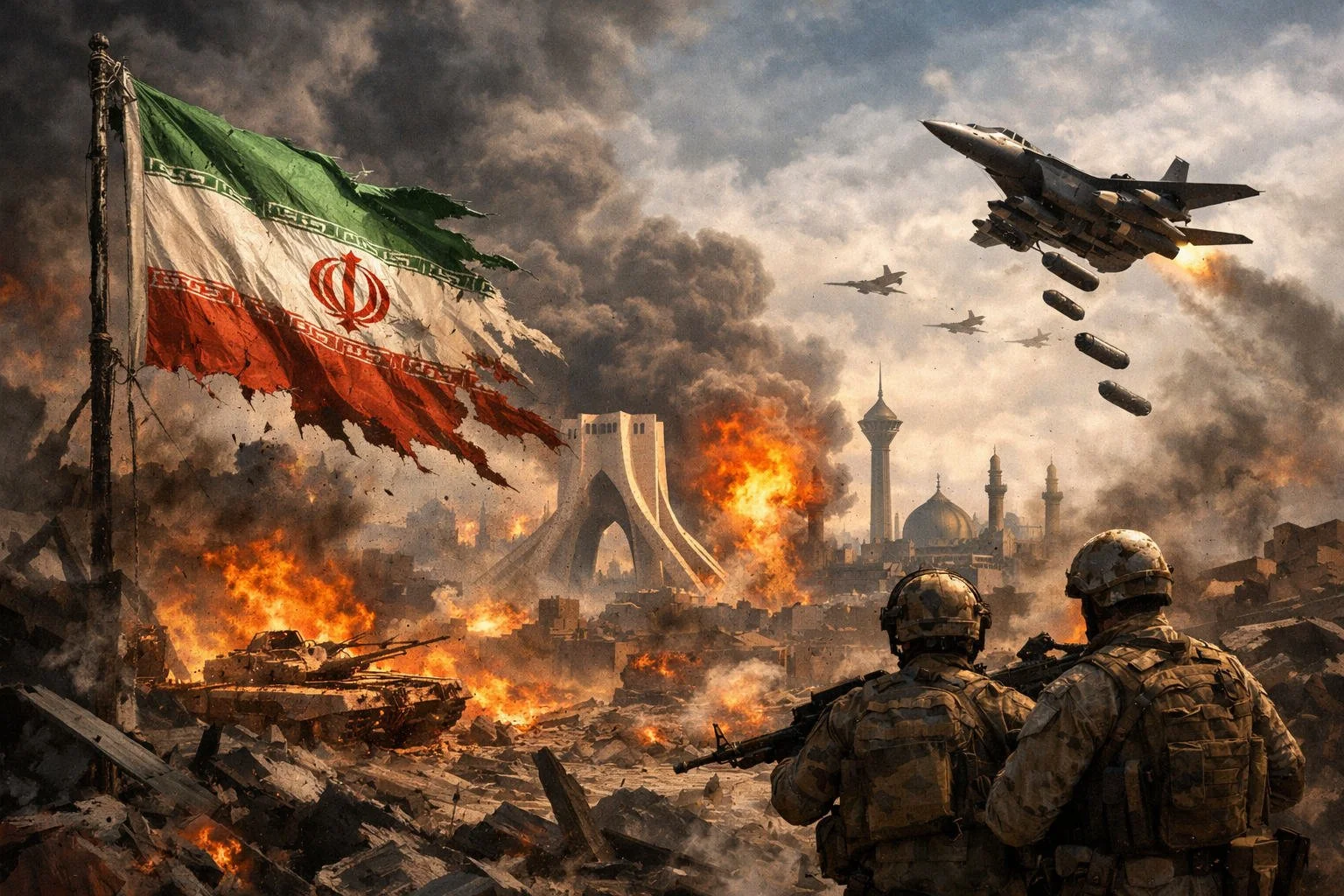
The most unsettling detail in the latest phase of the Iran war is not just the bombing, the missile fire, or the oil shock. It is the possibility that all of this destruction may still fail to achieve the political objective that many hawks clearly want: regime change. According to a Washington Post report published March 7, a classified National Intelligence Council assessment concluded that even a large-scale U.S. assault on Iran would be unlikely to oust the Islamic Republic’s entrenched military and clerical establishment. The NIC is designed to reflect the combined judgment of America’s 18 intelligence agencies, which makes that conclusion especially striking.
That matters because it cuts directly against the fantasy that air power can blow open a political vacuum and produce a friendly replacement government. The report, as described by people familiar with it, said Iran’s system was built with continuity mechanisms meant to survive even the killing of the supreme leader. It also reportedly judged that Iran’s fragmented opposition was unlikely to seize power in either a limited leadership-targeting campaign or a broader assault on state institutions. Reuters has separately reported that U.S. officials are deeply skeptical that Iran’s battered opposition can topple the theocratic system now in place.
That is the real nightmare for anyone doomscrolling this war: not a clean ending, but a grinding middle. A state can be wounded without collapsing. A leadership network can lose senior figures and still keep functioning. A country can absorb strikes, radicalize under pressure, and widen the battlefield faster than the attacking coalition expected. Reuters reported this week that the war has already expanded beyond Iran’s borders, with Tehran striking Israel and Gulf states that host U.S. military facilities, and with Hezbollah renewing hostilities from Lebanon.
In other words, the central danger is not simply “Will Iran fall?” It is “What happens if Iran does not fall, but instead hardens, retaliates, and drags more countries, markets, and supply chains into the fight?” That is where the NIC finding becomes bigger than a single intelligence tidbit. It suggests the war may be entering the most dangerous category of modern conflict: one in which tactical destruction outruns strategic realism.
Iran’s system was not designed as a normal presidential republic where killing or removing one person necessarily decapitates the state. Power is distributed across clerical bodies, security institutions, and patronage networks. The Assembly of Experts is the formal body charged with selecting the supreme leader, while the Islamic Revolutionary Guard Corps sits at the center of coercive power. Even before the latest war, Iran specialists noted that the supreme leader is chosen by the Assembly of Experts and that in practice the IRGC operates as the more powerful security actor reporting to the supreme leader with limited parliamentary oversight.
That institutional depth is exactly why outside bombing campaigns so often misread authoritarian resilience. Reuters reported after the killing of Ayatollah Ali Khamenei that analysts warned against assuming rapid collapse, stressing that Iran’s political order was deliberately built to avoid dependence on a single leader and to disperse authority across clerical institutions, the security apparatus, and broader power networks. Reuters also reported on March 7 that under Iran’s constitution, a three-man council has temporarily assumed the supreme leader’s role until the Assembly of Experts chooses a successor, with the constitution allowing up to three months for that choice.
That does not mean Iran is stable. It means instability does not automatically equal overthrow. Reuters describes a succession struggle now underway, with hardline clerics calling for the swift appointment of a new supreme leader and the Revolutionary Guards tightening their grip on wartime decision-making. The implication is grim: a successful strike campaign may not produce moderation or surrender. It may instead shift influence toward the very institutions most invested in escalation and internal repression.
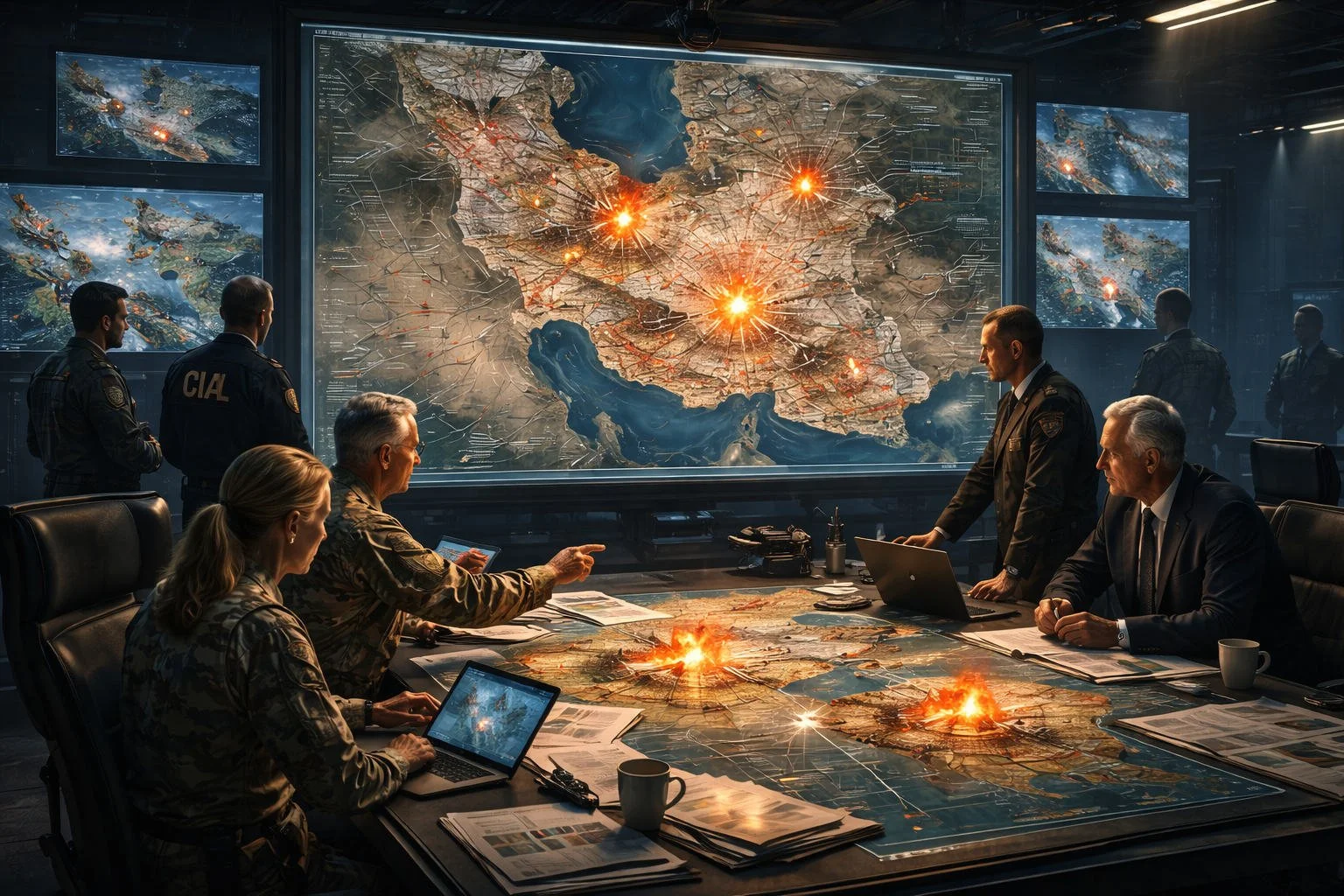
There is a broader historical reason intelligence analysts would be skeptical. Air campaigns can destroy assets, degrade military capabilities, and raise costs. What they usually do not do, by themselves, is manufacture a political order the attacker likes. A Royal Canadian Air Force Journal analysis notes that there is not a large body of evidence showing strategic air attacks alone have directly coerced regimes into capitulation, and explicitly argues that decapitation is not likely to topple governments by triggering popular rebellion or a coup. The article cites Robert Pape’s argument that foreign attack tends to unleash nationalism and fear of treason, making collective action against even unpopular regimes less likely.
That same logic is showing up in expert commentary on the current war. In an interview with TIME, Pape argued that attempts to produce regime change with air power alone have never worked and that bombing tends to inject nationalism into the target society, often leading either to a slightly modified version of the same regime or to a more radical successor. His broader warning is that precision and tactical success can create an illusion of control while the underlying politics move in the opposite direction.
This is why the NIC assessment is more serious than a narrow bureaucratic disagreement. It is effectively saying that even if the bombs hit their targets, even if command nodes are wrecked, even if senior leaders are killed, the political end state Washington may want could still remain out of reach. And if that is true, then every additional strike risks buying escalation without buying resolution.
You can already see the consequences spreading outward. Reuters reported that the widening war has choked major air and sea transport corridors through the Middle East and slowed shipping through the Strait of Hormuz to a near-halt. The U.S. Energy Information Administration says roughly 20 million barrels per day flowed through Hormuz in 2024, equal to about 20% of global petroleum liquids consumption, and about 20% of global LNG trade also transited the strait. This is why even people who do not follow geopolitics suddenly start doomscrolling the second oil jumps and tanker maps flood social feeds.
The market effects are not abstract. Reuters reported Brent crude at $90 per barrel, gasoline averaging $3.32 a gallon in the U.S., spot gas prices in Europe up about 80%, disruptions to aluminium shipments, and warnings from major firms and banks that a prolonged energy shock could hit growth and revive inflation. The report described knock-on effects reaching chemicals, autos, airlines, semiconductors, and even regional data center infrastructure. That means the war is no longer just a military story. It is becoming a household-cost story, a supply-chain story, and potentially a recession story.
And that is before you even get to the proxy and retaliation risks. Reuters says Hezbollah has renewed hostilities with Israel, Gulf states have been hit by drones and missiles, and Iran’s retaliatory strategy appears aimed at raising the costs for Israel, the United States, and their partners across the region. When wars stop being geographically tidy, the temptation is to say “this is how World War III starts.” That phrase is emotionally powerful, but analytically the more precise warning is this: wars become globally dangerous long before they become formally global. They do it by disrupting trade, energy, shipping lanes, air routes, investor confidence, and allied decision-making.
The succession issue makes everything even more combustible. Reuters reported that clerics want a new supreme leader named quickly, but wartime conditions could complicate the Assembly of Experts’ work. Other analysis, including from the Council on Foreign Relations, says leadership transition in Iran could move along three overlapping paths: regime continuity, military takeover, or regime collapse. That is a useful framework because it rejects the lazy assumption that there are only two outcomes, victory or collapse. The most plausible path may be continuity first, harder-line security dominance second, and only then some later political rupture if the war, economy, and public anger push the system past its capacity to cope.
That brings us to the hardest truth in the room. The intelligence community may be warning that the Islamic Republic is more resilient than the people bombing it want to believe. Reuters has also reported that Iran’s opposition remains fragmented and that many activists are wary of launching mass unrest while the country is under foreign attack. That does not mean the regime is loved. It means foreign war can freeze, fracture, or redirect domestic opposition instead of converting it into revolution on command.
So what should readers take from all this? First, the current war can still get worse even if it does not produce regime change. Second, resilience in Tehran does not equal stability in the region; in fact, it may mean a longer and more punishing conflict. Third, the intelligence finding reportedly making its way through Washington is a direct challenge to the clean-war illusion. Destroying targets is not the same thing as controlling outcomes.
For doomscrollers, that is the headline beneath the headline. The scary scenario is not simply that the bombs fail. It is that they partially succeed: enough to kill leaders, disrupt shipping, spike oil, activate proxies, harden the Guards, and spread retaliation across borders, but not enough to end the regime they were supposed to break. That is how modern wars turn into open-ended crises. Not with one dramatic mushroom-cloud moment, but with a sequence of “manageable” escalations that keep proving less manageable than advertised.