What Zelda Cooking Gets Right About Food as Functional Fuel
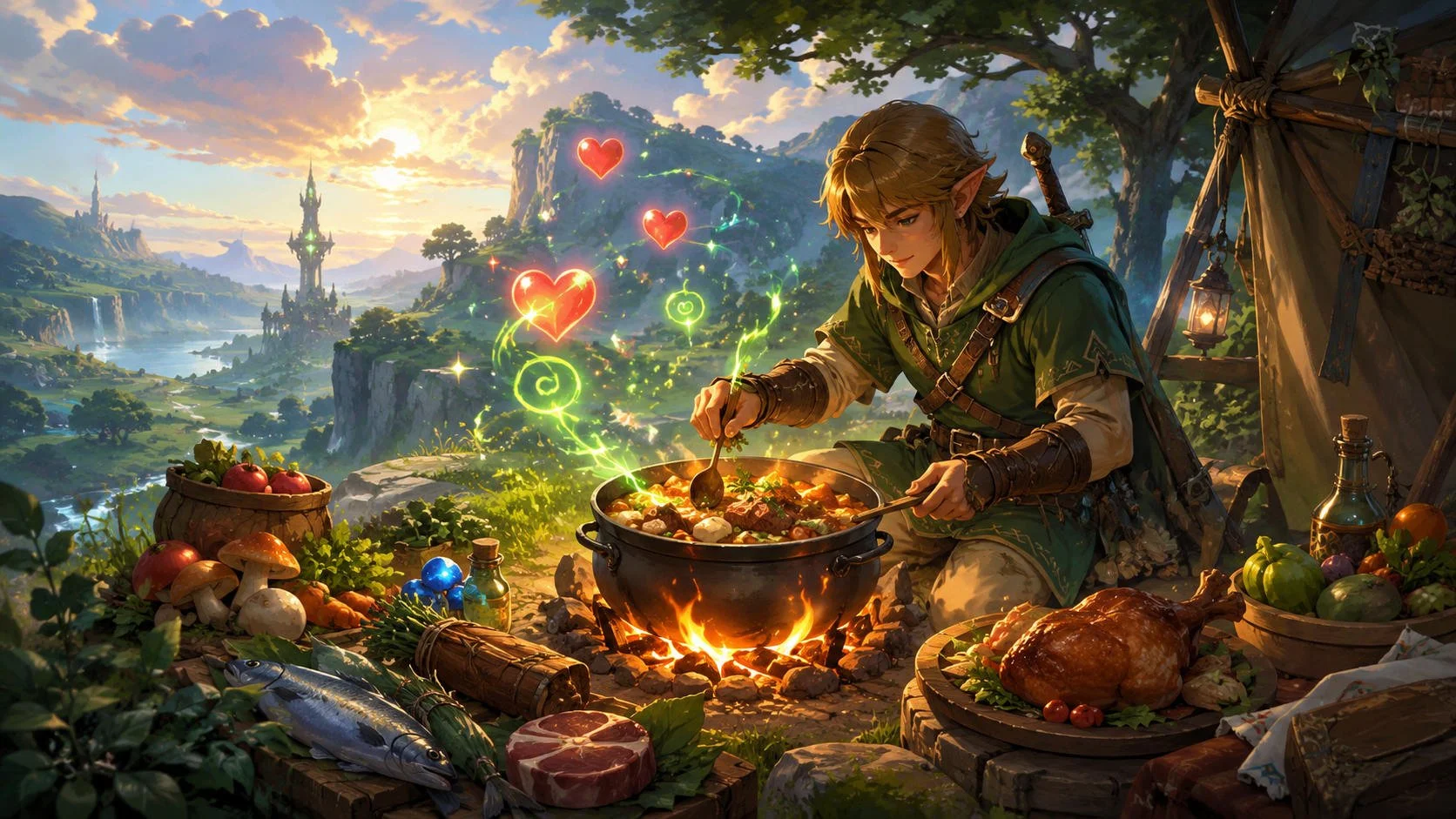
Zelda cooking understands food better than most wellness influencers, which is upsetting because the chef is a silent elf man who stores mushrooms in his pants and cooks by throwing five random objects into a pot until the accordion music approves.
In Breath of the Wild and Tears of the Kingdom, food is not lifestyle content. It is not “clean eating.” It is not a grain bowl photographed beside a linen napkin by someone who says “nourish” too much. Food is functional. It heals you, warms you, cools you, strengthens you, quiets you, speeds you up, refills stamina, restores gloom-broken hearts, and occasionally becomes Dubious Food, which is what happens when meal prep gives up and joins a swamp.
Nintendo itself frames cooking as survival. In Breath of the Wild, Link can cook ingredients over a fire to create dishes with different benefits, because apparently saving Hyrule on an empty stomach is frowned upon. In Tears of the Kingdom, Nintendo’s own guide says gathering materials is “the key to survival,” recommends stocking up on heart-replenishing foods like Raw Meat and Apples, and notes that cooked dishes restore more hearts than raw food.
Zelda Cooking Makes Food a Tool, Not a Personality
The genius of Zelda cooking is that it does not moralize food. A mushroom is not “good.” A pepper is not “bad.” Meat is not “clean” or “dirty” or “ancestral” or whatever word someone with a podcast is currently yelling at eggs.
Food has a job.
Spicy peppers help with cold resistance. Stamella Shrooms and Stambulbs can create stamina-recovery meals. Cooked food restores more hearts than raw ingredients. Ingredients with names like “stam” or “spicy” create specific effects.
That is useful. That is clear. That is how adults should talk about food, but instead we built a culture where a bagel needs a defense attorney.
In Zelda, the question is not “Is this food pure?” The question is, “Will this help me climb the frozen mountain without dying like a decorative idiot?”
Excellent question. More nutrition advice should sound like that.
Cooking Is Preparation, Not Aesthetic Theater
Link cooks because Hyrule is trying to kill him in multiple climates. Snowy mountain? Cook spicy food. Desert heat? Make cooling food. Long climb? Pack stamina meals. Big fight? Bring defense, attack, and healing. Trip into the Depths? Better have gloom recovery unless your plan is to become a cautionary loading screen.
This is food as planning. Not cute planning. Not “Sunday reset” planning where someone arranges blueberries like they are apologizing to Instagram. Actual planning. You look at the problem ahead and prepare food that solves it.
That is what real functional fuel should be. A meal should match the job. Long hike? Bring carbs, water, salt, and something with protein. Hard workout? Eat enough to recover. Long workday? Pack something that prevents the 3 p.m. vending-machine hostage crisis. Do not bring a single sad protein bar and call it “balance.” That is not a plan. That is a nutritional Post-it note.
Stamina Food Is the Real Hero, Because Climbing Is Violence
Zelda’s stamina system is one of the best arguments ever made for carbohydrates, even if the game does not say the word carbohydrates because it has dignity.
You climb, sprint, glide, fight, and swim. Your stamina drains. You eat. Your stamina returns. Simple. Elegant. A little rude, honestly, because it makes real life look badly designed.
Sports nutrition agrees with the broad principle: during high physical activity, energy and macronutrient needs, especially carbohydrates and protein, have to be met to support performance, maintain body weight, replenish glycogen, and repair tissue.
So yes, Zelda is basically correct: if you are about to scale a cliff in the rain while wearing three swords and a shield, maybe do not fuel yourself with vibes and black coffee.
Buff Meals Teach Specificity
The best thing about Zelda cooking is that meals are specific. You do not eat “healthy food.” You eat food for cold resistance, attack up, defense up, stealth, speed, stamina, or heart recovery.
That matters because “healthy” is too vague to be useful. Healthy for what? A marathon? A nap? A boss fight? A cold morning? A late shift? A child’s birthday party where the only available food is frosting and rage?
Zelda makes food situational. A stealth meal is useful when you are sneaking. An attack meal is useful before a fight. A stamina meal is useful before climbing. This is much better than real-life nutrition culture, where people act like one universal perfect diet exists and it somehow involves buying powder from a man who does shirtless videos in a garage.
Tears of the Kingdom Made Cooking Even More Tactical
Tears of the Kingdom improves the whole cooking-as-fuel idea by saving meals in a Recipe Book, so players can recreate dishes instead of relying on memory, screenshots, or the ancient method of “throw stuff in pot, hope.” Nintendo’s guide explains that meals you make are saved in the Recipe Book and can be accessed from the Food tab.
It also added more cooking convenience. Bon Appétit noted that Tears of the Kingdom includes a reference cookbook for ingredient combinations and lets Link use single-use portable pots to cook on the go, instead of only batch-cooking whenever he finds a cooking fire.
This is brilliant because it turns food into field gear. A portable pot is basically a camping stove for a man who regularly fights skeletons and builds illegal aircraft out of logs. You do not just cook at home. You cook where the problem is.
Real life could learn from this. The best emergency snack is the one you actually have with you. The best meal plan is the one that survives the day, not the one that looked attractive in a spreadsheet before Monday punched it in the mouth.
Elixirs Are Smoothies for People With Worse Ingredients
Zelda also separates meals from elixirs, which is fun because elixirs are basically what happens when a smoothie bar loses its mind and starts accepting lizard legs.
The system makes intuitive sense: food ingredients become meals; critters and monster parts become elixirs. Bon Appétit describes Link collecting monster parts, herbs, flowers, fish, tomatoes, truffles, and other ingredients, with many ingredients offering benefits like stamina restoration, stealth, or defense when cooked.
This is functional fuel with fantasy logic. Eat the fish stew for hearts. Drink the bug potion for climbing in rain. Consume the cursed swamp smoothie because the mountain is slippery and apparently dignity is optional.
Real-life version: sometimes food is enough. Sometimes you need electrolytes, caffeine, medication, or a specific supplement because the task demands it. The difference is that real supplements should be evidence-based, not made from a bokoblin horn and blind optimism.
Gloom Recovery Is the Best Example of Food as Medicine, But Make It Purple and Horrible
Tears of the Kingdom adds gloom, because Hyrule looked at regular damage and said, “What if trauma had a floor texture?”
Gloom can reduce Link’s maximum hearts, especially in the Depths, and certain foods help counter it. Nintendo Life explains that Sundelions, found on sky islands, can be cooked to recharge hearts and cure gloom affliction; Dark Clumps can also be mixed into meals to provide temporary gloom resistance.
That is a perfect functional-food mechanic. You identify the threat, find the ingredient, cook the countermeasure, and stop wandering into cursed sludge like a tourist in Crocs.
It also captures something real: food is not just calories. Food can be context. Warm soup when sick. Salt and fluids after sweating. Carbs before endurance work. Protein after strength training. Easy food during grief. High-fiber food when your digestive system is staging a coup. The need changes. The food changes. Revolutionary. Someone tell meal-prep TikTok.
What Zelda Gets Wrong, Because Link Is a Maniac
Of course, Zelda also gets food hilariously wrong, because it is a video game and not a registered dietitian with a sword.
Link can pause during mortal danger and inhale six full meals while a Lynel politely waits for digestion to finish. He can eat roasted meat, mushroom skewers, rice balls, fish, curry, and a suspicious elixir in three seconds, then immediately backflip with the grace of a gymnast who has never met acid reflux.
Real humans cannot do this. If you eat five plates of seafood rice before climbing a cliff, you will not gain stamina. You will gain regret and maybe a nap.
Zelda food is functional, but it is instant. Real food is functional over time. Your body has digestion, absorption, hydration, energy balance, and the tedious bureaucracy of being made of organs.
Zelda’s Best Lesson: Pack for the Problem
The best real-world lesson from Zelda cooking is simple: pack food for the problem you are actually facing.
Going hiking? Bring carbs, fluids, salt, and enough calories to avoid becoming the friend who gets weirdly quiet and then angry at a granola wrapper.
Training hard? Get protein and carbohydrates afterward; ACSM notes that building muscle requires resistance training, energy balance, adequate sleep, and carbohydrate plus protein in the right amounts and timing.
Working late? Pack something better than “I’ll figure it out,” which is how adults end up eating vending-machine crackers in a parking lot like a raccoon with a calendar invite.
Traveling? Bring snacks that survive being crushed. Zelda would not enter the Depths with one apple and vibes. Why are you entering an airport with nothing but gum and moral confidence?
Zelda Also Understands That Food Should Be Useful and Enjoyable
The game is not just numbers. That matters. The meals look fun. The cooking jingle is charming. Link’s little cooking animation makes a mushroom skewer feel like an event. The recipes have names, icons, and personality. Even the failures are funny. Dubious Food is basically the game saying, “This is garbage, but fine, eat it, you little wilderness raccoon.”
This is what real functional eating often gets wrong. It becomes too grim. Too clinical. Too spreadsheet-adjacent. Food can be fuel without becoming joyless beige paste in a plastic tub. A meal can support performance and still taste like someone cared whether you continued living.
Zelda’s food is useful, but it is not punished for being delightful. That is the secret.
The Real Reason Zelda Cooking Works
Zelda cooking works because it turns eating into strategy. Food is not decoration. It is preparation. It is survival. It is adaptation. It is how you cross the mountain, win the fight, sneak past the monster, survive the cold, recover from gloom, and climb the cliff you absolutely should not be climbing during rain, but will anyway, because gamers are stubborn little goats with thumbs.
That is what Zelda gets right about food as functional fuel: the best meal is not the most virtuous meal. It is the meal that helps you do the thing in front of you.
Sometimes that means stamina. Sometimes warmth. Sometimes recovery. Sometimes defense. Sometimes a plain apple because you are down half a heart and panicking near a moblin with boundary issues.
Food should serve the adventure.
Just maybe, in real life, do not eat five mushroom skewers mid-fight and expect your dentist to understand.