What Taco Bell Teaches About Cravings After 10 PM
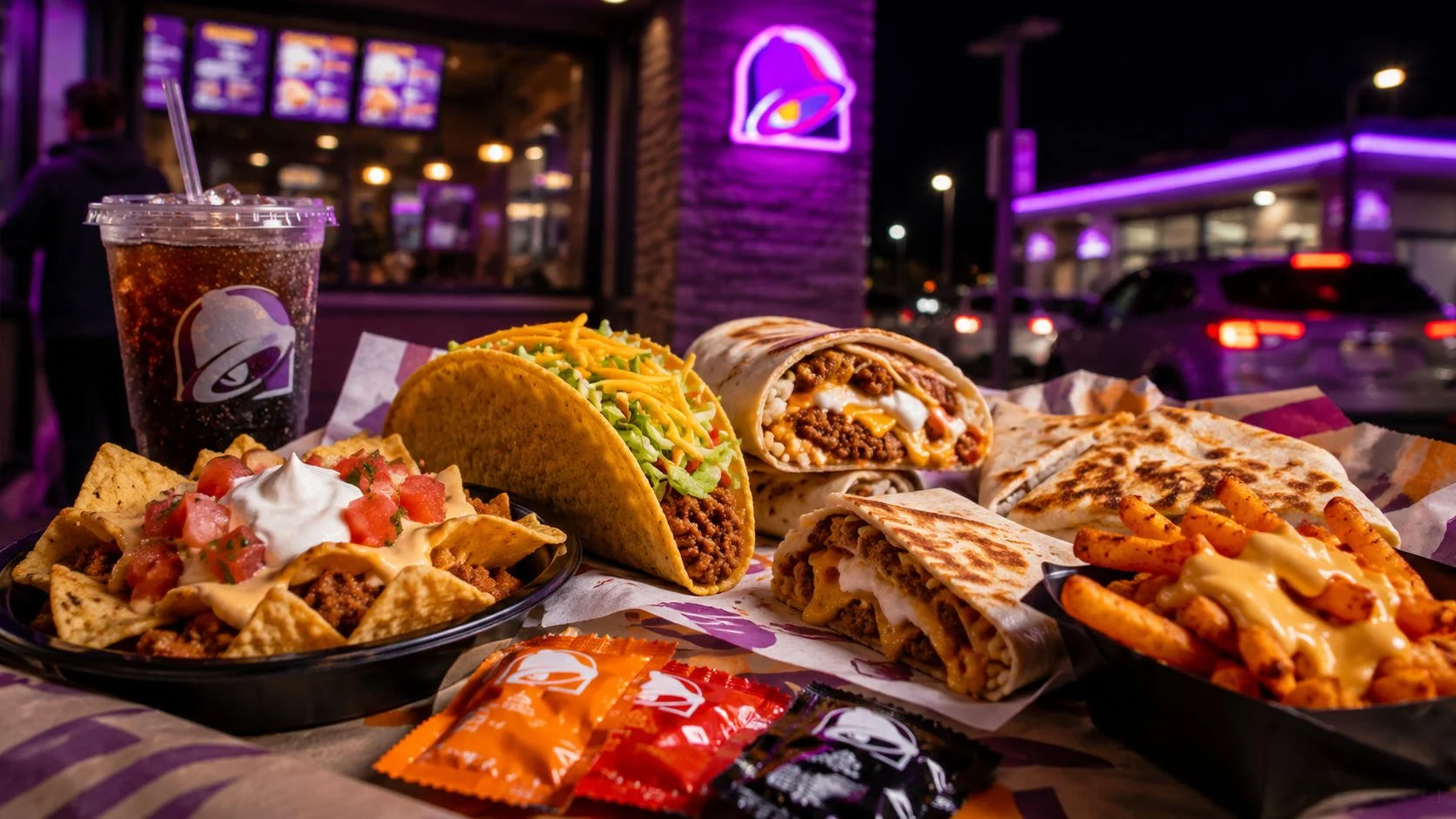
Taco Bell after 10 p.m. is not dinner. Dinner already happened. Dinner had vegetables and consequences. Taco Bell after 10 p.m. is a confession made through a drive-thru speaker by someone whose body has confused “I’m tired” with “I need a Crunchwrap Supreme and a Baja Blast the color of radioactive mermaid coolant.”
This is Taco Bell’s true genius. It does not merely sell tacos. It sells permission. Permission to believe that late-night hunger is not a mistake, but a meal category. Permission to look at the clock, see 10:43 p.m., and say, “The day is not over. The day has entered its nacho phase.”
And the annoying thing is, Taco Bell understands the human body better than most humans do.
Taco Bell Knows 10 PM Is When Your Brain Stops Negotiating
There is a reason Taco Bell’s late-night appeal feels different from normal fast food. A burger at noon is lunch. A burrito at 11:18 p.m. is an event. A private little collapse wrapped in a tortilla.
Taco Bell’s own late-night page says most Taco Bell restaurants are open late and do not close until midnight or later, though hours vary by location. It also says Taco Bell delivers late, with delivery hours varying by location. In other words, the brand has built itself around being available right when your better judgment clocks out and your sauce-packet personality clocks in.
This is not an accident. Taco Bell spent years branding late-night hunger as “Fourthmeal,” the meal between dinner and breakfast, a phrase that sounds like it was invented by a college sophomore, a stoner philosopher, and a marketing department locked in a room with 40 tacos. QSRWeb reported that Taco Bell launched Fourthmeal nationwide in April 2006, with TV, radio, outdoor ads, a website, and in-store merchandising.
That is the brilliance: Taco Bell did not wait for you to feel weird about eating after dinner. It gave the weirdness a name.
Your Body Is Kind of Built to Betray You at Night
The 10 p.m. Taco Bell craving is not only about weakness, laziness, or “just one more scroll.” There is biology involved, which is very rude because now your nacho impulse has peer-reviewed backup.
A controlled study found that the internal circadian clock increases hunger and appetite in the evening, independent of food intake and other behaviors. The study found a hunger trough around the biological morning and a peak around the biological evening, with similar rhythms for appetite for sweet, salty, and starchy foods. Translation: your body spends the evening saying, “What if chips, but urgently?”
This is where Taco Bell becomes less a restaurant and more a trapdoor under your circadian rhythm. Its menu is practically built from the substances your nighttime brain wants: salt, starch, fat, heat, cheese, crunch, and sauces in tiny packets that make people behave like medieval potion collectors.
Your 10 p.m. self does not crave steamed cod and a thoughtful side of asparagus. Your 10 p.m. self wants a soft tortilla full of beans, rice, cheese sauce, sour cream, potatoes, and enough customization to feel like you are still in control of the disaster.
You are not.
Sleep Debt Turns the Menu Into a Vision Board
Taco Bell is especially powerful after 10 p.m. because late-night cravings often travel with sleep debt. And sleep-deprived people do not become noble food decision-makers. They become raccoons with payment apps.
A PNAS study found that insufficient sleep increased total daily energy expenditure slightly, but increased energy intake more, especially at night after dinner. So yes, being tired can make you eat more at exactly the time Taco Bell is sitting there glowing like a cathedral of shredded cheese.
Another study found that sleep restriction increased ghrelin, the so-called hunger hormone, and was associated with more calories from snacks, especially carbohydrates. This is science confirming what every person has learned at 12:07 a.m. while holding a burrito: tired people do not want celery.
Taco Bell’s late-night menu works because it is not asking you to make one decision. It is asking you to surrender to a feeling. Tired? Crunchy taco. Stressed? Quesadilla. Lonely? Nachos. Slightly drunk? Cheesy Gordita Crunch, obviously, because apparently your mouth needed furniture.
Taco Bell Sells Cravings, Not Cuisine
Taco Bell’s menu language knows exactly what it is doing. It does not say, “Please examine our restrained and regionally faithful culinary program.” No. It says cravings. Loudly. Constantly. Like a brand that knows the human soul is mostly cheese and timing.
The official Taco Bell menu says it serves made-to-order and customizable tacos, burritos, quesadillas, nachos, vegetarian options, fountain drinks, and desserts, from breakfast at select locations to late night. It also points budget-minded customers toward value options like the Cheesy Roll Up and Cheesy Bean and Rice Burrito.
That word — customizable — is crucial. Late-night cravings are rarely elegant. They are specific in the way dreams are specific. You do not merely want a burrito. You want a burrito with potatoes added, grilled, no sour cream, extra creamy jalapeño, and maybe nacho fries if available, because your brain has become a committee and every member is wearing a hoodie.
Taco Bell lets the craving become architecture.
The Crunchwrap Is Basically Late-Night Engineering
The Crunchwrap Supreme may be Taco Bell’s most perfect after-10 p.m. object because it solves every late-night food demand at once: handheld, crunchy, soft, warm, cheesy, messy but not instantly catastrophic, and shaped like a hexagonal apology.
Taco Bell lists the Crunchwrap Supreme as including seasoned beef, reduced-fat sour cream, tomatoes, lettuce, and nacho cheese sauce, with add-ons like seasoned rice, three-cheese blend, jalapeños, black beans, potatoes, steak, chicken, seasoned fries, and more.
This is not a menu item. This is a personality test folded into a tortilla.
After 10 p.m., the Crunchwrap’s real gift is containment. Nachos are chaos. Tacos are fragile. Burritos can become tube-based regret. But the Crunchwrap says, “I have taken your desire for crunch, beef, cheese, sauce, lettuce, and delusion, and I have sealed it into a geometric unit.”
A civilization capable of this should probably have solved more serious problems by now. But no, we chose edible origami.
Cheap Food Feels Even More Powerful After Dark
Taco Bell also teaches that cravings are financial creatures. After 10 p.m., people are not always looking for a meal. They are looking for an inexpensive emotional reset that does not require a reservation, pants with a waistband, or interaction with a host named Caleb.
Taco Bell’s Luxe Value Menu currently features 10 items priced at $3 or less, including items like the Spicy Potato Soft Taco and Cheesy Bean & Rice Burrito. Earlier value-menu refreshes emphasized full-sized, “more satiating” items priced at $3 or less.
That matters because late-night hunger often arrives with low standards and a budget. Taco Bell says: you may be tired, broke, and spiritually damp, but here is a burrito you can afford.
This is not fine dining. This is not trying to be fine dining. This is the joy. Taco Bell is food for the moment when you do not want a chef. You want a warm object with cheese in it.
The Menu Is Built for the Half-Decision
At 10 p.m., no one wants to make a full decision. A full decision is “What should we cook?” A half-decision is “Taco Bell?” and then everyone in the car says yes because the group has already lost access to executive function.
Taco Bell thrives on half-decisions. It is familiar enough that you do not need to think, customizable enough that you can pretend you are thinking, and cheap enough that the decision does not require a family budget hearing.
This is what cravings want: low friction. Not nutrition. Not reflection. Frictionless movement from impulse to object.
A salad requires self-concept. Taco Bell requires a lane.
The Late-Night Drive-Thru Is a Ritual, Not a Transaction
Taco Bell after 10 p.m. is also social. Even when you are alone, it feels like joining a secret society of people who have all made questionable but understandable choices.
There is a reason late-night Taco Bell runs are part of college life, road trips, post-concert hunger, shift-worker meals, post-bar survival, and “we have been watching Netflix for six hours and now need something hot” diplomacy. The drive-thru becomes a tiny democratic institution. Everyone is equal beneath the speaker box. Everyone has sauce preferences. Everyone believes their order is normal.
It is not.
But Taco Bell’s gift is that it does not judge you. It cannot. It invented Fourthmeal. The brand looked at America eating after dinner and said, “No, no, this is a category now.”
That is either marketing genius or moral collapse. Probably both. Delicious distinction.
Late Eating Is Not Always Evil, But It Is Usually Not Salad
Here is where the responsible adult portion of the article enters wearing orthopedic shoes and ruining everyone’s Baja mood.
Late-night eating is not automatically bad. Night-shift workers exist. Travel exists. Busy schedules exist. Hunger is real. Sometimes a late meal is practical, not sinful. The problem is that late-night eating often involves high-calorie, highly palatable foods, large portions, and distracted eating — exactly the emotional habitat where a Nachos BellGrande can reproduce.
Research on late meal timing suggests it can affect hunger and metabolism. A 2022 Cell Metabolism study found that late isocaloric eating increased hunger, decreased energy expenditure, and altered metabolic pathways in adults with overweight or obesity.
That does not mean one 10:30 p.m. burrito ruins your life. Please do not become a wellness goblin about this. It means the timing, portion, sleep, stress, and frequency matter. Eating Taco Bell late once is dinner. Eating Taco Bell late every night because your day is a smoking crater of caffeine and missed meals is a pattern with nacho cheese on it.
What Taco Bell Teaches About the Craving Brain
Taco Bell teaches that cravings are not just hunger. They are timing, memory, mood, convenience, budget, fatigue, salt, starch, habit, reward, and availability wrapped together in a tortilla and sold with fire sauce.
The craving after 10 p.m. is rarely, “My body requires precisely 530 calories of Crunchwrap.” It is usually, “I am tired, underfed, overstimulated, bored, stressed, awake too late, and I would like a warm handheld object that asks nothing of me.”
Taco Bell wins because it meets that moment exactly. Not with nutrition theater. Not with judgment. Not with a $17 grain bowl featuring radish emotions. With tacos, burritos, nachos, quesadillas, value items, customization, late hours, and a brand voice that has never once said, “Are you sure?”
Dangerous. Comforting. Extremely American.
How to Handle a 10 PM Taco Bell Craving Without Becoming a Sauce-Packet Casualty
The best move is not to pretend you are above cravings. Nobody is above cravings. Some people just call them “intuitive eating” and buy better plates.
Eat enough during the day. A 10 p.m. Taco Bell run is often the ghost of a skipped lunch wearing nacho cheese.
Decide before you open the app. Apps are not menus. They are casinos with sour cream. Know what you want before the customization portal starts whispering add-ons into your weakened little brain.
Order one satisfying thing, not six “small” things that combine into a carbohydrate furniture set. A burrito and water is food. A burrito, taco, fries, cinnamon twists, Baja Blast, and a quesadilla “for later” is a sleep study with cheese.
Use customization for sanity, not chaos. Add beans. Add potatoes. Make it vegetarian. Go lighter on sauces. Or do the opposite occasionally because life is short and fire sauce exists. Just know which version of yourself is ordering.
And do not confuse being tired with being hungry every time. Sometimes you need food. Sometimes you need sleep. Sometimes you need to stop scrolling at midnight like your thumb is mining for meaning.
The Real Lesson
What Taco Bell teaches about cravings after 10 p.m. is that hunger is never just biological and never just cultural. It is both. Your circadian rhythm may increase evening appetite. Sleep debt may make high-calorie snacks more appealing. Stress and boredom may start whispering. Then Taco Bell appears, open late, cheap enough, customizable enough, salty enough, warm enough, and familiar enough to turn that vague internal static into an order number.
Taco Bell did not create the late-night craving. It named it, fed it, branded it, wrapped it, toasted it, and handed it to you through a window with sauce packets.
That is why it works.
After 10 p.m., Taco Bell is not selling Mexican-inspired fast food.
It’s selling a way to make the night feel briefly manageable.
Order a Crunchwrap at 11:42 p.m. and call it closure.