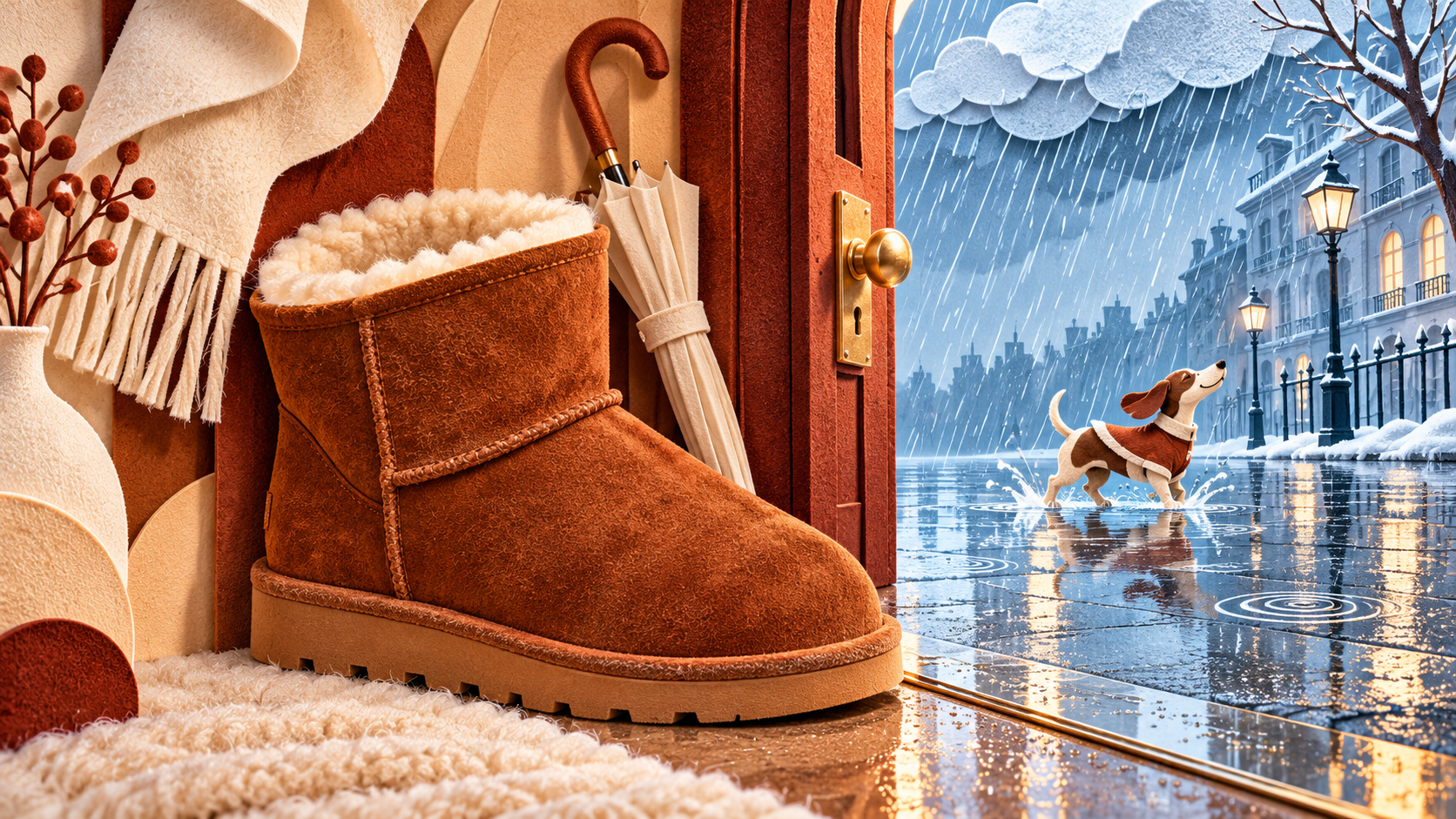
The UGG Classic Ultra Mini has a water-repellent treatment. That does not give it the same wet-weather specification as UGG’s waterproof winter boots. If you are choosing shoes for rain, slush or a snowy commute, the useful distinction is the exact model’s construction—not how warm the boot looks.
On the US product pages checked November 8, 2026, the Classic Ultra Mini and Adirondack Boot XXV make very different promises. One lists a surface treatment and casual use. The other specifies waterproof construction. That difference should do more of the shopping for you than the fleece-lined silhouette.
The Classic Ultra Mini’s label has limits
UGG lists a post-applied water-repellent finish on the Classic Ultra Mini, style 1116109. Its details also identify sheepskin, a low shaft and casual use. The page does not give this model the waterproof membrane specification found on the Adirondack comparison below.
The practical reading is narrow: buy the Classic for the features the manufacturer actually lists. A soft lining is a reason to consider comfort; it is not evidence that the boot can handle the puddle between the sidewalk and your car.
UGG’s regional care guidance helps explain the wording. It describes the treatment on selected products as providing initial resistance to light water. That is a qualified description of a finish, rather than a universal waterproof rating for everything sold under the Classic name.
It also leaves an obvious question unanswered: how long can your particular pair stay out in a particular downpour? These labels do not provide a tested minutes-in-rain allowance. An answer such as “ten minutes should be fine” would sound helpful while adding a number the evidence does not contain.
A waterproof UGG is a different model decision
The Adirondack Boot XXV, style 1170591, lists waterproof leather and suede, a membrane bootie and a gusset. UGG also gives it a manufacturer cold-weather rating of minus 32°C and specifies a Vibram ICETREK outsole.
Those are attributed product specifications. They are not our own comfort or traction results, and the temperature rating is not a promise that every wearer will feel comfortable at that temperature. Nor does an outsole name establish that you cannot slip.
What the comparison does establish is that UGG sells materially different weather specifications within the same brand. “Are UGGs waterproof?” is therefore too broad to settle a purchase. The more useful question is whether the exact pair in your basket has the construction your route calls for.
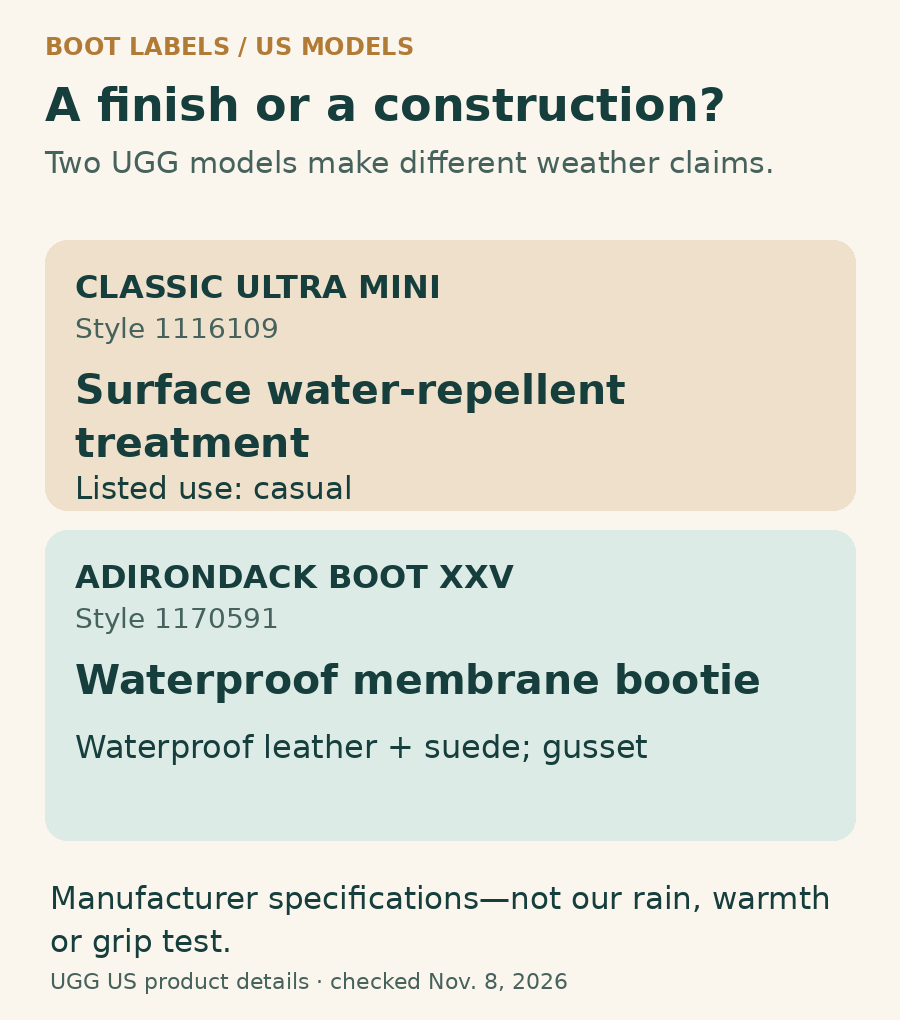
The Classic Ultra Mini 1116109 lists a surface water-repellent treatment and casual use. The Adirondack Boot XXV 1170591 lists a waterproof membrane bootie, waterproof leather and suede, and a gusset. These specifications do not establish a tested exposure time or slip-proof performance.
Rain, snow and a commute are different shopping problems
For an indoor-heavy day with a short walk outside, you may decide that the Classic’s style is the feature you want. That is a personal tradeoff. It does not require pretending the finish has passed a rain-boot test.
For an unavoidable wet route, our buying recommendation is to start with explicitly waterproof footwear. Look for a named construction claim on the product page, then read its conditions. The Classic’s surface treatment alone does not answer that requirement.
For snow, separate the jobs you need the boot to perform: managing moisture, keeping you comfortable and providing suitable traction. A single cozy-looking photograph cannot establish all three. Even a winter-rated model deserves a check of its precise specifications and instructions rather than a blanket endorsement based on its category.
Think about the entire trip, too. A pair chosen for the office can be different from the pair used to get there. Changing shoes may be a less frustrating compromise than asking one fashionable boot to satisfy an outdoor requirement it does not claim.
Protector spray belongs in the care plan
UGG sells a Protector product and recommends its Cleaner & Conditioner before applying Protector for best results. Follow the current instructions for your exact materials and product.
The important buying distinction survives the spray purchase: adding a care treatment does not establish that your Classic now has a waterproof membrane. Our advice is to budget for appropriate care without treating the bottle as a substitute for choosing the right boot in the first place.
UGG’s regional care page also advises against machine washing and dry cleaning, and describes natural drying. Regional instructions should be read in context; check the guidance supplied with your own pair before deciding on a treatment. This comparison does not establish a US warranty outcome for water exposure or an assured repair for stained boots.
The detail to check before checkout
Open the product details and record the style number. Then look for the actual water-protection wording. If waterproof construction is a requirement, a description limited to repellency leaves that requirement unanswered.
The Classic Ultra Mini can still be the boot you want. The better purchase is the one made with a clear idea of its job: a casual style with a listed treatment, rather than a weather guarantee inferred from the lining. Let the forecast choose the footwear requirement before the outfit chooses the color.