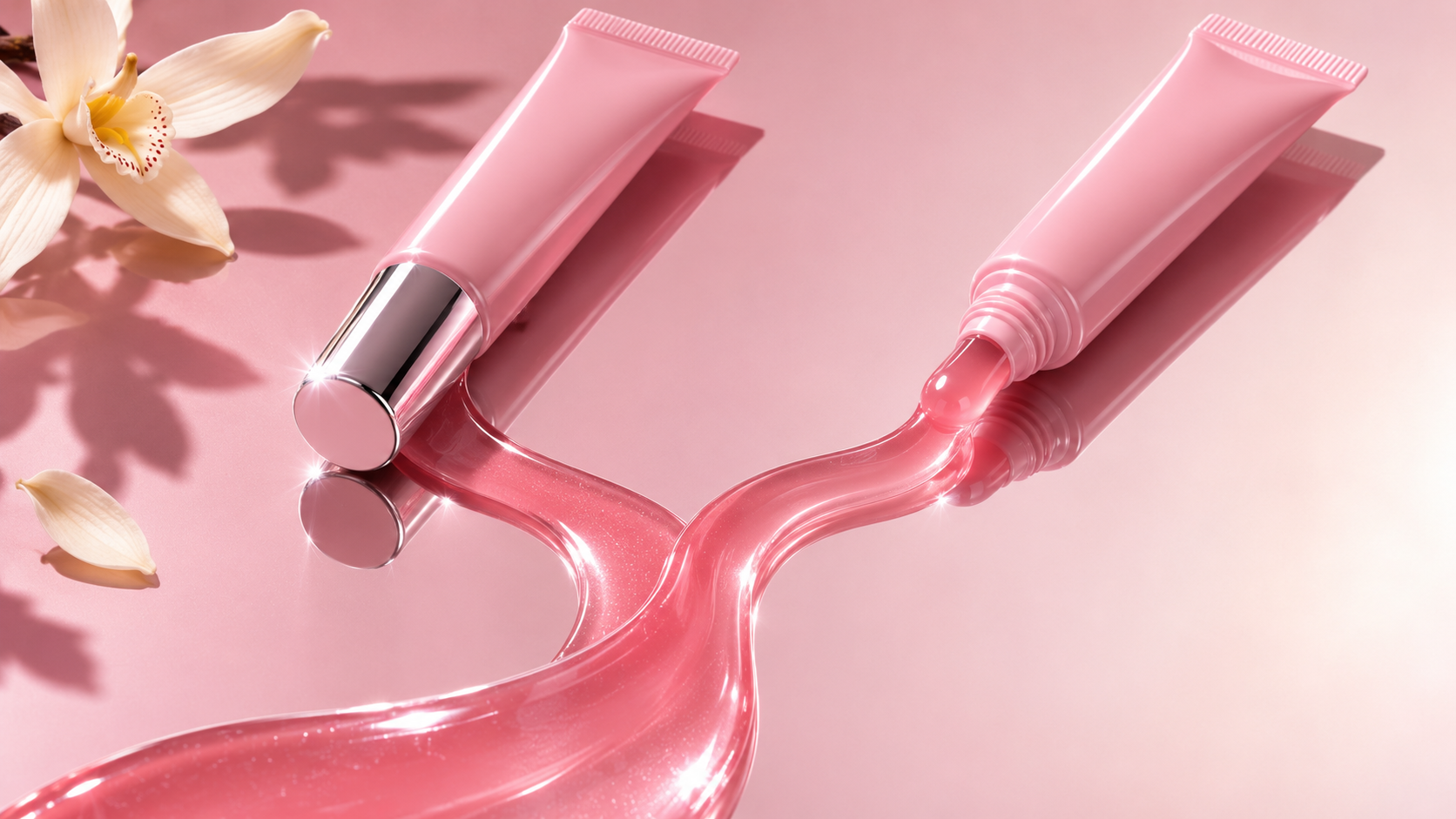
Rhode’s Ribbon Peptide Lip Tint is offered in separate scented and unscented versions. The shade name alone does not tell you which one you are ordering. In the US pages checked November 8, 2026, the scented Ribbon has a vanilla soft-serve description, while the unscented version carries Rhode’s fragrance-free claim.
Ribbon is the color choice; scent is another choice
The scented Ribbon page and unscented Ribbon page both describe a sheer pink shade and list a 10 ml tube. Each displayed US$20 when checked. Those are dated product-page observations, not a guarantee of stock, checkout price or future availability.
For a repeat purchase, search using the full version you want. A familiar shade name can make an order feel settled before you have checked the variant. Open the actual product page and look for the scent designation as well as the color.
The same applies to a gift list. “Ribbon, unscented” is a clearer instruction than “the pink Rhode one.” If you are sending someone a link, use the variant-specific page and ask them to check the cart before paying. A screenshot of the color alone leaves part of the request unstated.
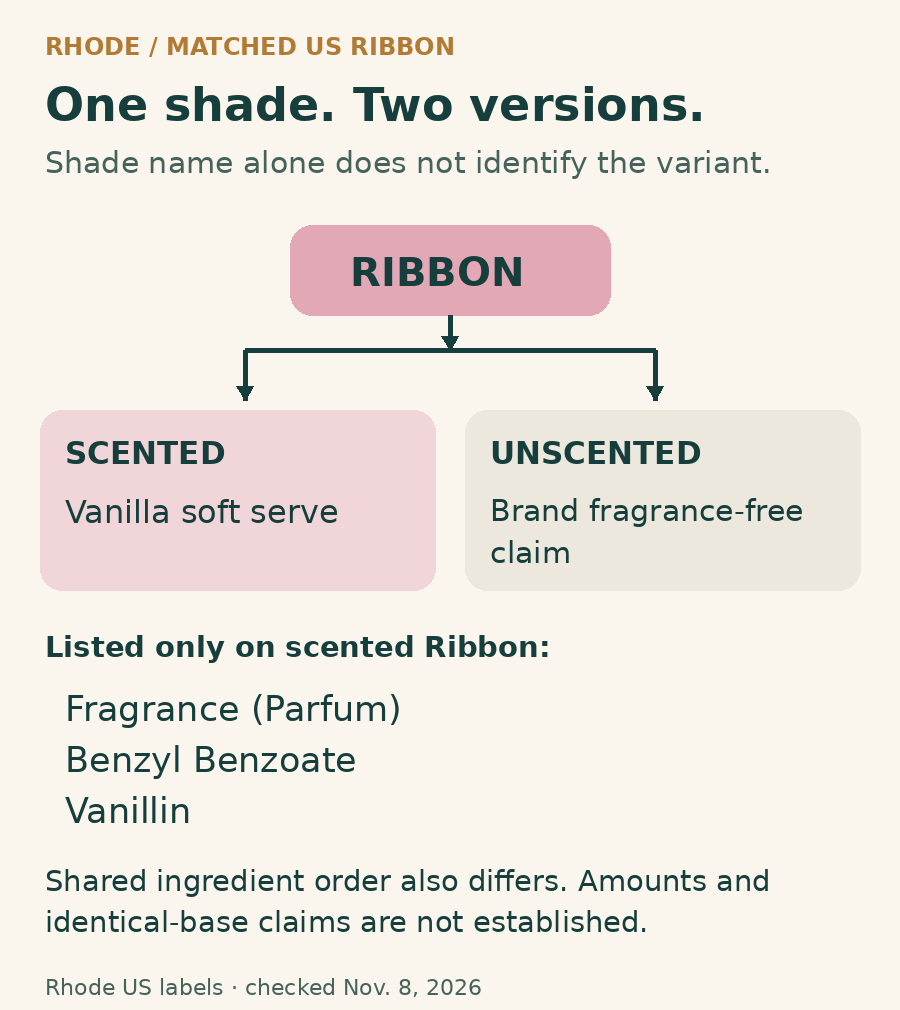
Both checked versions use the Ribbon shade name. The scented description is vanilla soft serve; the unscented page carries Rhode’s fragrance-free claim. Fragrance (Parfum), Benzyl Benzoate and Vanillin appear only on the scented list. Some shared ingredient order differs, so the lists do not establish concentrations or an otherwise identical base.
What the two ingredient lists show
Our comparison of the published US Ribbon lists found three names unique to the scented listing: Fragrance (Parfum), Benzyl Benzoate and Vanillin. We found no ingredient name unique to the unscented list after normalizing capitalization and formatting.
There is also an ordering difference: Hydrogenated Poly(C6-14 Olefin) and Polyglyceryl-2 Triisostearate switch relative positions. That detail is a useful brake on an overly neat explanation of the difference.
A list comparison does not reveal the amounts used, establish an otherwise identical base or predict how the two products will feel on your lips. We have not performed a wear or sensory test. This is one matched shade on the US site, not a finding about every Rhode shade, market or future formula.
What the labels cannot tell you
The pages do not settle whether you will prefer the taste, whether either will wear longer on you or whether you will notice a texture difference. A description of a scent is not a taste test, and matching shade language does not prove an identical result on every person.
Likewise, a fragrance-free label is not an individual allergy assessment. This comparison does not establish that either version is irritation-free or suitable for a particular allergy. If an ingredient is a deciding factor, compare your own package label with the full current listing rather than relying on a shorthand recommendation.
Make the second purchase as specific as the first
A useful reorder note would include the product line, shade and scent version. Keep the package or a photo of its ingredient label if you want a reference for a future comparison. That gives you something more precise than a memory of the tube’s color.
For a gift, the better question is whether the recipient wants the scented version. Price and shade are not enough to answer that for them. If you cannot find the requested variant, treat a substitution as a choice to confirm, rather than assuming the shared shade name makes it interchangeable.
The lesson from these two Ribbon listings is pleasantly small: check both choices. You can like the color and still care which scent version arrives. A few extra words in the cart are a better solution than trying to infer the entire product from “Ribbon.”