The Samurai Diet: What Japan’s Feudal Warriors Actually Ate
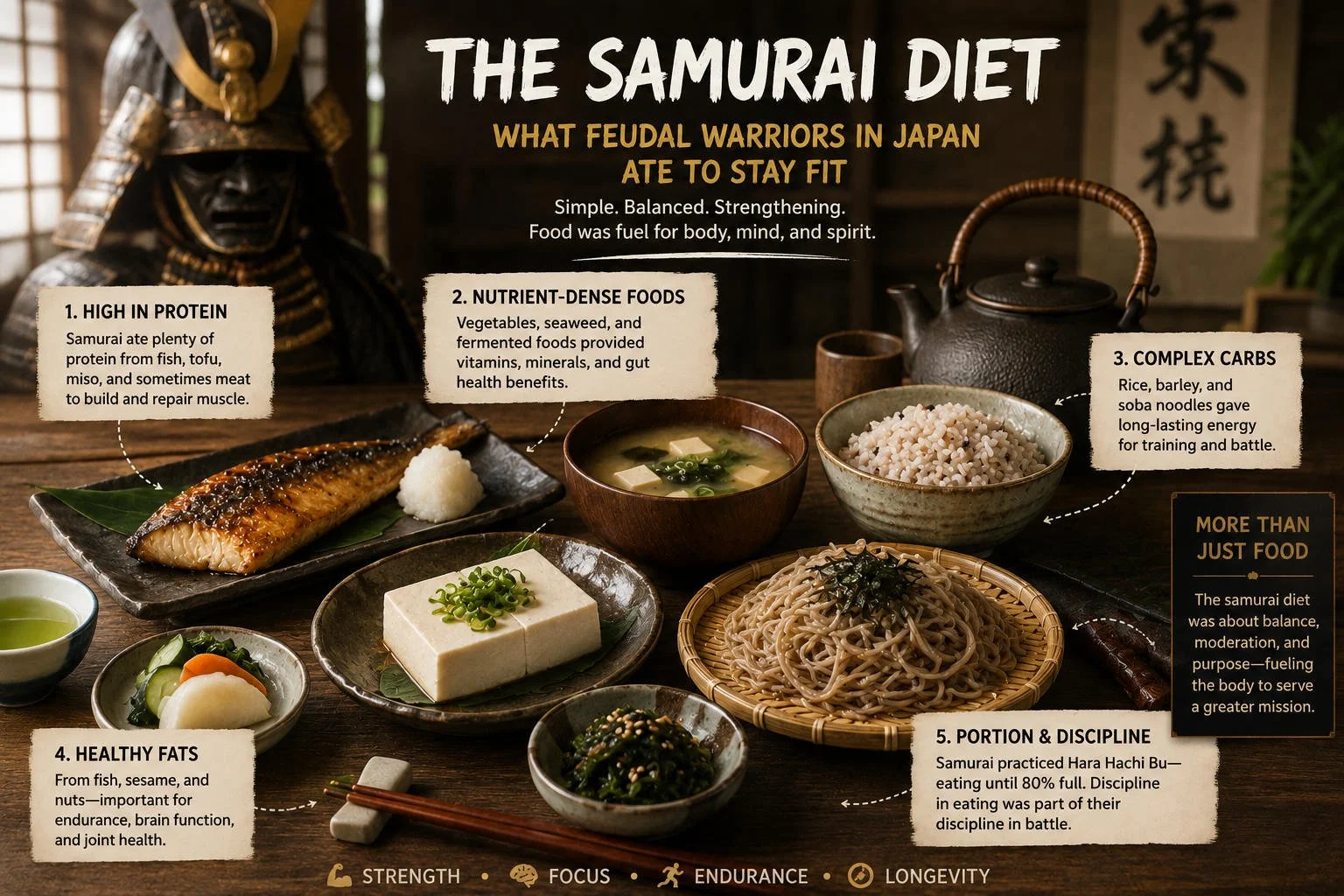
The “samurai diet” sounds like something that should be all steak, raw eggs, secret herbs, and warrior discipline.
The real thing was much simpler.
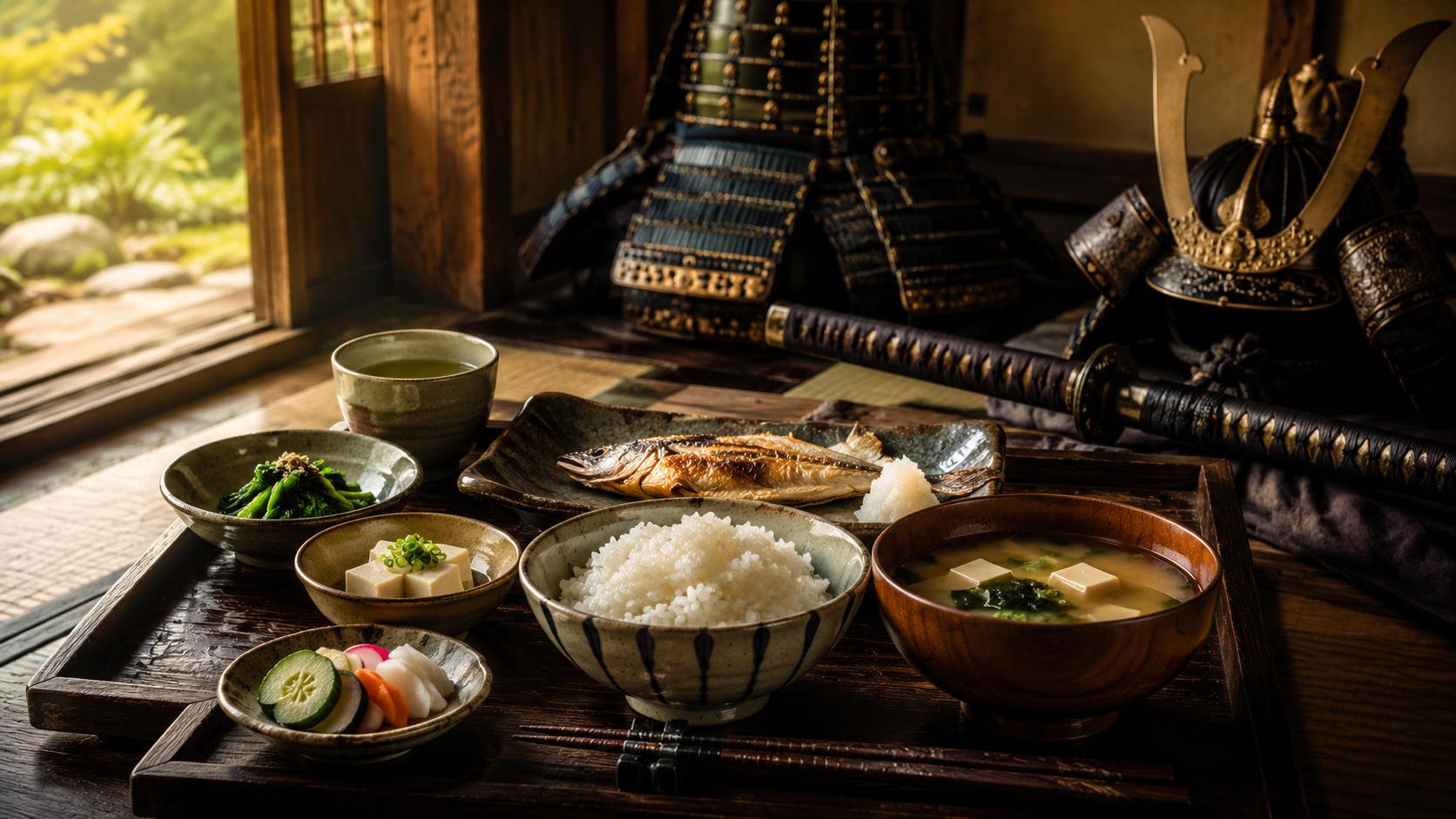
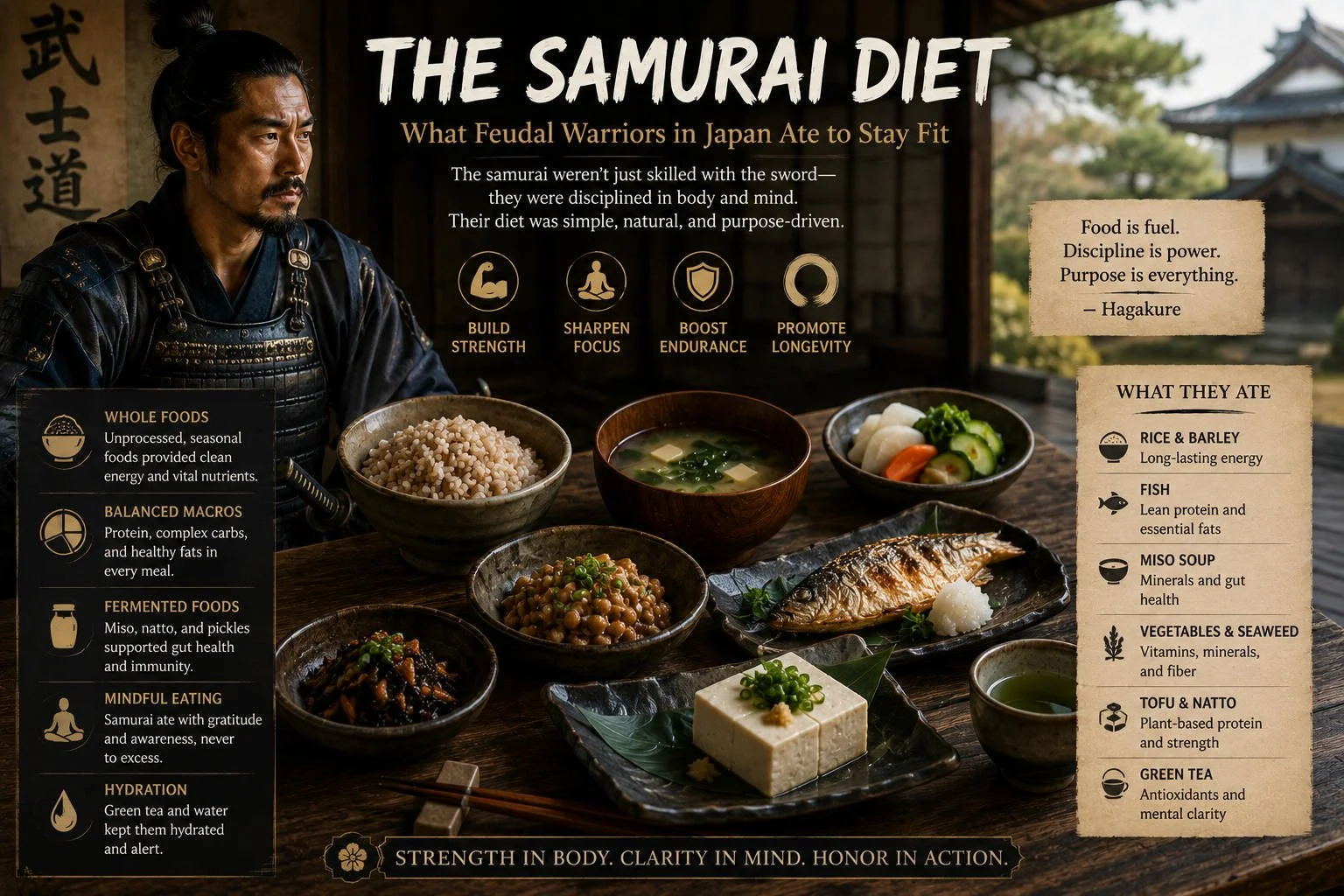
For most samurai, especially lower-ranking warriors, the diet was built around rice, miso soup, pickles, vegetables, tofu or other soy foods, fish when available, tea, and very little luxury. On campaign, food became even more practical: rice, dried foods, miso, pickled plums, salt, and portable rations.
That does not mean every samurai ate the same thing.
A low-ranking Edo-period samurai trying to survive a reduced stipend did not eat like a daimyo in a castle. A Sengoku battlefield soldier did not eat like a Tokugawa official on night duty in Edo. A wealthy household with multiple kitchens did not eat like a poor warrior family stretching rice and soup through the day.
So the better title is not:
“The Samurai Diet That Made Warriors Ripped.”
The better title is:
“The Samurai Diet: What Japan’s Feudal Warriors Actually Ate to Stay Battle-Ready.”
Because what made the diet interesting was not magic.
It was structure.
The samurai food pattern was built around staple carbs for energy, fermented soy for flavor and salt, modest protein from fish or soy, vegetables and seaweed for micronutrients, and relatively little added fat compared with many modern takeout diets. Traditional Japanese diet research describes washoku as centered on white rice, miso soup, fish, vegetables, mushrooms, soybean products, and seaweed, which lines up closely with the foods that appear again and again in historical descriptions of Edo-period meals.
This article is not claiming that every samurai was healthy, that rice alone is a perfect diet, or that feudal Japan had some lost fitness secret. The real lesson is more useful than that:
The samurai diet was simple, seasonal, portion-controlled, high in everyday movement, and built around repeatable meals rather than constant snacking.
Quick answer: what did samurai eat?
A historically reasonable “samurai-style” meal would usually include:
Rice or mixed grains
Miso soup
Pickles
Tofu, soybeans, or another soy food
Fish or seafood when available
Cooked vegetables
Seaweed or kelp
Green tea
Small amounts of sake in some contexts
Meat rarely, depending on region, period, and circumstance
A lower-ranking samurai meal could be extremely plain. One Edo-period diary described a low-ranking samurai family’s meals as typically soup, pickles, and rice with green tea poured over it. Sometimes tofu or boiled vegetables were added, while eggs and fish were considered extravagances.
A higher-ranking samurai or castle meal could be much more elaborate. Edo Castle meals could include steamed rice, miso soup with egg, tofu, fish paste, kelp, sea bream, broiled fish, egg wrapped in seaweed, vegetables, and pickles. But even then, records suggest that some elite figures ate modestly from the large meals prepared for them.
On campaign, food was more portable: rice, dried or preserved foods, salt, miso, and pickled items. Miso was especially important; one food-culture source notes that miso was dried or baked into balls, wrapped in bamboo skin or cloth, and carried by soldiers, while some commanders invested in miso production for military use.
First, there was no single “samurai diet”
The samurai existed for centuries.
The term originally referred to aristocratic warriors, but later came to apply broadly to Japan’s warrior class, which rose to power in the 12th century and dominated Japanese government until the Meiji Restoration in 1868.
That means “samurai diet” covers a huge range of time:
Kamakura period warriors
Muromachi-period warrior households
Sengoku battlefield armies
Edo-period retainers
High-ranking castle elites
Low-ranking bureaucratic samurai
Rural samurai families
Urban samurai in Edo
The samurai also changed over time. Columbia’s Asia for Educators describes samurai as warrior-administrators who replaced court government in managing local government, with strength resting on group loyalty and discipline.
By the long peace of the Edo period, many samurai were not constantly fighting. They were retainers, officials, guards, administrators, and members of a hereditary status group. So their food was not always “battlefield fuel.” Often, it was household food shaped by income, rank, local supply, rice stipends, duty, and social expectations.
That is why this article separates:
Daily food
Elite food
Lower-ranking food
Battlefield food
Modern lessons
The basic structure: rice, soup, and one or more side dishes
The core structure of traditional Japanese eating is often explained through formats like ichiju issai and ichiju sansai.
Ichiju issai means “one soup, one dish.” The Umami Information Center says the samurai meal custom known as ichiju issai became established around the Kamakura period, and miso soup became an essential part of the Japanese diet.
Ichiju sansai means “one soup, three dishes.” Kikkoman describes it as a meal format made up of rice, soup, one main dish high in protein such as meat or fish, and two vegetable or seaweed side dishes.
For a samurai household, the simpler version was more realistic most of the time:
Rice
Miso soup
Pickles
One side dish, if available
That side dish might be tofu, boiled vegetables, dried fish, grilled fish, beans, seaweed, daikon, burdock, egg, or another seasonal ingredient.
This is important because the samurai diet was not built around one huge entrée.
It was built around a staple and small accompaniments.
That structure naturally limited portions. It also made food flexible: if times were good, add fish or egg; if times were bad, rice, soup, pickles, and tea might be the meal.
What lower-ranking samurai ate
Lower-ranking samurai often ate simply.
A Kikkoman Food Culture article summarizing Edo-period food records describes the household of a low-ranking samurai whose stipend was suddenly reduced. His family’s meals were “extremely frugal,” typically soup, pickles, and rice with green tea poured over it. Sometimes tofu or boiled vegetables were added, but eggs and fish were considered luxuries.
That matters because modern pop culture often imagines samurai as noble warriors with abundant resources.
Many were not eating lavishly.
A realistic lower-ranking samurai meal might look like:
Rice with green tea poured over it
Pickled vegetables
Miso soup
Tofu or boiled vegetables if available
Fish only occasionally
This was not a bodybuilder diet.
It was a disciplined, inexpensive, mostly plant-and-rice-based diet with small amounts of protein.
The “fitness” of a lower-ranking samurai was not coming from high protein shakes or exotic superfoods. It came from the whole lifestyle: physical training, walking, duty, martial practice, limited luxury, and few calorie-dense processed foods.
What higher-ranking samurai ate
High-ranking samurai could eat much better.
The same Kikkoman source describes high-ranking samurai households as operating on a different scale, with daimyo houses containing multiple kitchens: one for the master, one for entertaining guests, and one for vassals. Meal boxes for samurai nobility on night duty at Edo Castle could include dried daikon, arame kelp, pickled plums, tofu, konnyaku, yams, burdock root, clams, broiled fish, pickles, miso soup, and sake.
Elite castle meals could be more elaborate still. One spring breakfast for the shogun’s legal wife included steamed rice, miso soup with egg, tofu, fish paste, egg crepes, kelp, sea bream, broiled fish, egg wrapped in seaweed, tofu with vegetables, and pickled vegetables.
So a higher-ranking samurai meal could include:
Rice
Miso soup
Tofu
Kelp
Pickles
Fish
Egg
Shellfish
Vegetables
Sake
Multiple small dishes
But even among elites, there were differences. Some shogunal meals were elaborate in preparation but not necessarily fully eaten. The Kikkoman article notes testimony that one shogun’s meals were based on simple steamed rice, and that he did not eat all he was served.
The lesson:
Rank mattered.
There was no single plate that every samurai ate.
What samurai and soldiers ate on campaign
Battlefield food had to be portable.
It needed to survive without refrigeration, travel with soldiers, provide energy, and be easy to prepare.
Common campaign foods included:
Rice
Rice balls
Dried rice or dried grain preparations
Miso
Miso balls
Pickled plums
Dried fish
Salt
Dried vegetables
Seaweed
Portable soup ingredients
Miso was especially important. A Japanese rice-culture source explains that soldiers carried dried or baked miso balls wrapped in bamboo skin or cloth, and that commanders such as Date Masamune and Takeda Shingen developed or supported miso production for military use. It also describes imogaranawa, dried taro stalks boiled in miso and dried into portable ropes that could later be cut and used for soup.
That is very different from modern protein bars, but the purpose was similar:
portable calories, salt, umami, and survival.
The battlefield diet was not luxurious.
It was practical.
A campaign meal might be:
Rice ball
Pickled plum
Dried fish
Miso soup made from carried miso
Water or tea
That is not enough to build modern gym muscle, but it was lightweight, familiar, and useful for marching and field conditions.
The core foods of the samurai diet
1. Rice
Rice was the foundation.
It was food, status, tax base, and economic symbol. Britannica notes that a koku represented the amount of rice consumed by one person in one year and was also used as a standard for levying military services.
In the Hideyoshi period, land and income were assessed in terms of rice production, and kokudaka came to define landholding and obligations. Britannica describes the system as assessing land in koku of rice, with peasants bound to pay land taxes in rice.
For diet, rice provided:
Calories
Carbohydrates
Training fuel
Satiety
A neutral base for salty side dishes
A way to stretch small amounts of fish, tofu, or vegetables
But rice alone was not enough.
A Kikkoman food-culture article warns that although rice was the basis of the Japanese palate, rice lacks enough thiamin, and a diet of rice alone can lead to beriberi. It specifically notes that many young people arriving in Edo developed beriberi after overindulging in white rice.
So the lesson is not:
Eat unlimited white rice.
The lesson is:
Use rice as a base, but pair it with protein, vegetables, fermented foods, seaweed, and variety.
2. Miso soup
Miso was central.
The Umami Information Center describes miso as a traditional Japanese fermented ingredient made from soybeans, koji, and salt. It also says miso soup became popularized through the samurai meal custom of ichiju issai around the Kamakura period.
Miso mattered because it was:
Flavorful
Fermented
Salty
Portable
Useful in soup
Easy to combine with vegetables, tofu, and seaweed
A way to make simple meals satisfying
Miso also helped solve a major problem in low-fat, simple diets:
flavor.
You can eat plain rice and boiled vegetables for only so long.
Miso makes simple food taste complete.
That may be one of the most important modern lessons from the samurai diet: if you want simple food to be sustainable, you need umami.
3. Fish and seafood
Fish was the main animal protein for much of Japanese food history.
Japan is an island country, and traditional Japanese diet research identifies fish and shellfish as characteristic elements of washoku. The same research notes that fresh fish and seaweed were available because Japan is surrounded by the sea.
Fish appeared in both commoner and elite meals.
Edo meal descriptions mention dried fish, broiled fish, sashimi, clams, sea bream, bonito, eel, and other seafood. Samurai on night duty could eat broiled striped mullet and marinated freshwater clams, while elite castle meals could include sea bream and broiled fish.
Fish gave:
Protein
Minerals
Omega-3 fats, depending on fish
Umami
Variety
A lighter protein source than large amounts of red meat
For a modern samurai-inspired diet, fish is one of the easiest things to copy.
4. Soy foods: tofu, miso, natto, soybeans
Soy was another key protein source.
Miso, tofu, soybeans, and natto appear repeatedly in Japanese food history. Edo food descriptions mention tofu shops, natto vendors, deep-fried tofu, tofu dishes, soy sauce, and miso.
Soy foods were useful because they were:
Relatively affordable
Protein-containing
Flexible
Easy to pair with rice
Useful in soup
Compatible with Buddhist-influenced food culture
Miso also had military value. The battlefield food source above describes miso as a source of protein, salt, vitamins, calcium, and amino acids, and notes its use as a carried ration.
Modern readers can copy this with:
Tofu miso soup
Natto rice
Edamame
Tofu bowls
Soy-marinated fish
Miso-glazed vegetables
Miso broth with tofu and seaweed
5. Vegetables, pickles, roots, and seaweed
The samurai diet was not built around giant salads.
It was built around cooked vegetables, pickles, roots, seaweed, and seasonal side dishes.
Common historical examples include:
Daikon
Pickled vegetables
Burdock root
Yams
Kelp
Arame
Seaweed
Mushrooms
Greens
Taro stems
Konnyaku
Plums
Takuan
Edo-period commoner breakfasts could include rice, soup, pickles, dried fish, boiled dried daikon, deep-fried tofu with kelp, fried burdock root, and boiled beans.
Traditional Japanese diet research also identifies vegetables, mushrooms, seaweed, soybean products, fish, shellfish, miso soup, green tea, and rice as characteristic components.
This is a major reason the diet was sustainable:
small portions, but high variety.
Instead of one massive entrée, the meal used rice plus small amounts of many strong-flavored foods.
6. Pickled plums and other preserved foods
Pickled plums, or umeboshi, show up in historical meal and campaign contexts because they were portable, salty, sour, and preserved.
They were not a protein source.
They were a practical food.
They could make plain rice more palatable, add salt, and travel well.
Other preserved foods included:
Pickled daikon
Dried fish
Dried vegetables
Dried miso
Salted fish
Dried seaweed
Fermented soy foods
The preserved-food pattern mattered because refrigeration did not exist.
The modern version is:
Pickles
Fermented vegetables
Seaweed snacks
Miso
Canned fish
Rice balls
Dried fruit in small amounts
Jerky, if you are adapting rather than strictly recreating
7. Meat, but not much
The samurai diet was not a steakhouse diet.
For both religious and practical reasons, Japanese people mostly avoided eating meat for long periods of history. Atlas Obscura summarizes the shift away from meat as beginning with Buddhism’s arrival and notes that beef was especially taboo, while Japan relied heavily on fish and seafood as staples.
That does not mean nobody ever ate meat.
Wild boar, deer, birds, and other meats did appear in some contexts. Some meat was treated as medicinal, and some regional lords ate it. A Kikkoman food-culture article notes that meat had been banned for well over 1,000 years primarily because of religious principles, but that wild deer and boar were occasionally eaten, and some regional lords regularly ate meat.
So the accurate view is:
Fish and soy were normal.
Red meat was uncommon, regional, medicinal, symbolic, or exceptional.
Modern “samurai diet” influencers who present it as a carnivore-style warrior diet are missing the point.
Why the samurai diet could support fitness
The samurai diet was not high-protein by modern gym standards.
But it had several features that can support leanness and physical readiness.
1. It was built around simple staple meals
Rice, soup, pickles, fish, tofu, vegetables, and tea are not hyper-palatable in the same way modern ultra-processed foods are.
That makes overeating less likely.
The diet had flavor, but it did not have constant access to chips, soda, pastries, fried fast food, delivery apps, and dessert drinks.
2. It was lower in added fat than many modern diets
Historical Japanese cooking often used boiling, steaming, simmering, grilling, pickling, and fermenting.
That does not mean it was fat-free. But compared with modern fried takeout, creamy sauces, cheese-heavy foods, and oil-heavy restaurant meals, the everyday samurai-style meal was usually simpler.
3. It used umami instead of heavy sauces
Miso, soy sauce, seaweed, dried bonito, fish, mushrooms, and fermented foods create depth.
That makes modest food satisfying.
Umami is one of the reasons simple meals can work.
4. It had controlled portions by default
Traditional meal structure naturally limited portion size.
Rice was the base, but side dishes were small. Protein was present, but usually not enormous. Vegetables and pickles were flavorful but not calorie-dense.
5. It matched a physically demanding lifestyle
Warriors trained. Soldiers marched. Many people walked far more than modern office workers. Even in peacetime, samurai culture prized discipline and martial readiness.
The diet alone did not keep them fit.
The diet plus movement did.
6. It included fermented and preserved foods
Miso, pickles, soy sauce, and other fermented or preserved ingredients gave flavor and helped food storage.
Modern nutrition research often identifies traditional Japanese diets as including miso soup, soybean products, fish, vegetables, mushrooms, seaweed, and green tea.
That does not mean every fermented food is automatically healthy in unlimited amounts. Many are salty. But the pattern is still useful.
What modern readers can learn from the samurai diet
The useful modern version is not a reenactment.
You do not need to eat like a poor Edo retainer or carry miso balls on your waist.
You can borrow the structure.
The modern samurai diet formula
Use this:
Rice or grain base
Miso soup or broth
Protein
Vegetables
Pickled or fermented side
Tea or water
That could look like:
Rice + grilled salmon + miso soup + cucumber pickles + spinach
Brown rice + tofu + miso soup + seaweed + mushrooms
Rice bowl + chicken + pickled vegetables + green tea
Soba + fish + miso broth + vegetables
Onigiri + miso soup + boiled egg + seaweed
This keeps the spirit of the diet without pretending you live in the Sengoku period.
A modern samurai-style day of eating
Breakfast
Rice or oats
Miso soup with tofu and wakame
Grilled fish or boiled eggs
Pickles
Green tea
Why it works:
You get carbs, protein, salt, fluids, and umami without a huge calorie bomb.
Lunch
Rice bowl with salmon, chicken, or tofu
Cooked vegetables
Mushrooms
Seaweed
Small pickled side
Why it works:
It is portable, simple, and meal-prep friendly.
Dinner
Miso soup
Grilled fish or tofu
Rice or soba
Burdock, daikon, greens, or mushrooms
Pickled vegetables
Why it works:
It is filling without relying on fried food or heavy sauces.
Snack, if needed
Rice ball with salmon or umeboshi
Green tea
Edamame
Seaweed
Fruit
Why it works:
It gives you a small, controlled snack instead of grazing all day.
Modern high-protein samurai-inspired meals
If you want to adapt the samurai pattern for modern fitness, raise the protein while keeping the structure.
High-protein salmon rice bowl
Use:
Rice or mixed grains
Salmon
Cucumber
Seaweed
Pickled ginger
Edamame
Miso soup
Why it works:
Fish plus edamame gives more protein than a historical low-ranking meal while keeping the Japanese structure.
Chicken miso soup bowl
Use:
Miso broth
Chicken breast or thighs
Tofu
Mushrooms
Spinach
Rice on the side
Why it works:
It turns miso soup from a side into a complete meal.
Tofu and egg breakfast
Use:
Miso soup with tofu
Rice
Soft-boiled egg
Pickled vegetables
Green tea
Why it works:
Simple, high-satiety, and not greasy.
Soba warrior bowl
Use:
Soba noodles
Grilled fish or chicken
Mushrooms
Greens
Seaweed
Soy-miso dressing
Why it works:
Soba adds variety and fits the Japanese food tradition without relying only on white rice.
Onigiri meal prep
Use:
Rice balls
Salmon, tuna, chicken, or tofu filling
Umeboshi
Seaweed
Miso soup packets
Edamame
Why it works:
It is the modern version of portable campaign food.
The “battlefield meal prep” version
If you want a meal-prep version inspired by samurai campaign food, make it portable and simple.
Option 1: Onigiri kit
Pack:
Two rice balls
Salmon or tuna filling
Umeboshi or pickled vegetables
Seaweed
Miso soup packet
Green tea
Option 2: Miso soup thermos
Pack:
Miso broth
Tofu
Wakame
Mushrooms
Chicken or egg
Rice on the side
Option 3: Modern ration box
Pack:
Rice ball
Dried seaweed
Edamame
Boiled egg
Pickles
Green tea
Option 4: High-protein version
Pack:
Chicken rice bowl
Miso soup
Pickled cucumbers
Seaweed
Green tea
These are not literal historical rations.
They are modern meals inspired by the same logic:
portable, salty, simple, filling, and not overly greasy.
What the samurai diet was not
It was not a carnivore diet
Meat was not the everyday center of the diet. Fish and soy were far more important than beef, pork, or large quantities of red meat.
It was not always high-protein
Lower-ranking samurai could have very little fish or egg. Rice, soup, pickles, and tea could be the core meal. That is not high-protein by modern standards.
It was not always healthy
A rice-heavy diet without enough variety could cause problems. Historical Japanese food sources note that rice alone lacks enough thiamin and that overreliance on white rice contributed to beriberi in Edo and later periods.
It was not the same for rich and poor
A daimyo household could have multiple kitchens and elaborate meals. A low-ranking samurai family might treat fish and eggs as luxuries.
It was not magic
The samurai did not stay fit because rice had secret warrior properties.
They stayed physically capable, when they did, because of movement, martial training, discipline, limited food abundance, and simple meals.
Common mistakes people make about the samurai diet
Mistake 1: Thinking samurai ate like modern athletes
They did not track protein macros. They did not bulk and cut. They did not drink whey shakes. Their diet was shaped by rice, rank, religion, economics, agriculture, and military practicality.
Mistake 2: Thinking the diet was always elegant
Some elite meals were elaborate. Many everyday meals were plain.
The lower-ranking samurai diet could be rice, soup, pickles, and tea.
Mistake 3: Ignoring class
High-ranking samurai, low-ranking samurai, townspeople, farmers, monks, soldiers, and daimyo did not eat the same.
Mistake 4: Over-romanticizing white rice
Rice was central, but rice alone is not a complete diet. White rice without enough thiamin-rich foods can be a problem.
Mistake 5: Assuming “traditional” means automatically healthy
Traditional diets can be useful, but they can also be high in sodium, low in certain nutrients, or shaped by scarcity.
Mistake 6: Copying the austerity instead of the structure
The useful lesson is not to eat like a hungry low-ranking samurai.
The useful lesson is:
simple meals, controlled portions, fermented flavor, protein from fish or soy, vegetables, and movement.
How to eat like a samurai today without being ridiculous
Use these rules.
Rule 1: Build meals around rice, soup, and protein
Use rice as a base, but do not let it become the whole meal.
Add:
Fish
Tofu
Eggs
Chicken
Edamame
Miso soup
Vegetables
Rule 2: Use miso for flavor, not just salt
Miso makes simple meals satisfying.
Use it in:
Soup
Marinades
Dressings
Glazes
Broths
Rule 3: Eat more fish and soy
The easiest modern samurai-inspired protein sources are:
Salmon
Sardines
Mackerel
Tuna
Tofu
Edamame
Natto
Miso
Eggs
Rule 4: Add vegetables, mushrooms, and seaweed
The traditional Japanese pattern included vegetables, mushrooms, and seaweed. That is one of the most useful things to copy.
Rule 5: Control portions
The meal structure matters.
A bowl of rice, a bowl of soup, and small sides naturally reduce overeating.
Rule 6: Move like the diet expects you to move
If you eat rice-heavy meals but sit all day, you are not copying the lifestyle.
Walk. Lift. Train. Stretch. Carry things. Practice something physically demanding.
Rule 7: Do not make it too salty
Miso, soy sauce, pickles, dried fish, and preserved foods can be sodium-heavy.
Use them intelligently.
Rule 8: Do not turn it into restaurant food
A modern “samurai bowl” with fried chicken, mayo, tempura, creamy sauce, and a huge rice base is no longer the same idea.
Keep it simple.
A modern “Samurai Diet” grocery list
Staples
Rice
Brown rice or mixed grain rice
Soba
Miso
Soy sauce
Green tea
Seaweed
Pickled vegetables
Umeboshi
Protein
Salmon
Sardines
Tuna
Mackerel
Tofu
Eggs
Edamame
Chicken
Natto
Greek yogurt if adapting for modern protein needs
Vegetables
Daikon
Burdock
Cabbage
Spinach
Mushrooms
Cucumber
Carrots
Sweet potato
Green onion
Seaweed
Bok choy or other greens
Flavor
Miso
Dashi
Ginger
Garlic
Sesame
Rice vinegar
Soy sauce
Mirin, in moderation
Wasabi
Shichimi togarashi
Pickled ginger
Sample modern samurai diet meal plan
Day 1
Breakfast:
Miso soup with tofu, rice, pickles, green tea
Lunch:
Salmon rice bowl with cucumber, seaweed, and mushrooms
Dinner:
Chicken miso soup with greens and a small rice bowl
Snack:
Edamame or onigiri
Day 2
Breakfast:
Rice, soft-boiled egg, miso soup, pickled daikon
Lunch:
Soba noodles with tofu, mushrooms, and greens
Dinner:
Grilled fish, rice, seaweed salad, miso soup
Snack:
Green tea and fruit
Day 3
Breakfast:
Natto rice, miso soup, tea
Lunch:
Chicken rice bowl with pickles and spinach
Dinner:
Tofu hot pot with mushrooms, seaweed, and rice
Snack:
Onigiri with salmon or umeboshi
The modern high-protein version
If you want a fitness-friendly adaptation, use bigger protein portions.
Breakfast
Miso soup with tofu and eggs
Small rice bowl
Green tea
Lunch
Chicken or salmon rice bowl
Seaweed
Pickled vegetables
Mushrooms
Dinner
Fish or tofu
Miso soup
Cooked vegetables
Half rice portion
Snack
Edamame
Protein-rich onigiri
Greek yogurt if you are not strict about historical accuracy
This is not historically pure.
It is historically inspired and nutritionally more modern.
What this does not mean
This article does not mean:
Every samurai ate the same diet.
Samurai were all lean and healthy.
The samurai diet was high-protein by modern standards.
White rice alone is healthy.
Meat was never eaten in Japan.
Fish and soy are magic.
Historical hardship should be romanticized.
You should copy a low-ranking samurai’s scarcity diet.
Diet alone creates warrior fitness.
Traditional food is always healthier than modern food.
This is medical or personalized nutrition advice.
It means this:
A historically realistic samurai diet was simple, rice-based, fermented, seasonal, modest in fat, often fish-and-soy-centered, and structured around small dishes. Its usefulness today comes from the pattern, not from pretending feudal warriors had secret nutrition science.
FAQ
What did samurai actually eat?
Samurai meals varied by rank, period, and region, but common foods included rice, miso soup, pickles, tofu, vegetables, seaweed, fish, tea, and sometimes eggs or seafood. Lower-ranking samurai could eat very frugally, while high-ranking samurai had access to elaborate multi-dish meals.
Did samurai eat meat?
Sometimes, but meat was not the everyday center of the diet. Fish and soy were much more common. Meat eating was shaped by Buddhist influence, practical constraints, and taboo, although wild boar, deer, birds, and medicinal or regional meat consumption did occur.
Did samurai eat rice every day?
Rice was central to Japanese food culture and the samurai economy. A koku was a rice measure tied to the amount consumed by one person in a year and was also used as a standard for military obligations.
Did samurai eat miso soup?
Yes. Miso soup became deeply tied to Japanese meal structure. The Umami Information Center says the samurai custom of ichiju issai, or one soup and one dish, became established around the Kamakura period, helping popularize miso soup.
What did samurai eat before battle?
Portable campaign food could include rice, rice balls, dried foods, miso, pickled plums, salt, dried fish, and preserved vegetables. Soldiers carried dried or baked miso balls, and some forms of miso were specifically developed or supported for military use.
Was the samurai diet healthy?
It could be healthy when it included variety: rice, fish, soy foods, vegetables, seaweed, miso, and tea. But it was not automatically perfect. A diet too dependent on polished white rice could contribute to thiamin deficiency and beriberi.
Was the samurai diet high protein?
Not by modern standards. Higher-ranking samurai could eat fish, egg, tofu, and other protein foods, but lower-ranking samurai might eat mostly rice, soup, pickles, tea, tofu, and vegetables, with fish or eggs considered luxuries.
What is the modern version of the samurai diet?
A modern version would be rice or mixed grains, miso soup, fish or tofu, vegetables, seaweed, pickled vegetables, and green tea. For more protein, add larger portions of fish, tofu, eggs, chicken, edamame, or Greek yogurt if you are adapting rather than reenacting.
Did samurai drink alcohol?
Yes, sake appeared in some contexts. Edo Castle night-duty meals for samurai nobility included sake. But that does not mean alcohol was central to every samurai meal or that it was consumed without limits.
What is the biggest lesson from the samurai diet?
The biggest lesson is structure: simple meals, staple carbs, modest protein, fermented flavor, vegetables, portion control, and movement. The diet worked as part of a lifestyle, not as a standalone hack.
Final takeaway
The samurai diet was not a secret warrior supplement plan.
It was mostly simple food:
Rice
Miso soup
Pickles
Tofu and soy foods
Fish and seafood
Vegetables
Seaweed
Tea
Portable rations like rice balls and miso
Occasional meat, depending on period and context
Lower-ranking samurai often ate extremely frugally. Higher-ranking samurai could eat elaborate meals. Battlefield food was portable and practical. Meat was not central. Fish, soy, rice, miso, vegetables, and preserved foods were far more important.
The modern lesson is simple:
Eat structured meals. Use rice as fuel, not the whole diet. Add fish or soy protein. Use miso and fermented foods for flavor. Eat vegetables and seaweed. Keep portions controlled. Move enough to deserve the carbs.
That is the real samurai diet lesson.
Not magic.
Discipline.