
GLP-1 Protein Snacks for Work When You Forget to Eat
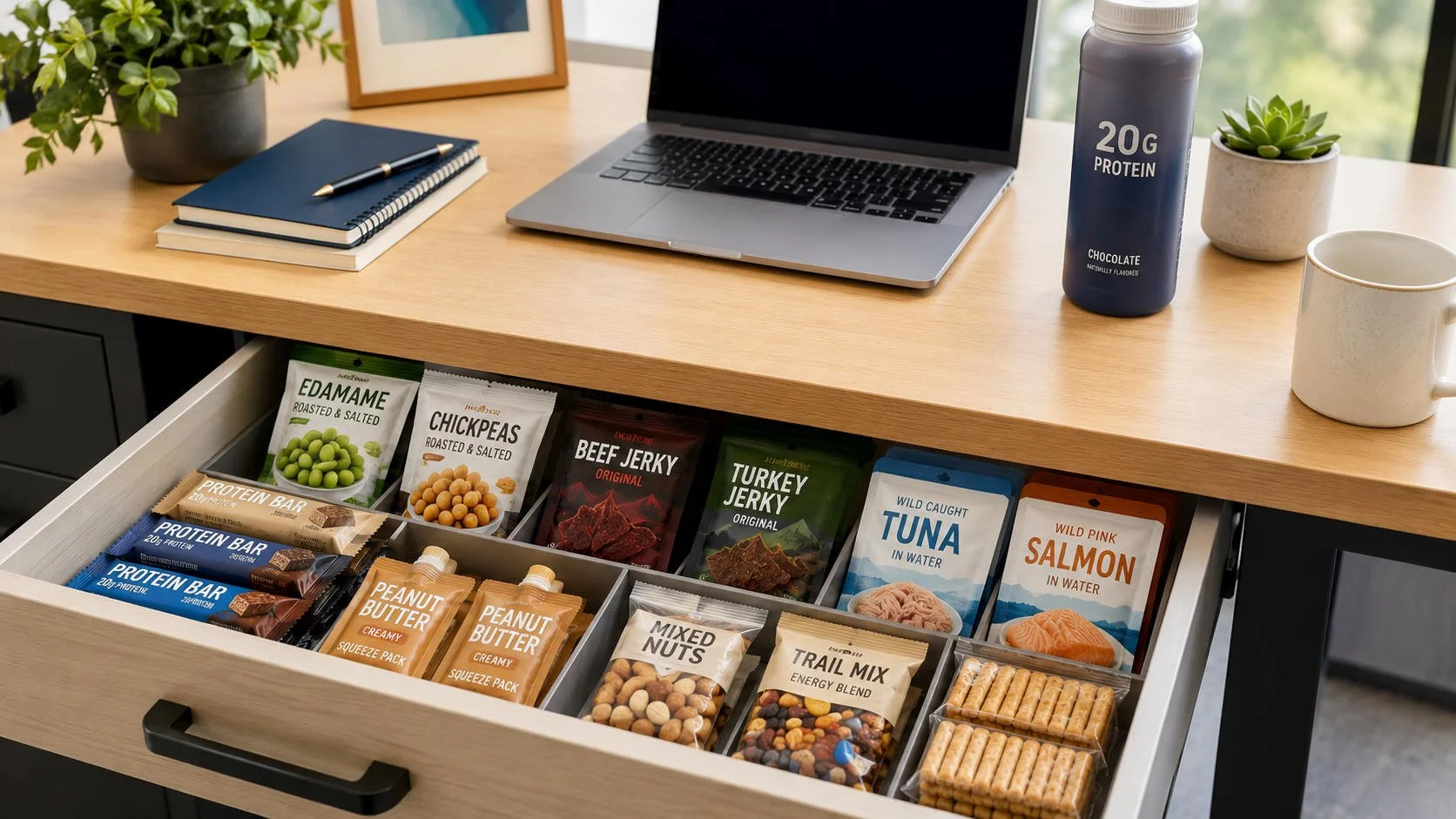
GLP-1 medications can make workday eating weird.
You get to the office. You answer emails. You jump into meetings. You sip coffee. You are not hungry, so you keep working. Then it is 3:17 p.m. and you realize you have had caffeine, water maybe, and almost no protein.
That is where GLP-1 protein snacks for work become useful.
Not because snacks are magic.
Because when you are taking Ozempic, Wegovy, Mounjaro, Zepbound, or another GLP-1 medication, your appetite may be lower, your digestion may be slower, and “I’ll eat later” can turn into “I accidentally ate almost nothing all day.”
Cleveland Clinic explains that GLP-1 agonists slow how fast the stomach empties, which can contribute to nausea, vomiting, heartburn, bloating, constipation, diarrhea, and appetite loss. It also recommends building meals around lean protein, fruits and vegetables, and whole grains, and notes that protein shakes or meal replacement shakes may help when appetite is low because liquids can be easier to digest than solids.
A good desk drawer snack is not a replacement for real meals.
It is a safety net.
The best Ozempic desk snacks, Wegovy work snacks, and shelf stable protein snacks are:
Easy to eat in small amounts
Shelf-stable until opened
High enough in protein to matter
Not greasy
Not overly sweet
Not huge in volume
Not likely to worsen nausea
Easy to keep at your desk, in a work bag, or in a locker
Useful when you forget to eat, get stuck in meetings, or cannot leave for lunch
This article is not medical advice. If you have diabetes, use insulin, take a sulfonylurea, have kidney disease, are pregnant, are breastfeeding, or have persistent nausea, vomiting, diarrhea, abdominal pain, dehydration symptoms, or low blood sugar symptoms, talk to your clinician.
Quick answer: the best desk drawer protein snacks for GLP-1 users
If you want the fastest answer, stock these:
Best all-around desk drawer protein snack
Single-serve protein powder packets
Keep a shaker bottle at work. Add water when needed. This gives you protein without refrigeration, chewing, or cooking.
Best “I can sip but not eat” option
Shelf-stable ready-to-drink protein shake
Keep it sealed in your drawer if the label says it is shelf-stable. Once opened, drink it or refrigerate it.
Best savory protein snack
Tuna, salmon, or chicken pouches
These are good shelf stable protein snacks if they stay sealed until lunch. Use with crackers, rice cakes, or a tortilla.
Best crunchy snack
Dry roasted edamame or roasted soy nuts
These are portable, shelf-stable, crunchy, and more protein-forward than chips, crackers, or pretzels.
Best emergency snack
Low-sugar protein bar
Not every protein bar is good. Choose one with meaningful protein, moderate calories, and a sugar alcohol level your stomach can tolerate.
Best small protein bite
Jerky, biltong, or turkey jerky
Good protein, but watch sodium, spice, fat, and portion size.
Best nausea-friendly backup
Crackers plus a few sips of protein shake
When food sounds impossible, bland carbs can help settle your stomach before protein.
Best “I forgot lunch” kit
Protein powder packet + tuna pouch + crackers + electrolyte packet
That gives you drinkable protein, savory protein, a bland carb, and fluids.
Best low blood sugar backup
Glucose tablets or fast-acting carbs, not protein
Protein snacks are not the right first treatment for low blood sugar. The CDC recommends the 15-15 rule: 15 grams of carbohydrates, wait 15 minutes, then recheck blood sugar. After treating the low, eat a balanced snack or meal with protein and carbs.
Why GLP-1 users need different work snacks
A normal work snack list might say:
almonds
granola bars
hummus
yogurt
cheese
fruit
crackers
Some of those can still work.
But GLP-1 users have different constraints.
You may forget to eat
GLP-1 medications can reduce appetite. Wegovy lists decreased appetite among related experiences in its safety information, and common side effects include nausea, vomiting, constipation, stomach pain, upset stomach, bloating, belching, heartburn, and tiredness.
You may tolerate smaller portions better
Zepbound’s patient guidance says that if nausea occurs, it may help to eat smaller meals, stop eating when full, avoid fatty foods like butter or cheese, and try bland foods like toast, crackers, or rice.
You still need protein
Cleveland Clinic notes that protein helps with fullness, blood sugar stability, and reducing the risk of losing muscle during weight loss.
You may need fiber, but not all at once
Fiber can help constipation, but Cleveland Clinic cautions that suddenly pushing fiber too high can worsen GI symptoms for some people.
You need shelf-stable food, not “I’ll just keep yogurt in my drawer”
Health Canada warns that perishable foods like tuna salad, chicken salad, egg salad, milk products, cold cuts, and lunch meats need temperature control and should not sit in the danger zone between 4°C and 60°C, where bacteria can grow quickly. It lists whole and dried fruits, cereals, breads, crackers, pickles, and unopened cans of meat and fish as examples of foods that do not need to stay cold.
That is the desk drawer rule:
Unopened shelf-stable food is fine. Perishable food is not.
The desk drawer protein snack formula
The best work snack has three parts:
Protein + easy carb or fiber + fluid
Examples:
protein shake + crackers + water
tuna pouch + rice cakes + electrolyte drink
protein bar + fruit + water
roasted edamame + applesauce pouch + tea
jerky + crackers + water
protein powder + oatmeal packet + hot water
For GLP-1 users, the goal is not always a full meal.
The goal may be:
10g protein now
10g protein later
a few bland bites to prevent nausea
enough food to avoid a late-day crash
something small before a long meeting
something safe when the office fridge is not available
Best desk drawer protein snacks for GLP-1 users, ranked
1. Single-serve protein powder packets
Best for: highest protein with no fridge
Typical target: 15–25g protein, usually 80–150 calories depending on product
GLP-1 usefulness: excellent
Protein powder packets are the best desk drawer protein snack because they are dry, compact, shelf-stable, and easy to use.
Keep:
protein powder packets
shaker bottle
bottled water or access to water
optional electrolyte packets
Best types:
whey isolate
clear whey
plant protein
collagen, if you tolerate it and understand it is not a complete protein like whey
ready-to-mix meal replacement packets, if the nutrition fits your goals
Why it works:
No fridge needed
No microwave needed
No chewing needed
Easy when appetite is low
High protein for the calories
Can be split into half servings
Best work strategy:
Use half a packet first.
If you feel okay, finish the rest later.
This is especially helpful if you are the kind of worker who forgets breakfast, gets stuck in meetings, then realizes you have had no protein by mid-afternoon.
What to watch:
Protein powders are dietary supplements, and the FDA says supplement manufacturers and distributors are responsible for evaluating safety and labeling before marketing; FDA can act against adulterated or misbranded products after they reach the market. Choose reputable brands, check labels, and be cautious if you have medical conditions or take medications.
Best desk drawer version:
Unflavored or lightly flavored protein powder packet + shaker bottle.
2. Shelf-stable ready-to-drink protein shakes
Best for: “I can sip but not chew” workdays
Typical target: 15–30g protein, usually 100–250 calories
GLP-1 usefulness: excellent, if tolerated
Ready-to-drink protein shakes are one of the easiest Wegovy work snacks because you do not need to mix anything.
They work well when:
you are not hungry
chewing sounds bad
you skipped breakfast
lunch got pushed back
you need protein before a meeting
you feel queasy but can sip slowly
Best types:
shelf-stable cartons
shelf-stable bottles
low-sugar protein shakes
high-protein milk drinks in aseptic packaging
clear protein drinks, if you prefer lighter texture
Important:
Only keep them in your desk drawer if the package says they are shelf-stable before opening.
Once opened, drink it or refrigerate it.
Why it works:
No fridge until opened
No utensils
Easy to sip slowly
Better than skipping food completely
Often easier than solid food on GLP-1s
What to watch:
Some shakes are very sweet.
Some are high in sugar alcohols.
Some are high-calorie meal replacements.
Some contain dairy.
Some can worsen nausea if too thick.
Best desk drawer version:
A sealed, shelf-stable protein shake you know your stomach tolerates.
3. Tuna, salmon, or chicken pouches
Best for: savory protein without a fridge
Typical target: 15–25g protein, often 70–150 calories depending on pouch
GLP-1 usefulness: excellent, if smell and texture do not bother you
Tuna, salmon, and chicken pouches are some of the most useful shelf stable protein snacks.
They are more like real food than a bar. They also give a strong protein hit without needing a fridge, as long as they stay sealed until you eat them.
Use with:
crackers
rice cakes
mini tortilla
shelf-stable pickles
mustard packets
hot sauce, if tolerated
shelf-stable salsa packets
applesauce pouch
water
Best work combinations:
Tuna pouch + crackers
Chicken pouch + salsa packet + tortilla
Salmon pouch + rice cakes
Chicken pouch + mustard + crackers
Why it works:
High protein
No fridge until opened
No cooking
More filling than most bars
Easy to keep in a desk drawer
What to watch:
Smell can be an office issue.
Sodium can be high.
Spicy flavors may worsen nausea.
Mayo-based tuna salad kits may be higher-calorie.
Once opened, do not leave leftovers at your desk.
Food safety note:
Health Canada lists unopened cans of meat and fish as foods that do not need to stay cold, but perishable prepared foods like tuna salad and chicken salad need temperature control.
Best desk drawer version:
Plain tuna, salmon, or chicken pouch + crackers + mustard packet.
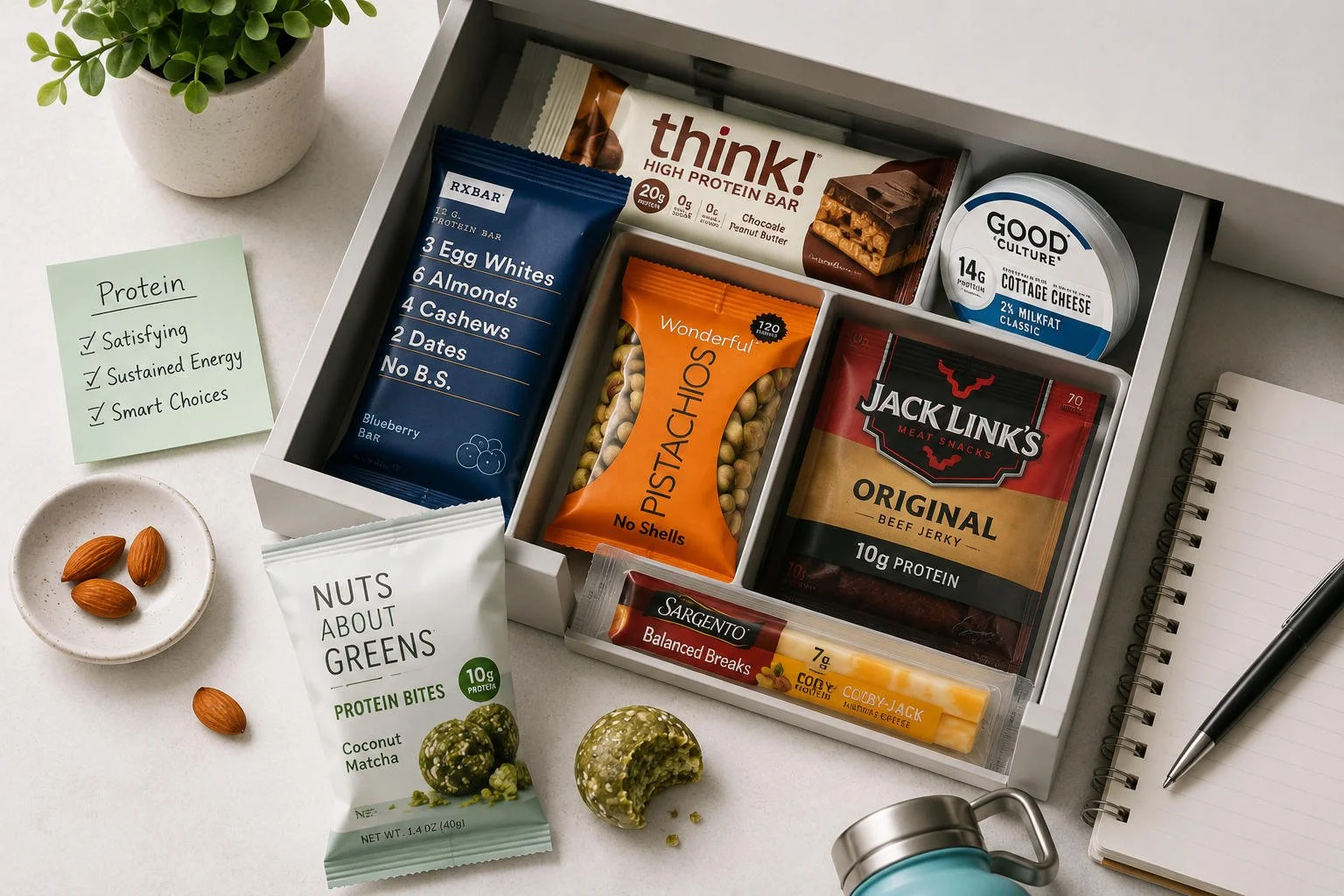
4. Roasted edamame or soy nuts
Best for: crunchy plant-based protein
Typical target: 10–15g protein, often 120–200 calories depending on serving
GLP-1 usefulness: very good
Roasted edamame is one of the best crunchy desk drawer snacks for GLP-1 users.
It is shelf-stable, plant-based, and much more protein-forward than chips, pretzels, or most crackers.
Why it works:
Crunchy
Portable
Plant-based
More protein than most snack foods
Usually more filling than crackers alone
Often has fiber
Best work combinations:
Roasted edamame + applesauce pouch
Roasted edamame + tea
Roasted edamame + protein shake
Roasted edamame + whole fruit
What to watch:
Fiber can be helpful, but too much at once may bother some GLP-1 users.
Some brands are very salty.
Some flavors are spicy.
Serving size matters.
Best desk drawer version:
Single-serve roasted edamame packets.
5. Jerky, biltong, or turkey jerky
Best for: compact savory protein
Typical target: 8–15g protein, often 70–150 calories depending on serving
GLP-1 usefulness: good, but not for everyone
Jerky is a classic desk drawer protein snack.
It is shelf-stable, compact, and easy to eat in a few bites. It is also salty, processed, and sometimes spicy, so it may not be the best everyday option for every GLP-1 user.
Best types:
turkey jerky
beef jerky
biltong
chicken jerky
salmon jerky, if available
meat sticks with lower fat and lower sodium
Why it works:
Portable
High protein
No refrigeration needed until opened, depending on product
Easy to eat quickly
Useful during long meetings or commutes
What to watch:
Sodium
Spice
Fat
Added sugar
Tough texture
Processed meat concerns
Best work combinations:
Jerky + crackers
Jerky + applesauce pouch
Jerky + water
Jerky + fruit
Best desk drawer version:
Small plain or lightly seasoned jerky packs.
6. Low-sugar protein bars
Best for: emergency snack, no utensils, no prep
Typical target: 10–20g protein, 150–250 calories
GLP-1 usefulness: good if label is chosen carefully
Protein bars are convenient, but they vary wildly.
Some are useful.
Some are candy bars with protein added.
Some are so high in sugar alcohols or fiber isolates that they can cause bloating or GI discomfort, especially for people already dealing with GLP-1 digestive side effects.
Use the label.
The FDA says Nutrition Facts labels list nutrients such as saturated fat, sodium, carbohydrates, dietary fiber, added sugars, and protein, and that 5% Daily Value or less is considered low while 20% or more is considered high for a nutrient.
A good GLP-1 work protein bar usually has:
10–20g protein
150–250 calories
not too much added sugar
not too much saturated fat
fiber you tolerate
sugar alcohols you tolerate
a texture you can actually eat when not hungry
Best use:
Emergency backup.
Not best use:
Your only daily meal plan.
Best work combination:
Protein bar + water
Half protein bar now, half later
Protein bar + tea
Best desk drawer version:
A protein bar you have already tested at home.
7. Clear protein packets or protein water powder
Best for: light protein, nausea-prone workdays
Typical target: 10–20g protein, 40–100 calories
GLP-1 usefulness: very good if tolerated
Clear protein can feel lighter than a creamy shake.
That can matter on GLP-1 medications, especially when your appetite is low or your stomach feels heavy.
Use:
clear whey packets
protein water powder
collagen electrolyte packets
clear protein drink mix
Why it works:
Lighter than creamy shakes
Easy to sip
No fridge needed
Can double as fluid support
Good for people who dislike thick shakes
What to watch:
Some flavors are very sweet.
Some contain caffeine.
Some contain sugar alcohols.
Some foam if shaken.
Some are supplements, so choose reputable brands.
Best desk drawer version:
Clear protein packet + shaker bottle + water.
8. Instant oatmeal plus protein powder
Best for: warm snack with protein and carbs
Typical target: 15–30g protein depending on powder, 200–350 calories
GLP-1 usefulness: good, especially if you need something gentle
This is a good office snack if you have hot water.
Keep:
plain instant oatmeal packets
protein powder packets
cinnamon
disposable spoon or office spoon
bowl or mug
How to do it:
Make oatmeal with hot water.
Let it cool slightly.
Stir in protein powder slowly.
Add cinnamon.
Why it works:
Warm
Gentle
More filling than a bar
Protein plus carbs
Useful if you skipped breakfast
What to watch:
Huge oatmeal bowls can feel too heavy.
Some protein powders clump in hot liquid.
High-fiber oatmeal plus GLP-1 nausea may not work for everyone.
Best desk drawer version:
Plain oatmeal packet + half scoop protein powder.
9. Roasted chickpeas or lentil snacks
Best for: fiber-forward snack with some protein
Typical target: 5–10g protein, 120–200 calories
GLP-1 usefulness: good, but more fiber/carb than pure protein
Roasted chickpeas and lentil snacks are better than chips if you want crunch and fiber.
But they are not as protein-dense as protein powder, tuna pouches, jerky, or roasted edamame.
Why they work:
Crunchy
Shelf-stable
More fiber than many snacks
Plant-based
Good for constipation-prone people if tolerated
What to watch:
Fiber can cause bloating if you eat too much at once.
Many are salty.
Some are spicy.
They are not pure protein.
Best work combination:
Roasted chickpeas + protein shake
Lentil snack + tuna pouch
Roasted chickpeas + water
Best desk drawer version:
Small single-serve roasted chickpea pack.
10. Peanut butter packets or powdered peanut butter
Best for: calories, satiety, emergency snack
Typical target: varies widely
GLP-1 usefulness: useful but easy to overdo
Peanut butter is shelf-stable and satisfying, but it is not as protein-efficient as people think.
It has protein, but most calories come from fat. That is not bad, but high-fat foods may feel heavier on GLP-1 medications because stomach emptying is slower. Cleveland Clinic specifically notes that greasy or high-fat foods can sit in the stomach longer and worsen nausea, vomiting, indigestion, or heartburn for some people.
Better use:
small peanut butter packet with crackers
powdered peanut butter mixed with water
powdered peanut butter added to oatmeal
peanut butter as backup calories, not primary protein
Best work combination:
Peanut butter packet + crackers
Powdered peanut butter + oatmeal
Peanut butter packet + apple, if you can bring fresh fruit
What to watch:
Calories
Fat
Added sugar
Nausea
Workplace nut policies
Best desk drawer version:
Powdered peanut butter packets if you want more protein-per-calorie; regular peanut butter packets if you need calories.
11. Nuts and seeds
Best for: backup snack, healthy fats, small portions
Typical target: 4–7g protein per ounce for many nuts, often 150–200 calories
GLP-1 usefulness: good in small portions
Nuts and seeds are shelf-stable and useful, but they are not the best protein-per-calorie snack.
They are better as:
backup calories
healthy fat source
small snack
topping for oatmeal
pairing with fruit
Good choices:
almonds
pistachios
pumpkin seeds
sunflower seeds
mixed nuts
peanuts
What to watch:
Calories
fat
salt
workplace nut restrictions
nausea if high-fat foods bother you
Best desk drawer version:
Single-serve nut or seed packs.
Not:
A giant bag you eat from during a stressful meeting.
12. Shelf-stable milk boxes or high-protein milk cartons
Best for: simple drinkable protein if unopened
Typical target: 8–20g protein, depending on product
GLP-1 usefulness: good if dairy is tolerated
Some milk cartons and high-protein milk drinks are shelf-stable because they are packaged aseptically.
These can be useful if the package says they are shelf-stable until opened.
Why it works:
Drinkable
Familiar
Easy with cereal or oatmeal
Useful if you cannot tolerate protein powder
What to watch:
Must be shelf-stable before opening
Must be refrigerated after opening
Dairy can bother some people
Added sugar varies
Best desk drawer version:
Shelf-stable high-protein milk carton + protein cereal or oatmeal packet.
13. Protein cereal or high-protein dry cereal
Best for: crunchy snack or milk pairing
Typical target: varies widely
GLP-1 usefulness: okay if paired with liquid or milk
Protein cereal can work, but it is easy to overrate.
Some brands are genuinely high-protein. Others are mostly cereal with slightly more protein.
Use it as:
a dry snack
a topping for oatmeal
a pairing with shelf-stable milk
a crunch element with a protein shake
What to watch:
serving size
added sugar
sugar alcohols
fiber level
whether it actually has enough protein
Best desk drawer version:
Single-serve high-protein cereal cup or bag.
The best desk drawer snack kits
Kit 1: The “I forgot breakfast” kit
Keep:
protein powder packet
shaker bottle
oatmeal packet
electrolyte packet
Use:
Protein shake first. Oatmeal later if needed.
Best for:
Busy workers who start the day with coffee and forget food.
Kit 2: The “meeting stack” kit
Keep:
protein bar
roasted edamame
water bottle
mint or ginger tea packet
Use:
Half bar before meeting. Edamame after.
Best for:
Back-to-back calendar days.
Kit 3: The “savory lunch backup” kit
Keep:
tuna pouch
chicken pouch
crackers
mustard packets
shelf-stable pickles
Use:
Pouch + crackers + mustard.
Best for:
When lunch gets canceled or delayed.
Kit 4: The “nausea-friendly” kit
Keep:
saltines
applesauce pouch
ginger tea
clear protein packet
electrolyte packet
Use:
Crackers first. Clear protein later.
Best for:
Shot day, dose increase week, or queasy mornings.
Kit 5: The “I have diabetes” safety kit
Keep:
glucose tablets
regular sugar packets
small regular juice box if shelf-stable and allowed
protein bar
crackers
Use:
Fast carbs for low blood sugar first, then protein plus carbs after recovery.
The CDC recommends 15 grams of fast-acting carbohydrate for low blood sugar, waiting 15 minutes, and rechecking; after treating the low, it recommends a balanced snack or meal with protein and carbs.
Best for:
Anyone at risk of low blood sugar, especially people using insulin or sulfonylureas.
What not to keep in your desk drawer
Do not keep these in a desk drawer unless the package clearly says they are shelf-stable and unopened:
Greek yogurt
cottage cheese
cheese sticks
deli meat
cold cuts
hard-boiled eggs
tuna salad
chicken salad
egg salad
milk cartons that require refrigeration
opened protein shakes
opened tuna or chicken pouches
leftovers
meal-prep containers
cut fruit
cut vegetables that require refrigeration
The FDA says foods requiring refrigeration should not sit at room temperature for more than two hours, or one hour above 90°F, and refrigerators should be kept at or below 40°F / 4°C.
The safe version:
Keep perishable protein in the office fridge or an insulated lunch bag with ice packs. Keep only sealed shelf-stable protein in the desk drawer.
How to choose a GLP-1-friendly protein bar
A protein bar can be useful, but only if you choose carefully.
Look for:
10–20g protein
150–250 calories
low or moderate added sugar
not too much saturated fat
fiber you tolerate
sugar alcohols you tolerate
not too large
not too greasy
not a candy bar with a protein label
Be careful with:
very high fiber bars
lots of sugar alcohols
chocolate-heavy bars if reflux is an issue
bars over 300 calories if you only need a small snack
“keto” bars that are mostly fat
bars that trigger nausea
Why this matters:
The FDA Nutrition Facts label can help compare protein, added sugar, fiber, sodium, saturated fat, and calories. The FDA lists 50g as the Daily Value for protein, 28g for dietary fiber, 50g for added sugars, 20g for saturated fat, and 2,300mg for sodium.
Best rule:
Buy one bar first. Test it at home. Then stock your desk.
Do not buy a whole box of a bar your GLP-1 stomach may reject.
How much protein should a work snack have?
A useful GLP-1 desk snack does not need to have 30g protein.
For a busy worker who forgets to eat, smaller doses often work better.
Mini protein dose
5–10g protein
Good for:
low appetite
nausea days
between meetings
“I need something but not a meal”
Examples:
half protein shake
small jerky pack
roasted edamame portion
half protein bar
protein water packet
Real snack dose
10–20g protein
Good for:
afternoon hunger
skipped breakfast
light lunch backup
post-meeting snack
Examples:
protein bar
protein powder packet
tuna pouch
ready-to-drink shake
clear protein drink
chicken pouch
Meal replacement dose
20–30g protein
Good for:
missed lunch
travel day
long shift
back-to-back meetings
Examples:
full protein shake
tuna pouch plus protein drink
chicken pouch plus crackers
protein powder plus oatmeal
The best amount depends on your full day, body size, tolerance, and clinician guidance. The desk drawer is there to prevent accidental under-eating, not to replace every meal.
Best desk snacks by GLP-1 symptom
If you feel nauseous
Choose:
saltines
dry toast or crackers
applesauce pouch
ginger tea
clear protein drink
half protein shake
broth packet, if you have hot water
small protein bar piece
Avoid:
spicy jerky
greasy bars
huge shakes
heavy nut butter
very sweet snacks
Zepbound’s side-effect guidance suggests smaller meals, stopping when full, avoiding fatty foods, and trying bland foods like toast, crackers, or rice if nausea occurs.
If you are constipated
Choose:
roasted edamame
roasted chickpeas
oatmeal packet
chia-containing bar, if tolerated
fruit if you can bring fresh food
water or electrolyte packet
Avoid:
only protein powder all day
only jerky all day
very low-fluid eating
sudden huge fiber increase
Cleveland Clinic says fiber can help constipation on GLP-1s, but it should be increased gradually if you are not used to it.
If you have reflux or heartburn
Choose:
plain protein shake
oatmeal plus protein
crackers plus protein
mild tuna or chicken pouch
low-acid protein bar
Avoid:
spicy jerky
hot sauce
very high-fat bars
chocolate-heavy snacks
large portions
strong coffee as the only “snack”
If you feel weak or shaky
Do not assume protein is enough.
If you have diabetes or are at risk of low blood sugar, follow your medical plan.
Wegovy’s safety information says low blood sugar risk may be higher in people also taking diabetes medicines such as insulin or sulfonylureas, and lists symptoms such as dizziness, light-headedness, blurred vision, anxiety, sweating, hunger, confusion, shakiness, weakness, headache, fast heartbeat, and feeling jittery.
Keep:
glucose tablets
fast-acting carbs
protein-plus-carb snack for after recovery
Protein alone is not a low blood sugar treatment.
The ideal desk drawer setup
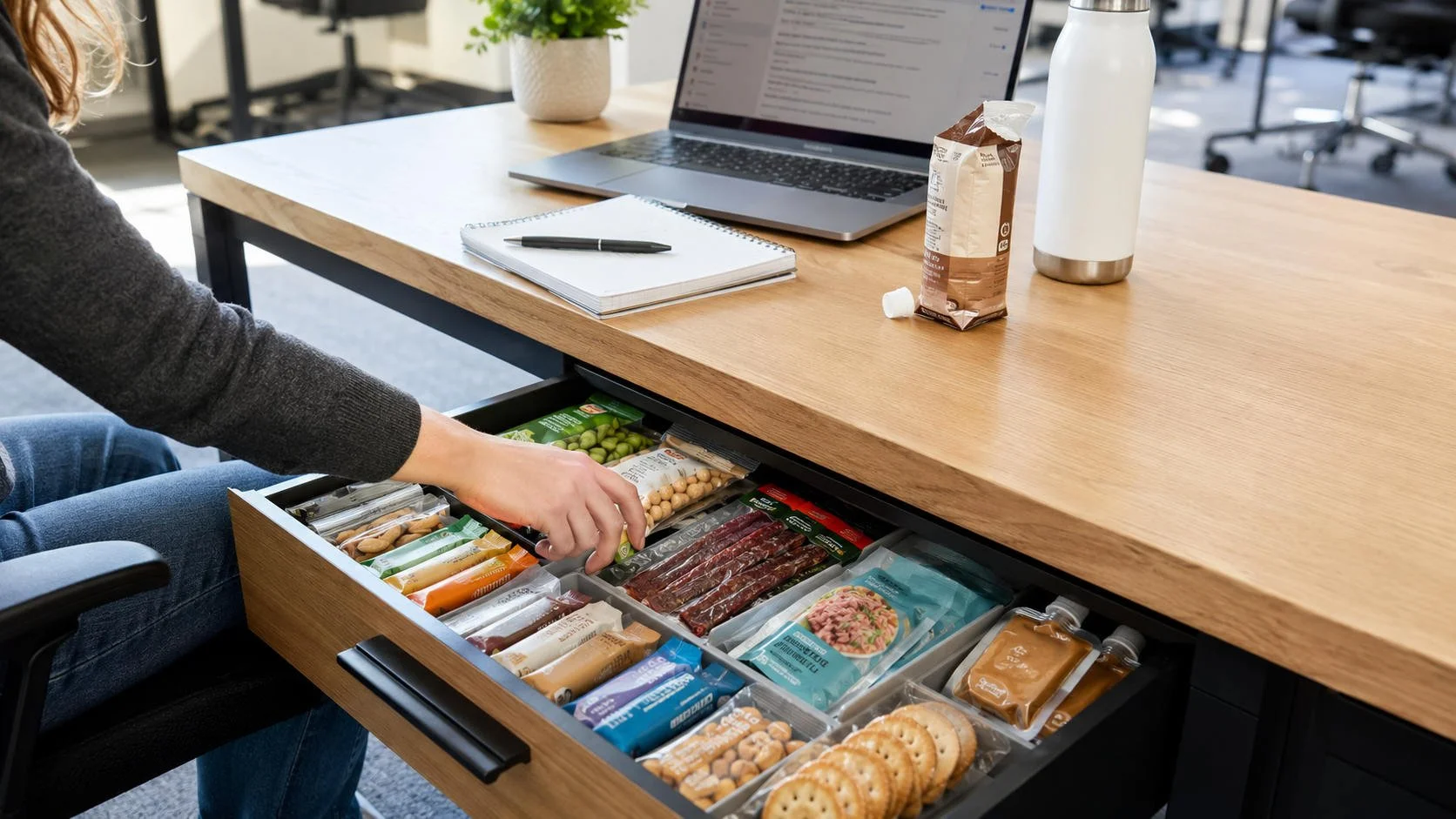
Keep these at all times
2 protein powder packets
2 protein bars
2 tuna/chicken/salmon pouches
2 roasted edamame packs
1 jerky pack
crackers or rice cakes
electrolyte packets
ginger tea
glucose tablets if you are at risk of low blood sugar
disposable spoon or fork
napkins
small trash bag
hand wipes
shaker bottle
Restock weekly
Every Friday, check:
What did you actually eat?
What made you nauseous?
What did you ignore?
What expired?
What smelled too strong for the office?
What saved you during a busy day?
Then restock only the useful items.
Best desk drawer snacks by work situation
Back-to-back meetings
Best picks:
protein shake
half protein bar
roasted edamame
jerky
clear protein packet
Why:
You need something fast that does not require utensils.
No lunch break
Best picks:
tuna pouch + crackers
chicken pouch + tortilla
protein powder + oatmeal
protein bar + roasted edamame
Why:
You need something closer to a mini-meal.
Low appetite
Best picks:
half protein shake
clear protein drink
few bites of protein bar
crackers first, protein later
applesauce plus protein drink
Why:
Tiny portions work better than forcing a full snack.
Shot day
Best picks:
saltines
ginger tea
protein shake
clear protein packet
oatmeal
applesauce
Why:
Bland, small, and drinkable usually wins.
Afternoon crash
Best picks:
protein bar
roasted edamame
jerky plus crackers
tuna pouch
protein shake
Why:
You need protein, not just caffeine.
Commute snack
Best picks:
protein bar
jerky
roasted edamame
ready-to-drink shake
protein water packet
Why:
No utensils and no mess.
What about fresh snacks?
Fresh snacks can be excellent.
They just are not desk drawer snacks.
Good fresh GLP-1 work snacks include:
Greek yogurt
cottage cheese
cheese stick
hard-boiled eggs
deli turkey
fruit
cut vegetables
hummus
edamame
leftover chicken
tuna salad
egg bites
But these need a fridge, cooler, or ice pack.
If your office has a reliable fridge, great.
If not, keep them out of the desk drawer.
Common mistakes
Mistake 1: Keeping perishables in the drawer
Greek yogurt, cheese sticks, deli meat, and hard-boiled eggs are not desk drawer foods unless specifically packaged as shelf-stable.
Use the fridge or an insulated lunch bag.
Mistake 2: Buying bars with too much sugar alcohol
Some GLP-1 users already deal with bloating, gas, nausea, or diarrhea. A bar with a lot of sugar alcohol may make that worse.
Test before stocking.
Mistake 3: Relying only on jerky
Jerky is useful, but too much can mean lots of sodium and processed meat.
Rotate with protein powder, pouches, edamame, and bars.
Mistake 4: Keeping only high-fiber snacks
Fiber matters, but too much too fast can cause bloating or diarrhea.
Balance fiber with fluids and smaller servings.
Mistake 5: Treating protein snacks as low blood sugar treatment
Protein is not the first tool for hypoglycemia.
Use fast-acting carbs first if your blood sugar is low, then follow with a balanced snack or meal.
Mistake 6: Stocking snacks you hate
The best snack is the one you will actually eat.
If tuna makes you dread opening your drawer, do not stock tuna.
Mistake 7: Ignoring hydration
Cleveland Clinic recommends staying hydrated while taking GLP-1 medications, especially because dehydration can contribute to constipation. Wegovy and Zepbound safety information also warn that nausea, vomiting, and diarrhea can cause dehydration that may lead to kidney problems.
Keep water nearby.
What this does not mean
This article does not mean:
GLP-1 users need to snack constantly.
Protein snacks replace meals.
Everyone needs the same protein target.
Protein bars are automatically healthy.
Jerky is a perfect everyday food.
Shelf-stable means safe after opening.
Protein treats low blood sugar.
You should force food when you are actively nauseous.
You should ignore persistent vomiting, diarrhea, abdominal pain, or dehydration.
This replaces medical nutrition advice.
It means this:
If you are a busy worker on a GLP-1 and you forget to eat, a small stash of shelf-stable protein snacks can prevent accidental under-eating and make workdays easier.
Desk drawer shopping list
Start with this
Protein powder packets
Ready-to-drink shelf-stable protein shakes
Tuna, salmon, or chicken pouches
Roasted edamame
Low-sugar protein bars
Jerky or biltong
Crackers or rice cakes
Instant oatmeal packets
Electrolyte packets
Ginger tea
Applesauce pouches
Glucose tablets if you are at risk of hypoglycemia
Optional add-ons
Roasted chickpeas
Lentil snacks
Powdered peanut butter
Shelf-stable milk cartons
High-protein cereal
Pickle packets
Mustard packets
Protein water packets
Disposable utensils
FAQ
What are the best GLP-1 protein snacks for work?
The best GLP-1 protein snacks for work are protein powder packets, shelf-stable protein shakes, tuna or chicken pouches, roasted edamame, low-sugar protein bars, jerky or biltong, clear protein packets, and oatmeal plus protein powder.
What are good Ozempic desk snacks?
Good Ozempic desk snacks include half a protein shake, crackers plus a tuna pouch, roasted edamame, clear protein powder, low-sugar protein bars, jerky, applesauce pouches, and ginger tea. If nausea is present, start with bland foods like crackers or toast and add protein later.
What are good Wegovy work snacks?
Good Wegovy work snacks include protein shakes, protein powder packets, tuna or salmon pouches, chicken pouches, roasted edamame, protein bars, instant oatmeal with protein powder, and low-calorie electrolyte drinks. If you take insulin or sulfonylureas, also keep fast-acting carbohydrates for low blood sugar.
What shelf stable protein snacks are best?
The best shelf stable protein snacks are sealed protein shakes, protein powder packets, tuna/salmon/chicken pouches, roasted edamame, jerky, protein bars, clear protein packets, shelf-stable milk cartons, and protein cereal. Check every package label because some products require refrigeration.
Can I keep Greek yogurt in my desk drawer?
No. Greek yogurt needs refrigeration unless a specific product is labeled shelf-stable. Keep it in the office fridge or an insulated lunch bag with ice packs.
Can I keep cheese sticks or hard-boiled eggs in my desk drawer?
No. Those are perishable unless specifically packaged as shelf-stable. The FDA says meat, poultry, seafood, eggs, and foods requiring refrigeration should not sit at room temperature for more than two hours, or one hour above 90°F.
Are protein bars good for GLP-1 users?
They can be, but choose carefully. Look for 10–20g protein, moderate calories, low added sugar, and ingredients your stomach tolerates. Be careful with high sugar alcohols or very high fiber bars if you are prone to bloating, nausea, or diarrhea.
Is jerky good for GLP-1 users?
Jerky can be useful because it is shelf-stable and high-protein. But it can be high in sodium, processed, spicy, or tough to chew. Use small portions and rotate it with other protein snacks.
Are nuts good protein snacks for GLP-1 users?
Nuts are shelf-stable and nutritious, but they are not the most protein-efficient snack because many calories come from fat. They are best in small portions, especially if high-fat foods worsen your nausea or reflux.
What should I keep at work if I have diabetes?
If you are at risk of low blood sugar, keep glucose tablets or another fast-acting carbohydrate. Protein snacks are useful after recovery, but the CDC recommends 15 grams of carbs first, waiting 15 minutes, and rechecking blood sugar.
What should I eat if I forgot lunch on a GLP-1?
Use a mini-meal: protein powder shake plus oatmeal, tuna pouch plus crackers, chicken pouch plus tortilla, protein bar plus roasted edamame, or shelf-stable protein shake plus rice cakes.
Final takeaway
The best GLP-1 protein snacks for work are the ones that solve real workday problems:
You forgot breakfast.
You missed lunch.
You are queasy.
You are stuck in meetings.
You need protein, but you do not want a giant meal.
You do not have a fridge.
The strongest desk drawer options are:
Protein powder packets
Shelf-stable protein shakes
Tuna, salmon, or chicken pouches
Roasted edamame
Low-sugar protein bars
Jerky or biltong
Clear protein packets
Instant oatmeal plus protein powder
Roasted chickpeas or lentil snacks
Peanut butter or powdered peanut butter packets
Single-serve nuts or seeds
Shelf-stable milk cartons
The simplest rule:
Keep sealed shelf-stable protein at your desk. Keep perishables in the fridge. Eat small amounts before you get too depleted. Use fast carbs, not protein, for low blood sugar.
For most busy workers on Ozempic, Wegovy, Mounjaro, or Zepbound, the best starter drawer is:
Protein powder packets, a shaker bottle, tuna or chicken pouches, crackers, roasted edamame, one protein bar, ginger tea, electrolyte packets, and glucose tablets if you are at risk of hypoglycemia.
That is enough to turn “I forgot to eat all day” into “I had something useful before the crash.”