
How to Make High-Protein Diet Coke or Coke Zero at Home
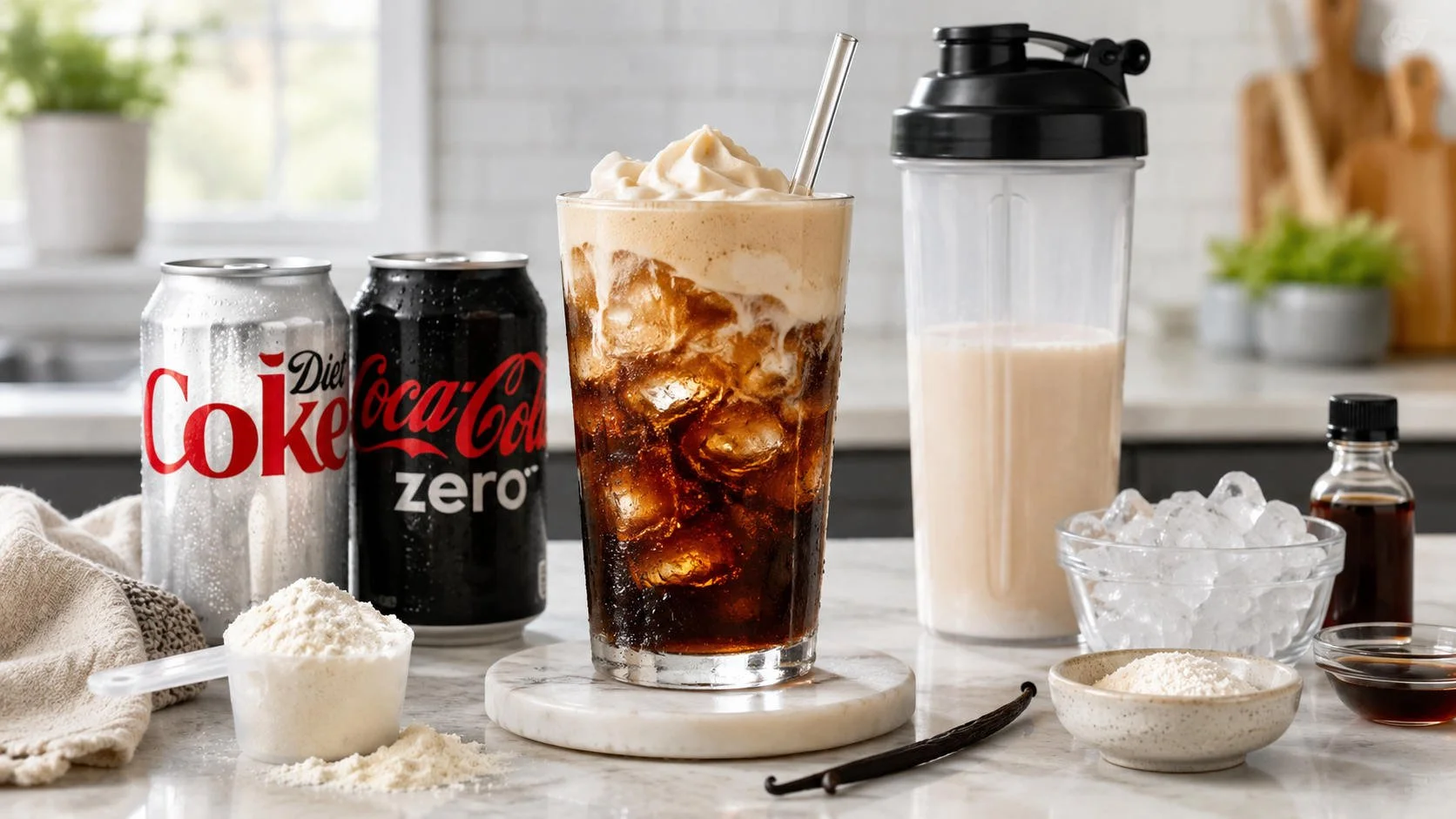
High-protein Diet Coke sounds like a joke until you realize the idea is actually useful.
Diet Coke and Coke Zero already taste good, have almost no calories, and are easy to drink. Protein powder has protein, but it often tastes chalky, milky, too sweet, or too thick. So the dream is obvious:
Can you add protein to Diet Coke or Coke Zero without ruining the taste?
Yes.
But there is a catch.
The more protein you add, the less it tastes like Diet Coke or Coke Zero.
If you want the drink to still taste like cola, the sweet spot is usually 3 to 10 grams of protein, not a full 25-gram scoop. A full scoop can work, but it usually turns the drink into a foamy, cloudy, flavored protein soda instead of “Diet Coke with a little protein.”
The best methods are:
Collagen peptides for the cleanest cola taste
Clear whey isolate for complete protein and low calories
Protein water for the easiest no-mixing option
A small splash of protein shake if you want a creamy “Diet Coke float” taste
Protein ice cubes if you want the least foaming
Diet Coke Canada lists 0 calories, 0g sugar, 0.1g protein, and 45mg caffeine per 355 mL can. Coca-Cola Canada lists Coke Zero Sugar as 0 calories, with 34mg caffeine per 355 mL can. So the calories and protein come almost entirely from whatever protein you add.
Quick answer: the best high-protein Diet Coke recipe
Best version if you want it to still taste like Diet Coke
The 5g collagen method
Use:
1 can cold Diet Coke or Coke Zero
5g unflavored collagen peptides
1 to 2 tablespoons room-temperature water
Ice
Instructions:
Mix the collagen with 1 to 2 tablespoons room-temperature water until dissolved.
Fill a glass with ice.
Pour in the Diet Coke or Coke Zero slowly.
Add the collagen mixture slowly down the side of the glass.
Stir once or twice.
Result:
About 20 calories
About 5g protein
Still tastes mostly like Diet Coke or Coke Zero
Slightly softer mouthfeel
Minimal protein-shake flavor
This is the best starting point because it adds “some protein” without turning the drink into a science project.
Best version if you want more protein
The 10g collagen method
Use:
1 can cold Diet Coke or Coke Zero
10g unflavored collagen peptides
2 tablespoons water
Ice
Result:
About 40 calories
About 10g protein
Still mostly cola-like
Slightly less crisp
Best if you want more protein but still care about taste
A 10g packet of unflavored collagen peptides is commonly listed around 40 calories and 10g protein, though labels vary by brand.
Best complete-protein version
The clear whey Coke Zero method
Use:
1 can cold Coke Zero or Diet Coke
1/4 to 1/2 scoop clear whey isolate
3 to 4 ounces cold water
Ice
Instructions:
Mix the clear whey with cold water in a shaker.
Let the foam settle.
Fill a glass with ice.
Pour in the Coke Zero slowly.
Add the clear whey mixture slowly.
Stir gently.
Result:
1/4 scoop: about 20 calories and 5g protein
1/2 scoop: about 40 calories and 10g protein
More complete protein than collagen
More likely to change the cola taste
Best with cherry, lemon, lime, or unflavored clear whey
MyProtein’s clear whey instructions say to mix one 25g scoop with cold water, then wait for natural foaming to settle; its Canadian product page lists one scoop at 80 calories and 20g protein. That means a quarter scoop is roughly 5g protein and 20 calories, before the soda.
The most important rule
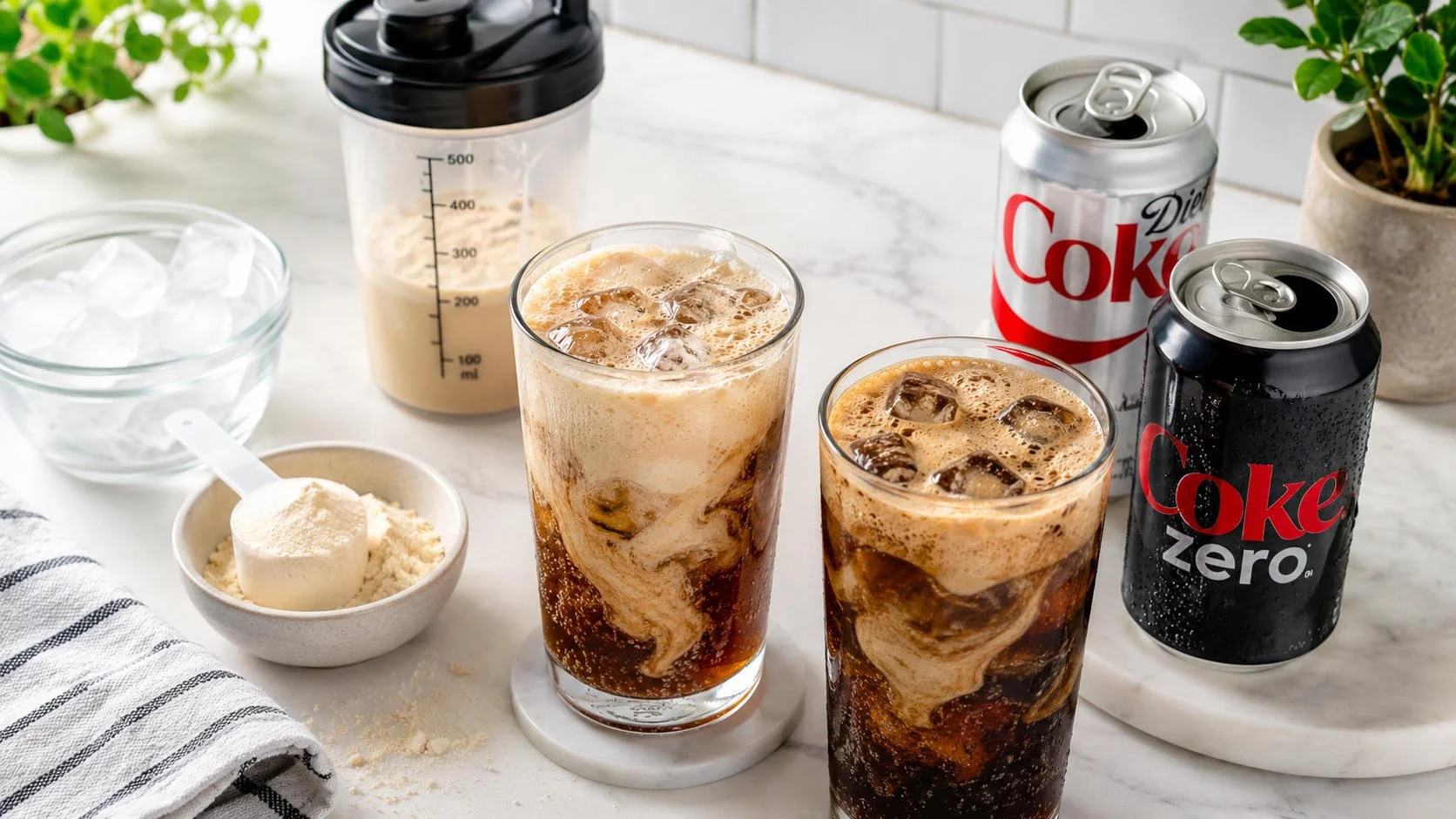
Do not shake protein powder directly into carbonated soda.
That is how you get foam, pressure, clumps, and a mess.
The better method is:
Mix the protein separately first. Let foam settle. Then add the soda slowly.
This matters especially with clear whey. Clear whey products naturally foam after shaking and often need a short settling period before they look and drink cleanly.
What protein works best in Diet Coke or Coke Zero?
1. Collagen peptides
Best for: keeping the cola taste
Protein quality: not a complete muscle-building protein
Calories: about 20 calories per 5g protein
Taste effect: mildest
Collagen is the best option if your top priority is:
“I want this to still taste like Diet Coke.”
It dissolves better than many regular protein powders, has less of a milky flavor, and does not make the drink taste like a shake. The downside is that collagen is not the same as whey, dairy, egg, meat, soy, or other complete proteins. It is useful protein, but it should not be your only protein source if your goal is muscle retention or a complete amino acid profile.
Best use:
3g to 5g protein if you want almost no taste change
10g protein if you want a noticeable but still drinkable protein soda
Best flavor pairing:
Diet Coke
Coke Zero
Caffeine-Free Coke Zero
Cherry Coke Zero, if available
Avoid:
Flavored collagen unless it is vanilla, cherry, or something cola-compatible
2. Clear whey isolate
Best for: complete protein with low calories
Protein quality: better than collagen for complete protein
Calories: often around 80 to 90 calories per 20g protein
Taste effect: moderate
Clear whey is better if you want a more complete protein source.
The downside is taste. Clear whey is usually flavored like lemonade, berry, tropical punch, peach, or sour candy. That can work with Coke Zero, but it will not taste like plain Diet Coke anymore. It will taste like cherry-lime protein Coke, lemon protein Coke, or fruit-cola protein soda.
Best use:
1/4 scoop for 5g protein
1/2 scoop for 10g protein
Full scoop only if you do not mind a very protein-forward drink
Best flavors:
Cherry
Lemonade
Lime
Cola-compatible berry
Unflavored, if you can find one that actually tastes neutral
Avoid:
Peach mango
Blue raspberry
Tropical punch
Anything very candy-like, unless you want the Coke taste to change
3. Ready-to-drink clear protein water
Best for: easiest mixing
Protein quality: usually whey isolate or collagen, depending on product
Calories: often about 80 to 100 calories per 20g protein bottle
Taste effect: depends on flavor
This is the easiest method because the protein is already dissolved.
Use:
8 to 10 ounces Coke Zero
2 to 4 ounces clear protein water
Ice
Result:
2 ounces may add about 2 to 3g protein
4 ounces may add about 4 to 5g protein
Usually very low calorie
Less foaming than powder
More likely to taste like flavored Coke
Best flavors:
Lemon
Cherry
Lime
Citrus
Light berry
Avoid:
Strong fruit punch
Blue raspberry
Very sweet flavors
This is a good option if you only want a small protein bump and hate mixing powders.
4. Regular whey isolate
Best for: complete protein if you already own it
Protein quality: strong
Calories: usually low for the protein
Taste effect: high
Regular whey isolate is not ideal for this drink.
Even unflavored whey can make Diet Coke taste milky, foamy, chalky, or like a melted protein float. If you use it, use a tiny amount.
Best use:
1 teaspoon to 1 tablespoon
3 to 5g protein max
Premix with water first
Avoid:
A full scoop
Chocolate whey
Cookies and cream whey
Anything thick or creamy
Best version:
Vanilla whey + Coke Zero = low-calorie “float” flavor
But that no longer tastes like normal Coke Zero.
5. Protein shake splash
Best for: Diet Coke float vibe
Protein quality: depends on shake
Calories: moderate
Taste effect: very high
This is the “dirty soda” version.
Use:
1 can Coke Zero
2 to 4 ounces vanilla protein shake
Ice
Result:
Creamy
More like a Coke float
Less like Diet Coke
Still can be low-calorie if the shake is lean
This is tasty, but it does not preserve the clean Diet Coke or Coke Zero taste.
Use this if you want:
protein Coke float
Not:
Diet Coke that happens to have protein
Best recipes
Recipe 1: The “still tastes like Coke Zero” version
Use:
1 can Coke Zero
5g unflavored collagen peptides
1 to 2 tablespoons water
Ice
Instructions:
Dissolve collagen in the water.
Add ice to a glass.
Pour Coke Zero over the ice slowly.
Add the collagen mixture slowly.
Stir once.
Approximate nutrition:
20 calories
5g protein
0g sugar
Best for:
First attempt
People who hate protein powder taste
Lowest-calorie version
Preserving cola flavor
Recipe 2: The 10g protein Diet Coke
Use:
1 can Diet Coke
10g unflavored collagen peptides
2 tablespoons water
Ice
Instructions:
Mix collagen and water until smooth.
Add Diet Coke to a glass with ice.
Slowly pour in collagen.
Stir gently.
Approximate nutrition:
40 calories
10g protein
0g sugar
Best for:
A meaningful protein bump
Still low-calorie
Minimal flavor change
What to expect:
This will taste slightly less crisp than regular Diet Coke. But it should still taste like Diet Coke, not a protein shake.
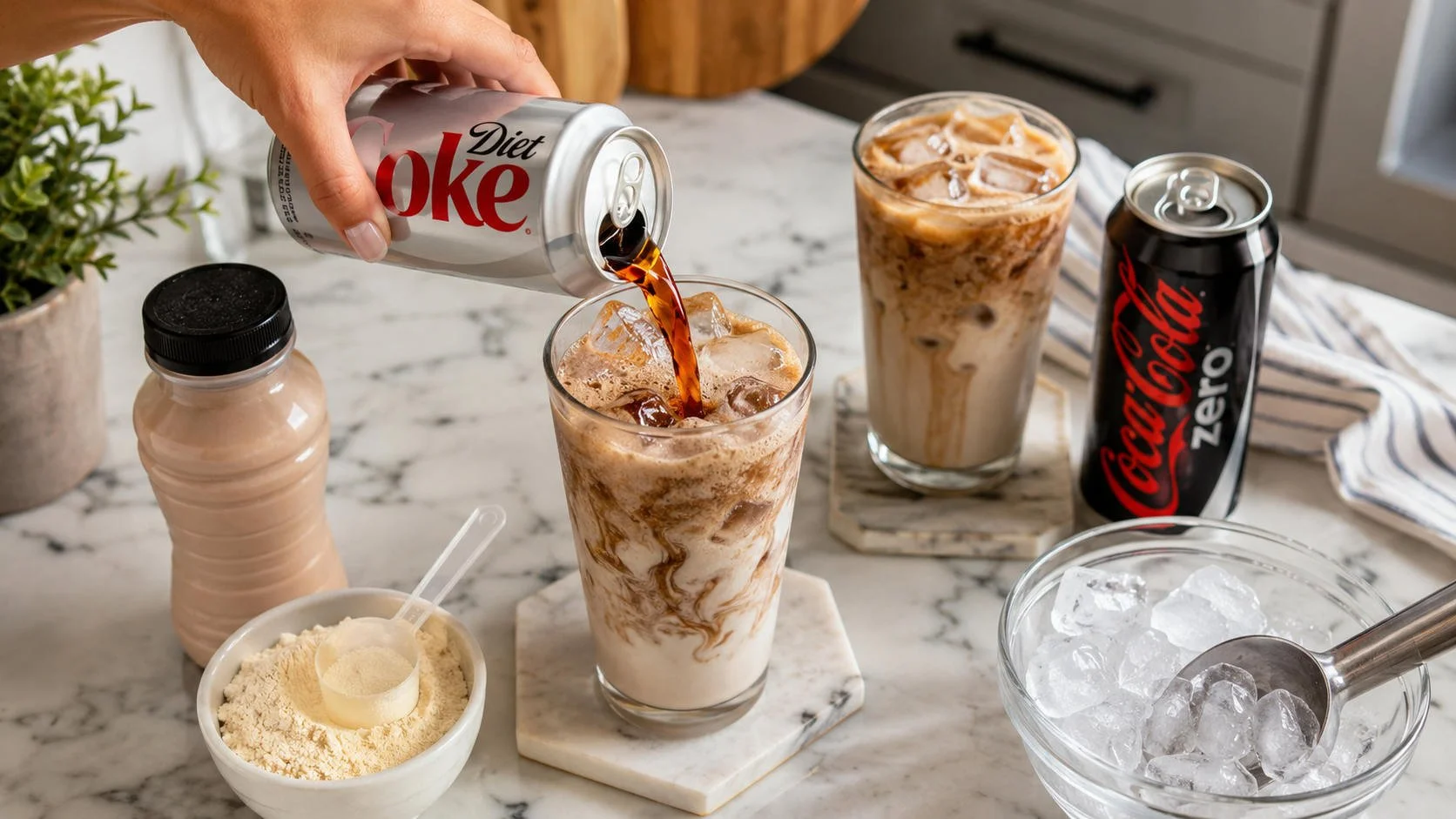
Recipe 3: Complete-protein Coke Zero
Use:
1 can Coke Zero
1/4 scoop clear whey isolate
3 ounces cold water
Ice
Instructions:
Shake clear whey with water.
Let foam settle.
Pour Coke Zero into a glass with ice.
Add the clear whey mixture slowly.
Stir gently.
Approximate nutrition:
20 calories
5g protein
0g sugar, depending on protein powder
Best for:
Complete protein
Very low calories
People who already use clear whey
Best flavor:
Cherry, lemon, lime, or unflavored
Worst flavor:
Tropical, peach, candy-blue, or anything that fights the cola taste
Recipe 4: 10g clear whey Coke Zero
Use:
1 can Coke Zero
1/2 scoop clear whey isolate
4 ounces cold water
Ice
Approximate nutrition:
40 calories
10g protein
Best for:
More protein
Complete protein
Post-workout soda craving
What to expect:
This tastes more like a flavored protein soda than normal Coke Zero. Still good, but less “pure cola.”
Recipe 5: Protein Coke Zero float
Use:
1 can Coke Zero
2 to 4 ounces vanilla protein shake
Ice
Instructions:
Fill a large glass with ice.
Pour Coke Zero in slowly.
Add protein shake slowly.
Stir gently.
Approximate nutrition:
Depends on shake and amount
Often about 30 to 80 calories
Often about 5 to 12g protein
Best for:
Dessert-style drink
Creamy Coke Zero
People who like dirty soda or Coke floats
Not best for:
Keeping the original Coke Zero taste
Recipe 6: Protein ice cube Coke Zero
Use:
10g collagen or clear whey
4 to 6 ounces water
1 can Diet Coke or Coke Zero
Instructions:
Mix protein with water.
Let foam settle.
Pour into an ice cube tray.
Freeze.
Add 2 to 4 protein cubes to Diet Coke or Coke Zero.
Best for:
Less foaming
Slow-release protein
Better cola taste at the start
Summer drinks
What to expect:
The first sips taste mostly like Coke. As the cubes melt, the drink becomes softer and slightly protein-flavored.
Best method if taste matters most
Use collagen.
Specifically:
3g to 5g unflavored collagen peptides per can.
This is not a huge protein hit, but it is the most likely to still taste like Diet Coke or Coke Zero.
The more protein you add, the more you change:
carbonation
mouthfeel
clarity
sweetness balance
aftertaste
foam
cola sharpness
So if the goal is “very low calorie and still tastes like Coke Zero,” do not chase 25g protein.
Chase 5g.
Best method if protein quality matters most
Use clear whey isolate.
A quarter scoop gives you about 5g protein for around 20 calories if your clear whey is similar to MyProtein’s 20g protein and 80-calorie serving. That is a good compromise between protein quality and taste.
Best formula:
1/4 scoop clear whey + 3 ounces water + 1 can Coke Zero
That keeps the drink light.
A full scoop may give 20g protein, but it will not taste like Coke Zero anymore.
Diet Coke vs. Coke Zero: which works better?
Coke Zero works better with protein
Coke Zero tastes closer to classic Coca-Cola, so it handles vanilla, cherry, lemon, and “float” flavors better. Coca-Cola says Coke Zero Sugar is designed to look and taste more like Coca-Cola Original Taste, while Diet Coke has a lighter, distinct taste.
Best pairings:
Collagen
Vanilla protein shake splash
Cherry clear whey
Lemon clear whey
Protein ice cubes
Diet Coke works better if you want a sharper taste
Diet Coke has a lighter, sharper flavor. That makes it less forgiving with creamy proteins but good with small collagen doses.
Best pairings:
3g to 5g collagen
10g collagen if you do not mind a softer taste
Very small unflavored clear whey dose
Avoid:
Vanilla protein shake if you want Diet Coke taste
Full scoop whey
Thick dairy protein
Ranking the methods by taste
1. 3g to 5g collagen
Best taste preservation. Still tastes like Diet Coke or Coke Zero.
2. Protein ice cubes
Good taste preservation because the protein releases slowly.
3. 10g collagen
Still drinkable and cola-like, but less crisp.
4. 5g clear whey
Good if the flavor is cola-compatible. Slightly changes the drink.
5. Protein water splash
Easy and low foam, but turns the drink into flavored cola.
6. 10g clear whey
Useful protein, but now it tastes like protein soda.
7. Vanilla protein shake splash
Tasty, but it becomes a Coke float.
8. Full scoop regular whey
Highest chance of tasting bad, foaming, clumping, or turning chalky.
Ranking the methods by protein quality
1. Clear whey isolate
Best complete-protein option.
2. Regular whey isolate
Good protein quality, but worse taste and texture in soda.
3. Protein shake splash
Can be good protein quality, depending on the shake.
4. Protein water
Depends on product. Many use whey isolate, but check the label.
5. Collagen
Useful protein, but not complete in the same way whey, dairy, egg, soy, meat, or fish proteins are.
How to prevent foam
Do not shake soda
Never put Diet Coke or Coke Zero in a shaker with powder.
Mix protein separately
Make a protein concentrate first.
Use a big glass
Foam needs space.
Use ice
Cold soda foams less aggressively and tastes better.
Pour slowly
Pour down the side of the glass.
Let clear whey settle
Clear whey often needs time for foam to settle before drinking. MyProtein’s instructions specifically tell users to wait for natural foaming to settle after shaking.
Use less protein
If your drink foams too much, cut the protein dose in half.
How to prevent clumps
Use room-temperature water for collagen
Collagen often mixes better in room-temperature water than directly in ice-cold soda.
Use a mini whisk or frother
Mix the protein and water first.
Add soda after the protein is dissolved
Do not add powder to the soda.
Use smaller doses
A tiny dose mixes better than a full scoop.
Avoid regular whey unless you want a creamy drink
Regular whey is more likely to taste chalky or cloudy in cola.
What not to do
Do not add dry protein powder directly to a full can of soda
It will foam and clump.
Do not use a full scoop first
Start with 1/4 scoop or less.
Do not use chocolate whey
Chocolate Diet Coke protein soda is usually not the move.
Do not use thick casein protein
Casein is too creamy and thick for this.
Do not use fruit flavors that fight cola
Peach, tropical punch, blue raspberry, and sour candy flavors can make the drink taste confused.
Do not expect 30g protein to taste like normal Diet Coke
That is too much protein for a clean cola taste.
Is high-protein Diet Coke healthy?
It depends what you mean by healthy.
A high-protein Diet Coke can be a low-calorie way to add a few grams of protein to your day. But it is not a meal, not a magic health drink, and not a substitute for real protein foods like Greek yogurt, eggs, chicken, fish, tofu, lentils, cottage cheese, or lean meat.
The FDA lists the Daily Value for protein as 50g for adults and children 4 years and older, based on a 2,000-calorie diet, though individual needs vary. A 5g protein Diet Coke is a small boost, not a full protein serving.
A good way to think about it:
5g protein Diet Coke = fun protein bump
10g protein Diet Coke = useful snack drink
20g+ protein Diet Coke = protein soda, not Diet Coke
Sweetener and caffeine notes
Diet Coke and Coke Zero are both low- or zero-calorie cola drinks, but they contain non-sugar sweeteners and, unless you choose caffeine-free versions, caffeine.
In Canada, Diet Coke lists aspartame and acesulfame-potassium in its ingredients and notes that it contains phenylalanine. Coca-Cola Canada lists Diet Coke at 45mg caffeine per 355 mL can, while Coke Zero Sugar is listed at 34mg caffeine per 355 mL can.
If you have phenylketonuria, pay attention to the phenylalanine warning. If you are sensitive to caffeine, use Caffeine-Free Diet Coke or Caffeine-Free Coke Zero. Health Canada lists caffeine ranges for cola beverages and notes diet cola can contain 39 to 50mg caffeine per 355 mL.
The FDA lists the acceptable daily intake for aspartame at 50mg per kilogram of body weight per day, while Health Canada lists an ADI of 40mg per kilogram of body weight per day. Those are population safety limits, not a reason to drink unlimited diet soda.
Supplement safety note
Protein powders and collagen powders are dietary supplements. They can be useful, but quality varies.
The FDA says dietary supplement firms are responsible for evaluating safety and labeling before marketing, and the NIH Office of Dietary Supplements advises people to talk with healthcare providers before using supplements, especially if they have health conditions, take medications, are pregnant, or are breastfeeding.
Best practice:
Choose a reputable brand.
Look for third-party testing when possible.
Avoid products with stimulant blends if you only want protein.
Check calories, protein, sweeteners, and allergens.
Use whey only if you tolerate dairy.
Use plant protein cautiously because some can taste stronger in soda.
Ask a clinician if you have kidney disease, pregnancy, breastfeeding, or medical dietary restrictions.
Hello, Worl
Best ingredients to buy
For best taste
Buy:
Use:
3g to 10g per can
Best for:
Diet Coke taste preservation
For best complete protein
Buy:
Clear whey isolate
Use:
1/4 to 1/2 scoop per can
Best for:
Low-calorie complete protein
For easiest mixing
Buy:
Ready-to-drink clear protein water
Use:
2 to 4 ounces mixed with Coke Zero
Best for:
No powder clumps
For creamy dessert
Buy:
Vanilla protein shake
Use:
2 to 4 ounces per can
Best for:
Coke Zero float
Best flavor combinations
Best Coke Zero combinations
Coke Zero + 5g collagen
Coke Zero + 10g collagen
Coke Zero + cherry clear whey
Coke Zero + lemon clear whey
Coke Zero + vanilla protein shake splash
Coke Zero + protein ice cubes
Best Diet Coke combinations
Diet Coke + 5g collagen
Diet Coke + 10g collagen
Diet Coke + very small unflavored clear whey
Diet Coke + lemon clear whey, if you like citrus Diet Coke
Diet Coke + protein ice cubes
Best Caffeine-Free combinations
Caffeine-Free Coke Zero + collagen
Caffeine-Free Diet Coke + collagen
Caffeine-Free Coke Zero + vanilla protein shake splash
Good if you want this in the afternoon or evening.
Troubleshooting
It foamed everywhere
You probably added powder directly to soda or shook the soda.
Fix:
Mix protein with water first.
Add soda slowly.
Use a bigger glass.
Use less protein.
It tastes chalky
You probably used regular whey or too much powder.
Fix:
Use collagen or clear whey.
Cut dose in half.
Mix better before adding soda.
It tastes too sweet
The protein powder may be sweetened.
Fix:
Use unflavored collagen.
Use unsweetened or less-sweet protein.
Use less protein powder.
It does not taste like Coke anymore
You added too much protein or used a strong flavor.
Fix:
Use 3g to 5g collagen.
Use Coke Zero instead of Diet Coke for flavored versions.
Avoid tropical/candy flavors.
It tastes flat
Protein can soften carbonation.
Fix:
Use more ice.
Add protein concentrate slowly.
Use less protein.
Open a fresh can right before mixing.
Best recipe by goal
If you want it to taste most like Diet Coke
Choose:
5g collagen + Diet Coke
If you want it to taste most like Coke Zero
Choose:
5g collagen + Coke Zero
If you want 10g protein
Choose:
10g collagen + Coke Zero
If you want complete protein
Choose:
1/4 to 1/2 scoop clear whey + Coke Zero
If you want a dessert drink
Choose:
Coke Zero + 2 to 4 ounces vanilla protein shake
If you want the least foam
Choose:
Protein ice cubes
If you want no mixing
Choose:
Coke Zero + splash of clear protein water
What this does not mean
This article does not mean:
Diet Coke becomes a health food because you add protein.
Coke Zero becomes a meal replacement.
Collagen is the same as whey protein.
More protein always tastes better.
You should use a full scoop.
You should ignore caffeine sensitivity.
You should ignore supplement quality.
Everyone should drink diet soda.
This is medical nutrition advice.
It means this:
If you already like Diet Coke or Coke Zero and want to add a small amount of protein while keeping calories very low, use a small dose of collagen or clear whey and mix it carefully.
FAQ
Can you put protein powder in Diet Coke?
Yes, but do not add dry protein powder directly to Diet Coke. Mix the protein with a small amount of water first, let foam settle if needed, then add the Diet Coke slowly.
What is the best protein for Diet Coke?
Unflavored collagen peptides are best if you want the drink to still taste like Diet Coke. Clear whey isolate is better if you want a more complete protein source, but it changes the taste more.
Can you put whey protein in Coke Zero?
Yes, but regular whey can taste milky or chalky. Clear whey isolate works better than normal whey because it is lighter and more juice-like.
How much protein should I add?
For best taste, add 3g to 5g protein. For a stronger protein drink, add 10g protein. A full 20g to 25g scoop usually changes the taste too much.
How many calories does high-protein Diet Coke have?
It depends on the protein. Roughly:
5g protein: about 20 calories
10g protein: about 40 calories
20g protein: about 80 calories
Diet Coke and Coke Zero themselves add essentially no calories.
Does collagen Diet Coke count as high protein?
It depends how much collagen you add. A 5g version is more of a “protein boost.” A 10g version is a light protein drink. Collagen is not a complete protein like whey, so do not treat it as your only protein source.
Does protein Diet Coke taste good?
It can, if you keep the protein dose low. The best-tasting version is usually Coke Zero or Diet Coke with 3g to 5g unflavored collagen.
Why does my protein Coke foam so much?
Protein powders foam when shaken, and carbonation makes that worse. Clear whey products often naturally foam after shaking and need time to settle. Mix protein with water first, wait, then add soda slowly.
Can I make this with Caffeine-Free Diet Coke?
Yes. Caffeine-Free Diet Coke or Caffeine-Free Coke Zero works the same way and may be better if you want this later in the day.
Is this safe?
For most healthy adults, adding a small amount of protein powder or collagen to Diet Coke or Coke Zero is basically a flavored protein drink. But supplement quality varies, and people with medical conditions, kidney disease, pregnancy, breastfeeding, PKU, medication concerns, or dietary restrictions should check with a clinician.
Final takeaway
The best high-protein Diet Coke or Coke Zero is not actually “high protein” in the bodybuilding-shake sense.
It is a low-calorie cola with a small protein boost.
The best versions are:
5g collagen + Coke Zero: best taste
10g collagen + Diet Coke: best simple protein boost
1/4 scoop clear whey + Coke Zero: best complete-protein version
Protein ice cubes + Diet Coke: least foam
Coke Zero + vanilla protein shake splash: best dessert version
The simplest rule:
Start with 5g protein. Mix it separately. Add soda slowly. Do not shake carbonation.
If you want it to still taste like Diet Coke or Coke Zero, small protein wins.
If you want 25g protein, make a protein shake.