The Asian Night Market Food Guide for People Who Want the Best Bite, Not the Biggest Line
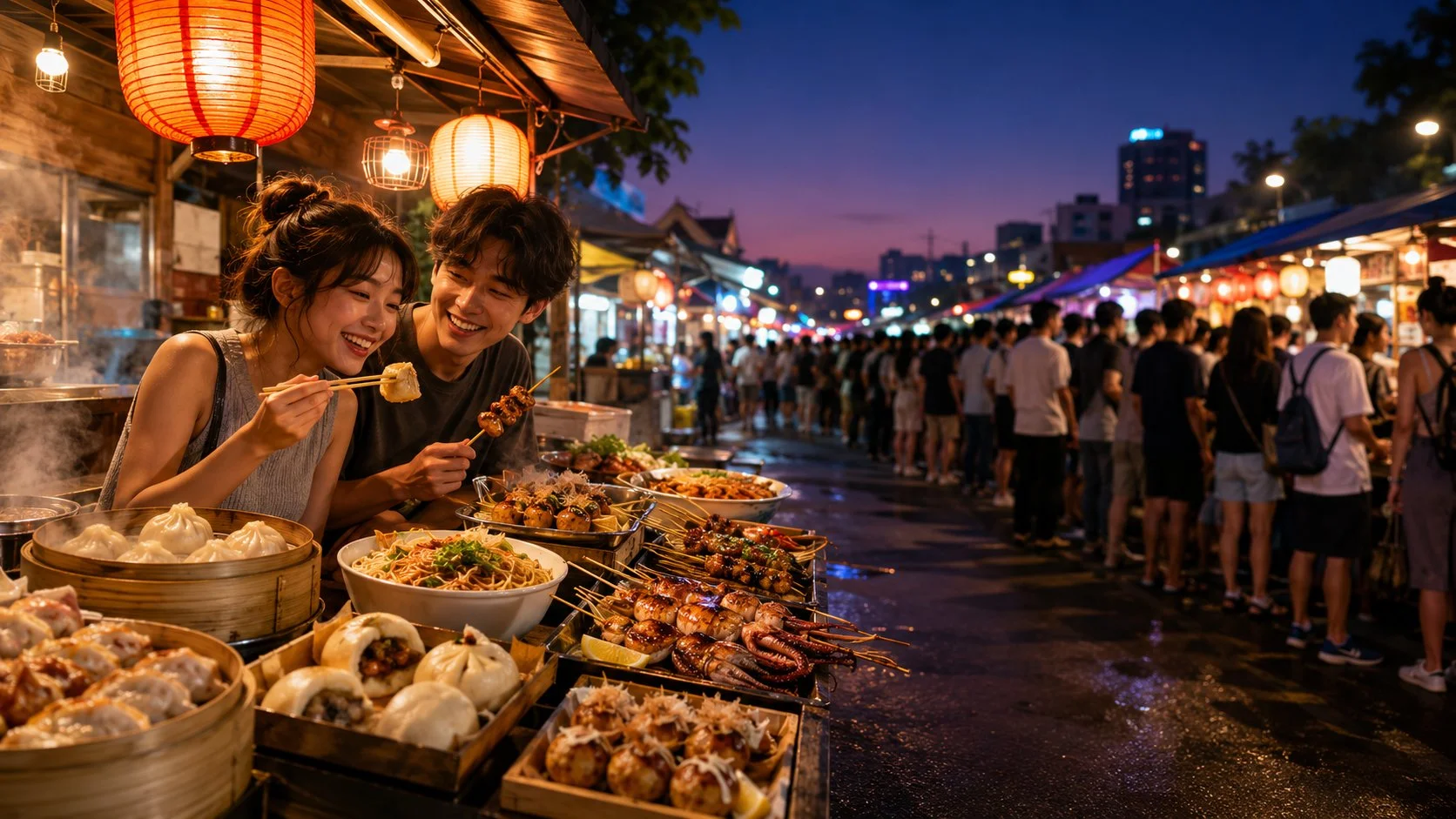
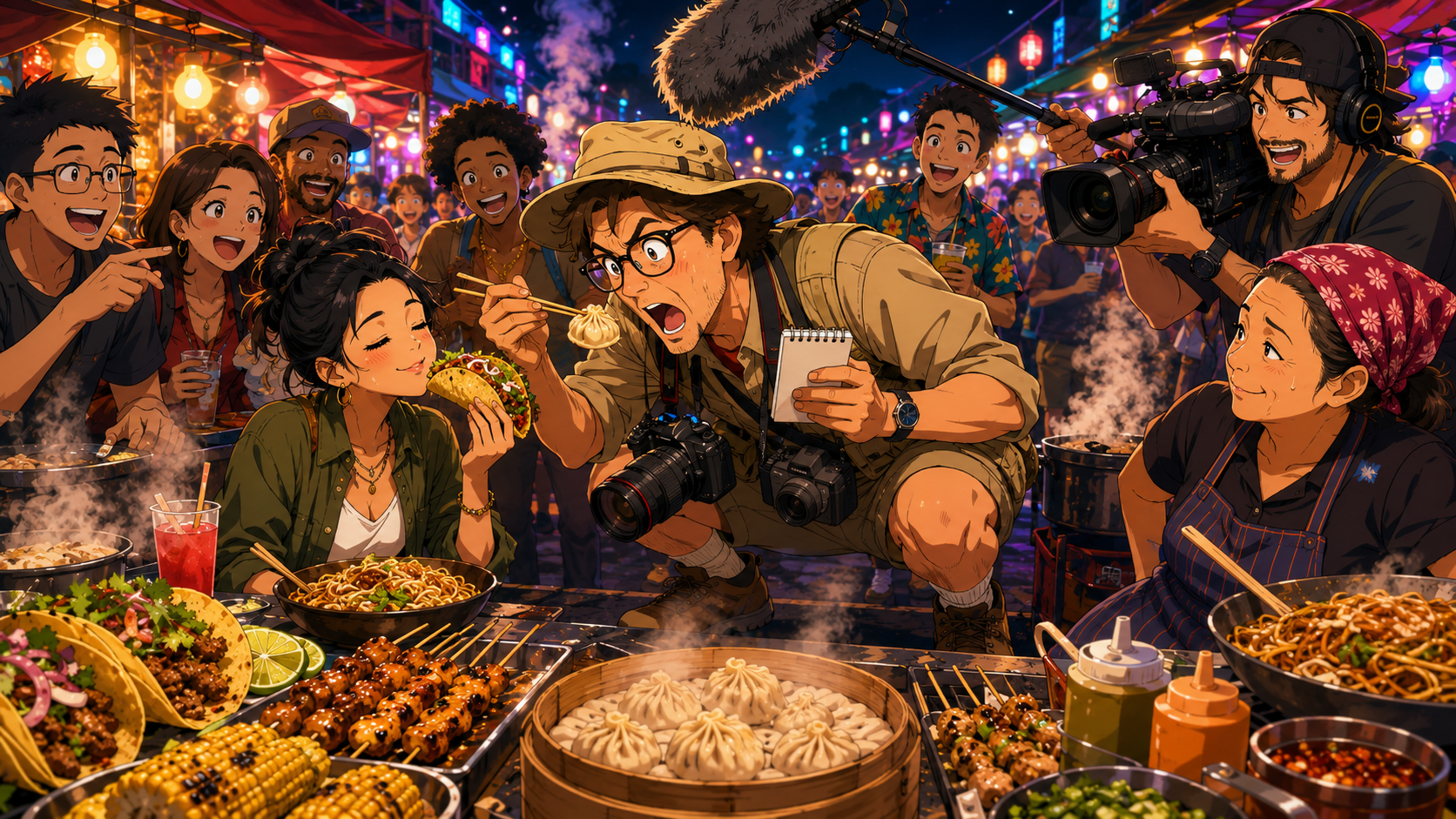
Asian night markets are beautiful, chaotic temples of steam, smoke, sugar, oil, skewers, shouting, bargaining, plastic stools, and people forming a 40-minute line because somebody on TikTok pointed dramatically at a cheese pull. They are proof that humanity can accomplish great things when dinner is served on a stick and nobody is forced to sit through a waiter explaining “the concept.”
But here is the problem: most night market advice is stupid.
“Go where the line is longest.”
Fantastic. Truly groundbreaking. By that logic, the best food in the world is airport security, passport control, and the women’s bathroom at a music festival. Lines can mean something. They can mean the stall is famous, delicious, safe, slow, understaffed, recently viral, or selling a snack shaped like a cartoon animal to people who think Instagram is a digestive organ.
The better strategy is not chasing the biggest line. It is learning how to spot the best bite.
Asian night markets and hawker-style food spaces matter because they are not just “cheap eats” with better lighting. Taipei’s night markets can take over entire neighborhoods, with pedestrians grazing from stall to stall, and Ningxia Night Market in Taipei is especially known as a food-focused market with many family-owned stalls rather than just franchise-style tourist bait. Singapore’s hawker culture, which evolved from street food culture, is recognized by UNESCO as part of the country’s intangible cultural heritage, reflecting Chinese, Malay, Indian, and other culinary traditions in shared community dining spaces.
So yes, the stakes are high. You are not merely buying a dumpling. You are entering a battlefield where your hunger, curiosity, wallet, and fear of missing out will all be manipulated by steam, signage, and a suspiciously photogenic dessert in a plastic bucket.
The Best Asian Night Market Food Is Usually Not the Most Photogenic Thing
The most photogenic stall is often not the best stall. It is just the stall with the most LED lights and the strongest understanding of human weakness.
A giant rainbow drink in a novelty cup? Fine. Enjoy your liquid screensaver. A tornado potato the size of a medieval weapon? Cute. A hot dog wrapped in cheese, sugar, cereal dust, and the moral collapse of three continents? Wonderful, if your goal is to eat something that looks like it was designed by a committee of unsupervised children.
But the best night market foods tend to be less dramatic. They are grilled, fried, steamed, simmered, braised, ladled, folded, skewered, flipped, or brushed with sauce by someone who has done the same thing ten thousand times and now moves with the quiet fury of a person who could make 80 oyster omelets during a power outage.
That is what you want.
Not the stall screaming “viral.” The stall muttering “I have been here since before your phone learned portrait mode.”
Rule One: Follow the Specialist, Not the Circus Tent
The best night market stall is usually doing one thing extremely well. Maybe two things if they are feeling reckless. If a stall sells fried chicken, bubble tea, takoyaki, grilled squid, mango shaved ice, cheese coins, curry fish balls, and churros, congratulations, you have found a snack court wearing one apron.
Specialists are safer bets because repetition creates speed, consistency, and turnover. A stall that only sells scallion pancakes is making them constantly. A stall that only sells satay has smoke, rhythm, and a queue that moves like it has somewhere to be. A stall with one giant laminated menu of 74 items is asking you to trust a freezer and a dream.
This is especially useful in cities where street food has deep stall cultures. Hong Kong Tourism Board’s street food guide highlights snack-specific staples like siu mai, curry fish balls, cheung fun, beef offal, stinky tofu, egg waffles, and egg tarts — foods often associated with vendors or shops known for particular bites rather than “everything everywhere all at once, but with chili oil.”
The specialist stall is the adult in the room. The multi-menu stall is a vending machine that learned to sweat.
Rule Two: Look for Heat, Smoke, Steam, and Actual Cooking
The best bite is usually happening right in front of you.
You want hot oil, boiling broth, charcoal smoke, sizzling griddles, steam baskets opening like tiny edible treasure chests, skewers being turned over fire, and fresh batter hitting metal. You do not want lukewarm mystery items sitting under a bulb like they are waiting for parole.
This is not just food-snob nonsense. It is also basic travel food safety. The CDC advises travelers to avoid lukewarm food and choose food that is cooked and served hot; it also recommends avoiding raw foods and, if eating street food, following the same rules by choosing items cooked steaming hot. The Government of Canada gives similar advice: eat foods that are well cooked and served hot, avoid food served at room temperature, and avoid raw or undercooked meats and fish.
So the safest and often tastiest night market strategy is painfully simple: choose the stall where your food is actively being cooked. Not “reheated.” Not “assembled.” Not “rescued from a tray.” Cooked.
Freshly fried chicken cutlet? Yes.
Grilled squid brushed over coals? Yes.
Soup dumplings steaming hard? Yes.
Pre-cut fruit sweating into a plastic tub? Maybe let that little bacteria aquarium continue its journey without you.
Rule Three: A Fast-Moving Line Beats a Long Line
A long line means nothing if it does not move.
The best line is not necessarily the biggest. The best line is steady, local, impatient, and efficient. People know what they want. The vendor knows what they are doing. Food comes out constantly. No one is asking eighteen questions about whether fish balls contain fish. Everyone is participating in a system older and better than you.
Food safety experts also point to crowd turnover as useful because it means food is moving quickly instead of sitting around. The Washington Post’s 2025 street food safety reporting quotes experts recommending vendors with heavy turnover, made-to-order food, and high-heat cooking methods like grilling, stir-frying, frying, and boiling.
The bad line is different. It is long because the stall is slow, underprepared, or selling one novelty item that requires assembly, blowtorching, branding, saucing, filming, garnishing, and possibly a small TED Talk. That is not a food stall. That is edible theater with a queue management problem.
Follow the line that moves. Avoid the line that poses.
Rule Four: Eat What the Market Does Best, Not What Your Algorithm Told You to Eat
Every night market has its trap food. Not bad food, necessarily. Just food that gets attention because it photographs well or looks funny in a video.
But the best market bites usually come from what the place is culturally and technically good at.
In Taipei, look for foods that reward griddle work, frying, braising, and fresh assembly: oyster omelets, pepper buns, scallion pancakes, fried chicken cutlets, stinky tofu, braised items, sweet potato balls, and fresh fruit drinks. Serious Eats describes Taipei as a city where food spills into streets and night markets fill neighborhoods with vendors and pedestrians grazing from stall to stall. Michelin has also highlighted Taipei night markets with MICHELIN-recommended eateries and food stalls, which is a polite way of saying: yes, the serious food people know the snacks are doing real work here.
In Hong Kong-style markets and snack streets, the power moves are curry fish balls, siu mai, cheung fun, beef offal, egg waffles, stinky tofu, and egg tarts. These are not necessarily giant, flashy, or designed to be held next to your face. They are the kind of snacks that quietly ruin your standards for mall food forever.
In Singapore-style hawker spaces, the best bites are often dish specialists: chicken rice, laksa, satay, char kway teow, Hokkien mee, roti prata, and other stall-specific staples. Hawker centres bring together different culinary traditions under one roof, and satay is especially associated with evening eating, charcoal grilling, peanut sauce, rice cakes, and cucumber.
The rule is simple: order the thing the place has practiced into muscle memory. Not the thing that looks like it was invented last Thursday to sell tote bags.
The Crispy Category: Fried Chicken, Pancakes, Fritters, and Anything That Sounds Like a Bad Decision
Crispy food is one of the safest bets at a night market because you can see the transformation. Batter goes in. Golden thing comes out. You eat it too fast and burn your mouth because patience is a decorative concept.
Taiwanese fried chicken cutlets are a classic example: huge, hot, seasoned, crunchy, and best eaten immediately while you reconsider every dry chicken breast you have ever tolerated. Korean bindaetteok, the mung bean pancake associated with Seoul’s Gwangjang Market, is another high-value bite because it is hot, crisp-edged, savory, and filling without requiring a 90-minute influencer line. Michelin’s Korea travel coverage calls Gwangjang Market a must-visit food destination with lively stalls, which is a much better use of your time than standing behind someone filming tteokbokki in cinematic mode.
Japanese takoyaki and okonomiyaki also live in this category. Takoyaki are octopus-filled balls cooked in round molds until lightly crisp outside and creamy inside, while okonomiyaki is a savory cabbage pancake with regional variations, usually finished with sauce, mayo, bonito flakes, and seaweed powder. In other words, both are hot, messy, and immediately rewarding — the holy trinity of street food.
The rule: crispy foods should be freshly fried or griddled. If they are sitting in a pile, softening into sadness, move on. You did not fly across a city or fight through a crowd to eat yesterday’s crunch having an identity crisis.
The Skewer Category: Smoke Is Usually a Good Sign
Skewers are one of the best night market choices because they are easy to judge. You can see the grill. You can smell the smoke. You can watch the turnover. You can decide whether the chicken, pork, squid, tofu, mushroom, or mystery meat looks like food or a medical challenge.
Satay, yakitori, Thai moo ping, grilled squid, lamb skewers, Taiwanese sausage, and Korean-style grilled meats all live in this lane. Good skewer stalls have fire, rhythm, and a vendor who turns meat with the calm confidence of someone who could season you by accident.
Japanese yakitori is a strong example of how simple skewered food becomes serious when technique is tight. Food & Wine describes yakitori as skewered ingredients, most often chicken, grilled carefully over charcoal and seasoned with salt or brushed repeatedly with tare. That repeated brushing matters. That is not sauce dumped on at the end like a condiment panic attack. That is flavor construction.
The skewer rule: pick the stall where the grill is active and the food is moving. Avoid skewers that look lacquered, cold, and abandoned, like they have been waiting for a bus since 2019.
The Soup and Noodle Category: Where the Smart People Eat
Soup and noodles are underrated night market moves because tourists get distracted by crunchy things and novelty desserts. Fools. Broth is where the professionals hide.
A good noodle stall has boiling water, quick hands, fresh toppings, and bowls moving out fast. This category includes beef noodle soup, wonton noodles, laksa, boat noodles, ramen-style yatai bowls, udon, fish ball noodle soup, and brothy dumpling bowls. It is not always convenient to eat standing up, but convenience is how you end up choosing a giant rainbow cheese stick over something with actual depth.
Singapore laksa is a great example of why noodles deserve respect: it is a rich noodle soup built with coconut milk, spices, and seafood, and good versions are aromatic, creamy, and spicy without requiring a dessert cup the size of a humidifier.
The broth rule: if a stall has one cauldron and a crowd of locals eating quietly with intense focus, investigate. People do not hunch over hot soup in public for vanity. They do it because something important is happening in that bowl.
The Dumpling and Bun Category: Tiny Packages, Actual Joy
Dumplings and buns are almost always worth inspecting. Not automatically buying — inspecting. The good ones are steamed, pan-fried, boiled, or griddled in batches, and you can see the turnover. The bad ones are sitting in a tray like damp little envelopes from the Department of Regret.
Look for xiao long bao, pan-fried buns, mandu, gyoza, momos, baozi, curry puffs, and stuffed breads. Korean mandu can be steamed, boiled, fried, or served in soup, and Korean street food’s global popularity is still rising alongside dishes like tteokbokki and hotteok.
The best dumpling stall has a short menu and a visible production line. Someone is folding. Someone is steaming. Someone is pan-frying. Someone is taking money without touching food directly, ideally, because we are trying to enjoy dinner, not audition for a foodborne illness documentary.
The dumpling rule: choose the batch that just came out. Not the pile. The batch.
The Sweet Category: Hot Dessert Beats Giant Dessert
Night market dessert is where people lose their minds.
They see shaved ice the size of a motorcycle helmet, soft serve wrapped in cotton candy, bubble waffles stuffed with ice cream and seven toppings, and drinks served in light bulbs because apparently cups were not theatrical enough.
Some of these are fun. Many are fine. But the best sweet bites are often smaller, hotter, and simpler: egg waffles, hotteok, taiyaki, yaki dango, mango sticky rice, sesame balls, coconut pancakes, sweet potato balls, and warm custard buns.
Hong Kong egg waffles are a classic sweet street snack, traditionally eaten plain but now often served in flavors or with soft serve. Japanese taiyaki is cooked in fish-shaped molds and filled with sweet red bean paste or custard, while yaki dango is grilled rice dumplings brushed with a savory-sweet soy glaze. Korean hotteok is another great night market dessert because it is hot, crisp, chewy, sweet, and dangerous to impatient mouths everywhere.
The dessert rule: choose fresh and hot over huge and melting. Nobody needs a dessert that requires structural engineering and a prayer.
The Drinks Category: Refreshment or Tourist Trap, Pick One
Night market drinks are either lifesaving or ridiculous. There is very little middle ground.
Fresh sugar cane juice, tea, soy milk, fruit shakes, iced grass jelly, calamansi drinks, chrysanthemum tea, bubble tea, and fresh lime drinks can be excellent. Hong Kong Tourism Board specifically highlights sugar cane juice as a sweet, refreshing drink usually made on the spot by pressing cane.
But be careful with drinks that rely on unsafe water or questionable ice depending on where you are traveling. Travel Canada advises drinking water only if boiled, disinfected, or commercially sealed, and notes that sealed bottled or canned drinks are generally safe; the CDC similarly cautions travelers about food and water risks and recommends safer eating and drinking habits.
The drink rule: fresh-pressed can be great when the stall looks clean and busy. Factory-sealed is safest. Neon liquid from an unmarked jug is how your stomach writes a strongly worded resignation letter.
The Biggest Line Is Sometimes Right, But Not for the Reason You Think
Let us be fair. Sometimes the biggest line is big because the food is outstanding. A famous oyster omelet stall, a Michelin-recognized noodle vendor, a legendary satay grill, a dumpling shop that has been making the same three items since before your parents made poor financial decisions — those lines may be worth it.
Michelin’s Bib Gourmand and street food coverage across places like Taiwan, Singapore, and Bangkok shows that highly regarded food can absolutely live in stalls, hawker centres, and casual street-food settings, not just restaurants where the chairs look expensive and the menu uses the word “foam” without shame.
But the line is only one signal. It should be cross-examined like a suspicious witness.
Ask yourself: Is the line moving? Are locals in it? Is the stall making one specialty? Is food being cooked fresh? Does the smell match the hype? Are people eating immediately and looking quietly furious with happiness? Or is everyone just filming a rainbow pancake shaped like a bear wearing cheese?
Because there is a difference between famous because it is good and famous because the internet has the attention span of a wet napkin.
The “Best Bite” Night Market Strategy
Start with one savory specialist. Not dessert. Not drinks. Not the novelty item. Get something grilled, fried, steamed, or simmered that represents the market’s actual food culture.
Then get one regional classic. In Taiwan, maybe oyster omelet or pepper bun. In Hong Kong, curry fish balls or cheung fun. In Korea, bindaetteok or tteokbokki. In Japan, takoyaki or yakitori. In Singapore, satay or laksa. In Thailand, grilled pork skewers, papaya salad, boat noodles, or mango sticky rice. This is not a scavenger hunt. It is dinner with a brain stem.
Then get one weird thing. This matters. Night markets are not for cowardice. Try stinky tofu, beef offal, unfamiliar fish balls, fermented sauces, innards, strange textures, or a dessert you cannot fully explain. Hong Kong Tourism Board describes stinky tofu as pungent, brined, deep-fried, and usually served with chili and soy sauce — divisive, yes, but exactly the kind of snack that gives a night market its personality instead of reducing it to fried chicken and sugar water.
Then finish with one hot dessert or simple drink. Not five. You are not a raccoon loose in a carnival.
What to Skip Unless You Enjoy Paying for Edible Marketing
Skip the stall with the longest filming line and the shortest eating line.
Skip the giant novelty item unless you genuinely want it, not because it looks funny next to your head.
Skip anything lukewarm, limp, or sitting exposed without obvious turnover.
Skip raw seafood from a random stall unless you have strong local knowledge and a stomach that has signed a liability waiver. The CDC specifically advises travelers to avoid raw meat or seafood and warns that street food should follow the same safety rules as other foods, especially choosing items cooked and steaming hot.
Skip the stall where the vendor handles money and food with the same gloves. That is not efficiency. That is bacterial multitasking.
Skip the food that exists only to be tall. Height is not flavor. It is architecture with sauce.
How to Share Without Turning Dinner Into a Logistics Committee
Night markets are best with two to four people. More than that and every purchase becomes a shareholder meeting.
The correct system is simple: buy one item, share it, move. Do not let everyone buy a full portion at every stall unless your plan is to become a walking dumpling warehouse.
Share crispy items immediately. Share soups only if you are close enough friends to survive splash diplomacy. Share skewers by ordering multiple, because cutting one chicken skewer into four pieces is how adults lose dignity in public.
Also, do not over-order early. The first ten minutes at a night market are dangerous because your brain thinks you need everything. Your brain is wrong. Your brain sees steam and becomes a toddler with a debit card.
The Best Night Market Bite Is Earned, Not Followed
The best Asian night market food is not always at the biggest line. It is at the stall with specialization, turnover, heat, smell, rhythm, local confidence, and zero interest in begging for your camera.
The best bite is usually fresh, hot, specific, and practiced. It may be a Taiwanese oyster omelet, a Korean mung bean pancake, Hong Kong curry fish balls, Japanese takoyaki, Singapore satay, Thai grilled pork, Filipino barbecue, Malaysian char kway teow, or a dessert so hot it temporarily removes your ability to speak like a normal citizen.
Lines can help. But lines can also lie. The best night market eaters know how to read the stall, not just the crowd.
So stop worshipping the longest queue like a hungry little cult member. Walk the market once. Watch what is being cooked fresh. Follow smoke, steam, specialization, and locals who look like they have no time for nonsense. Eat the hot thing. Share the weird thing. Skip the edible TikTok prop unless it actually smells good.
The best bite is out there.
It is probably not under the biggest neon sign.
And it is definitely not the 40-minute cheese pull being filmed by twelve people who will later describe it as “so worth it” while quietly wondering why dinner tasted like melted furniture.