Stardew Valley Is Why You’d Rather Milk a Pixel Cow Than Meal Prep for the Week

There is a very specific kind of modern collapse that happens when a person spends four uninterrupted hours watering imaginary parsnips, petting digital chickens, mining ore, flirting with a sad basement man, and lovingly milking a pixel cow named Bongwater — then closes the game, looks at three raw chicken breasts in the fridge, and says, “Absolutely not. I cannot be expected to perform labor.”
This is the great insult of Stardew Valley: it proves you are capable of planning, grinding, optimizing, budgeting, cooking, farming, socializing, and remembering someone’s birthday. You just prefer doing it in a tiny agricultural fantasy where the consequences are cute, the rewards are immediate, and nobody asks you to wash a sheet pan crusted with roasted broccoli like it died in battle.
Stardew Valley is officially an open-ended country-life RPG where you inherit an old farm, raise animals, grow crops, fish, craft, cook, befriend 30-plus residents, and slowly rebuild a community that corporate slimeball Joja has helped hollow out. As of December 2024, it had sold more than 41 million copies across platforms, which means a frankly staggering number of people have looked at real-life responsibility and said, “No thank you, I have to harvest cranberries before 2 a.m.”
Stardew Valley Makes Chores Feel Like Choice Instead of Punishment
The reason you will happily milk a pixel cow but refuse to chop onions for Wednesday’s lunch is not because you are lazy. Well, not only because you are lazy. Let us maintain scientific humility.
It is because Stardew Valley turns chores into chosen rituals. You wake up. You decide what matters today. Crops? Animals? Mines? Fishing? Romance? Rearranging a fence for 47 minutes because one tile is spiritually wrong? The game gives you structure without making you feel trapped inside a wellness spreadsheet.
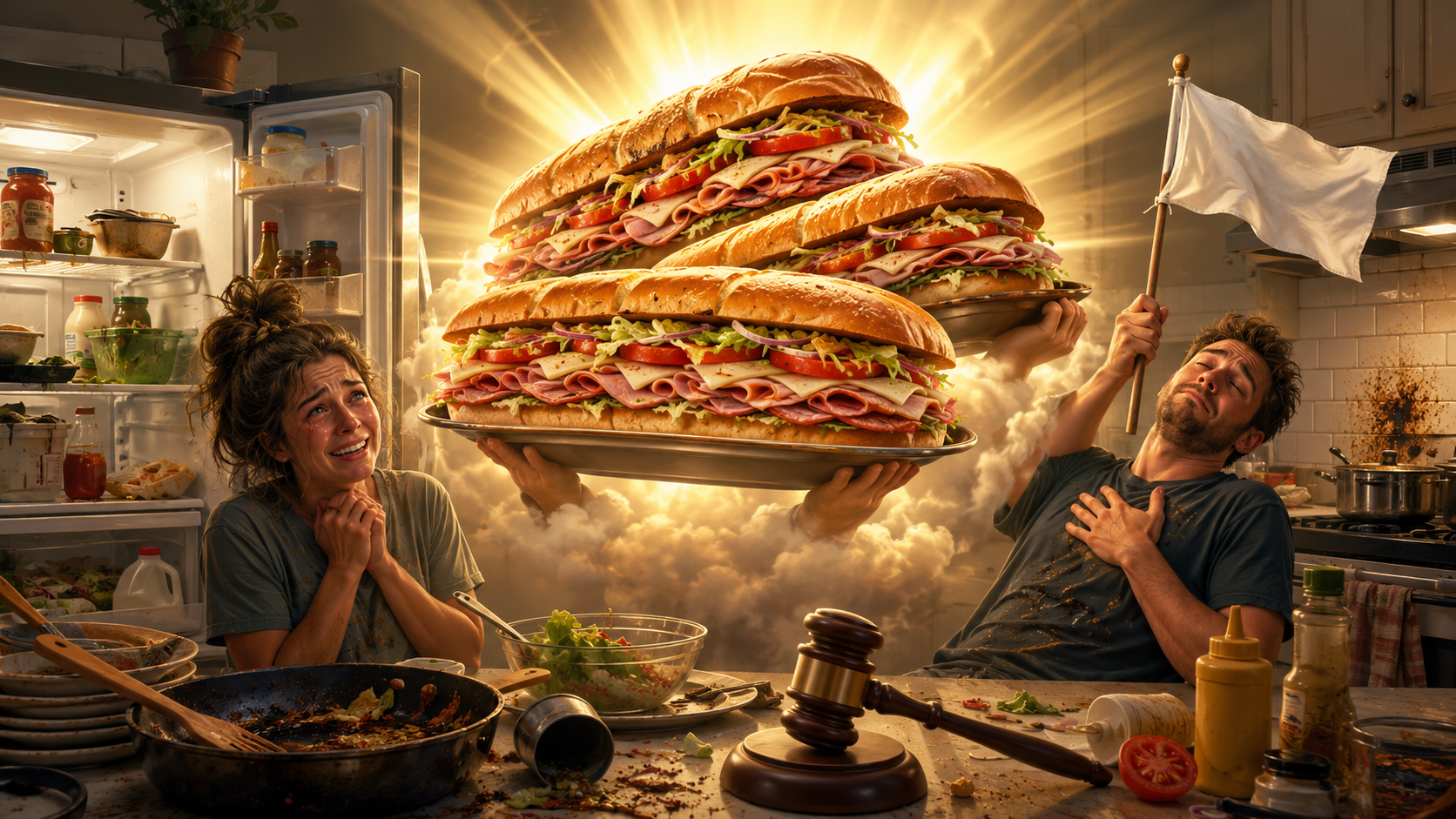
Real meal prep, meanwhile, arrives with the emotional tone of a court summons. You are not “choosing” to cook lentil bowls. You are being cornered by future hunger, grocery inflation, and the half-dead spinach you bought when you briefly believed in yourself. Meal prep says, “Be responsible now so a worse version of you does not order DoorDash on Thursday.” Inspiring stuff. Put it on a mug.
The Pixel Cow Gives Instant Gratification, Unlike Your Real Fridge
In Stardew Valley, you milk the cow and receive milk. Clean. Elegant. A transaction so pure it feels illegal. Maybe you turn that milk into cheese. Maybe you sell it. Maybe you use it in a recipe. The loop is immediate: action, reward, progress.
Real food prep does not have that decency. You wash produce and your reward is… wet produce. You cook rice and your reward is a container of rice that will somehow become either too dry, too sticky, or sentient by Friday. You marinate chicken and your reward is having to remember that you marinated chicken. The fridge becomes a cold museum of good intentions.
The official Stardew Valley feature list even includes cooking more than 100 recipes and crafting useful items, because in the game, cooking gives temporary boosts and clear benefits. In real life, cooking gives you dinner and then a pan in the sink that appears to have joined a biker gang.
Meal Prep Is Too Front-Loaded, Because Life Is a Bad Game Designer
Good games understand pacing. They give you quick wins, visible progress, gentle escalation, and little dopamine snacks along the way. Bad real life gives you “spend three hours Sunday making five identical meals so Wednesday You can eat beige cubes in silence.”
That is not a gameplay loop. That is a hostage situation with Tupperware.
Meal prep is useful. Unfortunately. Harvard’s Nutrition Source notes that meal prep can save money, save time, support portion control, contribute to a more balanced diet, and reduce stress around last-minute food decisions. It also recommends breaking planning, shopping, and prep into manageable steps, which is adult-speak for “stop trying to become Ina Garten and a warehouse logistics manager in the same afternoon.”
The problem is not that meal prep is bad. The problem is that most people design it like punishment. Five identical lunches. Cold chicken. Moral superiority. A container stack that looks like a meal-planning influencer’s shrine to sadness.
Stardew Gives You Visible Progress. Meal Prep Gives You Containers.
Stardew Valley understands the power of visible progress. The field starts messy. Then it gets cleared. Then seeds go in. Then sprouts appear. Then crops pop. Then money arrives. Then you buy a barn. Then you get a cow. Then you name the cow something stupid and suddenly feel more emotionally invested in dairy than anyone outside Wisconsin should.
Real meal prep hides progress in opaque containers. You do two hours of work and the final visual reward is six rectangles in a refrigerator, each whispering, “You will eat me when joy has left the building.”
USDA SNAP-Ed says meal planning is one of the best ways to save money and eat healthy meals, and its materials teach planning, shopping, and budgeting skills. Useful? Yes. Emotionally thrilling? Only if your blood type is laminated grocery list.
The game gives you animation, coins, music, stars, achievements, villager reactions, and a farm that becomes prettier. Real life gives you a Pyrex lid that vanished in 2021 and has chosen never to return.
You Are Not Avoiding Meal Prep. You Are Avoiding Decision Fatigue in an Apron.
The worst part of real cooking is not cooking. It is deciding.
What should I make? What do I already have? What expires first? What will I still want in four days? Is this enough protein? Did I buy rice? Why do I own three vinegars and no actual food? Should I use the kale? Is the kale still alive? Was the kale ever alive, or was it always a lifestyle threat?
Stardew Valley removes most of that psychic sludge. It gives you a clear day, a limited energy bar, a visible inventory, and a calendar. You know what to do because the world has rules. Real life has rules too, but they are mostly printed on bills, medical forms, and the back of food packages in fonts designed for ants.
Research on meal planning and home cooking has identified time scarcity and cooking skills as common barriers to preparing meals at home. Stunning news from academia: people cook less when they are tired, busy, and not magically good at cooking. Next grant proposal: “Does stepping on a rake feel bad?”
Stardew Valley Turns Repetition Into Comfort
In real life, repetition feels like decay. Same lunch. Same commute. Same kitchen. Same stupid knife that is somehow both dull and dangerous. Same container of quinoa glaring at you because you were “going to make bowls.”
In Stardew Valley, repetition feels like peace. Water the crops. Pet the animals. Check the weather. Visit town. Sleep. Repeat. The routine is not proof that life is stale; it is proof that the farm is working.
The 1.6 update even made farm animals a little happier when you close the animal door behind them at night, because apparently Stardew Valley looked at its player base and said, “Yes, these people want bedtime etiquette for goats.” And the horrible part is, they were right.
Real meal prep has not learned this. It keeps selling repetition as discipline. Stardew sells repetition as ritual. That is the difference between “I have to eat this chicken again” and “my mayonnaise empire is thriving.”
The Game Satisfies Your Little Goblin Need for Competence
There is actual psychology behind why games feel so sticky. A widely cited self-determination theory study on video games found that autonomy, competence, and relatedness predicted enjoyment and future play. In plain language: people like games when they feel free, capable, and connected. Revolutionary stuff. Someone please tell every productivity app that bullying users with streaks is not the same as meaning.
Stardew Valley gives competence constantly. You learn. You improve. You unlock sprinklers. You stop passing out in the mines like a damp sock with a sword. You remember that Caroline loves summer spangle or whatever delicate social puzzle the town has forced upon you. The game lets you get better in a way you can see.
Meal prep often does the opposite. You do everything “right” and still end up with rubbery chicken, soggy vegetables, and the horrifying realization that you forgot sauce. Sauce is not optional. Sauce is civilization.
Stardew Lets You Fail Without Becoming a Whole Adult Tragedy
In Stardew Valley, failure is survivable. Forgot to water crops? Annoying. Stayed out too late? Someone finds your unconscious little farmer body and charges you like rural Uber. Bought the wrong seeds? You recover. Gave someone a hated gift? Congratulations, you have offended a villager with a daffodil. The republic stands.
Real food failure feels worse because it costs money, time, and dinner. Burn the protein? There goes $14. Forget the groceries? Enjoy your pantry dinner of crackers, olives, and shame. Ruin meal prep? Now you have five portions of something you do not want to eat but cannot throw away because you are apparently emotionally married to sunk costs.
This is why imaginary farming is soothing. The stakes are fake enough to enjoy but real enough to care. Meal prep is the opposite: too boring to enjoy, too consequential to ignore. Great system. Very normal. No notes.
Stardew Valley Has Better Feedback Than Your Body
Your body is terrible at user experience. It sends unclear notifications like “tired,” “snacky,” “weird stomach,” and “perhaps scurvy, perhaps boredom.” Useless interface. Zero stars.
Stardew Valley gives clean feedback. Energy bar low? Eat. Crop mature? Harvest. Animal happy? Better products. Friendship improving? Hearts. Skill up? New crafting recipe. It is life with tooltips, which is what we all secretly want because adulthood shipped without a tutorial and apparently the patch is never coming.
The Bureau of Labor Statistics reported that, on an average day in 2024, 80% of people engaged in household activities such as housework, cooking, lawn care, or household management, spending about two hours on them. Food prep and cleanup happened slightly more often on weekdays than weekends. Translation: real life is already packed with invisible maintenance work, and then meal prep walks in holding a cutting board like it deserves applause.
Stardew Makes Food Emotional. Meal Prep Makes Food Administrative.
In the game, food is charming. Pink Cake. Lucky Lunch. Strange Bun. Seafoam Pudding. Little dishes with personality, boosts, lore, and vibes. The official Stardew Valley Cookbook even adapts more than 50 in-game recipes for real kitchens, including Lucky Lunch, Strange Bun, Seafoam Pudding, and Pink Cake. Because of course the game that made virtual farming addictive also found a way to make real cooking sound cute again. Treacherous.
Meal prep, by contrast, gives you “chicken rice bowl.” Bold. Stirring. Really evokes the human spirit. Nothing says “I am alive in a universe of possibility” like scraping reheated poultry into your mouth between meetings.
The lesson is humiliatingly simple: we do not hate food prep. We hate food prep that has been stripped of pleasure and renamed “fuel,” like humans are sad forklifts.
What Real Meal Prep Can Steal From Stardew Valley
The useful part, beneath the sarcasm compost pile, is that Stardew Valley is basically a masterclass in making chores tolerable.
Start smaller. Do not meal prep seven full meals like you are provisioning a bunker for beige apocalypse. Prep one component: rice, roasted vegetables, boiled eggs, chopped fruit, sauce, beans, marinated tofu, cooked chicken. Stardew does not make you build the greenhouse on day one. It hands you parsnips and lets you feel powerful.
Make progress visible. Use clear containers. Label things. Put ready-to-eat food at eye level. Harvard’s meal prep guide specifically recommends labeling freezer items and keeping perishable foods visible so they actually get used, because the back of the fridge is where vegetables go to become folklore.
Add rewards. Not fake rewards like “the reward is health.” Please. That is long-term shareholder value for your bloodstream. Add actual rewards: a good sauce, a favorite snack, better coffee, a podcast, a playlist, a show you only watch while cooking.
Automate one thing. Buy pre-washed greens. Use frozen vegetables. Get rotisserie chicken. Use canned beans. This is not cheating. Cheating is what billionaires do with taxes. This is surviving dinner.
Make it modular. Stardew ingredients become different things. Your real food should too. Rice can become bowls, fried rice, burritos, soup filler, or breakfast rice with an egg. One roasted vegetable tray can become sides, salads, wraps, omelets, or evidence that you tried.
The Pixel Cow Is a Design Lesson, Not a Moral Failure
The embarrassing truth is that you do not prefer pixel cows because you hate responsibility. You prefer them because Stardew Valley makes responsibility legible, rewarding, optional-feeling, and adorable. Real meal prep makes responsibility feel like unpaid project management performed under fluorescent refrigerator light.
The game gives autonomy. Real life gives obligation. The game gives feedback. Real life gives dishes. The game gives progress. Real life gives a leaking bag of cilantro you bought for one recipe and then abandoned like a coward.
So yes, you would rather milk a pixel cow than meal prep for the week. Of course you would. The cow is cute. The task is clear. The reward is instant. Nobody asks you to sanitize a cutting board afterward. The cow never tells you that cooked fish should only be kept for a few days. The cow simply stands there, generous and rectangular, waiting for you to continue your tiny dairy empire.
Meal prep can learn from that.
Make it smaller. Make it prettier. Make it rewarding. Make it less like a punishment issued by a wellness committee that hates joy.
Because the goal is not to become the kind of person who loves Sunday meal prep. Let’s not become unwell.
The goal is to make real food just satisfying enough that your fridge stops looking like a side quest you keep failing.