
Spicy Pineapple Looks Weird Until It Steals the Whole BBQ
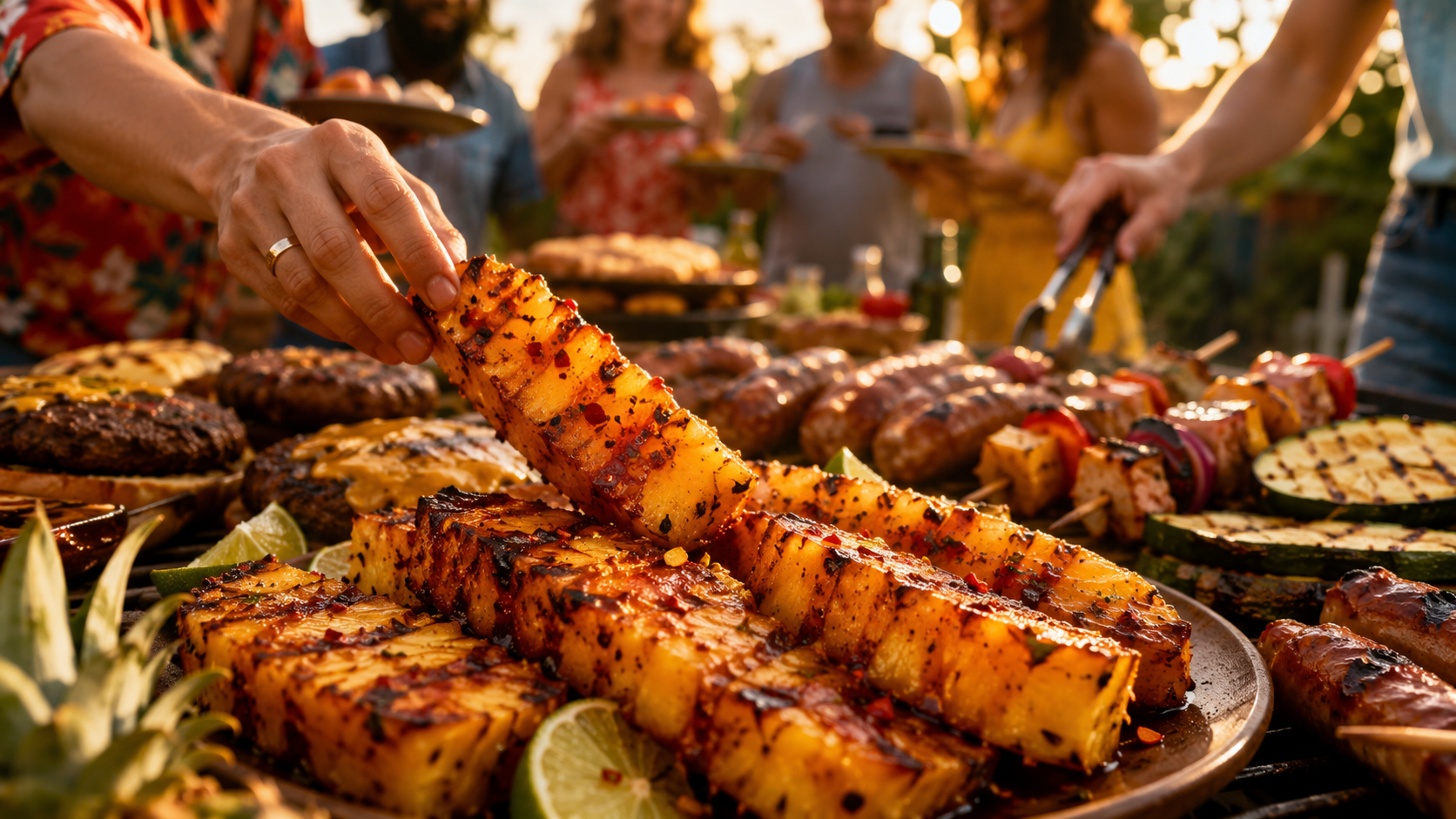
Spicy pineapple sounds like something invented by a person who got locked in a grocery store overnight and started making emotional decisions near the produce section.
Fruit? On the grill? With chili? Next to ribs? Possibly sprinkled with Tajín, brushed with hot honey, or charred until it looks like it has survived a small tropical house fire?
Yes.
And annoyingly, it works.
Spicy pineapple is one of those BBQ ideas that looks ridiculous until it lands on the plate and starts humiliating the potato salad. Suddenly the burger seems boring. The chicken looks underemployed. The ribs are still trying their best, but there’s a sweet-hot-charred pineapple wedge sitting there like it just bought the property and raised everyone’s rent.
The reason is simple: spicy pineapple solves the biggest BBQ problem.
BBQ is rich. BBQ is smoky. BBQ is salty. BBQ is fatty. BBQ is often a parade of meats, sauces, mayo-based salads, buttered corn, chips, dips, and enough beige side dishes to make your plate look like it joined a cul-de-sac homeowners association.
Spicy pineapple cuts through all of that like a tiny tropical chainsaw.
It is sweet, acidic, juicy, smoky, spicy, and bright. It wakes up grilled meat. It gives heavy food a reason to stop lying on the couch. It is not a garnish. It is not a cute little fruit cameo. It is the thing everyone pretends they were brave enough to like from the beginning.
Why Spicy Pineapple Works So Well at BBQ
The magic is contrast.
Pineapple brings sweetness and acidity. Chili brings heat. Lime brings brightness. Salt makes everything louder. The grill adds char, smoke, and caramelized edges. Together, the whole thing becomes a flavor ambush with manners.
This is not just some random TikTok goblin experiment. Sweet-spicy flavors have been moving hard across menus for years, with hot honey and other “swicy” combinations showing up in restaurants, snacks, sauces, and drinks. The National Restaurant Association’s 2025 culinary forecast called out spicy honey creations and bold global flavors as major menu trends, while more recent coverage has pointed to “fricy” — fruity and spicy — as a growing summer flavor idea built around mango, pineapple, watermelon, chili, chamoy, and Tajín-style flavor combinations.
So if spicy pineapple seems weird, congratulations. You have discovered what the menu already knows: people are bored of polite food.
BBQ especially needs this kind of flavor because grilled meat can get heavy fast. Fatty meats benefit from acid and fruit because acidity helps cut through that greasy mouthfeel. Bon Appétit has explained the same basic logic with pineapple and ham: the fruit’s acidity balances fatty richness. That is the entire BBQ argument in one sentence, except less sweaty and without someone named Dave arguing about charcoal.
The Best Way to Serve Spicy Pineapple at a BBQ
The easiest winning version is grilled chili-lime pineapple.
Cut fresh pineapple into spears or rings. Brush lightly with oil or melted butter if you want more browning. Add lime juice, chili powder, cayenne or chipotle, a little salt, and maybe honey or hot honey if you want the thing to become suspiciously addictive.
Then grill it until the edges char and the sugars caramelize. Pineapple gets sweeter and juicier on the grill as its natural sugars brown, which is why grilled pineapple tastes less like “fruit side dish” and more like “dessert accidentally wandered into the meat section and improved morale.”
Do not overthink it. This is not pastry school. Nobody needs you to make a pineapple reduction with smoked volcanic ash and a backstory.
The best BBQ pineapple formula is:
Sweet fruit + chili heat + lime acid + salt + char.
That’s it. That’s the little tropical engine.
What to Put on Spicy Pineapple
The safest seasoning combo is chili powder, lime, salt, and honey. This is the people-pleaser. It tastes familiar, bright, and just spicy enough to make the fruit interesting without turning your uncle into a medical documentary.
The best street-food-style combo is Tajín and lime. Tajín is a Mexican chile-lime seasoning made with chile peppers, dehydrated lime juice, and salt, and it is famously used on fruit like mango, pineapple, and cucumber. It gives pineapple heat, tang, and salt without requiring you to measure six things like a person auditioning for a cooking competition.
The best trendy combo is hot honey and chili flakes. Hot honey keeps showing up on menus because sweet heat works on everything from pizza to fried chicken to cocktails. On grilled pineapple, it behaves like it was born there. Sticky, spicy, glossy, and just dramatic enough to make plain barbecue sauce look like it came from a fax machine.
The best smoky combo is chipotle, lime, and brown sugar. This one pairs beautifully with ribs, pulled pork, brisket, and grilled chicken. Chipotle gives smoke and heat. Pineapple gives acid and juice. Brown sugar helps char the outside. Together they form a tiny flavor committee that actually gets work done.
The best “stop pretending this is just a side dish” combo is pineapple salsa with jalapeño, red onion, cilantro, lime, and salt. Spoon it over grilled pork, fish tacos, shrimp skewers, chicken thighs, or burgers. It is fresh enough to feel responsible and bold enough to distract from the fact that everyone is eating directly over paper plates like raccoons at a wedding.
What Spicy Pineapple Goes With
Spicy pineapple is best with meats that need brightness.
It is excellent with pork ribs because ribs are smoky, salty, fatty, and often sticky with sauce. Pineapple cuts through the richness like it has unpaid business with the pig.
It is great with pulled pork because the fruit adds acid and heat to a meat that can otherwise become soft, sweet, and sleepy. Put spicy pineapple slaw or pineapple salsa on a pulled pork sandwich and suddenly the sandwich has a spine.
It works with grilled chicken thighs because chicken thighs are juicy and forgiving but can become boring if the seasoning is just “BBQ sauce and optimism.” Spicy pineapple gives them a sweet-acid punch.
It is fantastic with shrimp because shrimp loves fruit, lime, and chili. Shrimp skewers with spicy pineapple are basically summer trying to get attention in a tank top.
It even works with burgers, especially when the burger has bacon, cheddar, jalapeño, or barbecue sauce. A grilled spicy pineapple ring on a burger sounds like a crime until you eat it and realize the burger has been waiting for a tropical midlife crisis.
The Menu Decision Rule: Order Spicy Pineapple With Fatty, Smoky, or Salty Foods
If spicy pineapple is on a BBQ menu, order it with the richest thing on the board.
Do not waste it next to plain grilled vegetables where it has to do all the emotional labor. Put it next to pork belly, ribs, brisket, pulled pork, sausage, fried chicken, burgers, or tacos.
That is where it wins.
The spicy pineapple’s job is not to be “healthy fruit,” though it does have the decency to be actual produce. Its job is to balance the plate. It gives BBQ what BBQ often lacks: acid, freshness, and heat that is not just another smoky sauce trying to win a personality contest.
This is the same reason pickles work with burgers, slaw works with pulled pork, and lime works with tacos. Fat needs acid. Salt needs sweetness. Smoke needs brightness. Food needs conflict, otherwise dinner becomes a beige meeting with napkins.
Fresh Pineapple Can Also Help Marinades, But Don’t Be a Maniac
Fresh pineapple contains bromelain, a group of protease enzymes that can break down proteins. Scientific reviews describe bromelain as a plant protease used in meat tenderization, because it can degrade meat proteins and affect texture.
This is why pineapple shows up in marinades for pork, beef, chicken, and tacos al pastor-style meats.
But here is the warning: fresh pineapple is powerful.
Use it carelessly and meat can go from tender to mushy, like a steak that gave up emotionally. Pineapple is not a marinade you abandon overnight while you go watch sports and forget time exists. Use fresh pineapple juice or puree for shorter marinades, especially with thinner cuts, and treat it like an ingredient with a tiny chainsaw.
For BBQ sides, though, grilled spicy pineapple is much easier. You get the flavor without having to manage enzyme chaos like a meat scientist in cargo shorts.
Why Spicy Pineapple Beats Another Heavy Side
Most BBQ sides are delicious little traps.
Mac and cheese. Potato salad. Pasta salad. Cornbread. Baked beans. Chips. Coleslaw drowned in mayo like it lost a bet.
Great sides? Yes. Necessary sometimes? Also yes. But they stack heaviness on heaviness. A plate of ribs, mac and cheese, beans, and potato salad is not a meal. It is a nap with sauce.
Spicy pineapple brings contrast without acting like punishment. It is not a sad lettuce leaf. It is not raw celery standing there like green office furniture. It is juicy, charred, sweet, spicy, and fun.
That is why it steals the BBQ. It gives people relief from the heavy stuff while still tasting like part of the party.
Nobody wants “light” food at a BBQ if light means boring. Spicy pineapple is light without being miserable. A miracle, basically.
The Restaurant Lesson: Spicy Pineapple Is a Cheap Menu Hero
For food businesses, spicy pineapple is wildly useful.
It is inexpensive compared with premium meat. It photographs well. It works as a side, topping, salsa, skewer, burger add-on, taco garnish, wing sauce component, rib glaze, mocktail ingredient, or dessert finish. It feels adventurous without terrifying normal customers. It plays nicely with current sweet-spicy and fruit-spicy trends. And it makes rich mains taste better, which is the whole point of a side dish unless that side dish is just there to occupy plate real estate like edible landscaping.
This is where many restaurants get menu innovation wrong. They think they need a completely new entrée. They do not. They need a high-impact accent that changes how the whole plate eats.
Spicy pineapple does that.
Put it on a pork taco and the taco feels new.
Put it on a burger and the burger feels limited-time.
Put it beside ribs and the plate feels brighter.
Put it in salsa and suddenly grilled chicken stops looking like something prescribed by a joyless fitness app.
That is menu efficiency. One ingredient, many uses. The pineapple is doing more work than half the seasonal specials board.
The Best BBQ Orders With Spicy Pineapple
Order spicy pineapple with ribs if you want the best balance of fatty, smoky, sweet, acidic, and hot.
Order spicy pineapple with pulled pork if you want the best sandwich upgrade. Pineapple salsa or slaw is better than another ladle of sweet BBQ sauce, which often just makes pork taste like meat candy.
Order spicy pineapple with grilled chicken if you want something lighter that still tastes like summer and not like meal prep being punished.
Order spicy pineapple with shrimp tacos if you want the cleanest win. Lime, chili, shrimp, pineapple, and cilantro is basically a beach vacation that learned portion control.
Order spicy pineapple on a burger if you like chaos but want the chaos to be correct.
Skip it with anything already aggressively sweet unless there is acid or spice to balance it. Pineapple plus super-sweet BBQ sauce plus sweet baked beans plus cornbread can become sugar wearing grill marks. That is not balance. That is dessert trying to hijack dinner.
How to Make Spicy Pineapple Without Ruining It
Use fresh pineapple if possible. Canned pineapple can work, but fresh holds up better on the grill and gives a brighter flavor. Cut it thick enough that it does not collapse through the grates like a tropical tragedy.
Season before grilling if you want the spices to bloom and stick. Finish after grilling if you want the lime, herbs, or Tajín to stay punchy.
Do not drown it in sugar. Pineapple is already sweet. Honey, brown sugar, or hot honey should be an accent, not a syrup-based hostage situation.
Do not forget salt. Salt makes the fruit taste more like itself and keeps the sweetness from wandering off into candy territory.
Use lime at the end. Lime juice before grilling can help flavor the fruit, but fresh lime after grilling gives the best bright finish.
Add herbs if you want it to feel more grown-up. Cilantro, mint, Thai basil, or scallions can all work depending on the direction.
Spicy Pineapple Is the BBQ Side Everyone Underestimates
Spicy pineapple looks weird because people still think fruit at a BBQ has to sit sadly in a plastic bowl next to melon cubes and grapes, slowly warming under the suspicious gaze of flies.
That version of fruit deserves its reputation.
But grilled spicy pineapple is different. It is fruit that got a job.
It cuts through fatty meat. It brightens smoky flavors. It balances salt. It adds heat without flattening everything into generic hot sauce. It works with ribs, pork, chicken, shrimp, burgers, tacos, and skewers. It can be a side, salsa, glaze, topping, or dessert. It looks good. It tastes better than it has any right to. It makes the rest of the BBQ look like it should have tried harder.
The best version is simple: pineapple, chili, lime, salt, heat, and char.
That is enough.
Because once spicy pineapple hits the grill, it stops being the weird fruit side.
It becomes the thing everyone eats first while pretending they only took “a little piece.”
Sources
The Guardian on the rise of “fricy” fruity-spicy flavor combinations in 2026.
National Restaurant Association on 2025 menu trends, including hot honey and bold global flavors.
Business Insider on hot honey and the broader sweet-spicy restaurant trend.
Bon Appétit on why pineapple’s acidity balances fatty meats.
Scientific review on bromelain and plant proteases in meat tenderization.