
Protein Brownies and Other Little Lies: What FoodTok Gets Wrong About “Healthy” Desserts
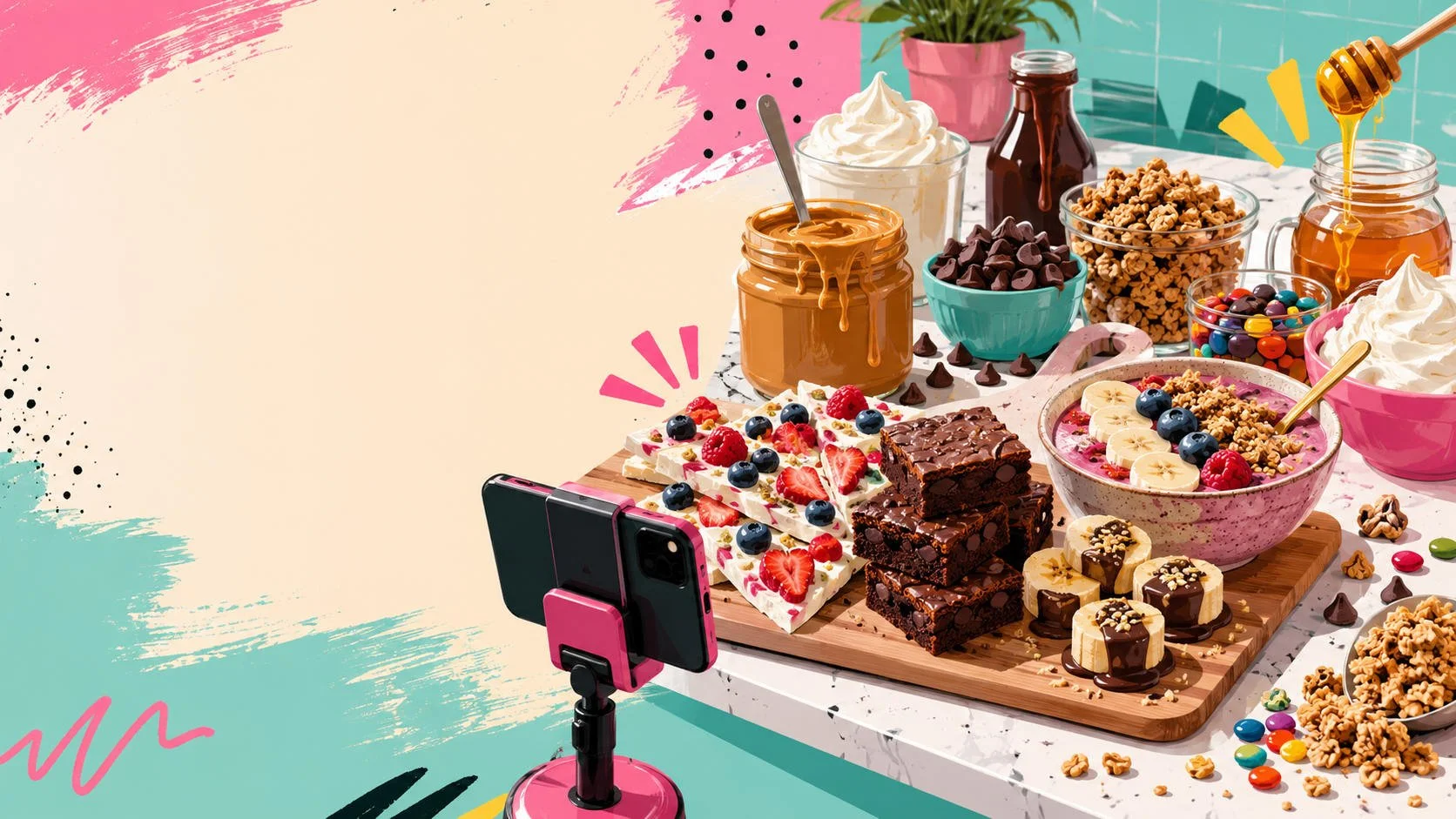
FoodTok has performed a miracle. It took dessert, one of humanity’s simplest pleasures, and turned it into a moral group project with Greek yogurt.
A brownie can no longer simply be a brownie. No, that would be too emotionally honest. Now it has to be a high-protein, refined-sugar-free, gut-friendly, gluten-free, cottage-cheese-based, macro-balanced brownie alternative that “tastes just like the real thing,” according to someone who has clearly not tasted the real thing since 2018 and now thinks cocoa powder mixed with mashed beans is a personality.
FoodTok’s “healthy dessert” universe is not entirely bad. Some recipes are genuinely useful. Cottage cheese ice cream can be a smart high-protein snack. Date bark can be delicious. Greek yogurt bark is fine. Protein pudding can do its job. A lighter mug cake can be exactly what someone wants at 9:47 p.m. when the alternative is eating chocolate chips from the bag like a woodland criminal.
The problem is not that healthier desserts exist. The problem is that FoodTok keeps pretending they are magic.
It treats “healthy” like a spell. Add protein powder, and suddenly a brownie is self-care. Use dates, and now sugar has put on a farmer’s market hat and become morally superior. Replace flour with oats, and congratulations, your cookie is apparently a wellness strategy. Put cottage cheese in something, and the entire internet salutes like dairy just enlisted.
This is where FoodTok gets dessert wrong. It confuses better-for-you with good for you, higher protein with automatically healthy, and lower sugar with free from consequences, cravings, and basic human psychology.
FoodTok Thinks “Healthy” Is an Ingredient
The first mistake is treating “healthy” like something you sprinkle into dessert, somewhere between chia seeds and denial.
A dessert is not healthy just because it contains one ingredient with a good reputation. Peanut butter has nutrients. Dates have fiber. Greek yogurt has protein. Dark chocolate has antioxidants. Oats have beta-glucan. Cottage cheese has protein. Lovely. Congratulations to the ingredients for having LinkedIn profiles.
But a dessert is still the sum of the whole recipe.
A date bark made with dates, peanut butter, chocolate, nuts, and sea salt may be more nutrient-dense than a candy bar. It may have fiber, minerals, and fats that make it more satisfying. It may be a great snack or dessert. But it is still energy-dense. It is still sweet. It is still easy to eat several pieces while telling yourself it is “basically fruit,” which is exactly how health halos mug your common sense in broad daylight.
FoodTok loves the “one heroic ingredient” approach. The video starts with, “You won’t believe this healthy dessert is made with chickpeas.” Yes, because chickpeas did not ask for this. Chickpeas were perfectly happy being hummus before someone forced them into a blondie and made them wear chocolate chips as a disguise.
One nutritious ingredient does not make the entire dessert a vitamin seminar. It just makes the dessert slightly more complicated.
Protein Is Useful. Protein Is Not a Priest.
The second mistake is protein worship.
Protein has become the internet’s favorite nutritional personality trait. Everything is high-protein now. Protein coffee. Protein cereal. Protein cookie dough. Protein brownies. Protein ice cream. Protein pudding. Protein pancakes. Protein cheesecake. At this rate, someone is going to release a protein candle and tell us inhaling vanilla whey supports recovery.
Protein matters. It helps with fullness. It supports muscle maintenance and growth. It can make snacks more satisfying. If you struggle to get enough protein, a high-protein dessert can be genuinely helpful.
But FoodTok acts like protein legally absolves dessert.
A protein brownie is still a brownie-adjacent object. If it has calories, fat, sweeteners, chocolate, nut butter, oats, flour, or whatever else got dragged into the bowl, those still count. The protein does not put on a robe and declare the rest of the recipe innocent.
This is especially funny when the “high-protein dessert” has 12 grams of protein and 480 calories. That is not a protein hack. That is a dessert that went to the gym once and now wears compression shorts to brunch.
Protein can make dessert more useful. It cannot make dessert unlimited. It cannot make a dry mug cake taste like bakery cake just because the caption says “so fudgy.” And it definitely cannot make eating half a pan of protein blondies a fitness strategy, unless your fitness goal is chewing through disappointment.
“Refined Sugar-Free” Is Not the Same as Sugar-Free
FoodTok also loves the phrase refined sugar-free, which is a beautiful marketing phrase because it sounds scientific while mostly meaning, “We used a different sweet thing.”
Dates. Maple syrup. Honey. Coconut sugar. Agave. Fruit juice concentrate. Mashed banana. These can all be useful ingredients. They can add flavor, texture, moisture, and sometimes fiber or micronutrients. They are not evil. But they are not invisible either.
A dessert sweetened with dates is still sweetened. A dessert sweetened with maple syrup is still sweetened. A “healthy caramel” made from dates and nut butter can be delicious, but calling it “sugar-free” because the sugar arrived inside a wrinkly fruit is nutritional theater with a blender.
FoodTok loves to act like “no refined sugar” means the dessert has escaped the entire concept of sweetness. It has not. It has simply changed outfits.
This matters because people hear “healthy” and “refined sugar-free” and start treating portions like fiction. A normal candy bar gets caution. A “healthy Snickers date bark” gets treated like trail mix’s spiritually evolved cousin. Suddenly you are eating six pieces because each one contains dates, and dates are fruit, and fruit is healthy, and this is how logic dies under melted chocolate.
Sugar-Free Does Not Automatically Mean Better
Then there is the sugar-free dessert wing of FoodTok: sugar-free pudding mix, sugar-free syrups, zero-calorie sweeteners, diet soda cakes, protein fluff, and various beige foams that promise dessert satisfaction while looking like something a laboratory made during a budget cut.
Artificial and non-sugar sweeteners are not automatically bad. Approved sweeteners can be safe within accepted use levels. For many people, sugar-free options are useful. They can help reduce added sugar, manage calories, or make certain foods more accessible for people with diabetes or other dietary needs.
But FoodTok turns “sugar-free” into a health halo so large it should need its own zip code.
A sugar-free dessert can still be ultra-processed. It can still be unsatisfying. It can still keep you mentally stuck in the cycle of wanting dessert, trying to hack dessert, eating the fake dessert, and then later eating the real dessert because your soul was not fooled by pudding mix and xanthan gum.
The problem is not the sweetener. The problem is the fantasy that removing sugar automatically creates health. Sometimes it creates a useful swap. Sometimes it creates a weird bowl of sweetened air you eat while whispering, “This is just like frosting,” to nobody but the kitchen cabinets.
It is okay to use sugar-free products. It is also okay to admit that a sugar-free cheesecake cup is not cheesecake. It is a cheesecake-themed dairy negotiation.
FoodTok Thinks Dessert Has to Earn Its Right to Exist
This may be the most annoying part.
FoodTok often frames healthy desserts as “guilt-free,” “clean,” “skinny,” “safe,” or “won’t ruin your progress.” Charming. Nothing like turning a cookie into a legal defense.
Dessert does not need to justify itself by having protein, fiber, collagen, adaptogens, or a tragic backstory involving almond flour. Sometimes dessert can just be dessert. A cookie can be a cookie. Ice cream can be ice cream. A brownie can be a brownie without needing to bench press.
The “guilt-free” language is especially stupid because it implies regular dessert should come with guilt. Over what? Butter? Sugar? Pleasure? Having taste buds? Please. If dessert required moral review, half of civilization would be in frosting jail.
This is where healthy dessert content starts sounding less like nutrition and more like diet culture wearing a cottage cheese mask. The message becomes: you may have dessert only if it has been nutritionally rehabilitated. You may enjoy sweetness only if it has enough protein. You may eat chocolate only if it has been flattened onto dates and described as “nourishing.”
No. Eat the healthier dessert if you want it. Eat the regular dessert if you want that. The crime is not dessert. The crime is pretending pleasure needs a macro excuse.
“Tastes Just Like the Real Thing” Is Usually a Threat
FoodTok’s boldest lie is the phrase tastes just like.
“This healthy brownie tastes just like a real brownie.”
No it does not, Jessica. It tastes like a protein bar went through a breakup.
Sometimes healthy dessert recipes taste good. Some are genuinely excellent. But the insistence that every banana-oat-cocoa microwave brick tastes “exactly like cake” is insulting to cake, microwaves, and anyone who has ever had a functioning mouth.
A healthier dessert does not need to taste exactly like the original to be worth eating. Date bark does not need to be a Snickers bar. Cottage cheese ice cream does not need to be Häagen-Dazs. Greek yogurt bark does not need to be cheesecake. It can be its own thing.
That is the better standard: does it taste good as itself?
The problem starts when a recipe is sold as a perfect replacement for the thing people actually want. That creates disappointment. You wanted ice cream. You made frozen cottage cheese. Now you are standing in the kitchen chiseling a tangy dairy brick with a spoon while pretending this is indulgence. This is not wellness. This is dairy carpentry.
Healthy Desserts Can Accidentally Make You Eat More
The health halo effect is real in everyday life even if people do not use that term while standing over a tray of chickpea blondies. When a food is labeled healthy, people often underestimate how energy-dense it is or feel more permission to eat more of it.
FoodTok pours gasoline on that effect.
A regular brownie announces itself honestly. It says, “Hello, I am a brownie. Behave accordingly.” A healthy brownie says, “I am made with oats, bananas, and protein powder.” Suddenly the brain says, “Excellent, this is basically breakfast,” and now the pan is half gone.
This does not mean healthy desserts are bad. It means they need the same common sense as regular desserts. Portions still matter. Satisfaction still matters. Whether it actually fills you still matters.
The weirdest outcome is when someone avoids a normal dessert, eats a larger amount of the “healthy” version, feels less satisfied, then snacks more later. Amazing. The diet version became both less enjoyable and not meaningfully lighter. Truly the worst of both worlds, like a brownie designed by an HR department.
FoodTok Confuses Low-Calorie With Satisfying
Low-calorie desserts can be useful. Sometimes you want something sweet and light. Fruit with whipped cream, a small pudding, yogurt with berries, frozen grapes, a mini ice cream bar — great. Nobody needs to stage an uprising over portion control.
But FoodTok often acts like the best dessert is the one that has the fewest calories possible, even if it tastes like sadness laminated in cocoa powder.
A 90-calorie brownie that leaves you angry is not automatically better than a 250-calorie brownie that satisfies you. A giant bowl of protein fluff may technically be low-calorie, but if you are eating it for 20 minutes while wishing it were cake, perhaps the foam has not delivered liberation.
Satisfaction matters. Texture matters. Flavor matters. The eating experience matters. Dessert is not just the nutritional profile. Dessert is pleasure, and if you remove all pleasure from dessert, congratulations, you have invented a punishment snack.
This is where the internet loses the plot. It treats eating like a math equation and forgets that human beings are not calculators with teeth.
The “Clean Ingredients” Obsession Gets Weird Fast
FoodTok’s healthy dessert universe loves “clean ingredients.” Almond flour. Coconut flour. Dates. Raw cacao. Nut butter. Maple syrup. Grass-fed collagen. Organic vanilla. Himalayan salt, because apparently regular salt lacks spiritual ambition.
There is nothing wrong with many of these ingredients. Some are great. But “clean” is a messy, moralizing word that often means more expensive, not automatically healthier.
A cookie made with almond flour, coconut sugar, maple syrup, and dark chocolate can still be calorie-dense. A dessert made with regular flour and sugar can still fit into a balanced diet. A homemade protein brownie with 11 specialty ingredients is not morally superior to a bakery brownie just because it required a trip to the expensive aisle where every bag stands upright and judges your income.
“Clean” also implies other food is dirty. That is where the language becomes gross. Food does not need moral hygiene. It needs context.
Is the dessert enjoyable? Does it fit your needs? Does it satisfy you? Can you afford the ingredients without needing to refinance your snack cabinet? These are better questions than whether the cookie is spiritually pure.
Cottage Cheese Is Not a Personality
Cottage cheese deserves its comeback. It is high in protein, versatile, affordable in many places, and useful in both sweet and savory recipes. Blended cottage cheese can make sauces, dips, pancakes, ice cream-style desserts, and puddings creamier. Fine. Excellent. Applause for curds.
But FoodTok has started treating cottage cheese like it is the savior of Western civilization.
Not everything needs cottage cheese. Not every dessert is improved by adding a tub of lumpy dairy and blending until the motor cries. Cottage cheese ice cream can be fun. Cottage cheese cookie dough can be fine. Cottage cheese cheesecake cups can work. But sometimes the correct answer is not “add cottage cheese.” Sometimes the correct answer is “eat the actual cheesecake and stop forcing dairy to cosplay.”
Also, not everyone likes cottage cheese. Some people find the texture disturbing, because it looks like milk had a nervous breakdown. That is allowed. You do not need to join the curd movement to be healthy.
FoodTok Turns Dessert Into Content First, Food Second
Another problem: the dessert has to look good on video.
That changes what gets popular. Viral healthy desserts are often visually satisfying: chocolate shell cracking over dates, blended cottage cheese becoming “ice cream,” yogurt bark snapping, protein cookie dough scooping, a mug cake rising in the microwave, peanut butter drizzling in slow motion like it has an agent.
But what photographs well is not always what eats well.
Date bark looks incredible in a cross-section. It can also be sticky, messy, and hard to portion. Yogurt bark looks refreshing. It can also melt into a sad puddle if you blink. Cottage cheese ice cream looks creamy in the blender. After freezing, it can become a block of tangy cement if the recipe is off. Protein brownies can look fudgy under warm lighting and taste like compressed gym towel if overcooked.
FoodTok rewards the reveal. Your mouth has to deal with the aftermath.
The Algorithm Loves Extremes
FoodTok does not reward moderate takes like, “This lighter dessert is nice, but regular dessert is also fine.” That is too sane. The algorithm prefers transformation, shock, and claims that make people stop scrolling.
“You won’t believe this has no sugar.”
“This brownie has 40 grams of protein.”
“This tastes exactly like a Snickers.”
“This is the dessert that helped me lose weight.”
“This is my healthy cheesecake that I eat every night.”
And there it is: dessert as spectacle, proof, hack, and identity.
TikTok’s recommendation system is built around user interaction and video information. If people watch a healthy dessert video to the end, save it, comment on it, or argue about whether dates are sugar, the platform learns that this content works. Then it serves more. Suddenly your feed becomes a parade of sweet substitutions, and normal dessert starts looking like a villain in a butter costume.
FoodTok does not necessarily show you the best nutrition advice. It shows you the most engaging nutrition-adjacent content. Those are very different animals. One is a dietitian. The other is a raccoon with a ring light.
What FoodTok Gets Right
To be fair, FoodTok’s healthy desserts are not useless. Some ideas are genuinely good.
Adding protein to dessert can make it more satisfying. Using fruit for sweetness can add fiber and flavor. Greek yogurt, cottage cheese, tofu, and beans can create creamy or fudgy textures while adding nutrients. Smaller-batch desserts can help people enjoy sweets without making an entire cake they then have to negotiate with for four days. No-bake recipes are convenient. Frozen yogurt bark can be refreshing. Date bark is legitimately tasty. Protein pudding can be useful after dinner or after a workout.
The useful version is simple: healthier desserts can add options.
The bad version is when those options become rules.
Healthy dessert should not mean “I am afraid of regular dessert.” It should mean “This version fits what I want today.” That is a much saner and less exhausting way to live.
How to Judge a “Healthy Dessert” Without Being Played
Use a better test than the caption.
First, ask whether the recipe actually satisfies the craving. If you want ice cream, will cottage cheese ice cream do it, or will it make you eat cottage cheese ice cream and then real ice cream while feeling dramatic? Be honest. Your freezer already knows.
Second, look at the whole recipe, not the headline ingredient. Dates, peanut butter, chocolate, oats, nuts, protein powder, coconut oil, maple syrup — these can be useful, but they still add up. Again, not bad. Just real.
Third, beware of moral language. “Guilt-free,” “clean,” “skinny,” “safe,” and “won’t ruin your progress” are not recipe categories. They are little diet-culture sirens trying to sell you a brownie that tastes like powdered compromise.
Fourth, check whether the recipe is actually easier or just influencer-easy. Some “healthy desserts” require protein powder, almond flour, sugar-free pudding mix, monk fruit sweetener, Greek yogurt, cottage cheese, dark chocolate, special molds, and a blender strong enough to survive a small war. At that point, a normal cookie would have been cheaper and less emotionally theatrical.
Fifth, stop comparing everything to the original. If date bark tastes good as date bark, great. If it does not taste like a Snickers, that is fine. Snickers already exists. It does not need a confused cousin.
The Best Healthy Desserts Know What They Are
The best healthy desserts do not lie.
Fruit with Greek yogurt and honey is not cheesecake. It is fruit with Greek yogurt and honey. Good.
A protein pudding is not mousse from a French restaurant. It is protein pudding. Fine.
Date bark is not a Snickers bar. It is dates, peanut butter, nuts, and chocolate. Honestly, that is enough. It does not need stolen candy-bar valor.
Cottage cheese ice cream is not premium ice cream. It is a high-protein frozen dessert. If you like it, great. If you do not, release yourself from the curd prison.
The problem is not substitution. The problem is delusion. FoodTok keeps trying to convince people that healthier desserts are identical to traditional desserts, and then everyone acts shocked when the banana-oat-cookie tastes like banana and oats. A mystery for the ages.
Dessert Does Not Need a Wellness Alibi
FoodTok gets “healthy” desserts wrong when it treats them like loopholes.
Protein is not magic. Dates are not invisible sugar. Sugar-free is not automatically nourishing. Cottage cheese is not a lifestyle. “Clean” is not a personality. And “guilt-free” is a phrase that should be fired into the sun using a cannon made of butter.
Healthy desserts can be great. They can help people add protein, reduce added sugar, use fruit, control portions, or create snacks that feel satisfying and practical. But they are still desserts or dessert-adjacent snacks. They do not need to be worshipped, feared, moralized, or forced to impersonate brownies they are clearly not qualified to portray.
The better approach is simple: eat the healthy dessert if it sounds good. Eat the regular dessert if that is what you actually want. Do not let a 24-year-old with a blender and a ring light convince you that pleasure requires nutritional paperwork.
A brownie can be a brownie.
A protein brownie can be a protein brownie.
And sometimes the healthiest dessert choice is the one you enjoy, eat, and move on from without turning it into a 40-minute courtroom drama starring almond flour.
Dessert was supposed to be the fun part. FoodTok should try remembering that.