McDonald's McDouble vs Double Cheeseburger Calories and Protein
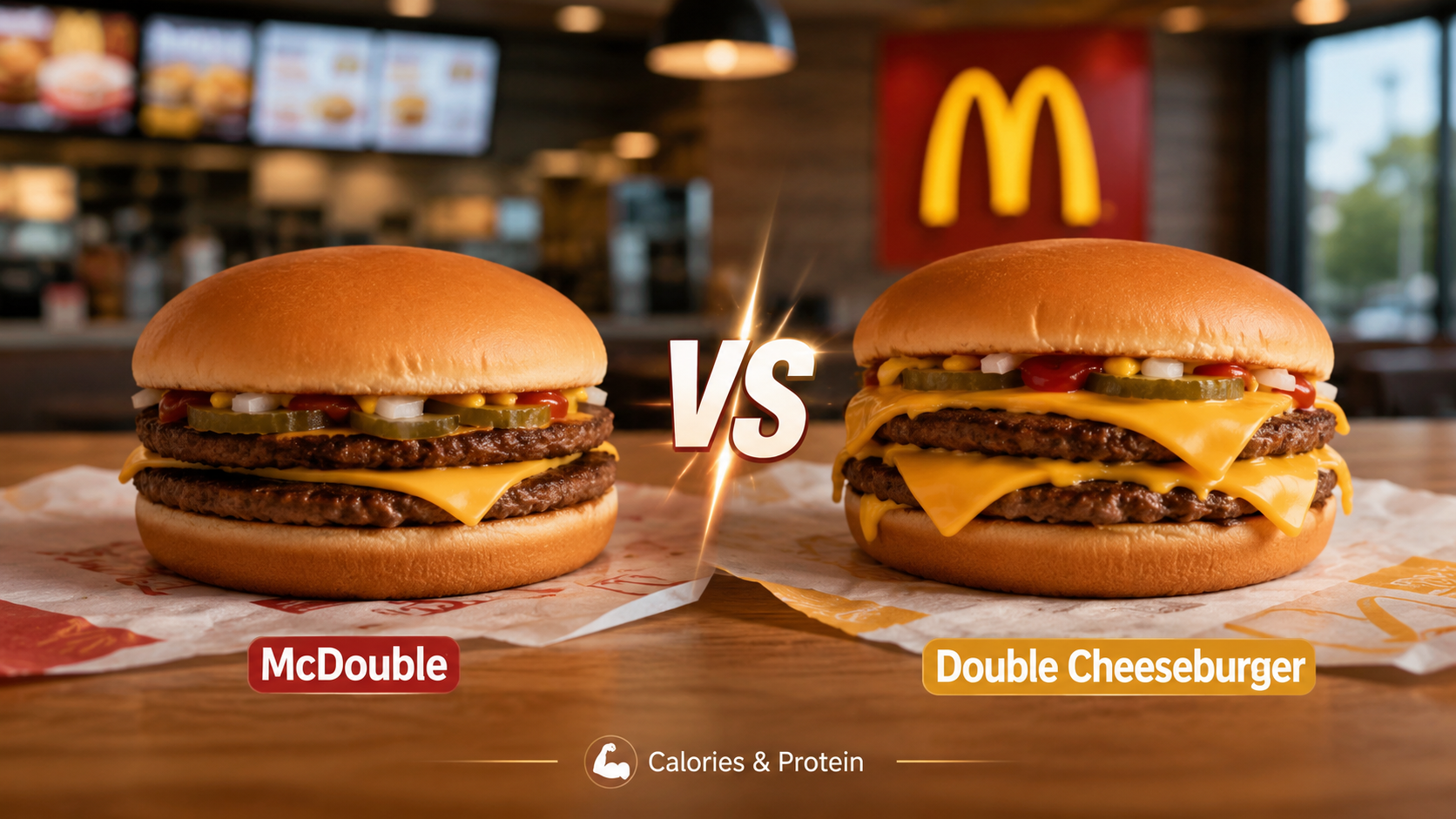
Some fast-food choices are complicated. This is not one of them. This is two nearly identical McDonald’s burgers staring at each other across the menu like Spider-Man pointing at Spider-Man, except one of them has an extra slice of cheese and the nutritional consequences of that tiny dairy blanket.
The McDouble and the Double Cheeseburger are basically the same burger wearing slightly different cheese pants. Both have two beef patties, pickles, onions, ketchup, mustard, and a bun. The official difference, according to McDonald’s, is gloriously simple: the Double Cheeseburger has one extra slice of American cheese. The McDouble has one slice. The Double Cheeseburger has two. That’s it. That’s the scandal. We have gathered here today to investigate dairy duplication.
But tiny differences matter when you are counting calories and protein, because nutrition is basically accounting for people who still want fries.
According to McDonald’s U.S. nutrition information, the McDouble has 390 calories, 22 grams of protein, 32 grams of carbs, 20 grams of fat, and 920 milligrams of sodium. The Double Cheeseburger has 440 calories, 25 grams of protein, 34 grams of carbs, 24 grams of fat, and 1,120 milligrams of sodium. McDonald’s also notes that nutrition values are based on standard formulations and average values, and that preparation, serving size, regional differences, and formulation changes can affect the numbers, because apparently even a burger can contain legal footnotes.
McDouble vs Double Cheeseburger: The Basic Nutrition Difference
The McDouble gives you 390 calories and 22 grams of protein.
The Double Cheeseburger gives you 440 calories and 25 grams of protein.
So the Double Cheeseburger has 50 more calories and 3 more grams of protein than the McDouble. This is the whole plot. A single extra slice of American cheese walks into the room and suddenly we have 50 extra calories, 3 extra grams of protein, 4 extra grams of fat, 2 extra grams of carbs, and 200 extra milligrams of sodium. Truly, cheese is nature’s tiny yellow accountant.
The Double Cheeseburger wins on total protein. The McDouble wins on lower calories. Protein per calorie is nearly identical, with the Double Cheeseburger barely ahead by a microscopic amount that only a macro-tracking app and a man named Brent with a food scale would care about.
Calories: The McDouble Wins Because It Knows When to Stop
If you are choosing strictly by calories, the McDouble is the better option. It has 390 calories, while the Double Cheeseburger has 440 calories.
That 50-calorie difference is not enormous. It is not the difference between “fitness icon” and “human cheese incident.” But if you are trying to keep a McDonald’s order under 400 calories, the McDouble slides under the line like a greasy little limbo champion. The Double Cheeseburger does not. It trips over its second cheese slice and lands in the 440-calorie zone.
This matters most if you are on a calorie-controlled diet and want a burger that feels like a burger without turning lunch into a full municipal disaster.
A McDouble by itself can be a reasonable fast-food order. A Double Cheeseburger can also fit into a normal diet. The real nutritional sinkhole appears when either burger gets promoted to “meal” status with fries and a sugary drink, because apparently we as a species cannot be trusted around potatoes and corn syrup.
Protein: The Double Cheeseburger Wins, But Calm Down
If you are choosing strictly by protein, the Double Cheeseburger wins. It has 25 grams of protein, compared with the McDouble’s 22 grams.
That is a difference of 3 grams. Useful? Sure. Life-changing? Absolutely not. Nobody is biting into a Double Cheeseburger and experiencing a muscle-building revelation while dramatic orchestral music plays over the ketchup packets.
Three grams of protein is nice, but it is not a heroic protein upgrade. It is more like the burger found a protein coupon in an old jacket.
Still, the Double Cheeseburger technically gives you more protein per sandwich. If your goal is to get the most protein from one of these two burgers, the Double Cheeseburger takes the crown, puts it on top of its second cheese slice, and acts like it earned a doctorate.
Protein Per Calorie: A Tie Wearing a Fake Mustache
Here is where things get annoying in the special way only nutrition math can be annoying.
The McDouble gives you about 5.6 grams of protein per 100 calories.
The Double Cheeseburger gives you about 5.7 grams of protein per 100 calories.
So technically, the Double Cheeseburger has a tiny edge in protein per calorie. But this difference is so small that treating it like a major victory would be like calling a puddle a lake because a bug drowned in it.
Because McDonald’s nutrition values are rounded and based on averages, this is basically a tie in the real world. One employee’s heavy cheese placement, one slightly different bun, one enthusiastic squirt of ketchup, and the entire math kingdom collapses into condiment fog. McDonald’s says nutrition information can vary based on serving sizes, preparation techniques, supply sources, regional differences, and formulation changes, so do not build a religion around decimal points here.
The practical answer is this: the McDouble is better if calories matter more, and the Double Cheeseburger is better if total protein matters more.
The Extra Cheese Problem
The Double Cheeseburger’s entire identity is the second slice of American cheese. That is the upgrade. That is the luxury suite. That is the golden throne made of processed dairy.
The second cheese slice adds flavor, creaminess, fat, sodium, and a tiny protein bump. This is why the Double Cheeseburger has more calories and more protein than the McDouble. It is also why it has more fat and sodium. Cheese is delicious, but it is not exactly a low-calorie whisper from a mountain monk.
The McDouble, meanwhile, keeps one slice of cheese and moves on with its life. It gives you the same two beef patties without the extra dairy drama. That makes it the more efficient choice for people who want the double-patty burger experience without paying 50 extra calories for a second sheet of melted yellow bureaucracy.
Fat and Carbs: The McDouble Is Slightly Less Chaotic
The McDouble has 20 grams of fat and 32 grams of carbs.
The Double Cheeseburger has 24 grams of fat and 34 grams of carbs.
Again, the difference is not massive. Nobody is going to eat the McDouble and levitate into a wellness retreat. But the McDouble is lighter on both fat and carbs, which makes sense because it has less cheese and fewer calories overall.
The extra fat in the Double Cheeseburger comes mostly from the second cheese slice. The extra carbs are small, probably the kind of rounding and formulation weirdness that makes nutrition labels feel like they were assembled in a candlelit basement by raccoons with calculators.
For macro tracking, the McDouble is the cleaner pick. Not “clean” in the influencer sense, where a woman in beige linen tells you a cashew has changed her life. Just cleaner compared with the Double Cheeseburger.
Sodium: Both Are Salty Little Menaces
Now for the sodium, where both burgers start acting like they were seasoned by someone trying to preserve them for a long sea voyage.
The McDouble has 920 milligrams of sodium.
The Double Cheeseburger has 1,120 milligrams of sodium.
The Double Cheeseburger has 200 milligrams more sodium, which is not nothing. The FDA says the Daily Value for sodium is less than 2,300 milligrams per day, and that 20% Daily Value or more per serving is considered high. The McDouble is already high. The Double Cheeseburger is even higher, because apparently the second cheese slice brought its own salt cannon.
If sodium is a concern, the McDouble is the better choice. Still salty, yes. But less salty. This is like choosing the smaller raccoon to release into your kitchen. Better, technically.
Which Is Better for Weight Loss?
For weight loss, the McDouble is usually the better choice because it has fewer calories while still giving you a solid amount of protein.
At 390 calories and 22 grams of protein, the McDouble does a decent job for a fast-food burger. It gives you the double-beef experience without the extra 50 calories from the second cheese slice. It is not a grilled chicken salad. It is not quinoa. It is not whatever joyless bowl of wet leaves your coworker eats while saying, “This is actually really good.” But for McDonald’s, it is efficient.
The Double Cheeseburger can still fit into a weight-loss diet if your total calories work. The issue is that its extra 50 calories only buys you 3 extra grams of protein. That is not a terrible trade, but it is not magical. If you are cutting calories, the McDouble makes more sense.
The real weight-loss move is ordering the burger by itself and not letting fries sneak into the meal like tiny potato burglars.
Which Is Better for Muscle and Protein Goals?
For muscle and protein goals, the Double Cheeseburger wins on total protein, but only slightly.
It has 25 grams of protein, which is a nice amount for a fast-food burger under 500 calories. The McDouble has 22 grams, which is also solid. The Double Cheeseburger gives you more protein, but it also brings more calories, fat, and sodium.
So if your goal is simply “most protein in one burger,” pick the Double Cheeseburger.
If your goal is “pretty good protein with fewer calories,” pick the McDouble.
This is not complicated. Naturally, the internet will find a way to make it complicated because the internet can turn a parking meter into a civil war.
Best Choice for Calories and Protein Overall
The best overall choice depends on what you are optimizing for, because unfortunately food has more than one number and we are all trapped inside arithmetic.
Choose the McDouble if you want fewer calories, less fat, less sodium, and nearly the same protein efficiency.
Choose the Double Cheeseburger if you want more total protein, more cheese, and a slightly richer burger.
For most people asking about calories and protein, the McDouble is probably the smarter everyday pick. It is lower in calories and still has 22 grams of protein, which is respectable for a cheap fast-food burger. The Double Cheeseburger is better when you specifically want the extra cheese or need those extra 3 grams of protein and do not care about the extra calories and sodium.
Ordering Tips That Don’t Require Becoming a Fitness Goblin
Order the McDouble if you are trying to keep calories lower. It gives you a good amount of protein without the extra cheese calories.
Order the Double Cheeseburger if taste matters more and you want the extra cheese. Food is allowed to taste good, despite what meal-prep influencers imply while eating gray chicken from a plastic rectangle.
Skip fries if calories are the priority. Fries are wonderful, obviously, but they turn a reasonable burger order into a beige carbohydrate parade with a sodium marching band.
Choose water, diet soda, black coffee, or unsweetened iced tea if you want to keep the meal lighter. A sugary drink is how a 390-calorie burger order puts on a fake mustache and becomes a 700-calorie situation.
Customize carefully. Removing cheese from a Double Cheeseburger basically turns it into a different burger. Removing ketchup can reduce sugar a little, but let’s not pretend this is open-heart surgery.
McDouble vs Double Cheeseburger Calories and Protein
The McDouble is better for lower calories. It has 390 calories and 22 grams of protein.
The Double Cheeseburger is better for total protein. It has 440 calories and 25 grams of protein.
But the difference is small. The Double Cheeseburger gives you only 3 more grams of protein for 50 more calories, plus more fat and more sodium. The McDouble gives you almost the same protein efficiency with fewer calories and less sodium, making it the more practical choice for calorie-conscious people who still want a double-patty McDonald’s burger.
So the final answer is painfully simple: choose the McDouble for calories, choose the Double Cheeseburger for protein, and choose either one if what you really want is a cheap beef-and-cheese rectangle that briefly makes life feel less like a spreadsheet with weather.