Low-Calorie, High-Protein Options at Harvey’s
Harvey’s is a wonderful little Canadian burger lab where you can build your meal “your way,” which sounds empowering until you remember most people’s “way” is cheese, bacon, mayo, fries, gravy, and a milkshake large enough to qualify as a dairy-based zoning problem.
The good news is Harvey’s is actually one of the easier fast-food places to customize. Harvey’s says its Garnish Counter offers 19+ free toppings and sauces, which means you can load up on lettuce, tomatoes, onions, pickles, cucumbers, hot peppers, jalapeños, and lighter sauces instead of letting mayo and poutine drag your lunch into a snowbank.
For this guide, “low-calorie” means roughly 650 calories or less, and “high-protein” means about 30 grams of protein or more. This is not a sacred law written on a burger bun. It is just a useful target so we do not accidentally call a 1,400-calorie poutine “protein-forward” because cheese curds wandered through the crime scene.
The Fast Answer: What to Order at Harvey’s
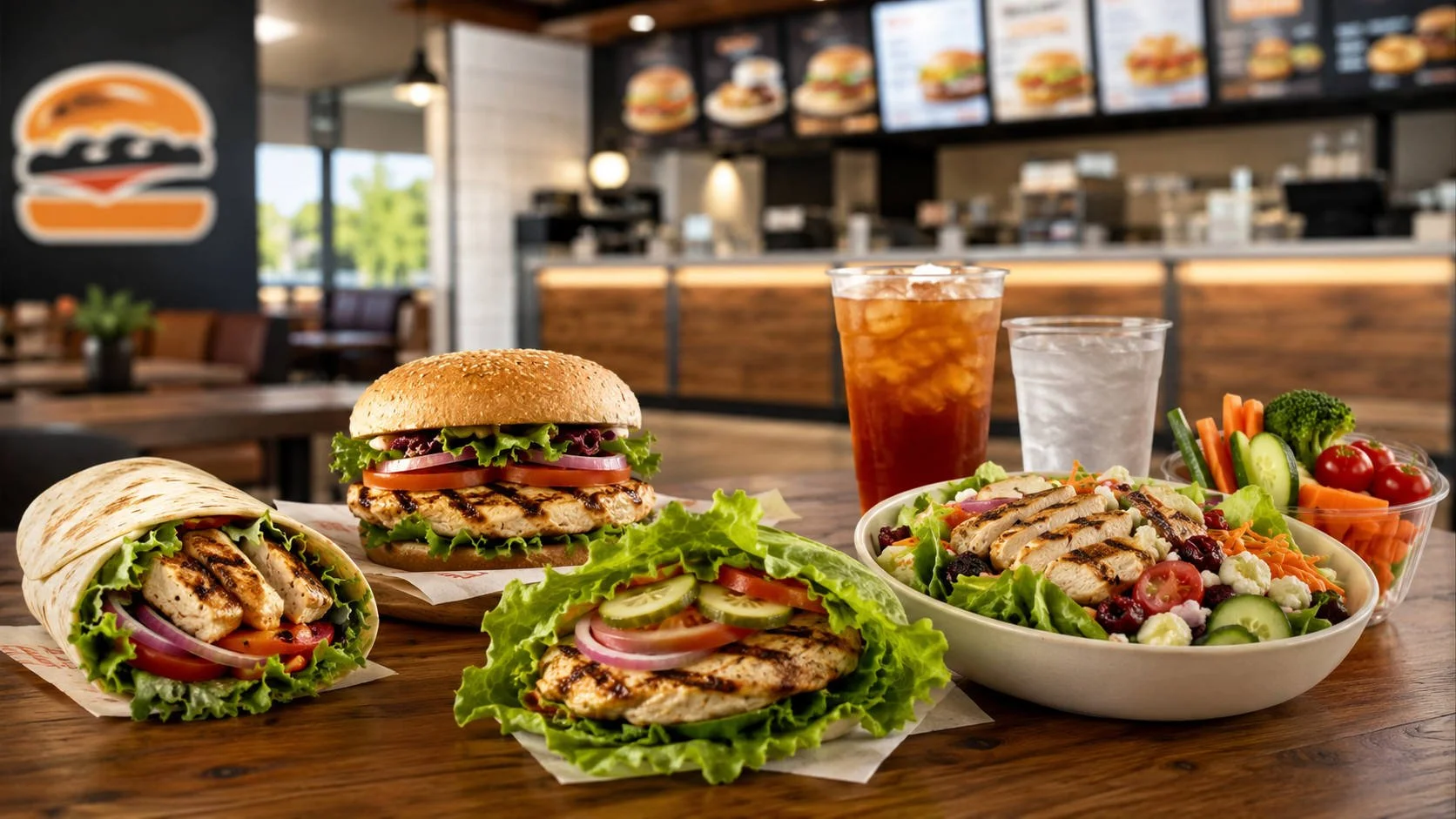
The easiest standard order is the Grilled Chicken Wrap, which has 420 calories and 30 grams of protein. It is the cleanest no-math option if you want to walk in, order, eat, and not perform nutritional long division under menu-board lighting.
The best low-calorie protein base is the Grilled Chicken Sandwich, which has 270 calories and 28 grams of protein. It barely misses the 30-gram protein mark, which is rude, frankly. Add a slice of cheese and it becomes about 330 calories and 31 grams of protein, using Harvey’s listed cheese slice nutrition of 60 calories and 3 grams of protein.
The best custom order is the Grilled Chicken Salad with extra grilled chicken, if your location allows the add-on. The Grilled Chicken Salad is 180 calories and 26 grams of protein, and Harvey’s lists a grilled chicken portion at 110 calories and 22 grams of protein, so the double-chicken salad lands around 290 calories and 48 grams of protein. That is absurdly efficient for a burger chain. That salad is basically smuggling a gym bag under some lettuce.
The best vegetarian-ish protein build is a Veggie Burger with an extra veggie patty, if available. The Veggie Burger is 330 calories and 20 grams of protein, and the veggie patty is 170 calories and 14 grams of protein, so that build comes to about 500 calories and 34 grams of protein. A vegetarian burger quietly doing more protein work than most regular burgers? Stunning. Somebody check on the beef patties; they may be embarrassed.
The Grilled Chicken Sandwich Is the Menu Cheat Code
The Grilled Chicken Sandwich is the Harvey’s order that actually understands the assignment. At 270 calories and 28 grams of protein, it is lean, simple, and far better than most burger-chain sandwiches that arrive wearing fried coating and a gallon of sauce like they’ve just escaped a state fair.
The only annoying thing is that it sits two grams short of the official high-protein target. Two grams. That is not a nutritional failure; that is protein being petty. Add cheese and you hit about 330 calories and 31 grams of protein. Add an extra grilled chicken portion, if the restaurant allows it, and you get around 380 calories and 50 grams of protein. That is not a sandwich anymore. That is a grilled chicken filing cabinet with a bun.
The smart topping setup is lettuce, tomato, onion, cucumber, pickles, hot peppers, and mustard or hot sauce. Harvey’s lists mustard at 3 calories, hot sauce at 5 calories, ketchup at 10 calories, BBQ sauce at 10 calories, and buffalo sauce at 10 calories per listed serving. Those are your friends. Mayo-style sauces are not banned from society, but they are definitely showing up with a calorie suitcase.
The Grilled Chicken Wrap Is the Safest Standard High-Protein Order
The Grilled Chicken Wrap is the best order if you do not want to customize anything. It has 420 calories and 30 grams of protein, which means it clears both targets without needing a special request, a second patty, or a tiny calculator séance.
Is it lower calorie than the grilled chicken sandwich? No. The tortilla is doing tortilla things. Harvey’s lists the tortilla wrap alone at 310 calories and 8 grams of protein, which is a lot of beige fabric energy for one meal. A tortilla is basically bread that learned yoga and now thinks it’s superior.
Still, the wrap works. It is filling, portable, and much more useful than the Crispy Chicken Wrap, which has 700 calories and 27 grams of protein, or the Buffalo Chicken Wrap, which has 800 calories and 27 grams of protein. Those wraps are not high-protein heroes. They are crispy chicken delivery envelopes with sauce-related confidence issues.
The Grilled Chicken Salad Is Ridiculously Low-Calorie
The Grilled Chicken Salad is listed at 180 calories and 26 grams of protein. That is almost suspicious. It is so low-calorie that you may briefly wonder whether Harvey’s forgot to include the chicken and just mailed you a photograph of it. But no, the math checks out: it is a strong light meal, especially if you want protein without a bun, wrap, fries, or breaded chicken doing interpretive dance in the background.
By itself, it misses the 30-gram protein line. Add bacon, and it becomes around 230 calories and 30 grams of protein, because bacon adds 50 calories and 4 grams of protein. Add extra grilled chicken instead, and it becomes around 290 calories and 48 grams of protein, which is the better move unless your lunch goals specifically include “leaf pile with bacon confetti.”
This is probably the best Harvey’s order for anyone who wants maximum protein with minimum calorie nonsense. It is not as emotionally exciting as a burger and fries. Neither is having clean laundry, but somehow both improve your life.
Chicken Strips Can Work, But They’re Not the Main Hero
The 4-piece Chicken Strips have 400 calories and 23 grams of protein, while the 2-piece Chicken Strips have 200 calories and 12 grams of protein. Put those together and a 6-piece order would be about 600 calories and 35 grams of protein, before sauce. That fits the low-calorie, high-protein target, but it is fried chicken math, so nobody should get too smug.
The strips are useful when you want something simple and higher protein without the bun. But sauces matter. Harvey’s dipping sauces range from 40 calories for BBQ dipping sauce to 100 calories for ranch and 120 calories for ghost pepper dipping sauce. A sauce cup is small, yes. So is a raccoon, and those can still destroy a kitchen.
The best sauce choice for strips is BBQ if you want a dip with fewer calories, or skip dipping sauce and use a lighter garnish sauce if possible. The worst move is turning chicken strips into a sauce aquarium and then acting betrayed when the calories rise.
Harvey’s Burgers: Delicious, But Not Protein Miracles
Here is the tragic burger truth: Harvey’s regular burgers are not especially protein-efficient unless you customize them.
The Original Burger has 380 calories and 17 grams of protein. The Original Burger with Cheese has 440 calories and 20 grams of protein, and the Original Burger with Cheese and Bacon has 490 calories and 25 grams of protein. These are tasty, sure, but not high-protein by our target. The beef is present, but the bun and toppings are standing around taking up space like interns with clipboards.
The Angus Burger has 410 calories and 18 grams of protein, while the Angus Burger with Cheese and Bacon has 520 calories and 25 grams of protein. Again, fine burgers. Not macro royalty. The Angus patty alone is 240 calories and 12 grams of protein, which is not terrible, but it is fattier and less protein-efficient than Harvey’s grilled chicken portion at 110 calories and 22 grams of protein. Chicken is absolutely bodying beef here. Very rude, very accurate.
If you want a burger to hit high protein under 650 calories, you need to build carefully. An Original Burger with an extra Original patty and cheese comes to about 650 calories and 31 grams of protein, using Harvey’s listed Original Burger, Original Patty, and cheese slice nutrition. An Angus Burger with an extra Angus patty also lands around 650 calories and 30 grams of protein. Both technically work, but they are heavier and less efficient than grilled chicken. This is burger protein with a lot of fat wearing a flame-grilled trench coat.
The Big Harv Is High-Protein, But Not Low-Calorie
The Big Harv Original has 690 calories and 35 grams of protein, while the Big Harv Angus has 750 calories and 36 grams of protein. So yes, they are high-protein. No, they are not low-calorie by the 650-calorie target. This is the classic fast-food trap: enough protein to sound impressive, enough calories to make your lunch sit down heavily and remove its shoes.
If you want a Big Harv, get a Big Harv. Live your flame-grilled truth. But do not pretend it is the lean option when the grilled chicken sandwich is standing nearby at 270 calories, quietly doing the work like a poultry accountant in sensible shoes.
Vegetarian Options: The Veggie Burger Actually Has a Case
The Veggie Burger has 330 calories and 20 grams of protein, and the Veggie Burger with Cheese has 390 calories and 23 grams of protein. That is better than many fast-food veggie burgers, which often have the protein content of a damp motivational poster.
The best vegetarian protein build is the Veggie Burger with an extra veggie patty, around 500 calories and 34 grams of protein. Add cheese and you’re around 560 calories and 37 grams of protein. That is a genuinely useful vegetarian fast-food order, assuming your location lets you add the extra patty.
The veggie patty does contain soy and wheat, and the regular Veggie Burger contains barley, oats, soy, sulphites, and wheat according to Harvey’s allergen listings, so anyone with allergy or sensitivity concerns should check the official nutrition and allergen page before ordering. Harvey’s also warns that cross-contact can occur during manufacturing, processing, and in-house preparation.
The Sides Are Mostly Here to Ruin Your Responsible Main
The best side for low calories is the Garden Side Salad, which has 35 calories and 2 grams of protein. It is not exciting. It is a salad. Its job is not to thrill you. Its job is to avoid becoming fries.
The regular fries have 430 calories and 6 grams of protein, and large fries have 550 calories and 7 grams of protein. That is not a side for a low-calorie, high-protein meal. That is a potato invoice. Onion rings are 300 calories and 4 grams of protein for regular and 600 calories and 7 grams of protein for large. Frings are 620 calories and 8 grams of protein, which is what happens when fries and onion rings form a delicious but nutritionally unhelpful coalition government.
Poutine is the real boss fight. Regular Classic Poutine has 700 calories and 22 grams of protein. Regular Bacon Double Cheese Poutine has 850 calories and 33 grams of protein. Regular Chicken Bacon Ranch Poutine has 910 calories and 32 grams of protein. Protein may be present, yes, but poutine is not low-calorie. It is fries, gravy, cheese curds, and optimism collapsing into a tray.
Sauce Strategy: Let Mustard Do the Boring Hero Work
The best low-calorie sauces are mustard, hot sauce, BBQ sauce, buffalo sauce, ketchup, and relish. Mustard is 3 calories, hot sauce is 5 calories, BBQ sauce is 10 calories, buffalo sauce is 10 calories, ketchup is 10 calories, and relish is 5 calories per listed garnish serving. These are the sauces that add flavour without acting like they own your meal.
The creamy sauces add up faster. Garlic mayo is 15 calories, light mayo is 15 calories, Harv Sauce is 20 calories, ranch is 20 calories, chipotle sauce is 25 calories, and ghost pepper sauce is 25 calories per small garnish serving. That is not catastrophic, but if you start layering three creamy sauces because the Garnish Counter gave you power, congratulations: democracy has failed again.
Dipping sauces are more dangerous because the portions are bigger. Ranch dipping sauce is 100 calories, garlic dill is 90 calories, honey mustard is 90 calories, ghost pepper dipping sauce is 120 calories, sweet and sour is 50 calories, and BBQ dipping sauce is 40 calories. The sauce cup may look cute, but it has the calorie confidence of a tiny landlord.
Drinks: Do Not Drink the Calories You Just Saved
The easiest drink choices are bottled water, Diet Pepsi, Pepsi Zero Sugar, coffee, or tea. Harvey’s lists bottled water at 0 calories, Diet Pepsi at 0 calories, coffee at 5 calories, and tea at 4 calories. That is the boring drink section, also known as “the one that works.”
Regular soft drinks add calories fast. A small Pepsi is 210 calories, regular is 260 calories, and large is 420 calories. A large regular soda with your low-calorie grilled chicken order is like locking your front door and then leaving through the window with your wallet.
The shakes are not drinks for this mission. Harvey’s menu lists hand-spun shakes ranging from 580 to 1,020 calories depending on flavour and size. A shake can be delicious, obviously. But a 700-calorie shake next to a grilled chicken sandwich is not “balance.” It is dessert wearing a straw and laughing at your intentions.
Best Harvey’s Orders by Mood
When you want the cleanest possible order, get the Grilled Chicken Salad with extra grilled chicken. Around 290 calories and 48 grams of protein is outrageously efficient, and it leaves room for a side salad, a diet drink, or the smug feeling of having outsmarted a burger chain.
When you want something handheld, get the Grilled Chicken Sandwich with cheese. Around 330 calories and 31 grams of protein is a strong order, and it still feels like fast food instead of punishment served in a plastic bowl.
When you want the simplest no-customization answer, get the Grilled Chicken Wrap. It is 420 calories and 30 grams of protein, and you do not have to ask for anything weird unless you want to pile on low-calorie toppings like pickles, lettuce, tomato, cucumbers, onions, and hot peppers.
When you want fried chicken, get 4-piece plus 2-piece Chicken Strips and go easy on sauce. Around 600 calories and 35 grams of protein works, but it is still fried food, not a protein spa retreat.
When you want vegetarian protein, get the Veggie Burger with an extra veggie patty, if available. Around 500 calories and 34 grams of protein is legitimately useful, and adding cheese still keeps it around 560 calories and 37 grams of protein.
When you want a burger and refuse to be told otherwise, build an Original Burger with an extra Original patty and cheese. It lands around 650 calories and 31 grams of protein, right on the edge, like a burger trying to sneak into a macro party with a fake ID.
The Harvey’s Ordering Script
Say this:
“Grilled chicken sandwich with cheese, lots of vegetables, mustard and hot sauce.”
Or this:
“Grilled chicken wrap with extra lettuce, tomato, onions, pickles, cucumbers, and hot peppers.”
Or this:
“Grilled chicken salad with extra grilled chicken.”
Or, for vegetarian protein:
“Veggie burger with an extra veggie patty, lots of vegetables, mustard, and hot sauce.”
That is it. No poutine negotiation. No Frings side quest. No milkshake pretending to be hydration. No ranch cup quietly filing paperwork to annex your calorie deficit.
Harvey’s is actually pretty friendly for low-calorie, high-protein eating if you let the grilled chicken do its job and treat the Garnish Counter like a vegetable weapon, not a sauce carnival. The grilled chicken is the cheat code. The salad is the sleeper hit. The wrap is the reliable option. The veggie burger can punch above its weight. And poutine? Poutine is beautiful, patriotic chaos — but it is absolutely not here to help your macros.