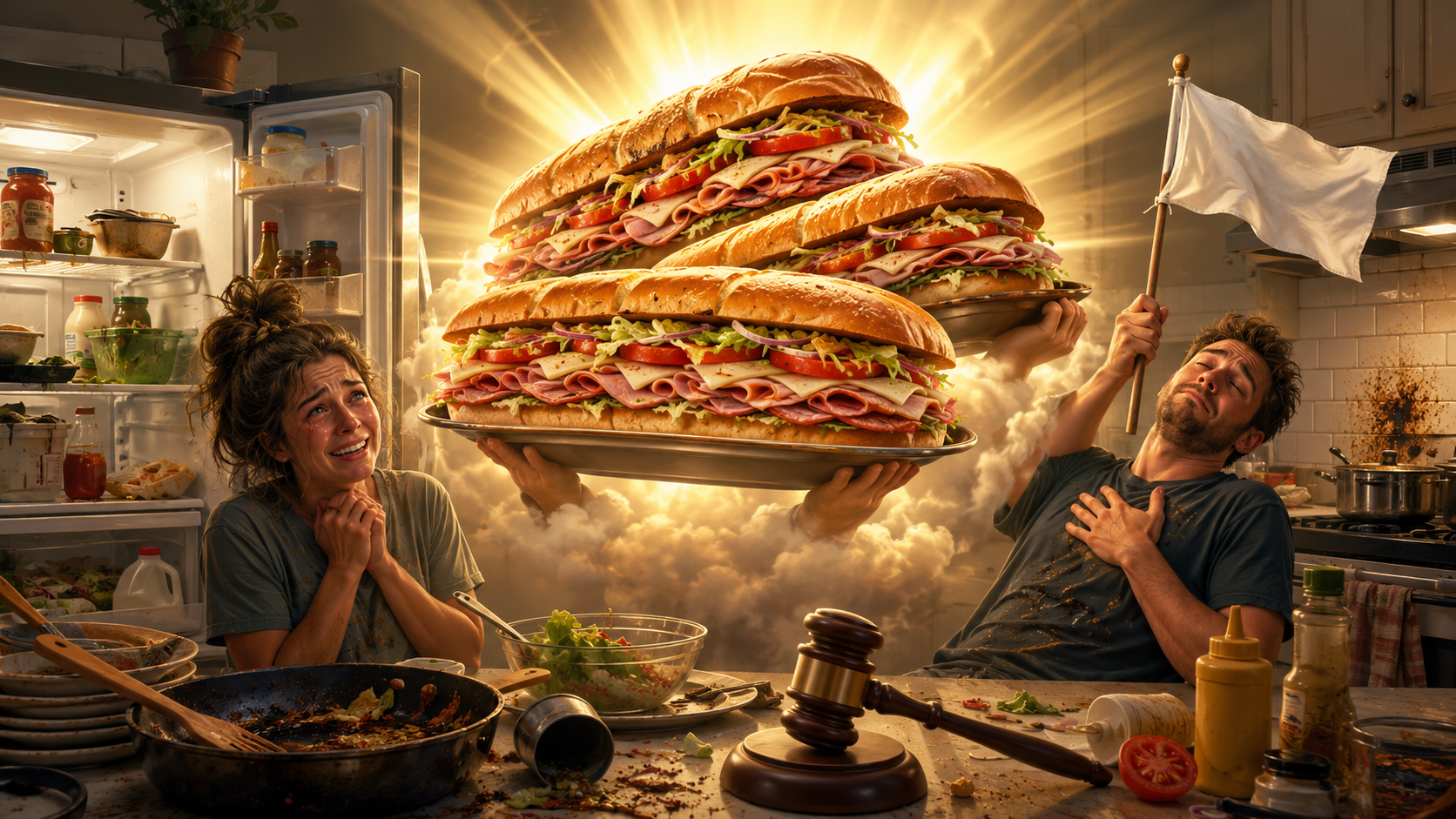
How the Sports Gambling Epidemic Became Junk Food Addiction for Young Men
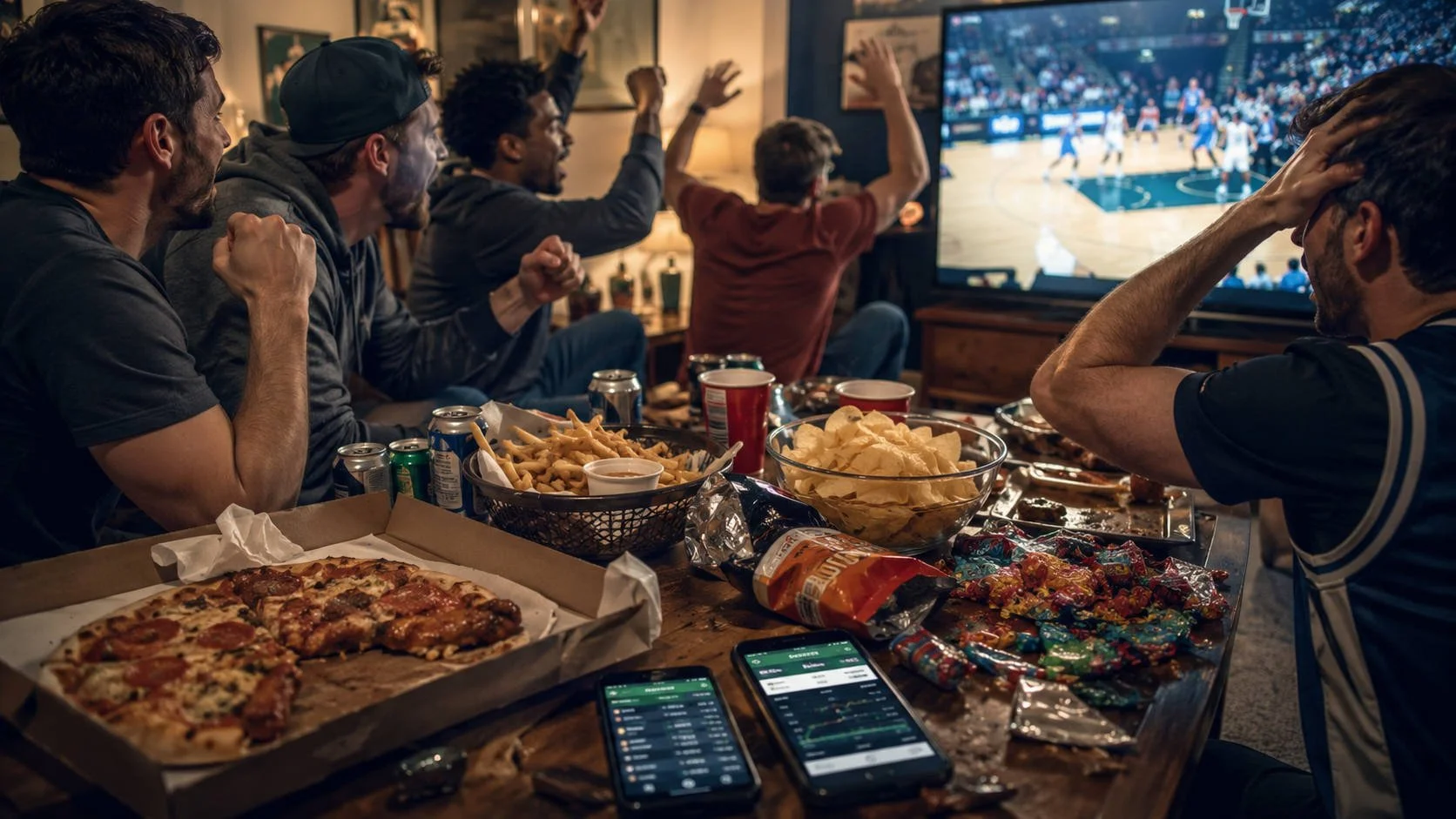
Sports gambling is what happens when the casino crawls out of the carpeted sadness palace, climbs into a man’s phone, puts on a hoodie, learns sports slang, and starts whispering, “Come on, bro, this one’s free.”
Junk food addiction is what happens when industrial food companies engineer fat, salt, sugar, crunch, novelty, convenience, and shame into a bag so loud it could legally replace a leaf blower.
Put them side by side and the similarity is not subtle. It is not even trying to be subtle. It is standing shirtless in the driveway revving a dirt bike. Modern sports betting and junk food are both built around the same miserable human hardware: reward, craving, impulse, cues, availability, habit, stress, boredom, social pressure, and the tiny magical lie that this next hit will be the satisfying one.
For young men, the comparison is especially bleak. One industry sells the fantasy of masculine control through prediction, risk, and “being sharp.” The other sells the fantasy of comfort through flavor, volume, and “treating yourself.” Both end up saying the same thing in different costumes: you are anxious, bored, lonely, underpaid, overstimulated, and looking for a quick win. Please insert money.
Sports Betting Is Fast Food for the Dopamine Economy
Old gambling had friction. You had to go somewhere. A casino. A bookie. A racetrack. A gas station with lottery tickets and lighting that made everyone look recently divorced.
Modern sports betting has no such dignity. It lives in your phone. It follows the game. It sends offers. It turns every possession, pitch, shot, injury, timeout, and player prop into a snackable little financial decision. It is not just gambling on sports. It is gambling inside sports, like a tapeworm with a sponsorship deal.
The industry is no longer a side attraction. American Gaming Association data show that legal U.S. sports betting revenue hit $16.96 billion in 2025, up 22.8%, on a total handle of $166.94 billion. That is not “a few guys making the Super Bowl more interesting.” That is a national attention-harvesting machine with odds boosts and a customer-acquisition budget large enough to make Satan open a LinkedIn account.
This is where the junk food comparison kicks open the door. Fast food did not win because people lack character. It won because it is cheap, convenient, tasty, everywhere, heavily marketed, and engineered to make stopping feel like a weird personal betrayal. Sports betting is doing the same thing to fandom. It takes something already enjoyable and coats it in reward mechanics until watching a game without a wager feels like eating fries without salt: technically possible, spiritually damp.
Young Men Are the Value Meal
The sports betting boom has a favorite customer, and shockingly, it is not contemplative grandmothers with balanced portfolios. It is young men.
A 2025 Siena College Research Institute and St. Bonaventure poll found that 22% of Americans had an account with at least one online sportsbook, including 48% of men ages 18 to 49. The same survey found ugly little warning lights blinking all over the dashboard: 52% of online sports gamblers said they had chased a bet, 37% felt ashamed after losing, and 20% reported losses that caused trouble meeting financial obligations.
That is not casual entertainment. That is a digital raccoon trap baited with masculinity and bad math.
The NCAA’s 2023 survey of 18- to 22-year-olds found that 58% had engaged in at least one sports betting activity, while 67% of students living on campus were bettors. Among on-campus students, 63% recalled seeing betting ads, and 58% of those said the ads made them more likely to bet.
Beautiful. A generation already drowning in debt, loneliness, job anxiety, and screen addiction has been handed a pocket casino with push notifications. What could possibly go wrong, besides the exact things already going wrong?
Junk Food and Sports Betting Both Sell Control While Removing It
Junk food marketing loves the language of choice. “Grab a snack.” “Treat yourself.” “You deserve it.” “Limited-time flavor.” It sounds empowering, like eating a neon-blue cookie is an act of self-actualization instead of a minor chemical event in a crinkly bag.
Sports betting does the same thing. “Make your picks.” “Trust your gut.” “Use your knowledge.” “Bet smarter.” “You know ball.” It flatters the young male ego with the tenderness of a scam email wearing cologne.
But both products are structured so that the user feels in control while the environment does the heavy lifting.
Junk food uses hyper-palatable combinations: refined carbohydrates, fats, salt, sweetness, crunch, novelty, and rapid reward. Sports betting uses variable rewards: unpredictable wins, near misses, parlays, live betting, promotions, and the feeling that the next bet is not random but “researched.” One gives you a flavor hit. The other gives you a possibility hit. Both say, “Again?” before your better judgment can put pants on.
The BMJ has argued that ultra-processed foods can produce addictive-like responses in some people, with food addiction estimated at 14% of adults and 12% of children using Yale Food Addiction Scale measures. The article points especially to ultra-processed foods high in refined carbohydrates and added fats, which can affect reward pathways in ways that resemble addiction mechanisms.
Gambling disorder, meanwhile, is not internet slang. The American Psychiatric Association defines gambling disorder as repeated betting and wagering that continues despite causing problems in multiple areas of life.
So no, the comparison is not “chips and parlays are literally identical.” Calm down, Professor Nugget. The point is that both industries exploit similar reward machinery, then pretend the customer is simply making free little choices in a neutral environment. Yes, and a Venus flytrap is just offering a bug a nice place to stand.
The Parlay Is the Doritos Locos Taco of Gambling
Every addictive industry eventually invents its perfect goblin product.
Junk food has the engineered mashup: pizza-flavored chips, cereal milk ice cream, limited-edition soda, a burger with six textures and the moral restraint of a fireworks stand.
Sports betting has the parlay.
A parlay lets bettors combine multiple wagers for a bigger potential payout, which sounds thrilling until you remember the entire thing is a probability shredder wearing a party hat. The National Council on Problem Gambling reported in 2025 that parlay betting nearly doubled, with 30% of sports bettors making parlay wagers in 2024, up from 17% in 2018. NCPG explicitly flagged this as concerning because of loss-chasing risks.
The parlay is junk food logic in pure betting form. One chip is not enough. One bet is not enough. Stack the flavors. Stack the legs. Stack the nonsense. Make it bigger, louder, more exciting, more impossible, more sharable. Then advertise it like it is a brilliant strategy instead of a lottery ticket wearing a team jersey.
This is not entertainment anymore. It is a dopamine casserole.
Ads Turn Both Addictions Into Social Permission
Nobody wants to feel like they have a problem. They want to feel like they are participating in culture.
Junk food nailed this years ago. You are not bingeing chips alone at midnight. You are “snacking.” You are “celebrating.” You are “indulging.” You are “trying the new flavor.” Congratulations, your shame has been rebranded as market engagement.
Sports betting has copied the homework and added former athletes. Betting is no longer presented as risky behavior. It is part of fandom. Part of watching. Part of knowing the game. Part of male social life. A man cannot watch a Wednesday night NBA game without being invited to financially care whether a backup forward gets seven rebounds. Truly, the Romans had bread and circuses; we have same-game parlays and buffalo chicken dip. Progress, apparently.
The Lancet Public Health Commission on gambling warned that commercial gambling is rapidly growing, increasingly digital, and creating harms that extend beyond gambling disorder itself, with children and young people routinely exposed to gambling products and marketing.
That is the industrial trick: make exposure normal before judgment develops. By the time someone notices the habit, the habit has already decorated the apartment.
“Just Stop” Is the Dumbest Advice in Both Cases
When young men struggle with sports betting, the world’s laziest advice squad arrives immediately: “Just stop betting.”
Amazing. Brilliant. Someone get this genius a federal grant and a sandwich.
This is the same useless advice people give around junk food: “Just don’t buy it.” As though cravings appear in a vacuum. As though apps, ads, promos, stress, social pressure, sleep deprivation, and convenience are not sitting there like a committee of raccoons voting against your future.
Yes, personal responsibility matters. Of course it does. Nobody is saying a man is helpless because FanDuel winked at him during a commercial break. But pretending this is only about willpower is how industries get rich while individuals blame themselves.
The food environment is saturated with ultra-processed products. CDC data published in 2025 found that adults ages 19 to 39 got 54.4% of their calories from ultra-processed foods, while youth ages 12 to 18 got 63.0%.
That is not a “bad choices” problem. That is a habitat problem. We built a food environment where the easiest calorie is often the most engineered one, then acted shocked when everyone started eating like exhausted vending-machine archaeologists.
Sports betting is building the same habitat around games. The easiest form of fandom is becoming wagered fandom. The phone is the sportsbook. The broadcast is the billboard. The group chat is the sales funnel. The game is the delivery mechanism.
Shame Is the Aftertaste
The junk food loop often goes like this: craving, eating, relief, regret, shame, restriction, craving again. A beautiful little misery carousel, painted in barbecue dust.
The gambling loop is not so different: bet, thrill, loss, chase, shame, promise to stop, promo email, bet again. The Siena poll’s findings that many online sports bettors have chased bets, felt ashamed after losing, or had financial trouble from losses matter because they show the emotional hangover built into the product experience.
Shame is not a bug. It becomes part of the loop. A man loses money, feels stupid, then tries to win back not just the money but the version of himself who was “right.” He is not only chasing cash. He is chasing dignity. And the sportsbook, like the worst friend imaginable, is always open.
Junk food does the same trick with the body. Eat too much, feel bad, buy “better” snacks, restrict, crack, repeat. The product creates the problem, then sells the next product as the solution. Diet soda. Protein chips. Low-carb cookies. Same sportsbook, different promo.
Masculinity Makes the Trap Worse
Young men are often taught to manage distress through performance, consumption, competition, or silence. A breathtaking menu of bad options, really. Would sir prefer emotional repression with a side of financial risk, or should we bring the loaded fries first?
Sports betting fits neatly into this mess. It lets anxiety cosplay as confidence. It turns loneliness into group chat bravado. It turns financial pressure into “a play.” It turns boredom into action. It lets a man feel analytical, competitive, and alive, even while doing something that may be quietly sanding down his bank account.
Junk food does its own version. It offers comfort without vulnerability. No conversation needed. No asking for help. No admitting sadness. Just eat the thing. Crush the thing. Order the thing. Feel better for 11 minutes while the bag crackles like applause from the worst audience on earth.
This is why the comparison matters. Both addictions give young men a way to self-soothe without calling it self-soothing. Because apparently saying “I’m stressed and need comfort” is illegal under the Bro Constitution, but losing $140 on a live total or eating 2,000 calories of drive-thru food in a parked car is fine because at least no one had to use a feeling word.
The Industries Both Hide Behind “Fun”
Gambling companies say it is entertainment. Junk food companies say it is enjoyment.
Fine. Sometimes it is.
A burger can be a burger. A bet can be a bet. Not every fry is a clinical episode and not every $10 wager is a spiral into ruin. Adults are allowed to enjoy things. This article is not asking the government to replace nachos with steamed civic responsibility.
The problem is scale, targeting, and design.
When an industry makes billions by increasing frequency, intensity, and dependence, “fun” becomes a flimsy little napkin over a grease fire. Sportsbooks do not want one ceremonial Super Bowl bet a year from a stable adult with a budget. They want active users. Deposits. Parlays. Live bets. Habit. Retention. Reactivation. They want engagement, that cursed word that makes every human weakness sound like a quarterly metric.
Junk food companies do not want you to have one cookie at your grandmother’s house and then go enjoy a balanced life. They want repeat purchase, brand loyalty, convenience occasions, cravings, snack moments, and pantry presence. They want your boredom.
The customer says, “I’m choosing this.”
The system says, “We know. We designed the hallway.”
The Differences Still Matter
The comparison is useful, but not perfect.
Sports gambling can create acute financial harm very quickly. A young man can lose rent money in a night, rack up debt, hide losses, damage relationships, and fall into crisis with terrifying speed. Junk food harm is usually slower, more metabolic, more cumulative, and often tangled with body image, class, access, stress, culture, and medical risk.
Gambling has a clearer diagnostic status as a behavioral addiction. Ultra-processed food addiction is an active research area with serious evidence, but it is still debated in clinical and policy contexts. The BMJ article argues for the social, clinical, and policy relevance of ultra-processed food addiction, while also making clear that the construct is about a subset of foods and a subset of people, not “food” as a whole.
Also, unlike gambling, food cannot be quit. You cannot go cold turkey from eating, unless your recovery plan is death, which most dietitians consider suboptimal. This makes junk food addiction uniquely annoying: the substance category overlaps with survival itself. Gambling is optional. Food is not. Unfortunately, the most addictive food products are often cheap, available, and marketed like joy in a wrapper.
So the analogy should not flatten the two. It should sharpen the shared pattern: commercial systems turning human vulnerability into repeat use.
What Would Actually Help
For sports betting, useful interventions look boring because useful things often do. Stronger ad rules. Better age verification. Deposit limits. Cooling-off periods. Restrictions on in-game betting and high-risk parlays. Clearer warnings. No celebrity-athlete clown parade telling 19-year-olds that risk management is a vibe. Easy self-exclusion tools. Better campus education. Real treatment access.
For junk food, the answer is not “men should eat kale and stop being weak,” because that sentence has the moral intelligence of a damp gym towel. Useful interventions include clearer labeling, limits on marketing to young people, healthier defaults in schools and workplaces, taxes or restrictions on the most harmful products where evidence supports them, and making minimally processed foods cheaper and easier to access.
For young men specifically, the deeper fix is less glamorous and more important: give them better ways to handle stress, boredom, loneliness, status anxiety, money pressure, and emotional pain without handing them a phone casino or a sack of engineered crunch dust.
This requires treating young men not as defective impulse machines but as people living inside predatory environments built to monetize their weakest hours.
Wild concept. Someone call a panel.
The Bet Slip and the Snack Bag Are Cousins
Sports gambling and junk food addiction are not the same problem. But they are absolutely related species of modern misery.
Both sell instant reward.
Both thrive on stress and boredom.
Both use ads to normalize excess.
Both turn “just one” into a ritual.
Both create shame, then invite the customer back for relief.
Both tell young men they are choosing freely while surrounding them with triggers, cues, discounts, boosts, flavors, odds, streaks, and social proof.
The junk food bag says, “You deserve this.”
The betting app says, “You know something they don’t.”
Both are lying in fonts designed by experts.
The sports gambling epidemic is junk food addiction with a scoreboard. It is ultra-processed risk: cheap to start, easy to repeat, engineered for craving, socially encouraged, and profitable precisely because moderation is fragile.
And young men are not failing because they enjoy games, snacks, competition, comfort, or risk. They are being hunted by industries that understand their appetites better than they do.
That is the real comparison. Not that a parlay is a potato chip. It is that both are designed to make the next one feel obvious.
Which is how the trap works.
Not with one giant catastrophic decision, but with a thousand tiny ones, each saying, “Come on, man. Just this once.”