How Guy Fieri Really Picks Restaurants for Diners, Drive-Ins and Dives
Guy Fieri does not simply wake up, frost his tips, climb into a red Camaro, and allow the spirit of barbecue to steer him toward a strip-mall empanada shop in Ohio. That would be beautiful, yes. It would also be chaos, which is frowned upon by television producers, insurance companies, and anyone who has ever had to schedule a 10-person camera crew around a lunch rush.
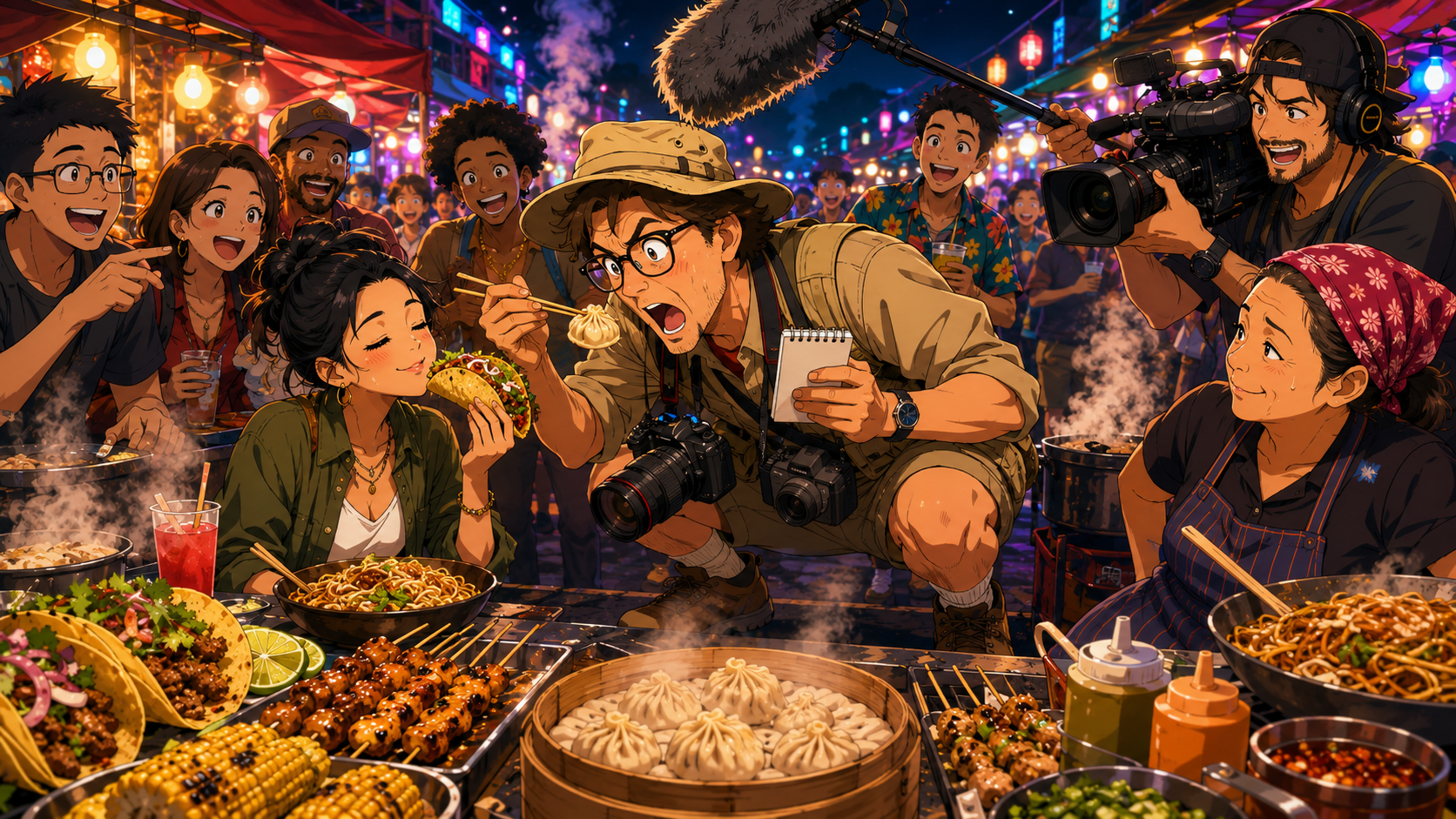
The way restaurants get chosen for Diners, Drive-Ins and Dives is less “Guy smells brisket from three states away” and more “research team, public nominations, producer interviews, chef recommendations, story development, logistics, final approvals, and then Guy appears like a sunglasses-wearing culinary comet.” The Food Network describes the show as Fieri road-tripping to “classic greasy spoons” with homemade food and memorable owners, which is polite network language for “we are looking for places with flavor, character, and zero interest in serving microgreens with tweezers.”
Guy Fieri Restaurant Picks Start With Suggestions
The first step is surprisingly democratic: people nominate restaurants. Food Network’s official help page says fans can suggest a favorite diner, drive-in, or dive by emailing the show at storyideas@tripledinfo.com and including contact information.
So yes, your uncle who keeps saying “Guy needs to come here” can actually do something besides pointing aggressively at a brisket sandwich and calling it “next level.” He can send the suggestion. Revolutionary. Civic engagement, but with onion rings.
But a nomination is not a golden ticket. It is more like throwing your restaurant into a giant national fryer basket and hoping the producers notice your hush puppies. Plenty of places get suggested. Very few become television-famous enough to have tourists drive 40 minutes out of the way to order “the thing Guy ate.”
Producers Do the Heavy Lifting Before Guy Ever Shows Up
The great lie of Diners, Drive-Ins and Dives is that it feels spontaneous. A convertible rolls up. Guy walks in. A chef casually reveals that his grandmother’s meatball recipe can cure loneliness. The whole thing looks like it just happened.
It did not just happen.
People reported that Fieri picks every restaurant and every dish from a curated list presented to him roughly two months before filming. He joked that the research team works like the FBI, which frankly sounds right, except instead of hunting fugitives they are tracking scratch-made pastrami and emotionally significant chili.
Thrillist also reported that each restaurant visit is months in the making, with owners spending hours on the phone with writers who develop the restaurant’s story before filming.
So when Guy says, “What are we making today, brother?” he is not wandering blindly into casserole combat. The show has already researched the restaurant, vetted the food, planned the segment, and figured out which dish will look best being pulled apart in slow motion like mozzarella owes someone money.
The Restaurant Has to Be Legit, Not Just Loud
The show is not looking for any restaurant with a neon sign and a fryer basket. The production team wants places that can survive national scrutiny. Executive producer Frank Matson told Videomaker that public suggestions matter, but the selection process is serious because the restaurant has to be “legit.” He added that the team does not want to send viewers somewhere that is not genuinely great.
This is important because Triple D fans actually go. They do not just watch a man in flame shirts eat pulled pork and then return to their regularly scheduled sadness. They plan road trips. They make lists. They show up in cargo shorts asking for the exact sandwich from season whatever, episode who cares.
That means a featured restaurant cannot just be cute. It needs to deliver when strangers arrive six months later demanding Guy-approved nachos like religious pilgrims with GPS.
Scratch-Made Food Gives Restaurants a Huge Edge
A major thing producers look for is scratch-made food. Matson told Videomaker that the team wants to make sure a high portion of what a restaurant serves is made from scratch, and that they usually are not looking for places already heavily featured on television.
Translation: do not microwave a frozen patty, slap “house special” on it, and wait for Flavortown to bless your parking lot. The show wants real cooking. Smoked meats. Handmade sauces. Family recipes. Fresh dough. Pickles someone had the patience to make instead of just buying a bucket and calling it heritage.
This is why so many Triple D restaurants feel oddly sincere. Beneath all the Camaro noise and Guyisms, the show is usually rewarding people who are actually back there doing the annoying, sweaty, repetitive work of cooking. Imagine that: a food show caring about food. Bold little concept.
Guy Looks for a Dish With a Hook
The food cannot just be good. It has to be television-good.
People reported that Fieri and the team look for distinctive dishes, with Matson explaining that Guy notices a unique ingredient or a different preparation method.
That is the secret sauce, and sadly I do not mean Donkey Sauce. A great Triple D dish needs a hook. Not necessarily a gimmick, although let us be honest, America has never met a burger stuffed with another food and said, “No, thank you, we are a serious nation.”
A good candidate dish might be a regional classic, an unexpected mashup, an old family recipe, a cooking method most people do not see every day, or a comfort food item made with absurd devotion. The dish needs to make viewers say, “Wait, what is that?” and not, “Ah yes, another chicken sandwich, alert the archives.”
Story Matters Almost as Much as the Food
The best Triple D restaurants are not just places with good sandwiches. They have a person, a history, a neighborhood, a weird origin, a family fight over sauce, a grandmother in the background spiritually supervising the roux.
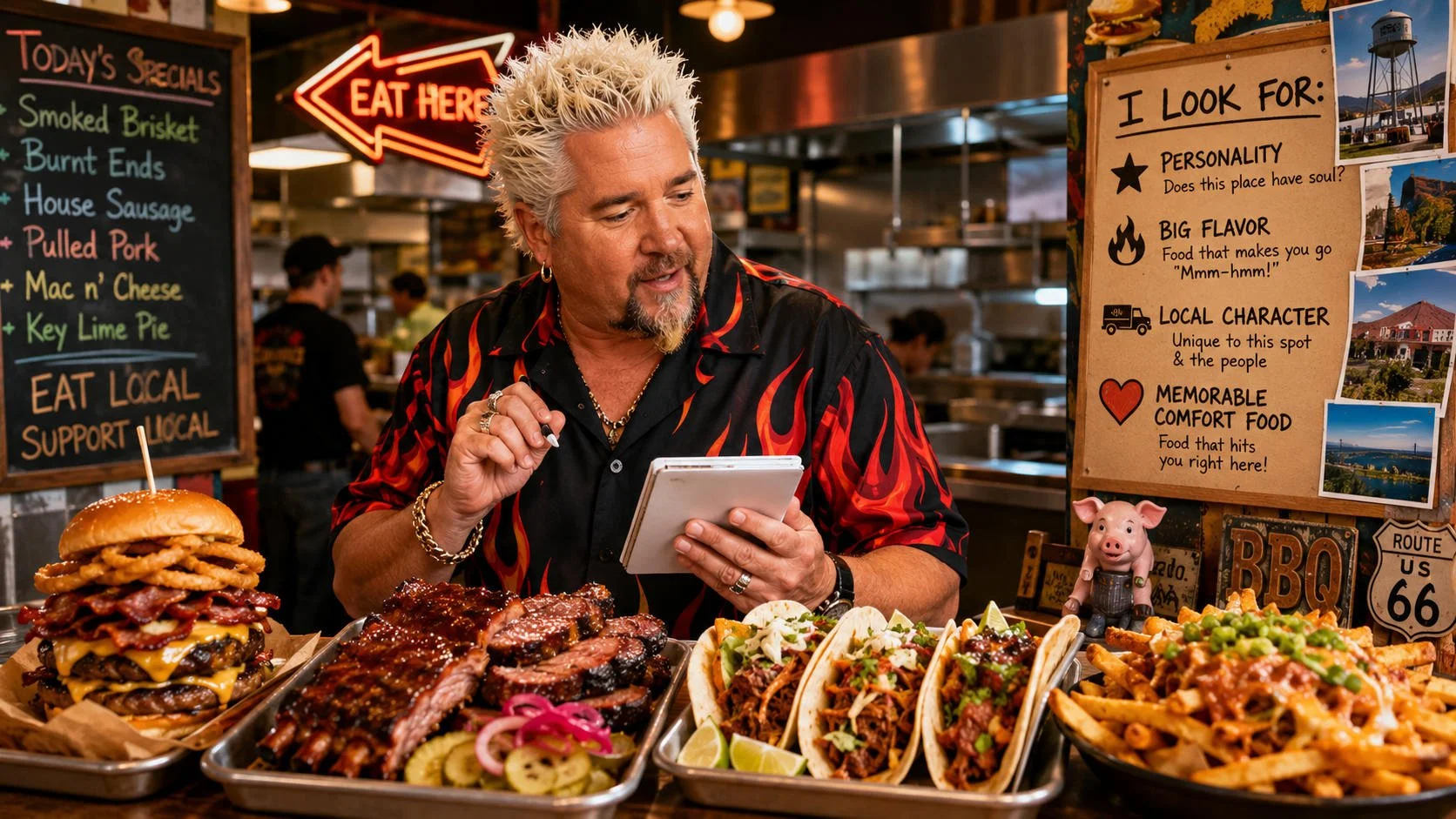
Delish, citing Fieri’s own comments to Food Network Magazine, summarized the show’s formula as “food, story, and character.”
That phrase is annoyingly perfect. Food gets viewers hungry. Story gets them invested. Character makes them remember the place. Without character, a restaurant is just a building where meat receives heat.
This is why the chef-owner matters so much. If you are charming, weird, passionate, funny, intense, emotional, or visibly haunted by your smoker, congratulations, you may be television material. If you mumble through your signature dish like you are reading the terms of service on a printer warranty, perhaps national food television is not your natural habitat.
Local Recommendations Matter
The show also leans on people who know the local food scene. Matson told Videomaker that after filming in so many states, the team knows chefs who can recommend restaurants in different areas.
This makes sense. Locals know which places are beloved and which places are just good at Instagram. A city’s best food is not always the restaurant with the most polished branding, the tallest burger, or the cocktail menu written like a lost poem from a bearded bartender named Everett.
Sometimes it is the tiny place in a weird location where the owner has been making one dish perfectly for 22 years and still acts personally offended if you do not order it. That is Triple D bait. Delicious, stubborn, and probably closed on Mondays for reasons no one fully understands.
Guy Gets the Final Say
The production team researches, interviews, scouts, and builds the list. But Guy is not just a human confetti cannon wheeled in at the end to yell “money.” People reported that he picks every restaurant and dish from the curated list presented before filming.
That matters because his taste is the filter. The show is not a neutral restaurant guide. It is Guy Fieri’s food worldview: bold flavors, big personalities, scratch-made comfort food, regional pride, and dishes that look like they could defeat a light salad in a parking lot.
You can mock the jewelry, the hair, the bowling shirts, the language, the whole Flavortown municipal government. Fine. It is easy. But the man has built a long-running show around small restaurants, and the filter is clear enough that viewers know what they are getting: food with a pulse, a backstory, and usually at least one sauce that looks capable of ruining a white shirt.
The Visit Is a Production, Not a Casual Drop-In
Once a restaurant is chosen, the filming itself is a whole operation. People reported that Fieri and two 10-person crews can film at three or four restaurants in a day, leapfrogging between locations. Videomaker reported that the production uses two crews in a city, with one setting up while Fieri films elsewhere, because apparently even Flavortown runs on logistics.
The famous Camaro is part of the theater, too. People reported that the car is trailered to locations and that Fieri has a driver between stops; he opens and closes the Camaro door for the camera.
Is that disappointing? Only if you believed a TV host personally drives across America in a convertible between three restaurant shoots a day like a barbecue Batman. Television is staged. Shocking development. Next we will learn that reality shows use editing and that nobody on home-renovation TV accidentally finds reclaimed barn wood in the emotional climax.
Restaurants Need to Be Ready for the Chaos
Getting picked is not just “free publicity, hooray, everyone clap.” Restaurants may have to close or adjust operations for filming. Thrillist reported that owners agree to close for a few days and be prepared to make menu items when Fieri arrives. Delish also reported that some restaurants film over multiple days, with time used for B-roll and cooking segments.
That means staff disruption, food costs, prep pressure, and the surreal experience of having a camera crew turn your kitchen into a small republic of cables.
And then the episode airs.
Then come the fans. The beautiful, terrifying fans. The people who watched Guy take one bite of your sandwich and say something like “that’s out-of-bounds” and now believe your restaurant is a required stop on their road trip to see Aunt Linda.
What Restaurants Should Do If They Want to Get Picked
The best strategy is not “act quirky until television happens.” Please do not hang a fake license plate wall and invent a sandwich called the Triple-Decker Flavortown Meltdown because you think Guy might smell desperation through the screen.
Make excellent food first. That is the part people keep trying to skip, because excellence is annoying and requires more than a mural.
Have a signature dish with a clear hook. It should be easy to explain, visually interesting, deeply flavorful, and specific to your restaurant. “Our burger is pretty good” is not enough. Every city has 400 pretty good burgers, most of them served by people wearing black gloves like they are handling evidence.
Tell your story clearly. Why does the restaurant exist? Who started it? What dish matters? What technique matters? What family recipe, regional tradition, personal obsession, or community connection gives the place its identity?
Build local love. If regulars, chefs, food writers, and neighborhood people already talk about your restaurant, the show has more reason to believe you are not just yelling into the national void.
Then submit the place properly through the official suggestion route, which Food Network lists as emailing storyideas@tripledinfo.com with contact information.
And if producers call, answer like a person who wants television. Be specific. Be prepared. Do not say, “Everything is good.” That is the restaurant equivalent of a dating profile that says “I like fun.” Useless. Pick the dishes that define you.
What Actually Gets Guy Fieri’s Attention
The magic formula is pretty simple, which is why so many restaurants will ignore it and instead buy a bigger sign.
Guy Fieri restaurants usually need:
Great food.
Scratch-made elements.
A standout dish.
A compelling owner or chef.
A local fan base.
A story that can be told quickly.
A look, flavor, or technique that makes good TV.
Enough operational strength to survive the filming and the aftershock.
That last part matters. A Triple D appearance can be a blessing, but blessings are still work. If a small restaurant cannot handle sudden demand, the blessing becomes a line out the door, an exhausted kitchen, and 1-star reviews from tourists furious that the famous sandwich took 28 minutes. Congratulations, you won the lottery and the prize is pressure.
The Real Reason Guy Fieri’s Picks Work
The reason Diners, Drive-Ins and Dives keeps working is not just Guy. It is the selection machine behind Guy.
The producers gather suggestions. They lean on local knowledge. They vet the restaurant. They care about scratch cooking. They build a story. They hand Guy a researched list. Guy chooses the restaurants and dishes that fit his taste. Then the crew turns the whole thing into 22 minutes of sizzling meat, proud owners, loyal customers, and catchphrases flying around like confetti at a county fair.
The result feels loose and spontaneous because the work underneath is extremely controlled. That is the trick. The show looks like a road trip, but it operates like a food-intelligence agency with better shirts.
So how does Guy Fieri choose restaurants for his shows?
He chooses places with real food, real people, real stories, and something memorable enough to survive national attention. He chooses the weird little spots, the family places, the scratch kitchens, the regional legends, the offbeat sandwich shops, the barbecue joints, the places where a cook has spent 15 years perfecting one sauce while everyone else was busy naming aioli after emotions.
In other words, he is not just looking for a diner, a drive-in, or a dive.
He is looking for a restaurant with enough flavor and personality to make America say, “Fine, I’ll drive 37 minutes for a meatloaf sandwich.”
Which is ridiculous.
And also exactly why the show works.