
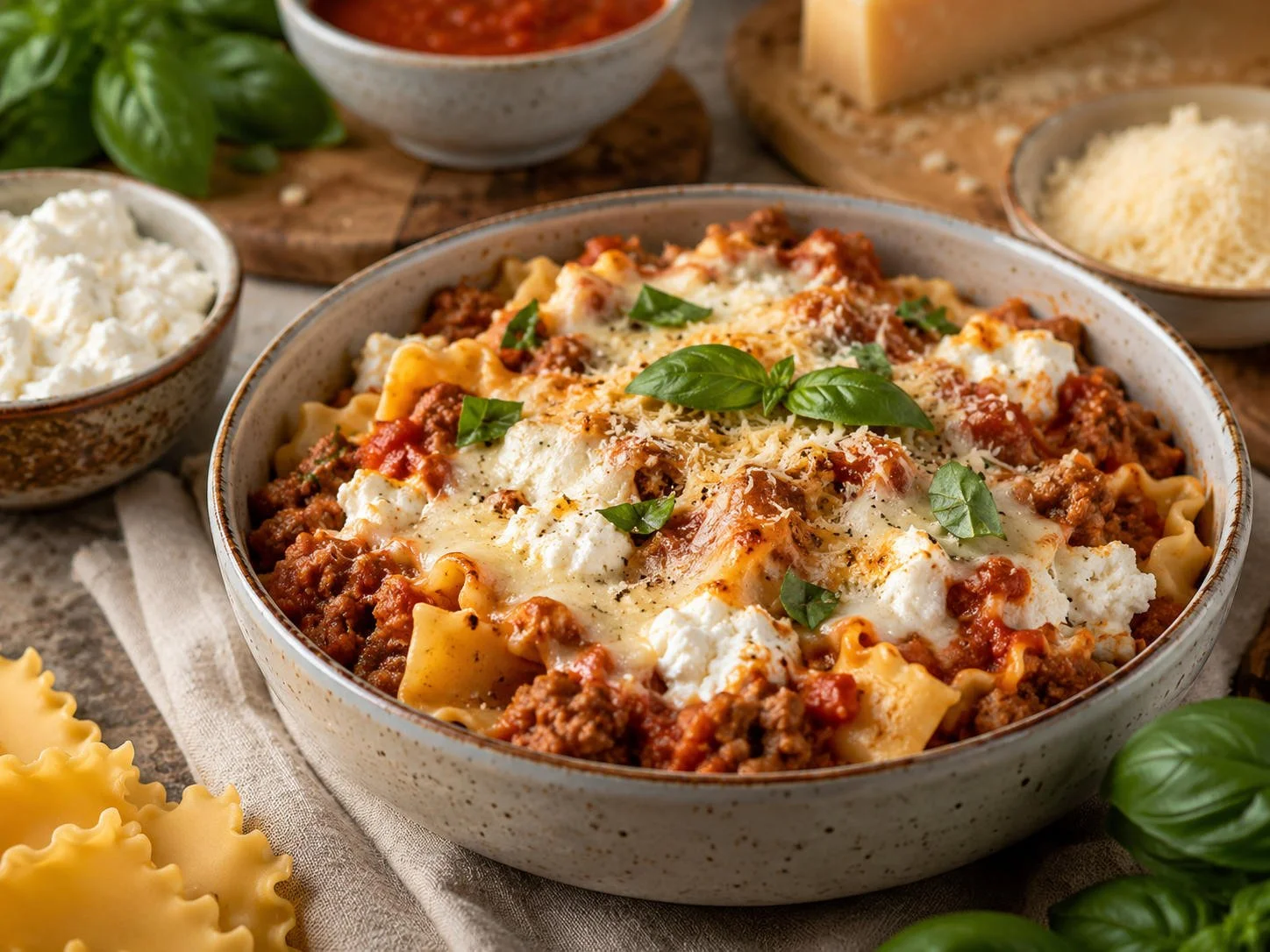
Lasagna is one of the greatest foods ever created, but it also behaves like a construction project.
You need noodles.
You need sauce.
You need meat.
You need cheese.
You need layering discipline.
You need a baking dish heavy enough to survive a medieval siege.
Then you wait for it to bake, wait for it to cool, cut into it too early anyway, and watch the entire thing slide apart like it has lost faith in itself.
That is where the high-protein lasagna bowl comes in.
This recipe gives you the best parts of lasagna: seasoned meat, tomato sauce, creamy cottage cheese or ricotta, melted mozzarella, parmesan, garlic, Italian herbs, and pasta. But instead of building a full lasagna, you make it in a skillet or bowl.
Same flavor family.
Way less effort.
Much better protein.
This is the kind of dinner you make when you want comfort food but also want to hit your protein target without eating plain chicken breast next to a pile of moral responsibility.
Why Make a High-Protein Lasagna Bowl?
Traditional lasagna can have plenty of protein if it includes meat and cheese, but it is also usually heavy on pasta, full-fat cheese, and large portions. That is not a bad thing. Lasagna is supposed to be rich. Nobody orders lasagna because they want to feel like they just finished a juice cleanse.
But if you want a version that works better for regular weeknights, meal prep, weight loss, muscle building, or post-workout dinners, a lasagna bowl is a smarter format.
You control the portions. You can use lean meat. You can use cottage cheese for extra protein. You can add vegetables without ruining the vibe. You can use high-protein pasta if you want. And you do not have to spend your evening assembling noodle architecture.
For context, the FDA lists the Daily Value for protein as 50 grams, and 20% Daily Value or more of a nutrient per serving is considered high. A well-built lasagna bowl can easily land around 40 to 60 grams of protein per serving, depending on the meat, cheese, pasta, and portion size.
In normal language: this is not “healthy” because someone added parsley on top.
This is actually a high-protein meal.
Recipe Snapshot
Prep time: 10 minutes
Cook time: 25 minutes
Total time: About 35 minutes
Servings: 4
Best for: High-protein dinner, meal prep, comfort food, post-workout pasta, easy weeknight meals
Ingredients
For the lasagna bowls:
1 lb lean ground turkey, lean ground beef, or ground chicken
8 oz pasta, broken lasagna noodles, rotini, penne, or high-protein pasta
2 cups marinara sauce
1 cup low-fat cottage cheese or ricotta
1 cup shredded part-skim mozzarella
1/4 cup grated parmesan
1 small onion, diced
3 cloves garlic, minced
1 teaspoon Italian seasoning
1/2 teaspoon dried oregano
1/2 teaspoon garlic powder
1/4 teaspoon red pepper flakes, optional
Salt and black pepper, to taste
1 teaspoon olive oil or cooking spray
Optional: 2 cups spinach, mushrooms, zucchini, or bell peppers
Optional: fresh basil or parsley for topping
Best Protein to Use
Lean ground turkey is probably the best all-around choice for a high-protein lasagna bowl. It is mild, easy to season, and works well with tomato sauce and Italian herbs. USDA-sourced nutrition databases commonly list ground turkey as a protein-dense option, with one FoodData Central-linked listing showing about 27 grams of protein per 100 grams for ground turkey.
Lean ground beef tastes more like classic lasagna. It gives the bowl that richer, old-school comfort-food flavor. If you use beef, choose extra-lean or lean ground beef if you want to keep the calories more controlled.
Ground chicken also works, but it is milder. If you use ground chicken, be generous with garlic, Italian seasoning, parmesan, and red pepper flakes so it does not taste like “fitness meat with sauce.”
The best choice depends on the goal:
Use ground turkey for the most balanced version.
Use lean beef for the most classic lasagna flavor.
Use ground chicken for the lightest taste.
Use a mix of turkey and beef if you want the best of both worlds.
Cottage Cheese vs. Ricotta
Classic lasagna usually uses ricotta, and ricotta is delicious. It is creamy, mild, and perfect with tomato sauce.
But for a high-protein lasagna bowl, cottage cheese is a strong move.
Cottage cheese typically has around 11 grams of protein per 100 grams, though exact amounts vary by brand and fat level. It also blends well into tomato sauce and gives you that creamy lasagna feeling without needing a massive amount of cheese.
If you hate cottage cheese texture, blend it.
This is the secret.
Blended cottage cheese becomes smooth and creamy, almost like a higher-protein ricotta sauce. Once it is mixed with marinara, garlic, parmesan, and mozzarella, it stops feeling like cottage cheese and starts feeling like lasagna filling.
Nobody needs to know.
This is between you and the bowl.
Best Pasta to Use
You have options.
Broken lasagna noodles are the most obvious choice because they make the bowl feel more like actual lasagna. Just break them into bite-sized pieces before cooking.
Rotini is probably the easiest. It holds sauce well, cooks evenly, and does not require any dramatic noodle snapping.
Penne works too.
High-protein pasta can raise the protein even more, especially if you use chickpea, lentil, or protein-enriched pasta. The tradeoff is texture. Some high-protein pastas taste great, and some taste like they were made in a laboratory by someone who has heard of pasta but never loved it.
For the best classic texture, use regular pasta.
For the highest protein, use high-protein pasta.
For the best middle ground, use a wheat-and-legume blend if you can find one you like.
And honestly, if the sauce is good enough, most pasta can be forgiven.
How to Make High-Protein Lasagna Bowls
Bring a large pot of salted water to a boil.
Cook the pasta according to package directions until al dente. Before draining, save about 1 cup of pasta water. This helps loosen the sauce later if it gets too thick.
While the pasta cooks, heat a large skillet over medium-high heat.
Add olive oil or cooking spray.
Add the diced onion and cook for 2 to 3 minutes, until softened.
Add the garlic and cook for about 30 seconds, just until fragrant.
Do not burn the garlic. Burnt garlic tastes like someone ruined dinner on purpose.
Add the ground turkey, beef, or chicken. Cook until browned and fully cooked, breaking it apart with a spatula as it cooks.
Season with Italian seasoning, oregano, garlic powder, red pepper flakes, salt, and black pepper.
If using vegetables like mushrooms, zucchini, bell peppers, or spinach, add them now. Cook until softened and until any extra water has cooked off.
This part matters. Watery vegetables can turn your lasagna bowl into lasagna soup. Lasagna soup may be fine as a separate concept, but it is not what we are doing here.
Add the marinara sauce and stir.
Reduce the heat to medium-low.
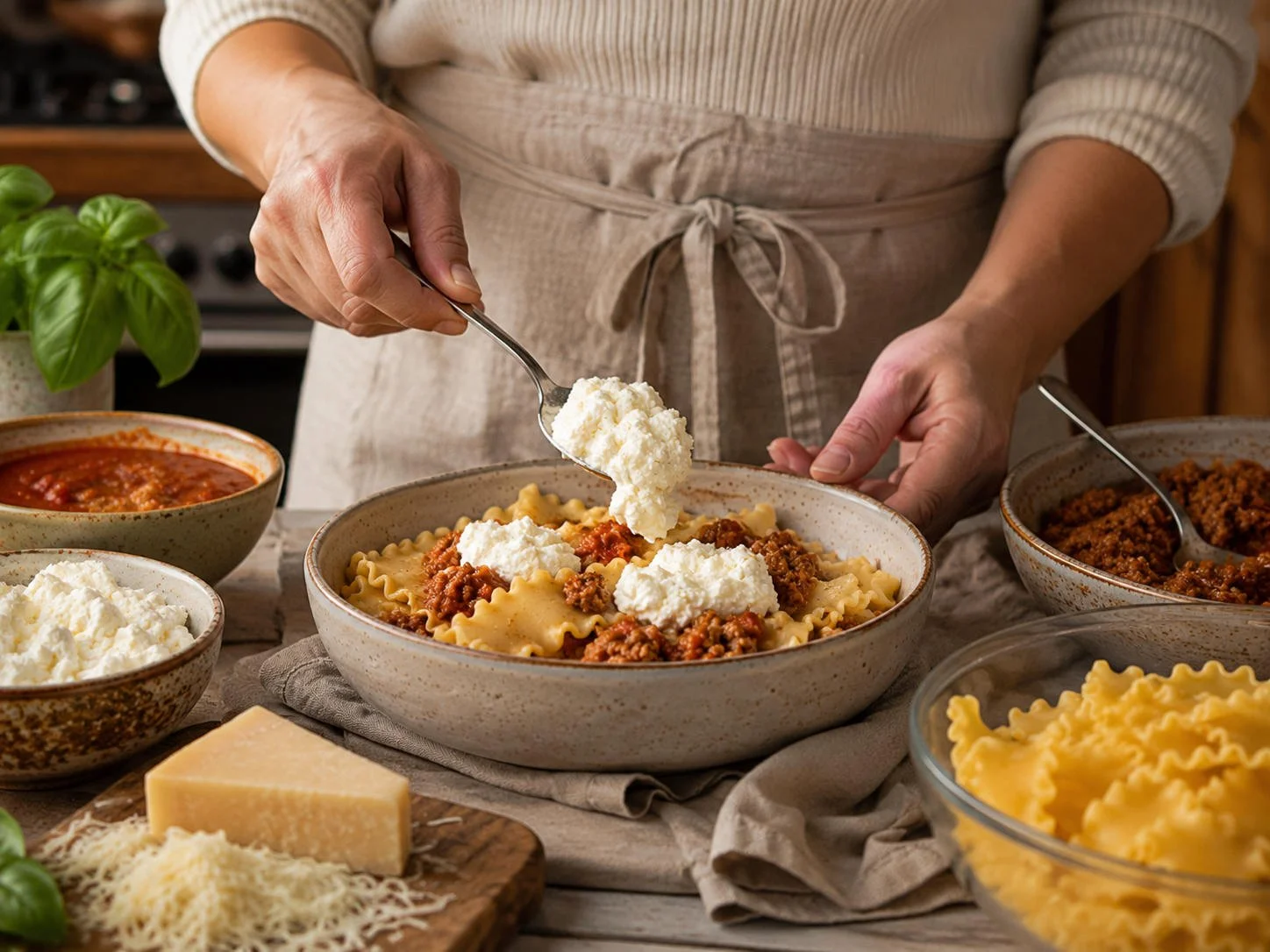
Add the cottage cheese or ricotta. If you want a smoother sauce, blend the cottage cheese first. Stir until creamy.
Add the cooked pasta and toss everything together.
Add a splash of reserved pasta water if the sauce is too thick.
Stir in half the mozzarella and parmesan.
Top with the remaining mozzarella. Cover the skillet for 2 to 3 minutes, until the cheese melts.
For a more baked-lasagna feeling, transfer the mixture to an oven-safe dish, top with mozzarella, and broil for 2 to 4 minutes until bubbly and golden.
Watch it closely. Broilers are not patient appliances. They go from “beautiful cheese” to “call the fire department” very quickly.
Top with basil or parsley and serve warm.
Estimated Nutrition
The exact nutrition depends on your meat, pasta, cheese, sauce, and serving size.
Using lean ground turkey, low-fat cottage cheese, part-skim mozzarella, marinara, and regular pasta, one serving will usually land around:
450 to 650 calories
40 to 60 grams of protein
40 to 65 grams of carbs
10 to 22 grams of fat
Using high-protein pasta can raise the protein.
Using full-fat ricotta, extra mozzarella, regular ground beef, or more pasta will raise the calories.
Using extra vegetables, lean turkey, low-fat cottage cheese, and a measured amount of cheese will keep it lighter.
The best version is probably the middle version: enough cheese to feel like lasagna, enough lean protein to make it useful, and enough pasta to avoid feeling like you are just eating meat sauce with a dream.
How to Make It Higher Protein
Use lean ground turkey, ground chicken, or extra-lean ground beef.
Use cottage cheese instead of ricotta.
Use high-protein pasta.
Add extra meat.
Add a little more parmesan for flavor and protein.
Use part-skim mozzarella instead of a lower-protein cheese blend.
You can also reduce the pasta slightly and increase the meat and cottage cheese. That gives you the same big bowl feeling with a better protein-to-calorie ratio.
The easiest upgrade is simple: add more meat and use cottage cheese.
Not glamorous.
Very effective.
How to Make It Lower Calorie
Use extra-lean ground turkey or chicken.
Use low-fat cottage cheese.
Use part-skim mozzarella and measure it.
Use a smaller pasta portion and add more vegetables.
Choose a lower-calorie marinara sauce.
Skip extra oil.
Use spinach, mushrooms, zucchini, or bell peppers to add volume.
The cheese is where people lose control. Understandable. Melted mozzarella has mind-control properties. But if you are trying to keep the recipe lighter, measure it once or twice until you know what a reasonable amount looks like.
Then you can freestyle without accidentally building a dairy volcano.
Best Vegetables to Add
Spinach is the easiest. It wilts right into the sauce and does not fight the lasagna flavor.
Mushrooms are excellent because they add savory depth.
Zucchini works, but cook off the water first.
Bell peppers add sweetness and color.
Eggplant can work if you cook it well, but undercooked eggplant has the texture of a sponge that regrets everything.
Broccoli is not traditional, but it is good if you want volume and do not mind the bowl becoming more “healthy pasta dinner” than “lasagna.”
For meal prep, mushrooms, spinach, and bell peppers are probably the best options.
Common Mistakes to Avoid
The biggest mistake is making the bowl watery.
Cook your vegetables long enough to release and evaporate their moisture. This is especially important with zucchini, mushrooms, and spinach.
The second mistake is using bland marinara.
Because this recipe is simple, the sauce matters. Use a marinara you actually like. If the sauce tastes flat, add garlic, oregano, black pepper, red pepper flakes, and a little parmesan.
The third mistake is skipping the cheese entirely.
Yes, you can make it lower calorie. But lasagna needs cheese. Otherwise, it is just pasta with meat sauce trying to get into a party.
The fourth mistake is overcooking the pasta.
Cook it al dente. It will keep absorbing sauce after you mix everything together.
The fifth mistake is not seasoning the meat.
Do not rely on sauce alone. Season the meat while it cooks so the whole bowl has flavor from the inside out.
Meal Prep Instructions
High-protein lasagna bowls are excellent for meal prep.
Divide the cooked mixture into four containers. Let it cool slightly, then refrigerate.
Leftovers can be kept in the refrigerator for 3 to 4 days, according to USDA food safety guidance. Perishable foods should also be refrigerated within 2 hours, which matters for meat, dairy, and cooked pasta dishes.
To reheat, microwave with a splash of water or extra marinara. Stir halfway through. Add a little extra mozzarella before reheating if you want the fresh melted-cheese effect.
This is one of those meals that may actually taste better the next day because the sauce, cheese, and pasta get to know each other overnight.
Meal prep romance.
Can You Freeze Lasagna Bowls?
Yes.
Lasagna bowls freeze well.
Let the mixture cool, portion it into freezer-safe containers, and freeze for up to 2 to 3 months for best texture.
For best results, freeze the meat, sauce, pasta, and cottage cheese mixture without the final mozzarella topping. Add fresh cheese when reheating.
You can freeze it fully assembled too. It will still be good. The cheese may just be slightly less glorious.
Thaw overnight in the fridge, then microwave or bake until hot.
Easy Variations
High-Protein Turkey Lasagna Bowl
Use lean ground turkey, cottage cheese, marinara, mozzarella, and rotini.
This is the best everyday version. High protein, easy, simple, and meal-prep friendly.
Beef Lasagna Bowl
Use extra-lean ground beef and ricotta or cottage cheese.
This tastes the most like classic lasagna. It is richer, more comforting, and slightly more dangerous around garlic bread.
Chicken Lasagna Bowl
Use ground chicken or chopped cooked chicken breast.
Add extra garlic, parmesan, and Italian seasoning to keep the flavor strong.
Spicy Lasagna Bowl
Add red pepper flakes, spicy marinara, Calabrian chili paste, or hot Italian turkey sausage.
This is for people who believe comfort food should fight back a little.
Low-Carb Lasagna Bowl
Skip the pasta and use zucchini, spaghetti squash, cauliflower rice, or sautéed cabbage.
It will not taste exactly like lasagna. Pasta is pasta. We are adults. We know the truth.
But the meat, sauce, cheese, and herbs still make it satisfying.
High-Protein Lasagna Bowl with Cottage Cheese Sauce
Blend cottage cheese with marinara before adding it to the skillet.
This makes the sauce creamy and smooth, almost like a vodka sauce crossed with lasagna filling.
It sounds suspicious.
It works.
What to Serve With a Lasagna Bowl
If you want to keep it light, serve it with a simple salad.
If you want the full comfort-food experience, serve it with garlic bread.
If you want more vegetables, add roasted broccoli, zucchini, or a Caesar-style salad on the side.
If you are eating it after a workout, the bowl is probably enough by itself. You get protein, carbs, sauce, cheese, and the feeling that life is temporarily manageable.
That is a complete meal in my book.
Is a High-Protein Lasagna Bowl Good for Weight Loss?
It can be.
This recipe can be very filling because it combines protein, pasta, sauce, cheese, and optional vegetables. A high-protein meal that actually tastes good can make it easier to stay on track than forcing yourself to eat “clean” food you secretly hate.
The key is portion size.
A balanced lasagna bowl made with lean meat, cottage cheese, measured mozzarella, marinara, and vegetables can fit well into a weight-loss plan.
A bowl made with regular beef, full-fat cheese, extra pasta, garlic bread, and “just a little more mozzarella” can become a full calorie event.
Both versions are valid.
They just have different jobs.
Is This Good After a Workout?
Yes.
This is a strong post-workout dinner because it gives you protein from the meat, cottage cheese, mozzarella, and parmesan, plus carbs from pasta. That combination is much more satisfying than eating plain chicken and rice while staring into the middle distance.
If you want more carbs, use a full pasta serving.
If you want it lighter, use less pasta and more vegetables.
If you want maximum protein, use high-protein pasta and extra lean meat.
If you want emotional recovery, add a little more cheese.
Sometimes that is also part of the program.
Mondays suck but lasagna is amazing.
This high-protein lasagna bowl recipe gives you the comfort of lasagna without the effort of building an entire pan.
It is saucy, cheesy, filling, easy to meal prep, and packed with protein. The lean meat gives it substance. The cottage cheese or ricotta gives it creaminess. The mozzarella gives you the melted lasagna top. The pasta makes it comforting. The marinara, garlic, herbs, and parmesan make it taste like actual Italian-inspired comfort food instead of a sad macro experiment.
Is it exactly the same as a layered lasagna baked by someone’s grandmother?
No.
Of course not.
Grandmothers have powers we do not understand.
But for a weeknight high-protein dinner that comes together in about 35 minutes and still gives you that lasagna feeling, this is a winner.
Make it once, portion it out, and enjoy the rare meal prep recipe that does not make you feel like you are serving a sentence.
Because healthy eating gets a lot easier when dinner tastes like something you actually wanted.