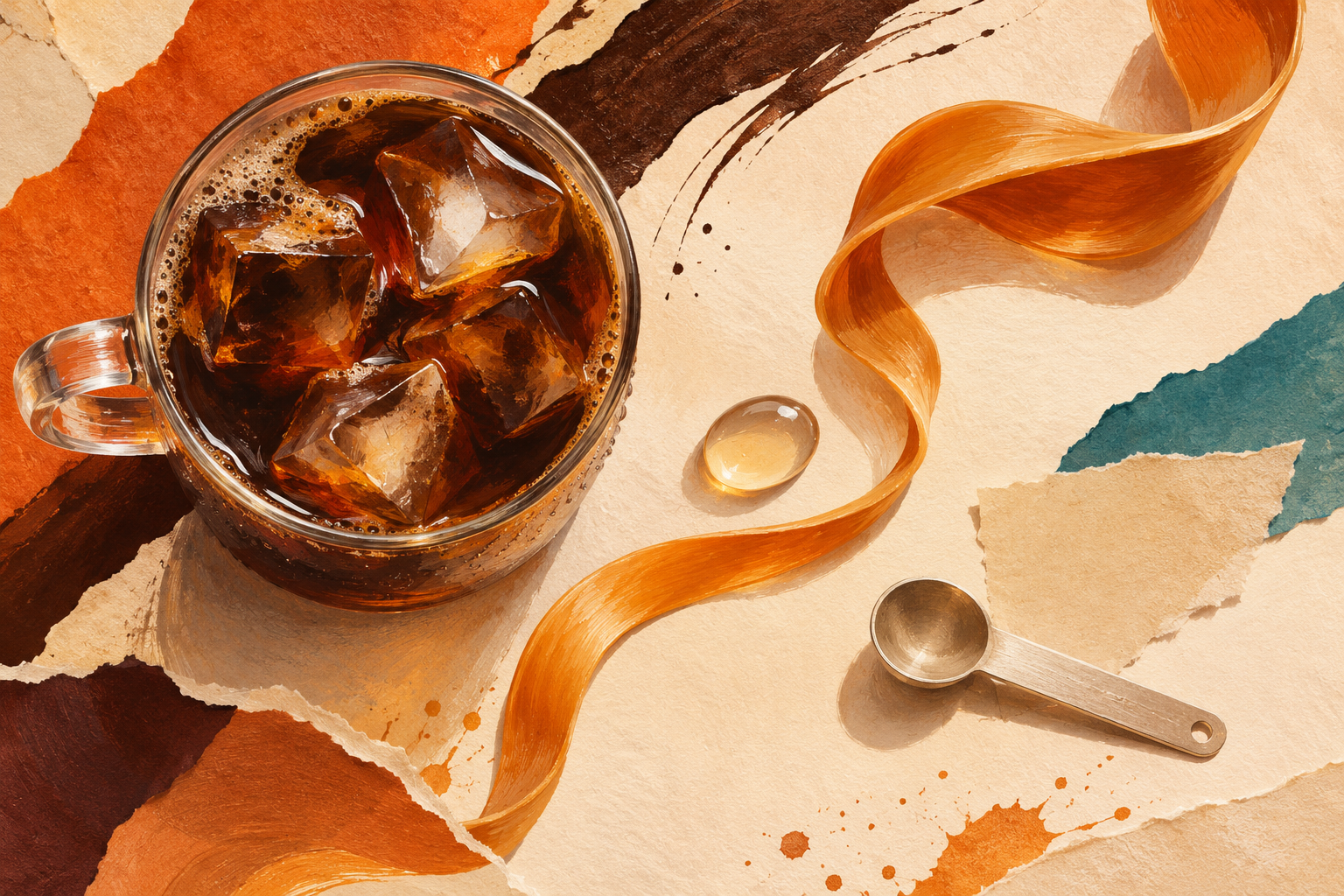
Dunkin's flavor shots and flavor swirls do different jobs. The brand describes shots as unsweetened and sugar-free, while swirls add sweetness.
The dairy distinction needs another step. A flavoring can have no milk in its listed ingredients while the completed coffee contains cream. Choosing the flavor is only part of choosing the drink.
Shots add flavor; swirls also add sweetness
According to Dunkin's own shots-versus-swirls explanation, shots are the unsweetened, sugar-free category. A flavor shot therefore does not promise the sweetness of a syrup-heavy flavored coffee. Swirls are the sweetened category, with the brand describing them as creamy and indulgent.
Flavor shots: The category description identifies these as unsweetened and sugar-free, adding 5–10 calories to a medium drink.
Flavor swirls: These are sweetened flavorings, adding 150–160 calories to a medium drink in the brand's category guidance.
Those figures describe the flavoring contribution in the brand's category explanation. They are not the calories in every finished medium beverage. Milk, cream, a different base or extra sweetener can change the order. They also are not per-pump numbers: dividing a category range by an assumed pump count would create precision the source does not supply.
Sugar-free also does not mean calorie-free. The official 5–10-calorie description is a good reason to avoid the common shortcut that shots add exactly zero calories. Nor does a sugar-free flavoring make a latte, sweetened tea or otherwise customized drink sugar-free.
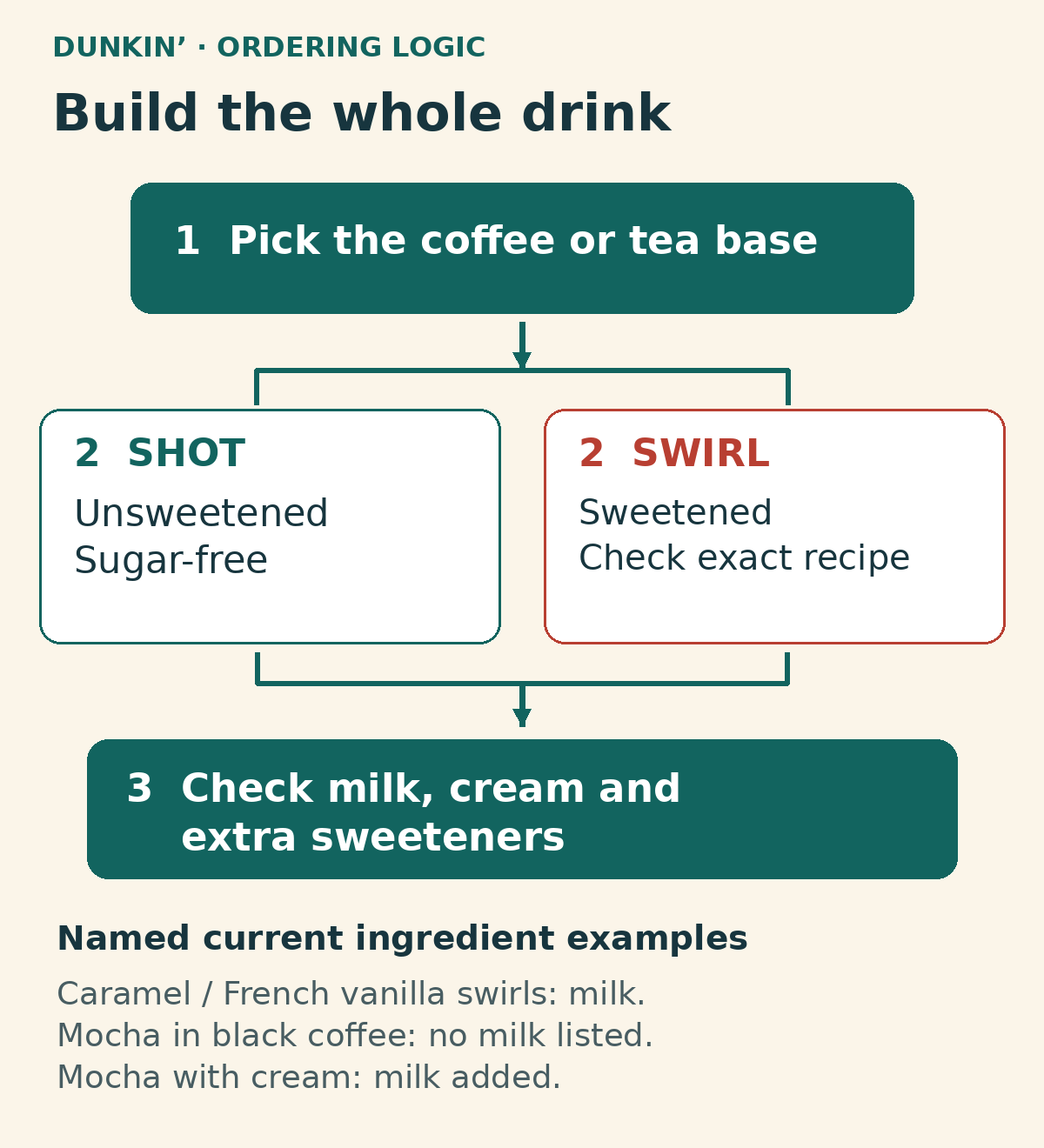
A flavoring is one part of the finished drink. Dairy examples refer to the named checked ingredient rows, not every flavor or preparation.
Choose the base drink, then identify an unsweetened sugar-free shot or a sweetened swirl, and finally check milk, cream and additional sweeteners. The checked caramel and French vanilla swirl examples contain milk. The checked mocha black-coffee row has no milk listed, while its cream version adds milk.
The dairy answer depends on the exact recipe
The brand's category article describes its shots as non-dairy and identifies mocha as an exception to its dairy-containing swirls. For an actual order, the more useful follow-up is to check the current named ingredients rather than turn that sentence into a rule for every syrup that might ever appear on the menu.
The ingredient guide linked from Dunkin's nutrition page, updated October 28, 2026, supports these concrete examples:
Caramel swirl in black hot coffee: The swirl includes sweetened condensed nonfat milk.
French vanilla swirl in black hot coffee: The swirl includes sweetened condensed nonfat milk.
Mocha swirl in plain black hot coffee: No milk ingredient or milk allergen is listed in the checked row.
Mocha swirl hot coffee with cream: Cream adds milk to the finished drink.
The two mocha examples are the important pair. “Mocha” can describe the same flavor direction while “with cream” changes the ingredient answer. Checking the swirl alone would miss that change.
These are named examples from the guide, not a guarantee that every mocha product is dairy-free or safe for someone with an allergy. A different milk, topping, base drink or preparation environment raises a different question. Dunkin asks customers with an allergy or intolerance to inform their server; the current full recipe and restaurant's handling information matter more than a shortcut label.
A sugar-free syrup is not automatically a flavor shot
Dunkin's 2026 dietitian recommendations also mention sugar-free vanilla syrup separately. That is a useful reminder that “shot” and “swirl” are not an exhaustive dictionary of every present or future flavoring product.
Ask for the exact product name shown for your order. If you want an unsweetened flavor shot, specify that. If you want a particular sugar-free syrup, check that specific item instead of assuming it belongs to the shot category. Availability at a restaurant is another question; a general brand article does not establish what is stocked behind one counter today.
This distinction keeps the article useful when a seasonal flavor arrives. A new name does not change the method: identify the flavoring, then inspect its ingredients and the complete drink. Familiar words such as vanilla or caramel do not establish an identical recipe across different product families.
Build the order in four separate decisions
Start with the base: coffee, espresso drink or tea. Then identify the flavoring and whether you want it sweetened. Next, check milk or cream. Finally, look for separately added sugar, liquid sugar or toppings.
Make sure the name on the order matches the flavoring you intended, then check everything added around it. That is how “sugar-free” or “no milk in this syrup” becomes a clear ingredient statement rather than a misleading description of the whole cup.