Best Bartender Shoes for Long Shifts
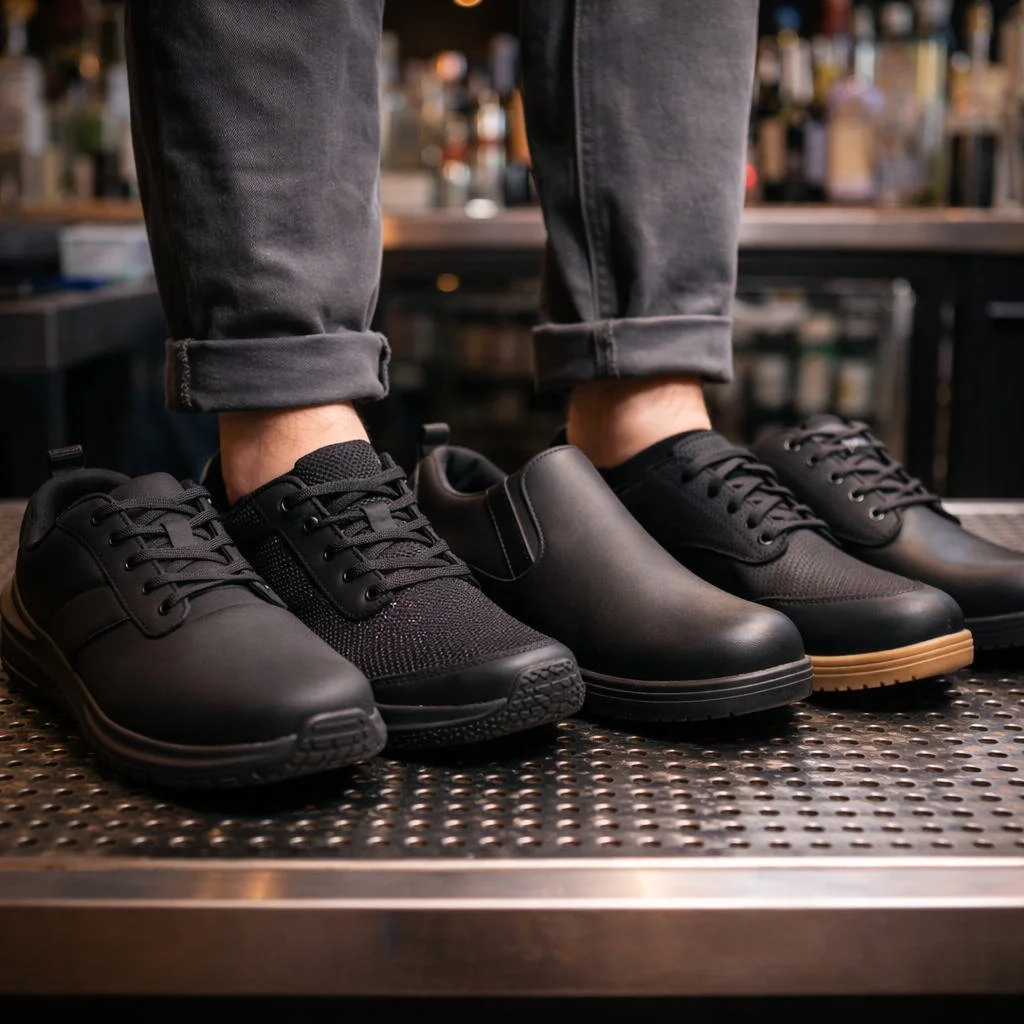
Bartending is basically a sport: concrete floors, wet spots, sudden pivots, and hours of standing with short bursts of sprinting. The right shoes don’t just feel better—they help reduce slips, knee/back pain, and that end-of-shift foot-brick feeling.
This guide covers what to look for and the best bartender shoe picks in 2026—without any fluff.
What to look for (the bartender shoe checklist)
1) Real slip resistance
You want an outsole designed for smooth, wet, greasy surfaces—not a normal running shoe tread. If it doesn’t say slip-resistant and it isn’t made for service work, assume it’s not enough.
2) Cushioning that doesn’t collapse
A lot of shoes feel amazing for two weeks and then the midsole packs down. For long shifts, you want cushioning that stays supportive.
3) Upper that handles spills
Water-resistant leather or easy-clean synthetic beats mesh every time. Beer, syrup, lime juice, and sanitizer will wreck mesh and create smells fast.
4) A stable platform
Extremely soft shoes can feel unstable when you’re moving quickly behind the bar. Look for a wide base and good heel containment.
5) Easy to clean
If you can wipe it down in 30 seconds after a shift, you’ll actually keep them in good shape.
Best bartender shoes (top picks by category)
Best overall work sneaker (maximum cushion + traction)
HOKA Bondi SR
If your main problem is foot fatigue (especially heel pain) and you want a sneaker feel, this is one of the most popular “standing all day” work shoes because it pairs big cushioning with a slip-resistant outsole and a spill-friendly upper.
Why bartenders like it
Very cushioned for long standing shifts
Water-resistant, wipeable upper
Slip-resistant outsole designed for workplace traction
Watch-outs
Bulkier than a typical sneaker
Very cushioned feel isn’t for everyone if you like a firm shoe
Best lightweight non-slip (quick movement, less “brick on your foot”)
Shoes For Crews Everlight / Everlight Pro
If you want something lighter and fast-feeling for busy shifts, this is built specifically for service work: slip resistance, easy cleaning, and a lighter profile.
Why bartenders like it
Lightweight for quick movement
Made for wet/messy work environments
Easy-clean upper
Watch-outs
Cushioning is solid, but not “max cushion” like the HOKA
Best budget pick (comfortable non-slip without premium pricing)
Skechers Squad SR
If you want a lower-cost slip-resistant sneaker, this is a very common restaurant pick because it’s comfortable, easy to find, and tends to work well for long shifts.
Why bartenders like it
Good comfort for the price
Slip-resistant work sneaker style
Easy to replace when worn out
Watch-outs
Longevity can be more variable than premium shoes (plan to replace sooner if you work lots of hours)
Best supportive clog (arch support + all-day stability)
Dansko XP 2.0
Dansko’s slip-resistant clogs are a classic in service and healthcare for a reason: they’re stable and supportive, especially if you like a firmer platform rather than a super-soft sneaker.
Why bartenders like it
Strong support and stable platform
Great for people whose feet ache from flat, hard floors
Slip-resistant versions are built for work environments
Watch-outs
Clogs feel different than sneakers
If you sprint behind the bar constantly, you may prefer a shoe with more locked-in heel feel
Best easy-clean “bar floor armor” clog (wipeable, durable)
Birkenstock Profi-style clogs
These are popular “kitchen/service” clogs because they’re durable, supportive, and designed to handle mess. Great if you want maximum wipe-clean practicality.
Why bartenders like it
Easy to clean
Supportive footbed
Built for wet/greasy environments
Watch-outs
Clog feel isn’t for everyone
Some people prefer sneaker flexibility for fast lateral movement
Quick “which should I choose?” guide
If your feet hurt the most (heel pain / plantar fasciitis vibe)
HOKA Bondi SR (maximum cushion + traction)
If you want lightweight and quick
Shoes For Crews Everlight / Everlight Pro
If you want a cheaper option that still works
Skechers Squad SR
If you want strong arch support + stable platform
Dansko XP 2.0
If you want “wipe clean, built for spills”
Birkenstock Profi-style clog
Fit tips that matter more than brand
1) Buy for the end of the shift
Your feet swell. Try shoes in the afternoon/evening and don’t size them “snug like runners.”
2) Lock your heel down
Heel slip = blisters + instability. If you’re between sizes, prioritize secure heel fit.
3) Upgrade your insoles (if needed)
Even great shoes can become elite with the right insole—especially if you have flat feet or high arches. Replace insoles regularly if you work lots of hours.
4) Rotate two pairs
Alternating pairs extends life and keeps cushioning from staying compressed every day.
5) Socks matter (seriously)
Use moisture-wicking socks with light padding. Cotton gets gross fast behind a bar.
Common mistakes bartenders make with shoes
Wearing lifestyle sneakers that slip when floors get slick
Choosing “super soft” shoes that feel unstable on fast pivots
Buying mesh uppers that soak up spills and smell fast
Keeping shoes long after the cushioning is dead (pain returns)