
Momoa returns as Hayt, a ghola of Duncan Idaho. The science-fiction explanation is straightforward; what that means for the man Paul remembers is more complicated.
Jason Momoa is back in Dune: Part Three because he plays Hayt, a ghola of Duncan Idaho: a person brought back after death through the practices of the Bene Tleilax. Duncan really did die. The return introduces a new question about who has come back, rather than revealing that the fatal fight was somehow survivable. The official film site identifies Hayt and his connection to Duncan; this is already part of the public premise.
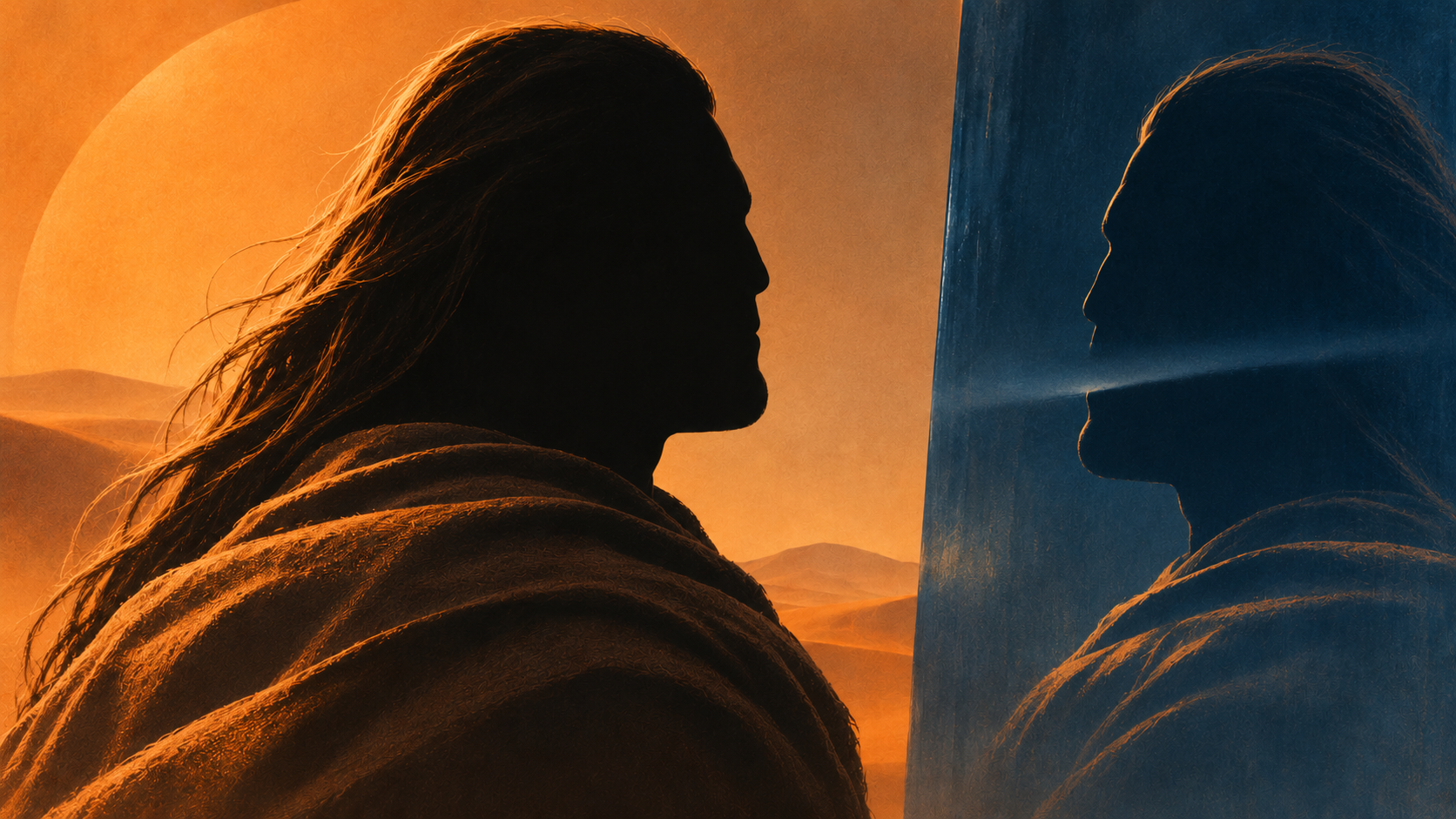
Duncan's death still happened
In the first Dune, Duncan is House Atreides' swordmaster and one of Paul's mentors. He dies protecting Paul and Lady Jessica from the Sardaukar. As Entertainment Weekly's account of Momoa's return recalls, the character sacrifices himself in the 2021 film and does not appear in Dune: Part Two.
The ghola premise accepts that loss. A return after death requires a death to return from; it does not make the original sacrifice a misunderstanding. Duncan's decision to protect Paul therefore remains part of their history, whatever happens to Hayt.
A viewer can still object that bringing a beloved character back makes death feel less final. The ghola explanation does not settle that criticism. It gives the story an opportunity to make the return carry its own cost: uncertainty about a relationship that once seemed beyond doubt.
What is a ghola, in plain English?
A ghola is Dune's means of bringing a dead person back through advanced biological techniques. In this case, the returned figure is called Hayt, and the Bene Tleilax are the people responsible.
The word “clone” gets part of the idea across. TheWrap describes Hayt as a ghola reanimated from Duncan's genetic material. It is a useful shortcut for the biological connection, but a less useful answer to whether Paul has his old friend back. A technical label cannot establish a relationship.
Nor is “resurrection” a complete explanation. In everyday language, it can suggest that a person returns with their whole life intact: the same memories, attachments and intentions. The official description deliberately leaves memory and loyalty among Hayt's open questions.
A familiar face carries several different promises
“Is it really Duncan?” sounds like one question. It contains at least three: does Hayt remember Duncan's life, does he understand himself as Duncan, and will he act with Duncan's loyalty?
Those questions are worth keeping separate. Memory concerns access to a past. Identity concerns what that past means to the person living now. Loyalty concerns what that person chooses to do. Treating them as interchangeable lets recognition settle matters it cannot actually settle.
Consider the emotional imbalance built into a reunion of this kind. The person doing the recognizing may remember years of shared experience. The returned person might not meet that history in the same way. One side can arrive with affection, gratitude and expectations before the other has established any of those things. That is the tension the premise makes possible, without needing to reveal Hayt's exact memory state or eventual choices.
It also makes the familiar actor useful beyond a simple welcome-back moment. Viewers bring their own memory of Duncan to Momoa's return. The audience can experience an echo of Paul's problem: we recognize the face and want that recognition to mean something reassuring. The story has room to ask how much reassurance it should buy.
Duncan's loyalty makes Hayt harder to judge
Duncan's remembered loyalty is exceptionally strong. He protected Paul at the cost of his life. That gives Paul a powerful emotional reason to welcome anything of Duncan that can be recovered.
It also creates a vulnerability. If a familiar person can return through someone else's intervention, the recipient has to consider the intervening party as well as the familiar face. Affection does not explain why the return was made possible, what interests surround it, or whether those interests align with Paul's.
The question is especially sharp because Duncan's sacrifice supplies such a demanding standard. Hayt can be measured against an act of absolute devotion before he has been allowed to establish who he is. From that perspective, being welcomed as a lost friend and being trapped inside someone else's expectations can look uncomfortably similar.
The return comes from Herbert's story
The basic idea predates this film. Dune: Part Three adapts Frank Herbert's Dune Messiah, published in 1969, and Hayt belongs to that source story. The third movie is not simply the third novel: the first two films covered the original Dune.
That literary background explains why a reader could expect Momoa's return. It does not establish exactly how Denis Villeneuve's film will handle every memory, relationship or later revelation.
The announced theatrical schedule puts Dune: Part Three in North American theaters and IMAX on December 18, 2026, with international releases beginning December 16. Local opening dates can differ.
Until then, the useful thing to carry into the film is the distinction Duncan's return creates. Paul knows what his friend once did for him. Hayt's presence asks whether that past can tell him whom to trust now.