
What to Eat for Breakfast on Ozempic When You’re Not Hungry
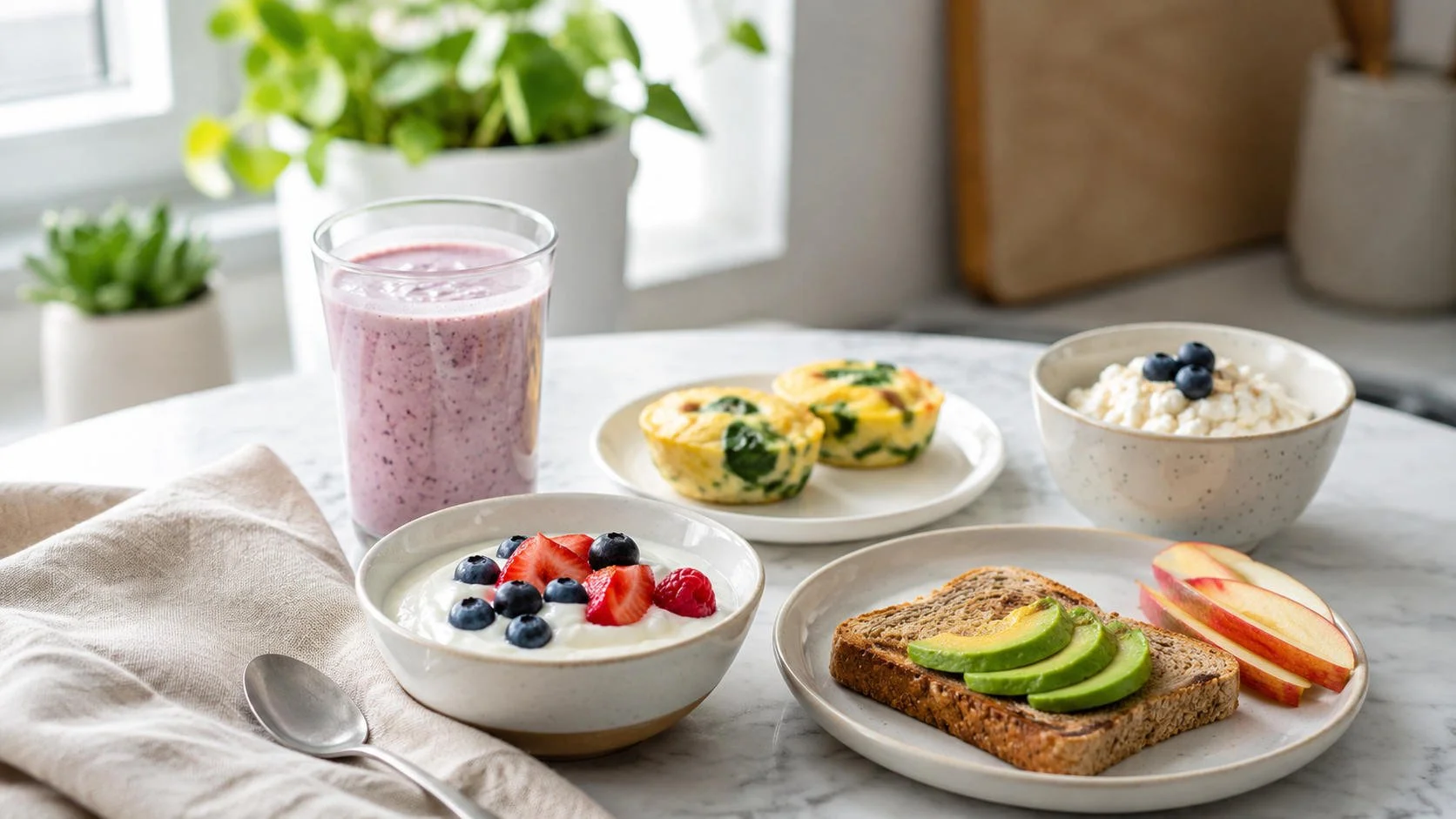
Breakfast can get weird on Ozempic.
You wake up. You know you should probably eat something. But food sounds heavy. Coffee feels risky. Eggs sound like too much. A full breakfast feels impossible. You may not be nauseous exactly, but you are not hungry either.
That is common.
Ozempic and other GLP-1 medications affect appetite and digestion. Cleveland Clinic explains that GLP-1 agonists affect hunger signals and digestion, and that food stays in the stomach longer; this can help with blood sugar and weight loss, but can also contribute to nausea, constipation, and other GI symptoms.
The goal is not to force a giant breakfast.
The goal is to get something useful into your body: fluids, protein, and a small amount of easy-to-tolerate food.
A good Ozempic breakfast when you are not hungry should be:
Small
High-protein
Easy to digest
Not greasy
Not overly sweet
Not huge in volume
Easy to split into two parts
Simple enough to eat even when food sounds unappealing
This article is not medical advice. Ozempic is a prescription medication used with diet and exercise to improve blood sugar in adults with type 2 diabetes, and the Ozempic site also notes that Ozempic is not a weight-loss drug. If you are using semaglutide for weight management, using another GLP-1 medication, taking insulin, taking sulfonylureas, pregnant, dealing with kidney disease, or having persistent nausea, vomiting, diarrhea, abdominal pain, dehydration, or low blood sugar symptoms, talk to your clinician.
Quick answer: the best breakfasts on Ozempic when you’re not hungry
If you can only handle a few bites or sips, start with one of these:
Best no-appetite breakfast
Half a protein shake
This is the easiest option when chewing feels like too much. Use water, unsweetened almond milk, fairlife-style high-protein milk, or low-fat dairy if tolerated. Start with half, wait 15 minutes, then finish the rest later.
Best real-food option
Plain Greek yogurt with berries
Greek yogurt gives protein in a small volume. A common nonfat Greek yogurt serving can be around 100 calories with most calories coming from protein, though brands vary.
Best tiny savory option
One egg plus egg whites
One large egg has about 70–72 calories and roughly 6g protein, and egg whites can add more protein without much extra fat.
Best “I feel nauseous” option
A few crackers or dry toast plus a few sips of protein drink
Novo Nordisk’s Ozempic patient support material suggests smaller, more frequent meals for nausea, light/bland foods such as saltines or plain bread, avoiding fried/greasy/sweet foods, and drinking clear or ice-cold drinks.
Best meal-prep option
Egg-white bites or mini protein muffins
Make them small. Eat one now and one later. The Mayo Clinic Diet’s GLP-1 protein meal plan specifically suggests splitting meals into smaller portions eaten a few hours apart when appetite is low.
Best “coffee first” option
Protein coffee or a latte with protein
If coffee does not worsen nausea for you, mix a protein shake into iced coffee, or use high-protein milk in coffee. Avoid making strong coffee your entire breakfast if it leaves you shaky, nauseous, or low on energy.
Best gentle carb add-on
Half a banana, a few berries, dry toast, or a small oatmeal portion
You do not need a huge carb serving. You just need enough to make the meal tolerable and steady, especially if you are also managing blood sugar.
The rule: think “small protein dose,” not “breakfast”
When you are not hungry on Ozempic, “breakfast” can feel too big.
So shrink the goal.
Instead of asking:
“What full breakfast should I eat?”
Ask:
“What small protein dose can I tolerate?”
That could be:
5 spoonfuls of Greek yogurt
Half a protein shake
One egg bite
A cottage cheese cup
A few bites of turkey roll-up
A small smoothie
A few crackers plus a protein drink
Half an overnight oats jar
A small tofu scramble
A mini breakfast wrap
This works because GLP-1 medications can reduce appetite while your body still needs protein, fluids, fiber, and micronutrients. Cleveland Clinic specifically highlights protein and fiber as key nutrients to keep on your plate while taking a GLP-1, with protein helping reduce muscle loss during weight loss and fiber helping with constipation.
The best breakfast may not be one meal.
It may be:
8:00 a.m.: half a shake
10:30 a.m.: Greek yogurt or an egg bite
That still counts.
Why breakfast feels hard on Ozempic
Ozempic can make breakfast hard for several reasons.
Your appetite is lower
This is part of how GLP-1 medications work. They affect hunger signals, and many people end up eating less. The problem is that eating less can make it harder to get enough protein, fluids, fiber, and micronutrients.
Food may sit heavier
GLP-1 medications slow stomach emptying. That can make a normal breakfast feel too large, especially early in the day. Cleveland Clinic notes that because food stays in the stomach longer, certain foods can contribute more to GI side effects.
Greasy or sweet foods can backfire
The Ozempic patient support brochure suggests avoiding fried, greasy, or sweet foods if nausea occurs. Cleveland Clinic also recommends limiting high-fat foods, added sugars, refined carbs, processed foods, and spicy foods because they can worsen GLP-1 side effects for some people.
You may be trying to eat “normally” when your stomach wants “tiny”
The Mayo Clinic Diet’s GLP-1 meal plan says it is best to avoid skipping meals, but if you cannot eat an entire meal at once, you can split it into two smaller meals eaten two to three hours apart.
That is the mindset shift.
You are not failing breakfast.
You are resizing it.
Important safety note: not eating can matter more if you have diabetes
If you take Ozempic for type 2 diabetes and also use insulin or a sulfonylurea, eating very little can be more complicated.
Ozempic’s safety information says the risk of low blood sugar may be higher when Ozempic is used with another medicine that can cause low blood sugar, such as insulin or a sulfonylurea. It lists symptoms such as dizziness, lightheadedness, blurred vision, sweating, shakiness, weakness, headache, fast heartbeat, confusion, hunger, and feeling jittery.
So if you are skipping breakfast because you are not hungry, do not guess your way through diabetes medication timing.
Ask your prescriber or diabetes educator:
What should I do if I cannot eat breakfast?
Should I check blood glucose more often?
Do I need to adjust insulin or sulfonylurea timing?
What low blood sugar symptoms should I watch for?
What is my personal “safe minimum” breakfast?
Should I carry glucose tablets or another fast carb?
The CDC says a diabetes meal plan should consider your goals, tastes, lifestyle, and medicines, and should help ensure you get the nutrition you need while keeping blood sugar in target range.
The best Ozempic breakfast formula
Use this simple formula:
Protein first + tiny volume + gentle carb or fiber + fluid
That might look like:
Greek yogurt + berries + water
Protein shake + half banana
Egg bite + dry toast
Cottage cheese + peaches
Mini smoothie + crackers
Turkey roll-up + fruit
Tofu scramble + cucumber
You do not need all food groups every morning. But over the day, you want to keep working toward protein, fluids, fiber, and enough overall nutrition.
The Obesity Society notes that a 2025 joint advisory from major lifestyle medicine, nutrition, obesity medicine, and obesity science organizations emphasized nutrition support during GLP-1 therapy, including managing GI side effects, nutrient-dense minimally processed diets, preventing micronutrient deficiencies, adequate protein intake, and strength training to preserve lean mass.
Breakfast levels: choose based on how you feel
Level 1: Food sounds impossible
Choose one:
Water or ice water
Electrolyte drink with little or no sugar
Ginger tea
Clear broth
A few sips of protein shake
A few bites of plain toast or crackers
Best move:
Sip first, then try protein 10 to 20 minutes later.
This is not a full breakfast. It is a bridge.
Level 2: You can drink but not chew
Choose one:
Half protein shake
Greek yogurt smoothie
Protein coffee
Fairlife-style protein milk
Whey or pea protein mixed with water
Smoothie with protein powder and berries
Best move:
Keep it small and thin.
Thick smoothies can feel too heavy.
Level 3: You can eat a few bites
Choose one:
Greek yogurt
Cottage cheese
One egg bite
One hard-boiled egg
A few bites of overnight oats
Half a protein bar
Turkey roll-up
Tofu scramble cup
Best move:
Eat protein first. Save the fruit, oats, or toast for later.
Level 4: You can eat a small breakfast
Choose one:
Greek yogurt bowl
Egg-white scramble
Small overnight protein oats
Mini breakfast wrap
Cottage cheese and fruit
Two egg bites
Protein smoothie with fruit
Tofu scramble with toast
Best move:
Stop before you feel stuffed.
On Ozempic, “comfortably done” can turn into “too full” quickly.
Best breakfasts on Ozempic when you’re not hungry
1. Half a protein shake
Best for: no appetite, busy mornings, nausea-prone days
Approximate target: 100–200 calories, 15–30g protein
This is the easiest breakfast when chewing feels impossible.
Use:
Whey protein
Pea protein
Ready-to-drink protein shake
High-protein milk
Unsweetened almond milk plus protein powder
Water plus protein powder
How to make it easier:
Make it thinner than usual.
Use cold water or ice.
Drink half now and half later.
Avoid adding peanut butter, cream, or lots of fruit if nausea is an issue.
Keep sweetness moderate.
Why it works:
It gives protein without a big volume of food. Protein is especially important during GLP-1-related weight loss because appetite can drop and total intake may shrink; nutrition guidance from obesity and nutrition organizations emphasizes adequate protein and strength training to preserve lean mass.
Best version:
Protein powder + cold water + ice
More filling version:
Protein powder + unsweetened milk + a few berries
Avoid:
Protein shake + peanut butter + banana + oats + honey
That can be healthy, but it may be too heavy when your appetite is low.
2. Plain Greek yogurt with berries
Best for: tiny high-protein breakfast
Approximate target: 120–250 calories, 15–25g protein
Greek yogurt is one of the best Ozempic breakfast foods because it gives a lot of protein in a small serving.
Use:
Plain nonfat Greek yogurt
Berries
Cinnamon
A small amount of high-fiber cereal, optional
A few chia seeds, optional
Keep it small:
Start with half a cup.
Eat slowly.
Add berries only if they feel good.
Avoid large amounts of granola if calories or nausea matter.
Why it works:
Greek yogurt is protein-dense, easy to portion, and gentle for many people. A nonfat Greek yogurt listing shows about 100 calories with most calories coming from protein, though exact protein depends on brand.
Best version:
Half cup Greek yogurt + berries + cinnamon
Higher-protein version:
Greek yogurt + half scoop protein powder
Nausea-friendly version:
Greek yogurt thinned with milk or water, eaten slowly
3. Cottage cheese with fruit
Best for: small breakfast, high protein, no cooking
Approximate target: 150–300 calories, 15–30g protein
Cottage cheese is another strong option because it is high-protein and easy to eat in small amounts.
Use:
Low-fat cottage cheese
Peach slices
Berries
Pineapple in small amounts
Cinnamon
Cucumber and pepper if you prefer savory
Why it works:
It is small, protein-rich, and easy to prepare. The tradeoff is sodium: cottage cheese can be much higher in sodium than Greek yogurt, so label-check if that matters for you.
Best sweet version:
Cottage cheese + peaches + cinnamon
Best savory version:
Cottage cheese + cucumber + black pepper
Nausea-friendly version:
A few spoonfuls only, then pause

4. Egg-white bites
Best for: meal prep, savory breakfast, small appetite
Approximate target: 80–200 calories, 10–25g protein depending on recipe
Egg bites are great because they are small.
You can eat one, wait, and then eat another later.
Basic recipe:
Egg whites
One whole egg, optional
Low-fat cottage cheese or Greek yogurt
Spinach
Turkey slices or chicken sausage, optional
Salt, pepper, garlic powder
Bake in a muffin tin.
Why it works:
One large egg is around 70–72 calories with about 6g protein, and egg whites let you raise protein without adding much fat.
Best version:
Egg whites + cottage cheese + spinach
More filling version:
Egg whites + one whole egg + turkey
Nausea-friendly version:
One small egg bite, eaten slowly, with water
Meal prep note:
Refrigerate cooked egg dishes and use within 3 to 4 days; the FDA says cooked egg dishes should be reheated to 165°F before serving later.
5. Protein overnight oats, but make the jar tiny
Best for: people who need some carbs in the morning
Approximate target: 200–350 calories, 15–30g protein
Overnight oats can work on Ozempic, but the portion matters.
A normal influencer-sized oats jar may feel impossible.
Make a half-size jar.
Use:
1/4 cup oats
1/2 cup Greek yogurt
1/4 to 1/2 scoop protein powder
Cinnamon
A few berries
Milk or water to thin
Why it works:
It gives protein plus a gentle carb source. Mayo Clinic Diet’s GLP-1 sample meal plan includes overnight oats and also suggests smaller, easy-to-consume meals for low-appetite periods.
Best version:
Mini protein oats jar
Not ideal:
Huge oats jar with peanut butter, banana, granola, and honey
That can be nutritious, but too heavy when appetite is low.
6. Protein coffee
Best for: coffee people who cannot face food yet
Approximate target: 100–250 calories, 15–30g protein
Protein coffee can work if coffee does not worsen your nausea or reflux.
Options:
Iced coffee + ready-to-drink protein shake
Coffee + high-protein milk
Coffee + protein powder, blended
Decaf coffee + protein shake
Tips:
Start iced if hot coffee feels harsh.
Do not drink it too fast.
Avoid very sweet creamers.
Avoid using coffee as your only fluid.
Why it works:
It turns a normal habit into a protein opportunity.
What to watch:
If coffee on an empty stomach makes you nauseous, shaky, acidic, or anxious, switch to water, tea, or a protein shake first.
7. One egg plus egg whites
Best for: small savory breakfast
Approximate target: 150–250 calories, 20–30g protein depending on egg whites
This is a good option when you want something warm but not huge.
Use:
One whole egg
1/2 cup egg whites
Spinach or peppers
Salsa
Optional low-fat cheese
Why it works:
The whole egg gives flavor and texture. The egg whites add protein without much extra fat.
Best version:
One egg + egg whites + spinach + salsa
Nausea-friendly version:
Soft scramble, small portion, no heavy oil
Avoid:
Greasy fried eggs with sausage, bacon, hash browns, and heavy coffee
Greasy foods are more likely to worsen symptoms for some people on GLP-1s.
8. Mini turkey breakfast wrap
Best for: people who need something solid but small
Approximate target: 200–350 calories, 15–30g protein
A full breakfast burrito may be too much.
Make a mini version.
Use:
Small tortilla
Egg whites or one egg
Turkey slices or chicken sausage
Salsa
Spinach
Optional low-fat cheese
Why it works:
It is portable and easy to split.
Eat half now. Save half for later.
Best version:
Egg whites + turkey + salsa in a small tortilla
What to avoid:
Large tortilla
Lots of cheese
Bacon grease
Sour cream
Fried potatoes
9. Smoked salmon cucumber plate
Best for: low-volume, high-protein breakfast
Approximate target: 150–300 calories, 15–30g protein
This is a good option if eggs and dairy sound bad.
Use:
Smoked salmon
Cucumber slices
Low-fat cream cheese or Greek yogurt spread
A few crackers or half a slice of toast
Lemon
Why it works:
It is salty, cold, and small. That can be easier than warm food for some people.
What to watch:
Sodium
Strong smell
Reflux triggers
Cream cheese calories
Best version:
Smoked salmon + cucumber + Greek yogurt dill spread
10. Tofu scramble cup
Best for: plant-based protein breakfast
Approximate target: 200–350 calories, 15–30g protein depending on tofu amount
A tofu scramble can be easier than eggs for some people.
Use:
Firm or extra-firm tofu
Turmeric
Garlic powder
Nutritional yeast
Spinach
Salsa
Salt and pepper
Why it works:
It is soft, savory, and meal-prep friendly.
Best version:
Tofu + spinach + salsa
More protein:
Add edamame or a side of soy yogurt if tolerated.
Watch out:
Tofu is not always as protein-dense per calorie as whey, Greek yogurt, shrimp, or chicken, but it is one of the better plant-based breakfast proteins.
11. Egg drop soup or broth with protein
Best for: nausea-prone mornings
Approximate target: 100–250 calories, 10–25g protein
Breakfast does not have to be breakfast food.
If you wake up nauseous, warm broth may be easier than eggs, oats, or yogurt.
Options:
Bone broth
Egg drop soup
Chicken broth with shredded chicken
Miso broth with tofu
Clear soup with egg whites
Why it works:
It is warm, salty, hydrating, and small.
This can be useful because Ozempic-related nausea, vomiting, and diarrhea can contribute to dehydration; Ozempic patient information specifically says nausea, vomiting, and diarrhea can cause dehydration and that drinking fluids is important.
Best version:
Broth + egg whites or shredded chicken
12. Two-part breakfast
Best for: people who cannot eat early
Approximate target: flexible
This may be the most realistic option.
Part one:
Protein shake
Greek yogurt
Egg bite
Broth
Cottage cheese
Part two, two or three hours later:
Fruit
Oats
Toast
Second egg bite
Turkey wrap
Yogurt
Mayo Clinic Diet’s GLP-1 meal plan explicitly suggests splitting a meal into two smaller meals if you cannot eat an entire meal in one go.
Best example:
8:00 a.m.: half protein shake
10:30 a.m.: egg bite or yogurt
That may work better than forcing a full plate at 7:30 a.m.
What to eat if you are nauseous in the morning
When nausea is the issue, do not start with a high-fat breakfast.
Start small and bland.
Good options:
Saltines
Plain toast
Dry cereal
Applesauce
Banana
Ice water
Ginger tea
Clear broth
Half protein shake
Greek yogurt, if tolerated
Small smoothie
Egg bite, if tolerated
Novo Nordisk’s Ozempic patient support material recommends slowly eating smaller, more frequent meals, choosing light and bland foods such as saltine crackers or plain bread, avoiding fried, greasy, or sweet foods, and drinking clear or ice-cold drinks when nausea occurs.
A good nausea breakfast might be:
A few crackers + half a protein shake
Plain toast + Greek yogurt later
Ice water + egg bite later
Broth + cottage cheese later
The goal is not to eat a perfect breakfast.
The goal is to avoid an empty, dehydrated, protein-free morning.
What to avoid for breakfast on Ozempic when appetite is low
Greasy breakfast foods
Examples:
Fried bacon-heavy breakfast
Sausage and hash browns
Fried egg sandwiches
Greasy breakfast burritos
Fast-food breakfast platters
High-fat foods can worsen GLP-1 side effects for some people because food remains in the stomach longer.
Very sweet breakfasts
Examples:
Donuts
Pastries
Sugary cereal
Syrup-heavy pancakes
Sweet coffee drinks
Candy-like protein bars
Novo’s nausea tips include avoiding sweet foods if nausea occurs, and Cleveland Clinic recommends limiting added sugar while taking a GLP-1.
Huge smoothies
A smoothie can be great.
But this may be too much:
Protein powder
Banana
Peanut butter
Oats
Yogurt
Honey
Whole milk
Chia seeds
That can become a 600-calorie meal that feels heavy in your stomach.
Better:
Protein powder + water + ice + a few berries
Big coffee on an empty stomach
Coffee is not automatically bad.
But if it worsens nausea, reflux, shakiness, or anxiety, do not make it your first and only breakfast.
Try:
Water first
Smaller coffee
Iced coffee
Protein coffee
Decaf
Food first, coffee later
Very high-fiber breakfasts all at once
Fiber matters, especially because constipation can happen on GLP-1s. Cleveland Clinic specifically notes that fiber can help combat constipation.
But if you are already nauseous or bloated, a giant bowl of bran cereal, beans, seeds, oats, and raw vegetables may be too much.
Build fiber gradually.
Best meal-prep breakfasts for Ozempic
1. Mini egg-white bites
Make:
Egg whites
One or two whole eggs
Cottage cheese
Spinach
Turkey or chicken sausage
Salsa
Prep:
Bake in muffin tins.
Store in the fridge.
Eat one or two at a time.
Food safety:
The FDA says cooked egg dishes should be refrigerated and used within 3 to 4 days, and reheated to 165°F if serving later.
2. Tiny protein oats jars
Make:
1/4 cup oats
Greek yogurt
Protein powder
Cinnamon
Berries
Prep:
Make half-size jars.
Store 3 to 4 days.
Eat half if needed.
3. Greek yogurt protein cups
Make:
Greek yogurt
Berries
Cinnamon
Optional protein powder
Prep:
Portion into small containers.
Keep toppings separate if you want texture.
Use plain yogurt to avoid added sugar.
4. Smoothie freezer packs
Make freezer bags with:
Berries
Spinach
Half banana, optional
At breakfast:
Add protein powder
Add water or milk
Blend thin
5. Turkey breakfast wraps
Make:
Small tortilla
Egg whites
Turkey
Spinach
Salsa
Prep:
Wrap individually.
Refrigerate or freeze.
Reheat gently.
6. Cottage cheese cups
Make:
Cottage cheese
Fruit or cucumber
Cinnamon or pepper
Prep:
Portion small.
Keep fruit separate if it gets watery.
7. Protein soup cups
Make:
Broth
Shredded chicken or tofu
Egg whites or egg ribbons
Spinach
Prep:
Store in small containers.
Reheat gently.
Good for nausea-prone mornings.
Leftovers in general are best used within 3 to 4 days in the refrigerator or frozen for longer storage, according to USDA guidance.
Breakfast ideas by calorie target
Under 150 calories
Good options:
Half protein shake
Small Greek yogurt cup
One egg bite
One hard-boiled egg plus a few berries
Broth with egg whites
Cottage cheese mini cup
A few crackers plus protein drink sips
Best for:
Very low appetite mornings.
150 to 250 calories
Good options:
Greek yogurt with berries
Cottage cheese and fruit
Protein coffee
Two egg-white bites
One egg plus egg whites
Half mini turkey wrap
Small smoothie with protein
Smoked salmon cucumber plate
Best for:
Small but useful breakfast.
250 to 400 calories
Good options:
Full protein smoothie
Mini overnight protein oats
Egg-white scramble with toast
Turkey breakfast wrap
Greek yogurt bowl with protein powder
Tofu scramble with toast
Cottage cheese bowl plus fruit
Two-part breakfast split over the morning
Best for:
More normal appetite, but still Ozempic-friendly.
Breakfast ideas by symptom
If you feel nauseous
Try:
Ice water
Ginger tea
Crackers
Dry toast
Half protein shake
Broth
Small yogurt portion
Banana
Applesauce
Avoid:
Greasy food
Fried breakfast
Very sweet drinks
Large portions
Strong smells
Eating too fast
If you feel constipated
Try:
Water
Oats in a small serving
Berries
Chia in a small amount
Kiwi
Ground flax in a small amount
Vegetables later in the day
Walking after meals
Cleveland Clinic notes that fiber can help with constipation on GLP-1s, but increase slowly if your stomach is sensitive.

If you feel weak or shaky
Do not assume it is just “not eating enough.”
If you have diabetes, check your blood sugar if you have been told to monitor it. Ozempic’s safety information warns that low blood sugar risk may be higher when it is combined with insulin or a sulfonylurea, and lists symptoms such as dizziness, sweating, shakiness, weakness, fast heartbeat, confusion, hunger, and feeling jittery.
Talk to your clinician about what to do on mornings when you cannot eat.
If protein feels too heavy
Try:
Smaller servings
Thinner shakes
Greek yogurt thinned with milk
Broth plus egg whites
Cottage cheese in a tiny portion
Protein split into two mini-meals
Avoid large meat portions first thing
If coffee makes it worse
Try:
Water first
Decaf
Iced coffee
Protein shake before coffee
Tea
Smaller coffee serving
What to do if you truly cannot eat breakfast
Some days, breakfast may not happen.
That does not mean you should panic.
But you should have a plan.
Step 1: Hydrate first
Start with:
Water
Ice water
Ginger tea
Electrolyte drink
Broth
This matters because nausea, vomiting, and diarrhea can cause dehydration, and Ozempic’s patient information specifically warns about dehydration from digestive side effects.
Step 2: Try a tiny protein dose
Try:
Three sips of protein shake
Two spoonfuls of Greek yogurt
One egg bite
One bite of turkey
One spoonful of cottage cheese
Wait 10 to 20 minutes.
Step 3: Split breakfast
Do not force a full meal.
Eat part now and part later.
The Mayo Clinic Diet GLP-1 meal plan suggests splitting meals into two smaller meals two to three hours apart if you cannot eat a full meal at once.
Step 4: Watch for red flags
Call your healthcare provider if nausea, vomiting, diarrhea, or stomach pain does not go away. Ozempic’s safety information says dehydration from nausea, vomiting, and diarrhea can lead to kidney problems, and it also tells patients to contact a healthcare provider for severe or persistent stomach problems.
Seek urgent care or follow your clinician’s instructions if you have severe, persistent abdominal pain, especially with vomiting, because Ozempic’s safety information warns that pancreatitis symptoms can include severe stomach pain that does not go away, sometimes radiating to the back.
The “Ozempic breakfast plate” when you can eat normally
When appetite returns, use a simple structure.
Protein
Pick one:
Greek yogurt
Cottage cheese
Eggs or egg whites
Turkey
Chicken
Tofu
Smoked salmon
Protein shake
Protein oats
Gentle fiber or carb
Pick one:
Berries
Small oats portion
Half banana
One slice toast
Small wrap
Chia in a small amount
Apple slices
Beans or lentils later in the day if tolerated
Fluid
Pick one:
Water
Ice water
Tea
Coffee, if tolerated
Electrolyte drink
Broth
Optional fat, small amount
Pick one:
A few nuts
Small avocado portion
Small peanut butter portion
One whole egg
A little olive oil
A little cheese
Fat is not bad. But high-fat meals can worsen GI symptoms for some people on GLP-1s, so keep breakfast fat modest if you are nausea-prone.
Sample 5-day Ozempic breakfast plan for low appetite
Day 1
Half protein shake
Later:
Greek yogurt with berries
Best for:
A very low-appetite morning.
Day 2
One egg-white bite
Later:
Half mini overnight oats jar
Best for:
A morning when you can eat a little but not much.
Day 3
Cottage cheese with peaches
Later:
Coffee or tea
Best for:
A no-cook breakfast.
Day 4
Protein coffee
Later:
Turkey roll-up
Best for:
A busy morning.
Day 5
Broth with egg whites
Later:
Small Greek yogurt
Best for:
A nausea-prone morning.
Best grocery list for Ozempic breakfasts
Keep these on hand:
Plain Greek yogurt
Cottage cheese
Egg whites
Eggs
Protein powder
Ready-to-drink protein shakes
Turkey slices
Smoked salmon
Tofu
Berries
Bananas
Applesauce
Oats
Small tortillas
Crackers
Dry toast
Ginger tea
Electrolyte packets
Broth
Chia seeds
Cinnamon
Salsa
Cucumber
This list gives you options for both normal mornings and “I cannot deal with food” mornings.
Common mistakes
Mistake 1: Skipping protein all morning
If you are not hungry, it is easy to skip breakfast and then realize later that you have eaten almost no protein all day.
Better:
Get a small protein dose early, even if it is just half a shake.
Mistake 2: Forcing a full meal
Forcing a large breakfast can make nausea and fullness worse.
Better:
Split breakfast into two mini-meals.
Mistake 3: Starting with greasy food
Fried, greasy foods are more likely to worsen nausea for some people on Ozempic. Novo’s nausea tips specifically say to avoid fried, greasy, or sweet foods if nausea occurs.
Better:
Greek yogurt, shake, egg bite, toast, broth, or cottage cheese.
Mistake 4: Making smoothies too big
Smoothies can become huge fast.
Better:
Protein powder + water or milk + a few berries.
Mistake 5: Ignoring fluids
Low appetite can mean low fluid intake too.
Better:
Start with water or ice water before worrying about food.
Mistake 6: Not adjusting for diabetes medications
If you take insulin or sulfonylureas, skipping meals can be more serious.
Better:
Ask your clinician what to do on mornings when you cannot eat.
Mistake 7: Treating “not hungry” as the same as “well-nourished”
Ozempic can lower appetite, but your body still needs nutrients. The 2025 nutrition advisory for GLP-1 therapy emphasizes nutrient-dense diets, prevention of deficiencies, adequate protein, and strength training as part of care.
What this does not mean
This article does not mean:
Everyone on Ozempic must eat breakfast.
You should force food when you are nauseous.
A protein shake is required.
Carbs are bad.
Fat is bad.
Coffee is bad.
You should ignore low blood sugar symptoms.
You should change diabetes medication without your clinician.
You should keep taking Ozempic through severe symptoms without medical advice.
This is personalized nutrition or medical guidance.
It means this:
When you are not hungry on Ozempic, a tiny, protein-focused breakfast is usually more realistic than a full meal. Start with fluids, choose small portions, prioritize protein, avoid greasy or very sweet foods if nausea is present, and split breakfast into two mini-meals if needed.
FAQ
What should I eat for breakfast on Ozempic if I’m not hungry?
Start with something small and protein-focused: half a protein shake, Greek yogurt, cottage cheese, an egg bite, a small smoothie, or one egg plus egg whites. If you feel nauseous, start with water, crackers, toast, broth, or a few sips of protein drink.
Is it okay to skip breakfast on Ozempic?
Some people naturally eat later because appetite is lower. But if you skip breakfast regularly and struggle to get enough protein, fluids, fiber, or calories later, it may backfire. The Mayo Clinic Diet GLP-1 plan suggests avoiding skipped meals when possible and splitting meals into smaller portions if you cannot eat all at once.
What if I have diabetes and cannot eat breakfast?
Talk to your clinician, especially if you use insulin or a sulfonylurea. Ozempic’s safety information says low blood sugar risk may be higher when Ozempic is used with medicines such as insulin or sulfonylureas.
What breakfast is easiest on nausea?
Try small, bland, low-fat options: crackers, plain toast, applesauce, banana, broth, ice water, ginger tea, Greek yogurt in a small portion, or half a protein shake. Novo’s Ozempic support material suggests smaller, frequent meals, bland foods, avoiding greasy/sweet foods, and clear or ice-cold drinks for nausea.
Is Greek yogurt good on Ozempic?
Yes, for many people. It is high in protein, small in volume, and easy to portion. Choose plain Greek yogurt if you want less added sugar.
Are eggs good on Ozempic?
Eggs can work well, especially in small portions. A large egg has about 70–72 calories and roughly 6g protein. Egg whites can increase protein without adding much fat.
Is oatmeal good on Ozempic?
It can be. Keep the portion small and add protein. A tiny overnight oats jar with Greek yogurt or protein powder is usually better than a large bowl of oats with lots of nut butter, honey, and granola.
Can I drink coffee on Ozempic?
Many people can. But if coffee worsens nausea, reflux, shakiness, or low appetite, try water first, smaller coffee, iced coffee, decaf, or protein coffee. Do not rely on coffee as your only breakfast if it leaves you feeling weak.
What should I avoid for breakfast on Ozempic?
If you are nausea-prone, avoid greasy, fried, very sweet, very spicy, or very large meals. Cleveland Clinic notes that high-fat, spicy, sugary, refined-carb, and processed foods can worsen GLP-1 side effects for some people.
When should I call my doctor?
Call your healthcare provider if nausea, vomiting, diarrhea, or stomach pain does not go away; if you have signs of dehydration; if you have severe stomach problems; or if you have symptoms of low blood sugar. Seek urgent help for severe, persistent abdominal pain, especially with vomiting, because pancreatitis is a serious warning listed in Ozempic safety information.
Final takeaway
When you are on Ozempic and not hungry in the morning, the best breakfast is not a giant plate of food.
It is a small, strategic protein dose.
Start with:
Half a protein shake
Greek yogurt
Cottage cheese
Egg-white bites
One egg plus egg whites
Tiny protein oats
Protein coffee
Broth with egg or chicken
Mini turkey wrap
Smoked salmon cucumber plate
Two-part breakfast split across the morning
The simplest rule:
Fluids first. Protein second. Tiny portions. Avoid greasy or very sweet foods if nausea is present. Split breakfast if needed.
For most people, the best practical breakfasts are:
Half a protein shake when food sounds impossible.
Greek yogurt when you can eat a few spoonfuls.
Egg bites when you want something savory.
Mini protein oats when you need gentle carbs.
Soup or broth when nausea is the main issue.
And if you have diabetes, use insulin, take a sulfonylurea, or have symptoms that do not go away, do not try to solve it with breakfast alone.
Talk to your clinician.