
High-Protein, Low-Calorie Indian Food You Can Meal Prep at Home
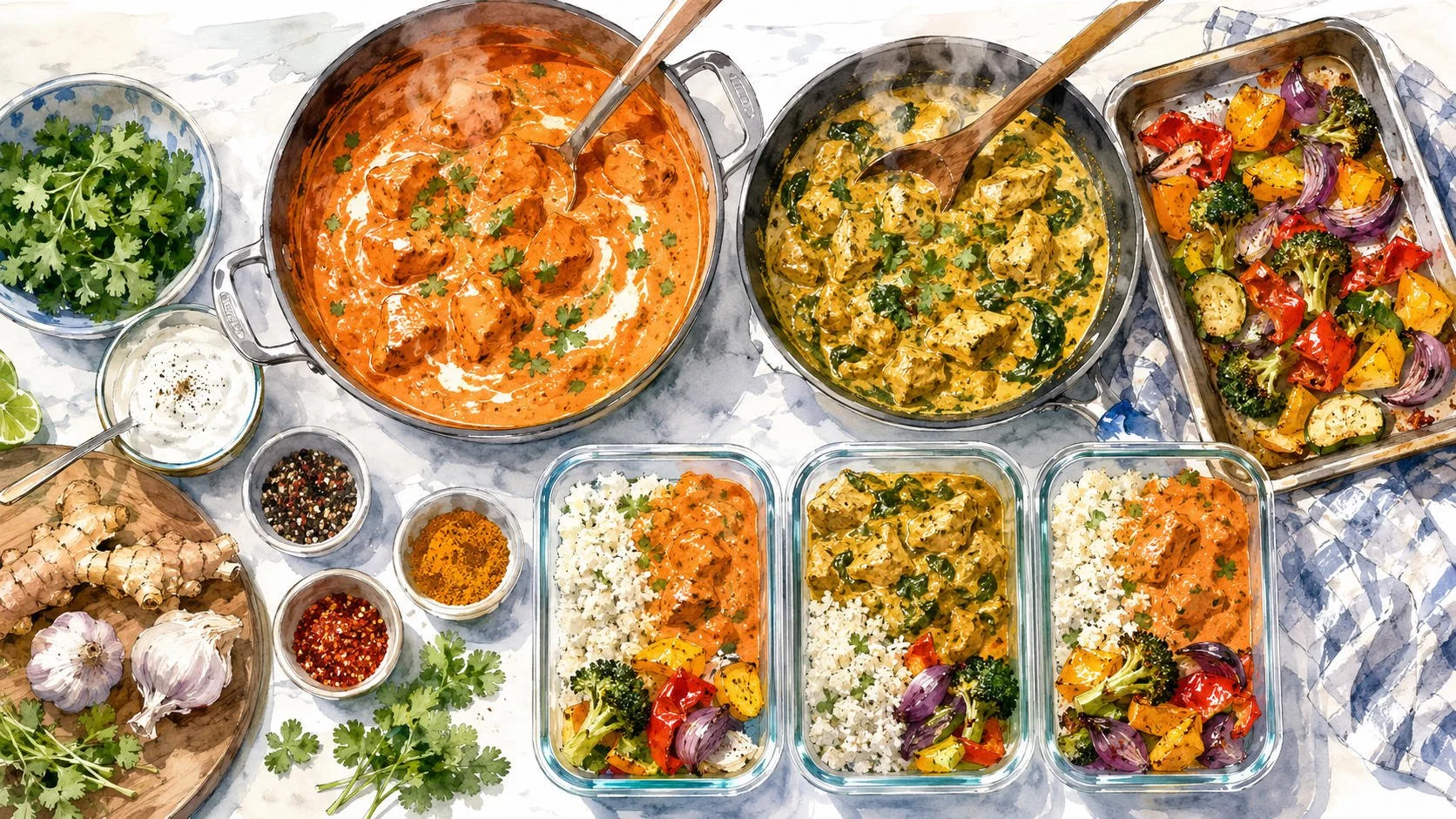
Indian food can be one of the best cuisines for meal prep.
It is flavorful. It reheats well. It works in big batches. The sauces get better overnight. A curry can become lunch for four days. A pot of dal can become dinner, a side, or a high-fiber base. Tandoori-style chicken can go into bowls, wraps, salads, or cauliflower rice plates.
But restaurant-style Indian food can also get high-calorie fast.
The problem is usually not the spices. The problem is the extras: ghee, butter, cream, oil, coconut milk, cashews, paneer, naan, rice, fried pakoras, and big portions. One tablespoon of ghee is about 112 calories, heavy cream is about 101 calories per fluid ounce, and one cup of cooked white rice is about 205 calories before you even count the curry.
The good news is that you can keep the flavor and cut a lot of calories.
The trick is to build Indian food around:
Lean protein
Tomato-based sauces
Greek yogurt instead of heavy cream
Measured oil or ghee
Big spice flavor
Blended onions, tomatoes, spinach, or cauliflower for body
Cauliflower rice or half-rice bowls
Smaller portions of calorie-dense ingredients
Meal-prep-friendly sauces that do not fall apart
This guide focuses on popular American Indian-restaurant favorites: butter chicken, chicken tikka masala, chicken curry, saag, chana masala, dal, korma-style curry, tandoori chicken, and keema.
This is not medical advice or a personalized diet plan. Protein needs vary by body size, activity level, age, health status, and goals. As a general baseline, HealthLinkBC says healthy adults 19 and older need about 0.8 grams of protein per kilogram of body weight per day, though active people may aim higher.
Quick answer: how to make Indian food high-protein and low-calorie
If you want the simplest formula, use this:
Lean protein + tomato/spice sauce + Greek yogurt + measured oil + vegetables + cauliflower rice or half rice.
The best high-protein Indian meal-prep ingredients are:
Chicken breast
Shrimp
Lean ground turkey
Extra-lean ground chicken
Egg whites
Nonfat Greek yogurt
White fish
Tofu
Lentils, especially when paired with lean protein
Chickpeas, especially in smaller portions or paired with chicken
Low-fat cottage cheese or blended cottage cheese, if you want a paneer-like creamy effect
Cooked chicken breast is one of the strongest bases because a 100g cooked chicken breast listing shows 157 calories, with most calories coming from protein.
The biggest calorie-saving swaps are:
Use 0% Greek yogurt instead of heavy cream.
Use 1 tablespoon ghee for the whole batch, not several tablespoons.
Use tomato puree, crushed tomatoes, or blended roasted vegetables for sauce body.
Use chicken breast or shrimp instead of paneer, lamb, or high-fat meat.
Use light coconut milk only when coconut flavor is important.
Serve over cauliflower rice or half cauliflower rice, half basmati rice.
Add creaminess at the end, off heat, so yogurt does not split.
Freeze sauce and protein in portions.
A 1-cup listing for riced cauliflower shows about 20 calories, compared with about 205 calories for a cup of cooked white rice, so the rice base is one of the easiest places to lower calories without changing the curry itself.
Why restaurant-style Indian food gets high-calorie
Indian food itself is not automatically high-calorie.
A home-cooked dal, tandoori chicken plate, grilled fish curry, or spinach chicken can be very reasonable.
The calorie load usually comes from restaurant-style choices:
Butter chicken with butter and cream
Tikka masala with cream and oil
Korma with cream, coconut, or cashew paste
Saag paneer with full-fat paneer and ghee
Large servings of rice
Naan or garlic naan
Fried samosas, pakoras, or bhajis
Large portions of oil in the base sauce
Creamy sauces finished with butter
Multiple dishes eaten together
The important point:
You do not need to remove the spices. You need to control the fat, starch, and portion size.
Spices like garam masala, cumin, coriander, turmeric, chili powder, fenugreek, cardamom, cinnamon, garlic, ginger, and kasuri methi add huge flavor for very few calories. The flavor problem happens when people remove butter, cream, and oil but do not replace the richness with enough aromatics, acid, salt, heat, and texture.
The high-protein, low-calorie Indian cooking rules
Rule 1: Use lean protein as the center
Best options:
Chicken breast
Shrimp
Turkey breast or extra-lean ground turkey
White fish
Extra-firm tofu
Egg whites
Low-fat Greek yogurt as a sauce ingredient
Lentils or chickpeas paired with lean protein
Chicken breast and shrimp are the most efficient. Lentils and chickpeas are nutritious, filling, and meal-prep friendly, but they are not as protein-dense per calorie as chicken or shrimp. One cup of cooked lentils is listed around 230 calories and provides fiber and plant protein, but most of its calories still come from carbohydrates.
Rule 2: Measure the oil or ghee
A lot of Indian flavor comes from blooming spices in fat.
That does not mean you need half a cup of oil.
For meal prep, use:
1 tablespoon oil or ghee for a 4-serving batch
Cooking spray plus 1 teaspoon oil for a very lean batch
A splash of chicken broth or water to keep onions from sticking
A nonstick pan or Dutch oven
The goal is not zero fat. The goal is controlled fat.
Rule 3: Replace cream with Greek yogurt
Plain nonfat Greek yogurt is one of the best tools for lighter Indian food. It adds tang, creaminess, and protein without acting like heavy cream. Dietitian-facing nutrition sources commonly describe Greek yogurt as a high-protein food, often around 15–17g protein per 6-ounce serving, depending on brand and fat level.
How to use it:
Add it off heat.
Stir slowly.
Do not boil aggressively after adding.
Temper it with a spoonful of hot sauce before mixing it into the pot.
Use plain, unsweetened yogurt only.
Rule 4: Build sauce body without cream
Use these instead:
Crushed tomatoes
Tomato paste
Blended onions
Blended roasted cauliflower
Blended spinach
Blended Greek yogurt
Pumpkin puree for korma-style sauce
Cashews only in small measured amounts
Light coconut milk when needed
A thick sauce does not need to be high-calorie.
Rule 5: Use cauliflower rice or half rice
You do not have to give up rice.
A good compromise:
Half basmati rice + half cauliflower rice
This keeps the meal feeling like Indian takeout while cutting a lot of calories.
If you want the lowest-calorie version:
All cauliflower rice
If you want a training-day version:
Regular basmati rice, measured
Rule 6: Make the sauce intense
Lower-calorie Indian food fails when it tastes watered down.
Use enough:
Garlic
Ginger
Garam masala
Cumin
Coriander
Chili powder
Paprika
Turmeric
Salt
Lemon juice
Lime juice
Kasuri methi
Cilantro
Green chili
Tomato paste
If you cut fat, you need to increase seasoning precision.
Meal-prep safety rules
Most Indian curries meal prep well, but they still need safe storage.
The USDA says leftovers can be kept in the refrigerator for 3 to 4 days or frozen for 3 to 4 months. Health Canada similarly lists cooked dishes containing meat and vegetables at 3 to 4 days in the fridge, and cooked poultry at 3 to 4 days in the fridge.
For chicken, poultry should reach a safe internal temperature of 165°F / 74°C. Foodsafety.gov also says reheated leftovers should reach 165°F / 74°C.
Meal prep rules:
Cool curry in shallow containers.
Refrigerate within 2 hours.
Keep fridge at 40°F / 4°C or below.
Eat refrigerated meals within 3 to 4 days.
Freeze extra portions.
Reheat only what you plan to eat.
Add Greek yogurt after reheating if you want the smoothest texture.
Store rice separately if possible.
For freezer meals:
Butter chicken freezes well.
Chicken curry freezes well.
Tikka masala freezes well.
Keema freezes very well.
Dal freezes well.
Saag can freeze, but may release water.
Yogurt-based sauces may separate slightly, but stirring usually fixes them.
Add fresh lemon, cilantro, or yogurt after reheating.
Recipe 1: High-Protein Butter Chicken
This is the main recipe to master.
It gives you the butter chicken flavor profile without turning the sauce into a cream-and-butter calorie bomb.
What makes it lighter
Traditional restaurant-style butter chicken often uses butter, cream, and a rich tomato base. This version keeps a small amount of butter or ghee for flavor, then uses crushed tomatoes and Greek yogurt for body.
Makes
4 meal-prep servings
Approximate macros
Per serving, without rice:
Calories: about 300–350
Protein: about 40–50g
Carbs: about 15–20g
Fat: about 8–12g
Macros vary by chicken weight, yogurt brand, and how much butter or ghee you use.
Ingredients
2 lb boneless skinless chicken breast, cut into bite-size pieces
1 tablespoon ghee or butter
1 large onion, finely diced
4 cloves garlic, minced
1 tablespoon grated ginger
2 tablespoons tomato paste
1 large can crushed tomatoes
1/2 cup plain nonfat Greek yogurt
1/2 cup chicken broth or water
1 tablespoon garam masala
1 teaspoon cumin
1 teaspoon coriander
1 teaspoon paprika
1/2 teaspoon turmeric
1/2 teaspoon chili powder, or to taste
1 teaspoon kasuri methi, crushed, optional but highly recommended
Salt to taste
Lemon juice to finish
Cilantro to finish
Instructions
Heat the ghee or butter in a large pan.
Add onion and cook until soft and golden.
Add garlic and ginger. Cook for 1 minute.
Add tomato paste and spices. Cook for 1 to 2 minutes so the spices bloom.
Add crushed tomatoes and broth.
Simmer 10 minutes.
Blend the sauce if you want a smoother restaurant-style texture.
Add chicken and simmer until fully cooked.
Turn off heat.
Stir in Greek yogurt slowly.
Add kasuri methi, lemon juice, and cilantro.
Portion into containers.
Meal-prep notes
This is one of the best freezer recipes in the article.
For best texture:
Freeze without rice.
Reheat gently.
Add a spoonful of fresh Greek yogurt after reheating if the sauce looks grainy.
Serve with cauliflower rice, half rice, or a measured portion of basmati rice.
Best sides
Lowest-calorie:
Cauliflower rice + cucumber salad
Balanced:
Half basmati rice + half cauliflower rice
Higher-carb:
Measured basmati rice
Recipe 2: Low-Calorie Chicken Tikka Masala
Chicken tikka masala is one of the most popular American Indian-restaurant dishes.
The lighter version depends on two things:
Marinate the chicken well, then keep the sauce tomato-y instead of creamy.
Makes
4 servings
Approximate macros
Per serving, without rice:
Calories: about 330–380
Protein: about 45g
Carbs: about 15–25g
Fat: about 8–12g
Ingredients
For the chicken:
2 lb boneless skinless chicken breast
1/2 cup plain nonfat Greek yogurt
1 tablespoon lemon juice
2 teaspoons garam masala
1 teaspoon cumin
1 teaspoon paprika
1 teaspoon turmeric
1 teaspoon salt
1 tablespoon grated ginger
3 cloves garlic, minced
For the sauce:
1 teaspoon oil or ghee
1 onion, diced
2 tablespoons tomato paste
1 large can crushed tomatoes
1/2 cup chicken broth
1 teaspoon garam masala
1 teaspoon coriander
1/2 teaspoon chili powder
1/2 cup plain nonfat Greek yogurt
Lemon juice
Cilantro
Instructions
Mix the chicken with yogurt, lemon, garlic, ginger, and spices.
Marinate at least 30 minutes, or overnight.
Bake, grill, or air-fry the chicken until cooked.
In a pot, cook onion in 1 teaspoon oil or ghee.
Add tomato paste and spices.
Add crushed tomatoes and broth.
Simmer 10 to 15 minutes.
Add cooked chicken.
Turn off heat and stir in Greek yogurt.
Finish with lemon and cilantro.
Meal-prep notes
This reheats very well.
For best results:
Store sauce and chicken together.
Store rice separately.
Add yogurt after reheating if you want the smoothest sauce.
Freeze in single portions.
Why it works
The yogurt marinade gives you tenderness and tang without needing heavy cream. The tomato paste and spices keep the sauce bold.
Recipe 3: Simple High-Protein Chicken Curry
This is the everyday curry.
Not butter chicken. Not tikka masala. Just a clean, spicy, tomato-onion chicken curry you can eat all week.
Makes
4 servings
Approximate macros
Per serving, without rice:
Calories: about 280–340
Protein: about 40–50g
Carbs: about 12–18g
Fat: about 6–10g
Ingredients
2 lb boneless skinless chicken breast or chicken tenderloins
1 tablespoon oil for the whole batch
1 onion, diced
4 cloves garlic, minced
1 tablespoon ginger, grated
1 tablespoon curry powder
1 teaspoon garam masala
1 teaspoon cumin
1 teaspoon coriander
1/2 teaspoon turmeric
1/2 teaspoon chili powder
1 large can diced or crushed tomatoes
1/2 cup chicken broth
1/4 cup plain nonfat Greek yogurt, optional
Salt
Lemon or lime juice
Cilantro
Instructions
Cook onion in oil until soft.
Add garlic and ginger.
Add spices and cook until fragrant.
Add tomatoes and broth.
Add chicken.
Simmer until chicken is cooked and tender.
Stir in Greek yogurt off heat if using.
Finish with lemon and cilantro.
Meal-prep notes
This is one of the most reliable lunch curries.
It freezes well, reheats well, and works with:
Cauliflower rice
Basmati rice
Lentils
Roasted vegetables
Low-calorie wraps
Salad bowls
Best variation
Add spinach at the end.
It adds volume, color, and nutrients without many calories.
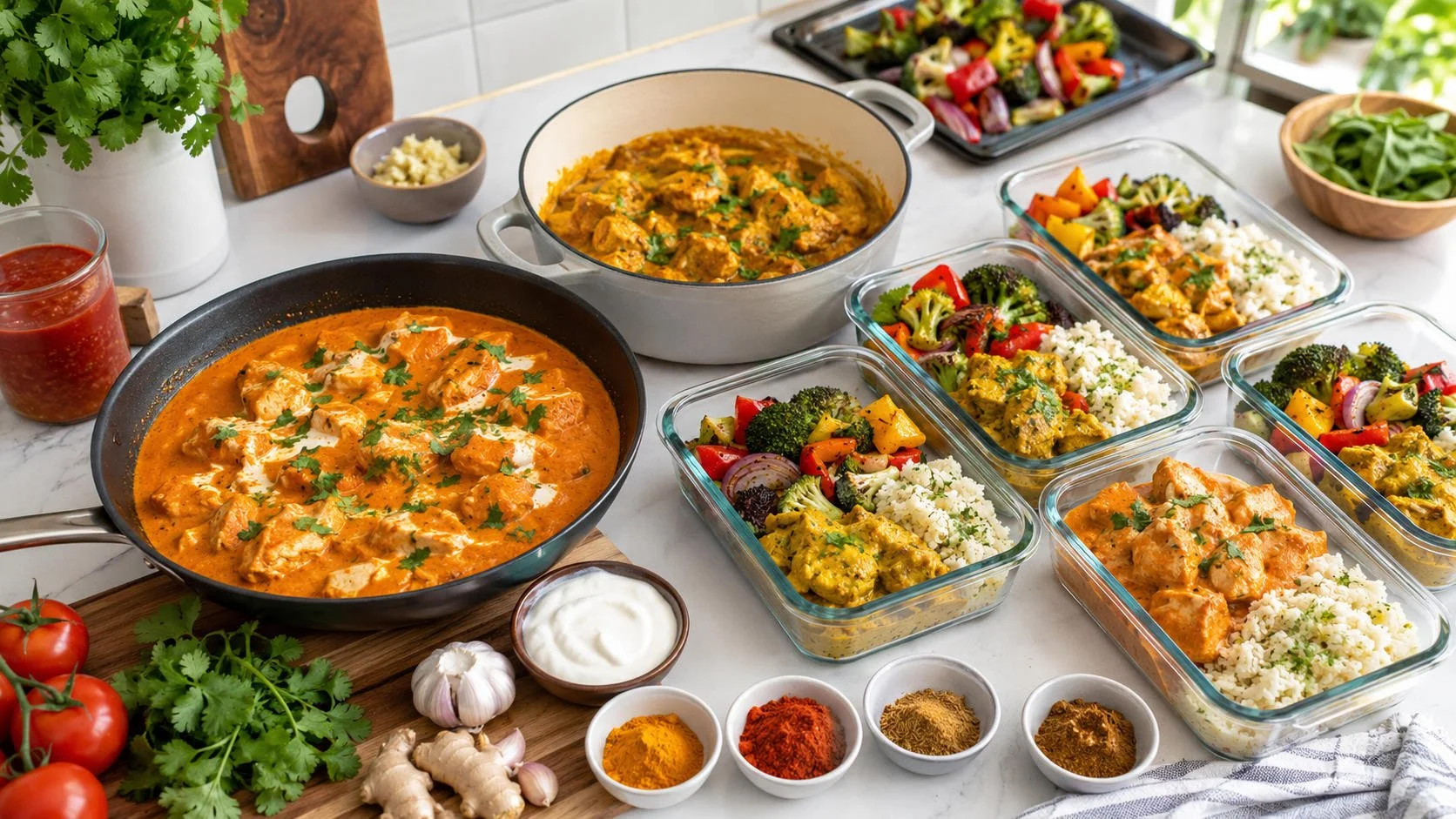
Recipe 4: High-Protein Saag Chicken
Saag paneer is delicious, but paneer can be calorie-dense.
This version keeps the spinach curry flavor and uses chicken breast as the main protein.
Makes
4 servings
Approximate macros
Per serving, without rice:
Calories: about 300–360
Protein: about 40–50g
Carbs: about 12–18g
Fat: about 8–12g
Ingredients
2 lb boneless skinless chicken breast
1 tablespoon oil or ghee
1 onion, diced
4 cloves garlic
1 tablespoon ginger
1 teaspoon cumin
1 teaspoon coriander
1 teaspoon garam masala
1/2 teaspoon turmeric
1/2 teaspoon chili powder
16 oz frozen spinach, thawed and squeezed
1/2 cup plain nonfat Greek yogurt
1/2 cup chicken broth
Salt
Lemon juice
Instructions
Cook onion in oil or ghee.
Add garlic, ginger, and spices.
Add spinach and broth.
Blend if you want a smoother saag.
Add chicken and simmer until cooked.
Turn off heat.
Stir in Greek yogurt.
Finish with lemon juice.
Meal-prep notes
Saag can release water after refrigeration or freezing.
To fix it:
Reheat uncovered for a minute or two.
Stir well.
Add a spoonful of Greek yogurt after reheating.
Add lemon at the end.
Best side
Saag chicken is great over cauliflower rice because the sauce is thick and flavorful.
Recipe 5: Low-Calorie Shrimp Curry
Shrimp is one of the best proteins for a lighter curry.
It cooks fast, reheats decently, and gives a lot of protein without many calories.
Makes
4 servings
Approximate macros
Per serving, without rice:
Calories: about 230–300
Protein: about 30–40g
Carbs: about 10–18g
Fat: about 6–10g
Ingredients
1.5 lb shrimp, peeled and deveined
1 teaspoon oil
1 onion, diced
4 cloves garlic
1 tablespoon ginger
1 tablespoon curry powder
1 teaspoon garam masala
1/2 teaspoon turmeric
1/2 teaspoon chili powder
1 large can crushed tomatoes
1/2 cup light coconut milk or broth
Salt
Lime juice
Cilantro
Instructions
Cook onion in oil.
Add garlic, ginger, and spices.
Add tomatoes and light coconut milk or broth.
Simmer 10 minutes.
Add shrimp and cook just until pink.
Finish with lime and cilantro.
Meal-prep notes
Shrimp can become rubbery if overcooked.
For meal prep:
Slightly undercook shrimp before storing.
Reheat gently.
Do not microwave too long.
Freeze the sauce separately if you want the best texture.
Best side
Cauliflower rice or a smaller serving of basmati rice.
Recipe 6: Lean Turkey Keema
Keema is one of the easiest Indian-style dishes to meal prep.
Traditional keema can use lamb or beef. This version uses lean ground turkey or chicken to keep calories lower.
Makes
4 servings
Approximate macros
Per serving, without rice:
Calories: about 300–380
Protein: about 35–45g
Carbs: about 15–25g
Fat: about 8–14g
Ingredients
2 lb extra-lean ground turkey or ground chicken
1 tablespoon oil
1 onion, diced
4 cloves garlic
1 tablespoon ginger
2 tablespoons tomato paste
1 cup crushed tomatoes
1 cup frozen peas
1 tablespoon garam masala
1 teaspoon cumin
1 teaspoon coriander
1/2 teaspoon turmeric
1/2 teaspoon chili powder
Salt
Lemon juice
Cilantro
Instructions
Cook onion in oil.
Add garlic, ginger, tomato paste, and spices.
Add turkey and cook until browned.
Add crushed tomatoes and peas.
Simmer until thick.
Finish with lemon and cilantro.
Meal-prep notes
Keema is one of the best freezer meals.
Use it in:
Bowls
Lettuce wraps
Cauliflower rice plates
Half-rice bowls
Stuffed peppers
Egg-white scrambles
Low-calorie wraps
Best side
Cauliflower rice, roasted vegetables, or a measured portion of rice.
Recipe 7: Chicken Chana Masala
Chana masala is usually chickpea-based.
Chickpeas are nutritious and filling, but if your main goal is high protein for fewer calories, chickpeas alone are not as efficient as chicken or shrimp. The best compromise is a hybrid: chickpeas for fiber and texture, chicken for protein.
Makes
4 servings
Approximate macros
Per serving, without rice:
Calories: about 360–430
Protein: about 35–45g
Carbs: about 30–40g
Fat: about 7–12g
Ingredients
1.5 lb boneless skinless chicken breast
1 can chickpeas, drained and rinsed
1 tablespoon oil
1 onion, diced
4 cloves garlic
1 tablespoon ginger
2 tablespoons tomato paste
1 large can crushed tomatoes
1 tablespoon garam masala
1 teaspoon cumin
1 teaspoon coriander
1/2 teaspoon turmeric
1/2 teaspoon chili powder
1/2 teaspoon amchur or lemon juice
Salt
Cilantro
Instructions
Cook onion in oil.
Add garlic, ginger, tomato paste, and spices.
Add tomatoes and simmer.
Add chicken and cook through.
Add chickpeas and simmer until thick.
Finish with lemon or amchur and cilantro.
Meal-prep notes
This is very good for lunch because the chickpeas keep it filling.
Best storage:
Fridge: 3 to 4 days
Freezer: 2 to 3 months for best quality
Store rice separately
Best side
Skip rice if you want lower calories because the chickpeas already provide carbs.
Use:
Cauliflower rice
Cucumber salad
Roasted vegetables
Recipe 8: High-Protein Dal With Chicken or Tofu
Dal is healthy, cheap, and meal-prep friendly.
But dal by itself is not always as high-protein as people assume. Lentils contain protein, but they also contain a lot of carbohydrates. That is not bad. It just means dal becomes much more protein-focused when you add chicken, tofu, shrimp, or Greek yogurt. Cooked lentils are listed at about 230 calories per cup, with calories coming mostly from carbohydrates and protein.
Makes
4 servings
Approximate macros with chicken
Per serving:
Calories: about 320–400
Protein: about 30–40g
Carbs: about 35–45g
Fat: about 5–10g
Ingredients
1 cup dry red lentils
1 lb chicken breast, diced, or 14 oz extra-firm tofu
1 teaspoon oil
1 onion, diced
4 cloves garlic
1 tablespoon ginger
1 teaspoon cumin
1 teaspoon coriander
1/2 teaspoon turmeric
1/2 teaspoon chili powder
4 cups broth or water
1 cup crushed tomatoes
Salt
Lemon juice
Cilantro
Optional: 1/2 cup Greek yogurt stirred in off heat
Instructions
Cook onion in oil.
Add garlic, ginger, and spices.
Add lentils, tomatoes, and broth.
Simmer until lentils soften.
Add chicken early enough to cook through, or add tofu near the end.
Finish with lemon and cilantro.
Stir in Greek yogurt off heat if using.
Meal-prep notes
Dal thickens in the fridge.
To reheat:
Add a splash of water or broth.
Stir well.
Add lemon after reheating.
Best use
This is a great cold-weather meal prep because it is filling, cheap, and freezer-friendly.
Recipe 9: Low-Calorie Korma-Style Chicken
Restaurant korma can be very high-calorie because of cream, nuts, coconut, and ghee.
This version gives you the mild, creamy, slightly sweet korma feeling without using a huge amount of cream or cashew paste.
Makes
4 servings
Approximate macros
Per serving, without rice:
Calories: about 330–420
Protein: about 40–50g
Carbs: about 15–25g
Fat: about 10–16g
Ingredients
2 lb chicken breast
1 tablespoon oil or ghee
1 onion, diced
4 cloves garlic
1 tablespoon ginger
1 tablespoon garam masala
1 teaspoon cumin
1 teaspoon coriander
1/2 teaspoon turmeric
1/4 teaspoon cinnamon
1/4 teaspoon cardamom
1 cup crushed tomatoes or pumpkin puree
1/2 cup plain nonfat Greek yogurt
2 tablespoons cashew butter or 1/4 cup soaked cashews, optional
1/2 cup broth
Salt
Lemon juice
Instructions
Cook onion in oil or ghee.
Add garlic, ginger, and spices.
Add tomatoes or pumpkin puree and broth.
Add chicken and simmer.
Blend sauce if using cashews.
Turn off heat and stir in Greek yogurt.
Finish with lemon.
How to keep it lower-calorie
Use:
Greek yogurt instead of cream
2 tablespoons cashew butter for the whole batch, not half a cup
Pumpkin puree for body
Chicken breast instead of paneer or lamb
Meal-prep notes
Korma-style sauces may thicken in the fridge.
Reheat gently and stir.
Recipe 10: Tandoori Chicken Meal-Prep Bowls
This is the easiest Indian-style protein prep.
No creamy sauce required.
Makes
4 servings
Approximate macros
Chicken only, per serving:
Calories: about 250–330
Protein: about 40–50g
Carbs: low
Fat: depends on chicken cut
Ingredients
2 lb boneless skinless chicken breast or thighs
1/2 cup plain nonfat Greek yogurt
2 tablespoons lemon juice
1 tablespoon grated ginger
4 cloves garlic
1 tablespoon garam masala
1 teaspoon cumin
1 teaspoon coriander
1 teaspoon paprika
1/2 teaspoon turmeric
1/2 teaspoon chili powder
Salt
Instructions
Mix yogurt, lemon, garlic, ginger, and spices.
Coat chicken.
Marinate at least 30 minutes, preferably overnight.
Bake, grill, or air-fry until cooked.
Slice and portion.
Meal-prep bowl ideas
Low-calorie bowl:
Tandoori chicken
Cauliflower rice
Cucumber
Lettuce
Tomato
Greek yogurt raita
Balanced bowl:
Tandoori chicken
Half basmati rice
Half cauliflower rice
Cucumber salad
Raita
Higher-carb bowl:
Tandoori chicken
Basmati rice
Chickpeas
Vegetables
Meal-prep notes
This is one of the best options if you get tired of curry.
It works cold or hot.
Use it in:
Bowls
Wraps
Salads
Lettuce cups
Egg scrambles
Recipe 11: Butter Chicken Meatballs
This is a good meal prep option if you like meatballs and sauce.
Use lean ground chicken or turkey.
Makes
4 servings
Approximate macros
Per serving, without rice:
Calories: about 330–430
Protein: about 35–45g
Carbs: about 15–20g
Fat: depends on ground meat
Ingredients
For the meatballs:
2 lb lean ground chicken or turkey
1 egg
1/4 cup breadcrumbs or oat flour
1 tablespoon garam masala
1 teaspoon cumin
1 teaspoon garlic powder
1 teaspoon salt
Chili powder to taste
For the sauce:
1 tablespoon ghee or butter
1 onion, diced
4 cloves garlic
1 tablespoon ginger
2 tablespoons tomato paste
1 large can crushed tomatoes
1/2 cup Greek yogurt
1/2 cup broth
1 teaspoon garam masala
1 teaspoon paprika
Kasuri methi, optional
Lemon juice
Instructions
Mix meatball ingredients.
Form into small meatballs.
Bake until cooked through.
Make the sauce in a pan.
Add cooked meatballs.
Turn off heat and stir in Greek yogurt.
Portion into containers.
Meal-prep notes
This freezes well.
For best results:
Freeze meatballs and sauce together.
Reheat gently.
Add fresh yogurt or lemon after reheating.
Recipe 12: Low-Calorie Tofu Saag
This is the vegetarian alternative to saag paneer.
Paneer is delicious, but tofu is usually easier to fit into a lower-calorie, higher-protein plan. Firm tofu is often listed around 144 calories and 17.3g protein per 100g, though brands vary.
Makes
4 servings
Approximate macros
Per serving:
Calories: about 280–380
Protein: about 22–35g
Carbs: about 15–25g
Fat: about 12–18g
Ingredients
2 blocks extra-firm tofu, pressed and cubed
1 teaspoon oil
1 onion, diced
4 cloves garlic
1 tablespoon ginger
16 oz frozen spinach
1 teaspoon cumin
1 teaspoon coriander
1 teaspoon garam masala
1/2 teaspoon turmeric
1/2 cup Greek yogurt or unsweetened soy yogurt
Salt
Lemon juice
Instructions
Press tofu and cube it.
Air-fry or bake tofu for better texture.
Cook onion, garlic, ginger, and spices.
Add spinach and simmer.
Blend spinach sauce if desired.
Add tofu.
Stir in yogurt off heat.
Finish with lemon.
Meal-prep notes
Store tofu saag separately from rice.
It reheats well but may release water. Stir well after reheating.
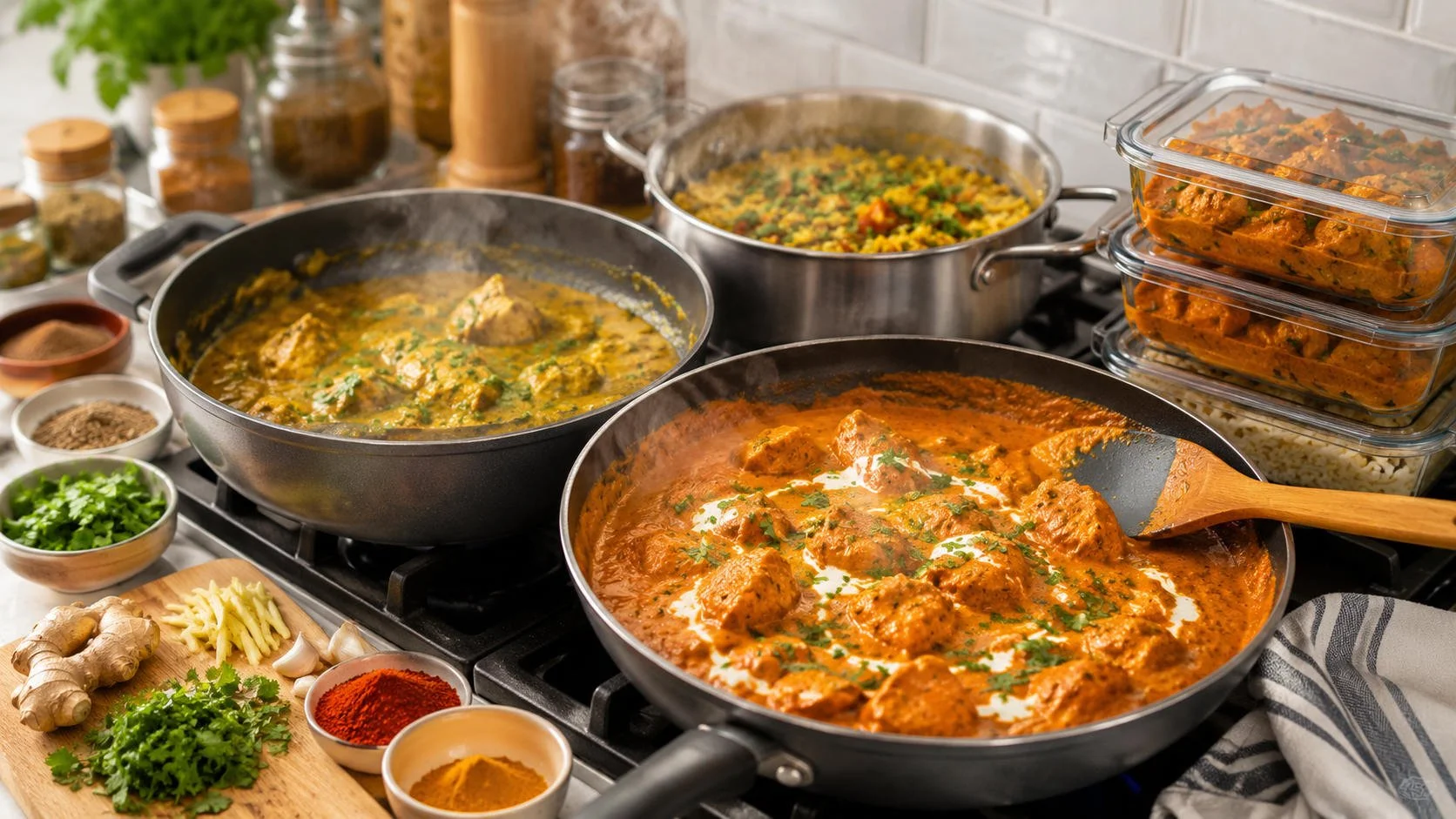
Best low-calorie Indian meal-prep sides
Cauliflower rice
Best for:
Lowest calories
Butter chicken
Curry
Saag
Keema
Shrimp curry
Use when:
You want the curry to be the main event.
Half rice, half cauliflower rice
Best for:
Realistic meal prep
People who still want rice texture
Training days
Higher satisfaction
Use when:
You want lower calories without feeling like you are dieting.
Cucumber raita
Use:
Nonfat Greek yogurt
Cucumber
Salt
Cumin
Lemon
Mint or cilantro
Best for:
Heat balance
Extra protein
Creaminess without mayo or cream
Kachumber salad
Use:
Cucumber
Tomato
Onion
Lemon
Cilantro
Salt
Chili
Best for:
Low-calorie volume
Crunch
Freshness
Roasted vegetables with chaat masala
Use:
Cauliflower
Zucchini
Bell pepper
Onion
Eggplant
Carrots in moderation
Best for:
Meal-prep bowls
Bigger portions without tons of calories
Lentils or chickpeas
Best for:
Fiber
Plant protein
Fullness
Vegetarian meals
Use carefully if calories are tight, because they add carbs and calories along with protein.
Best high-protein Indian meal-prep bowls
Butter chicken bowl
Use:
High-protein butter chicken
Cauliflower rice
Cucumber raita
Cilantro
Lemon
Best for:
Lowest-calorie butter chicken meal prep
Tikka masala rice bowl
Use:
Chicken tikka masala
Half rice, half cauliflower rice
Kachumber salad
Best for:
Takeout-style meal prep
Saag chicken bowl
Use:
Saag chicken
Cauliflower rice
Pickled onions
Yogurt
Best for:
Lower-carb Indian bowl
Shrimp curry bowl
Use:
Shrimp curry
Basmati rice or cauliflower rice
Cucumber salad
Best for:
Light seafood lunch
Keema bowl
Use:
Lean turkey keema
Cauliflower rice
Lettuce
Tomato
Raita
Best for:
High-protein meal prep that is not saucy chicken
Chana chicken bowl
Use:
Chicken chana masala
No extra rice, or cauliflower rice only
Lemon
Cilantro
Best for:
Higher-fiber lunch
Tandoori chicken bowl
Use:
Tandoori chicken
Half rice, half cauliflower rice
Raita
Kachumber
Pickled onions
Best for:
Meal prep that tastes good hot or cold
How to make Indian food taste rich without tons of calories
Use tomato paste
Tomato paste adds sweetness, depth, and body.
Cook it in the pan for 1 to 2 minutes before adding liquids.
Use kasuri methi
This is one of the most important butter chicken shortcuts.
Crush dried fenugreek leaves into the sauce near the end.
It makes the dish smell more restaurant-style.
Use lemon or lime at the end
Acid makes lower-fat food taste brighter.
Add citrus after cooking.
Salt properly
A lot of “healthy” curry tastes flat because people reduce oil and also under-salt.
Use enough salt to make the spices pop.
Toast or bloom spices
Cook spices briefly in the measured oil, ghee, or tomato paste.
This makes the dish taste richer without adding more fat.
Use Greek yogurt at the end
It gives tang and creaminess.
Do not boil it hard.
Use a blender
Blending onions, tomatoes, spinach, or roasted vegetables makes a sauce feel richer than it is.
Add heat carefully
Chili, fresh green chiles, and black pepper can make lower-calorie food feel more exciting.
Best swaps for popular American Indian-restaurant dishes
Butter chicken
Instead of:
Butter
Heavy cream
Lots of oil
Large rice portion
Naan
Use:
Chicken breast
Crushed tomatoes
Greek yogurt
1 tablespoon ghee for the batch
Kasuri methi
Cauliflower rice or half rice
Chicken tikka masala
Instead of:
Creamy sauce
Oil-heavy base
Large rice portion
Use:
Yogurt-marinated chicken
Tomato-heavy sauce
Greek yogurt off heat
Measured rice
Chicken curry
Instead of:
Coconut milk as the whole sauce
Lots of oil
Dark meat only
Use:
Chicken breast or mixed breast/thigh
Tomato and broth
Light coconut milk only if needed
Lots of garlic, ginger, and spices
Saag paneer
Instead of:
Full-fat paneer
Lots of ghee
Cream
Use:
Chicken breast, tofu, or a smaller amount of paneer
Spinach
Greek yogurt
Lemon
Measured oil
Korma
Instead of:
Cream
Large cashew paste
Coconut cream
Use:
Greek yogurt
Pumpkin puree
A small amount of cashew butter
Chicken breast or shrimp
Chana masala
Instead of:
Chickpeas plus rice plus naan
Use:
Chickpeas plus chicken
Chickpeas plus tofu
Cauliflower rice
No extra rice if chickpeas are the main carb
Dal
Instead of:
Dal plus rice plus naan plus oil-heavy tadka
Use:
Dal with chicken, shrimp, tofu, or Greek yogurt
Measured tadka
Cauliflower rice or no rice
What to avoid if low-calorie is the goal
You do not have to avoid these forever. Just treat them as calorie-dense.
Full-fat cream
Cream can make curry delicious, but it adds calories quickly and very little protein. Heavy cream is mostly fat calories.
Lots of ghee
Ghee is flavorful, but 1 tablespoon is about 112 calories. Use it like a seasoning, not a cooking liquid.
Cashew-heavy sauces
Cashews are nutritious, but calorie-dense.
Use 2 tablespoons cashew butter for a batch, not a whole cup of cashews.
Naan with every meal
Naan can fit, but curry plus rice plus naan is often where calories jump.
Choose rice or naan, not both, when calories matter.
Paneer as the main protein every time
Paneer is delicious, but it is not usually the lowest-calorie protein.
Use tofu, chicken, shrimp, or smaller paneer portions if protein-per-calorie matters.
Coconut cream
Use light coconut milk or a small amount of regular coconut milk if flavor matters.
Coconut cream can make the meal much heavier.
Fried appetizers
Samosas, pakoras, bhajis, and fried breads are not the best fit for low-calorie meal prep.
Meal prep plan: 2 hours, 12 meals
Here is a simple weekly prep.
Make these three proteins
Batch 1: High-Protein Butter Chicken
4 servings
Batch 2: Tandoori Chicken
4 servings
Batch 3: Lean Turkey Keema
4 servings
Make these sides
4 servings cauliflower rice
4 servings half rice, half cauliflower rice
4 servings cucumber raita
1 container kachumber salad
1 tray roasted vegetables
How to portion
For lower calories:
1 serving curry
1 to 2 cups cauliflower rice
Cucumber salad
2 tablespoons raita
For balanced meals:
1 serving curry
1/2 cup cooked rice
1 cup cauliflower rice
Cucumber salad
For higher-carb meals:
1 serving curry
1 cup cooked rice
Vegetables
Raita
One cup of cooked white rice is about 205 calories, so measuring rice is one of the easiest ways to keep meal-prep calories predictable.
Storage
Keep 3 days of meals in the fridge.
Freeze the rest.
Store rice separately when possible.
Store raita separately.
Add fresh lemon and cilantro after reheating.
Reheat leftovers to 165°F / 74°C.
Best recipes by goal
Best for weight loss
Choose:
High-Protein Butter Chicken over cauliflower rice
Why:
It gives the takeout flavor with much fewer calories than the restaurant-style version.
Best for meal prep
Choose:
Lean Turkey Keema
Why:
It freezes well, reheats well, and works in bowls, wraps, salads, and egg scrambles.
Best for high protein
Choose:
Chicken Tikka Masala or Grilled Tandoori Chicken
Why:
Chicken breast plus Greek yogurt gives a strong protein base.
Best for low carb
Choose:
Saag Chicken over cauliflower rice
Why:
Spinach, chicken, yogurt, and spices make a filling lower-carb plate.
Best for pescatarians
Choose:
Shrimp Curry
Why:
Shrimp is high-protein and cooks quickly.
Best vegetarian option
Choose:
Tofu Saag or high-protein dal with tofu
Why:
Tofu is more protein-efficient than many vegetarian curry bases, and saag gives volume.
Best for people who still want rice
Choose:
Chicken curry over half rice, half cauliflower rice
Why:
You keep the rice texture while cutting the calorie load.
Common mistakes
Mistake 1: Removing all fat
A little ghee or oil helps bloom spices.
The goal is not zero fat. It is measured fat.
Mistake 2: Using yogurt wrong
Greek yogurt can split if boiled hard.
Turn off the heat, temper the yogurt, then stir it in.
Mistake 3: Making the sauce too watery
If you remove cream, you need another thickener.
Use:
Tomato paste
Blended onion
Blended spinach
Blended cauliflower
Greek yogurt
Pumpkin puree
Small amounts of cashew butter
Mistake 4: Forgetting acid
Healthy curries often taste flat because they need lemon or lime.
Add it at the end.
Mistake 5: Using chickpeas and lentils as if they are pure protein
Chickpeas and lentils are healthy, but they are mixed protein-and-carb foods.
If you want a high-protein dish, pair them with chicken, shrimp, tofu, or Greek yogurt.
Mistake 6: Serving every curry with rice and naan
Pick one starch.
Better:
Curry + cauliflower rice
Curry + measured rice
Curry + naan and salad
Curry + half rice, half cauliflower rice
Mistake 7: Meal-prepping too many fridge meals
Cooked meals are generally best kept in the fridge for 3 to 4 days. Freeze extra portions instead of forcing a 6-day fridge batch.
FAQ
Can Indian food be high-protein and low-calorie?
Yes. The easiest way is to build the dish around chicken breast, shrimp, lean turkey, tofu, Greek yogurt, lentils paired with lean protein, and tomato- or spinach-based sauces. The biggest calorie savings usually come from reducing cream, ghee, oil, rice, naan, cashews, and fried sides.
What is the best low-calorie Indian dish for meal prep?
The best options are high-protein butter chicken, chicken tikka masala, chicken curry, saag chicken, tandoori chicken, turkey keema, shrimp curry, and chicken chana masala. They reheat well and can be portioned with cauliflower rice or measured rice.
How do I make butter chicken lower-calorie?
Use chicken breast, crushed tomatoes, tomato paste, spices, kasuri methi, and Greek yogurt instead of heavy cream. Use 1 tablespoon of ghee or butter for the entire batch rather than several tablespoons.
What can I use instead of heavy cream in curry?
Use plain nonfat Greek yogurt, blended cottage cheese, light coconut milk, blended cauliflower, blended onion, pumpkin puree, or a small amount of cashew butter. Greek yogurt is especially useful because it adds creaminess and protein.
Can I freeze healthy butter chicken?
Yes. Butter chicken freezes well. The sauce may look slightly separated after reheating if it contains yogurt, but stirring and adding a fresh spoonful of yogurt usually fixes the texture.
Is curry good for meal prep?
Yes. Tomato-based curries, keema, dal, butter chicken, tikka masala, and tandoori chicken all work well for meal prep. Store refrigerated meals for 3 to 4 days and freeze anything you will not eat in that window.
Is basmati rice bad for weight loss?
No. Rice is not bad. The issue is portion size. A cup of cooked white rice is about 205 calories, so measuring rice or mixing it with cauliflower rice can make meals easier to fit.
Is cauliflower rice necessary?
No. It is just useful. Riced cauliflower is much lower-calorie than white rice, so it helps if you want a big curry bowl without using most of your calories on the base.
Is paneer good for high-protein low-calorie meals?
Paneer has protein, but it is often higher in fat and calories than chicken, shrimp, tofu, or Greek yogurt. It can fit, but if calories are tight, use a smaller portion or swap in tofu or chicken.
What is the best vegetarian high-protein Indian meal prep?
Tofu saag, tofu tikka masala, high-protein dal with tofu, and chana masala with tofu are the best starting points. Lentils and chickpeas are nutritious but not as protein-efficient as tofu or Greek yogurt, so pairing them with another protein helps.
Final takeaway
You can make Indian food high-protein and lower-calorie without making it bland.
The key is not removing the Indian flavor.
The key is changing the structure.
Use:
Chicken breast
Shrimp
Lean turkey
Tofu
Greek yogurt
Tomato-based sauces
Spinach-based sauces
Measured oil or ghee
Cauliflower rice or half rice
Lemon, cilantro, and kasuri methi for flavor
Be careful with:
Heavy cream
Large amounts of ghee
Cashew-heavy sauces
Paneer-heavy dishes
Naan plus rice
Fried appetizers
Coconut cream
Unmeasured rice
The best recipes to start with are:
High-Protein Butter Chicken
Low-Calorie Chicken Tikka Masala
Simple Chicken Curry
Saag Chicken
Shrimp Curry
Lean Turkey Keema
Chicken Chana Masala
High-Protein Dal
Low-Calorie Korma-Style Chicken
Tandoori Chicken Bowls
The simplest meal-prep formula:
Cook one high-protein curry, portion it with cauliflower rice or measured basmati rice, add cucumber raita, and freeze anything you will not eat within 3 to 4 days.
That is how you get Indian takeout flavor with meal-prep macros that actually work.
Enjoy your delicious Indian food!