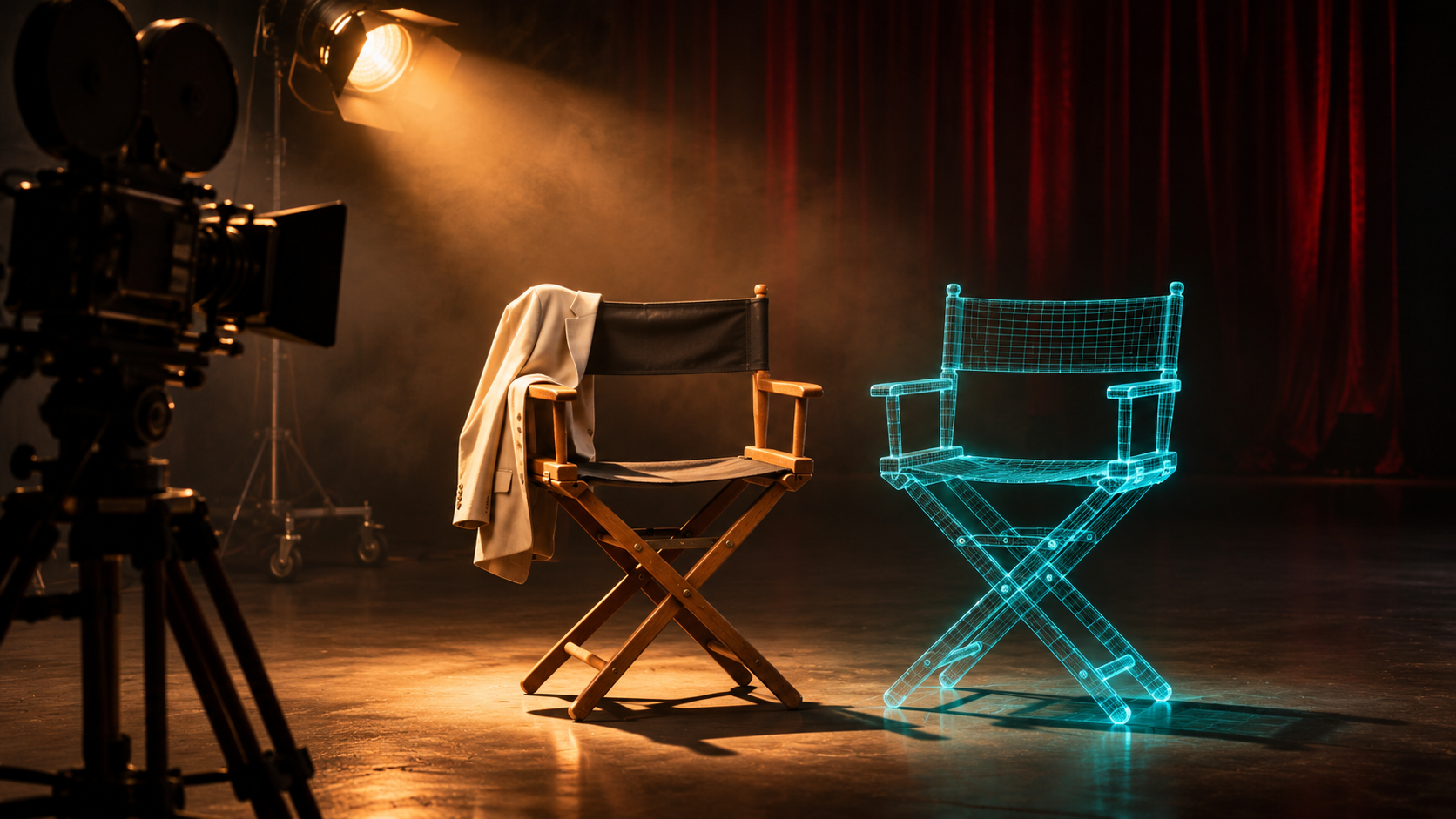
The unsettling thing about an AI actor is not that it looks like a machine. It is that, for a few seconds, it might not.
A convincing face appears on screen. It speaks, reacts and seems to inhabit a scene. The obvious question follows: if software can do that, how long before Hollywood stops hiring people?
The answer depends on which part of the job you mean. AI can already substitute for particular appearances and performance-related tasks. Replacing an actor across a complete production, reliably and on terms a studio can use, is a much larger proposition.
There is no defensible countdown to the disappearance of Hollywood actors. But there is a useful distinction between replacing a shot, reproducing a performer and replacing the human cast. Much of the confusion comes from treating those as the same achievement.
An actor can appear without performing a new scene
In April 2026, the filmmakers behind As Deep as the Grave showed a trailer featuring an AI-rendered Val Kilmer. According to ABC's reporting, his estate permitted the digital replication, received compensation and supplied archival material. The filmmakers described using photographs, footage and voice recordings to help construct the performance.
That is not a hypothetical demonstration involving an anonymous synthetic face. It is a recognizable actor's likeness being used in a film project after his death.
It also does not prove that a complete synthetic cast can reliably carry any production. The verified example here is the project and its public trailer, not an independently established verdict on the finished film's quality or commercial success.
Still, it changes the question. “Can an actor appear without newly performing the scene?” is no longer purely theoretical. “Will audiences accept an industry built around that?” remains a much broader question.
There are several different things called replacement
Consider five uses that can all fit beneath an AI headline:
Changing an existing performance: altering something the actor actually recorded.
Creating a missing element: generating a voice segment, insert or additional shot.
Reusing a digital replica: producing new material with an identifiable person's licensed likeness.
Casting a synthetic character: creating a human-looking performer who is not a recognizable copy of a particular person.
Replacing the principal cast: sustaining the characters and performances across a complete production without hiring those actors to perform the roles.
This is a conceptual ladder, not a timetable. The steps have different technical requirements and different implications for employment, payment and consent.
An actor who licenses a replica may remain involved and compensated while doing less fresh performance work. A wholly synthetic character raises a different question: whether the role goes to a person at all. A tool that repairs a shot may help finish a film without telling us much about either scenario.
The technology can therefore reduce some kinds of work without eliminating the profession. Equally, a surviving profession does not mean every job within it is safe.
A convincing clip is not the same as a controllable performance
Movies already consist of short shots, so it is too easy to argue that short AI clips cannot threaten filmmaking. Editors have been assembling fragments into convincing scenes for a long time.
The harder question is whether a production can obtain the specific fragment it needs, then obtain the next one with the right continuity, expression and timing.
Think about a simple dramatic instruction: deliver the same line again, but sound less certain while keeping the same blocking and matching the close-up already filmed. An impressive generated clip does not, by itself, establish that the system can deliver that revision consistently or economically.
Runway's September 2026 guide to long-form AI video describes a process built from shorter shots, continuity planning, regeneration and editing. As a vendor guide, it is not an independent benchmark. It is nevertheless useful evidence that a production workflow involves more than entering one prompt and receiving a finished movie.
The practical issue is controllability. If a beautiful result arrives only after extensive retries, the work has not vanished. Some of it has moved into directing the system, selecting outputs and repairing the sequence.
That does not make the technology harmless to employment. It means the relevant comparison is the complete workflow, not the most impressive ten seconds posted online.
Hollywood's rules now distinguish replicas from synthetic performers
The legal and contractual landscape matters because a technically possible shot is not automatically one a producer is free to use.
SAG-AFTRA's 2026 TV/Theatrical agreement materials describe the current contract period as July 2026 through June 2030. Its specific explanation of synthetic performers says covered producers must bargain with the union before using them and describes a principle favoring human performances.
The agreement also addresses using a synthetic in a human role that would otherwise be performed by a person, requiring “significant additional value” compared with a human or digital replica. That last distinction is important: the union's explanation says digital replication may count as human performance for this comparison.
In other words, protecting a performer's place in the arrangement is not identical to insisting that the performer personally acts out every new frame. There can be a meaningful difference between authorized reuse of someone's likeness and replacing the role with an invented synthetic person.
These are protections within the agreement's scope. They are not a worldwide ban on AI characters, and they should not be described as one.
Copying an actor is not the same as inventing one
California has also legislated around digital replicas. The state's explanation of AB 2602 and AB 1836 describes protections concerning performer contracts and unauthorized digital replicas of deceased personalities.
The details and exceptions matter. These laws should not be flattened into “Hollywood cannot use AI.” They concern particular uses of identifiable people's likenesses and particular contractual arrangements.
That leaves several separate questions for a production: Is the person recognizable? What rights have been granted? Does a union agreement apply? Is the intended use covered? What jurisdiction governs the arrangement?
Those questions cannot be answered by judging whether the image looks realistic. Nor does estate or performer consent, on its own, resolve every wider debate about employment or audience acceptance. Permission is one essential dimension, not the entire argument.
Some AI investment is about the film around the actor
Not every Hollywood AI project is a plan to cast artificial stars.
In its March 2026 announcement about InterPositive, Netflix described production technology intended to work under filmmakers' control. That is a different proposition from replacing a leading performer with an entirely synthetic person.
The distinction should not become a comforting slogan either. A company's stated purpose does not independently establish that its tools will have no effect on employment. Technologies designed to assist a workflow can still change how much labor the workflow requires.
But it does explain why treating every AI investment as a vote to abolish acting is analytically weak. A shot-repair system, a licensed replica and a synthetic leading character need to be examined separately.
What would count as evidence that replacement is getting closer?
Rather than looking for a prediction with an impressively specific year, look for repeatable production evidence.
Can the same character sustain a long sequence without distracting changes? Can filmmakers revise a performance precisely rather than accepting whatever looks plausible? Can the production clear the necessary rights? Does the whole process save money after generation, editing and correction? Do viewers choose the resulting work when it competes with other entertainment?
These are tests to watch, not boxes this article claims have all been checked. A trailer answers fewer questions than a completed production. A completed production answers fewer than a repeatable commercial model.
Hollywood does not need to eliminate actors for AI to reshape acting. Fewer fresh performances, more licensed replicas or a different mix of roles could change livelihoods well before a fully synthetic cast becomes ordinary.
So how close is AI to replacing Hollywood actors? Close enough that some appearances and tasks can already be substituted. Not established enough to justify a date when human casts disappear.
The sharper question is no longer whether a machine can produce a convincing face. It is who still gets hired, who controls the likeness and who gets paid when that face appears.