
Fox now owns Roku. For viewers, the useful question is which promises concern their viewing experience—and which questions remain unanswered.
Start with the public text, then ask which question it answers. A blanket assurance is less useful than a promise whose scope you can identify.

The closing has happened
Fox announced completion on November 6, 2026. Its announcement presents the combination as a way to expand its streaming business while preserving Roku’s openness. That is the company’s strategy, not evidence of a benefit already delivered to an individual household.
Roku’s June customer notice still describes an expected first-half 2027 closing. The later closing filing records the completed transaction and successor Roku, LLC. The earlier timetable is obsolete.
An ownership announcement and a customer-service change are different things. Establishing the first does not tell you whether a particular subscription has changed price or whether an app has changed its features.
Read the promises clause by clause
The DOJ statement describes non-Fox carriage for at least three years; nondiscriminatory search and continued user control of app rearrangement; third-party data products on commercially reasonable terms; and existing sensitive non-Fox content-data firewalls for at least three years.
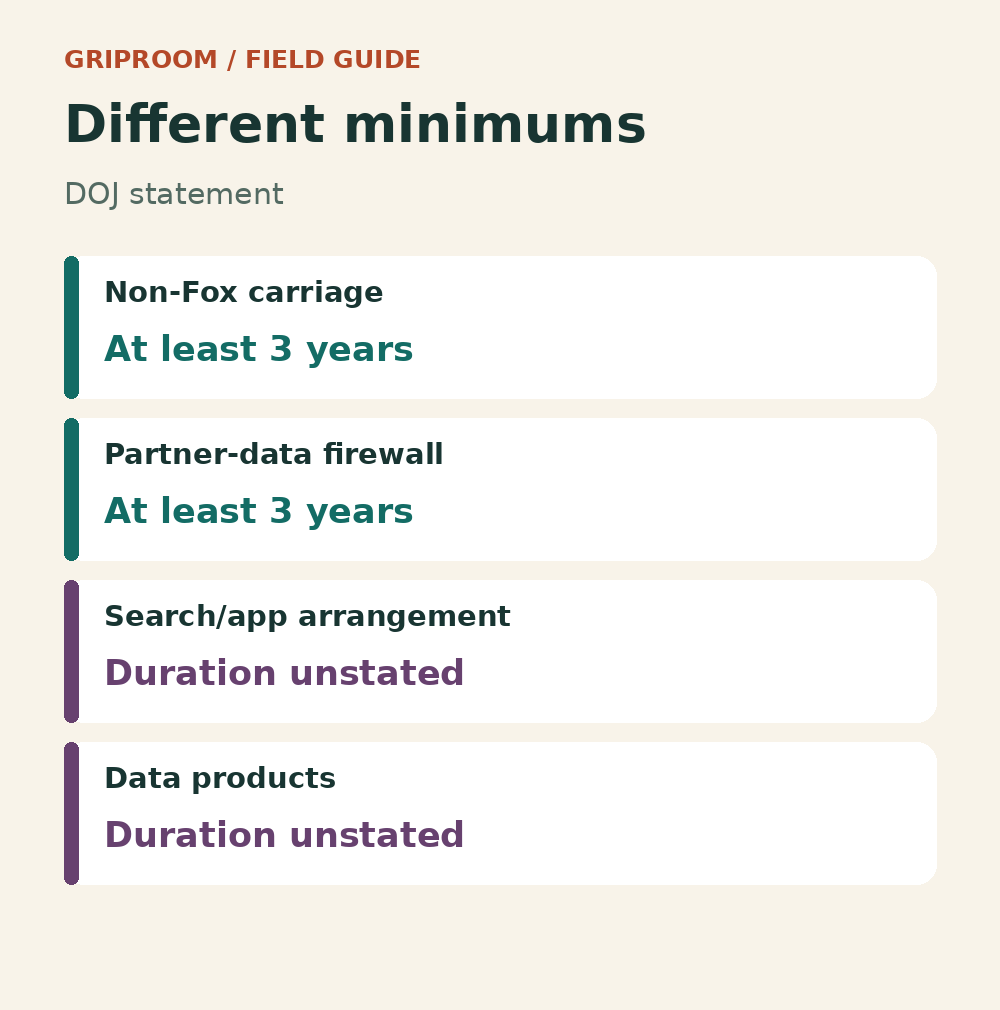
Carriage and the firewall have explicit minimums. The other clauses do not state the same term; that does not make them permanent.
DOJ closed its investigation, judging harm unlikely. The public statement is not a court order or an individual service guarantee.
Start with the change you can observe
Suppose your television looks different next month. Before deciding what that means, describe the change. Did an app disappear? Did a search produce a different result? Did a subscription become more expensive, or did an icon move?
Those observations raise different questions. A screenshot can help establish what appeared on a screen. A bill can establish what you were charged. Neither, by itself, establishes why the change occurred or which legal commitment applies.
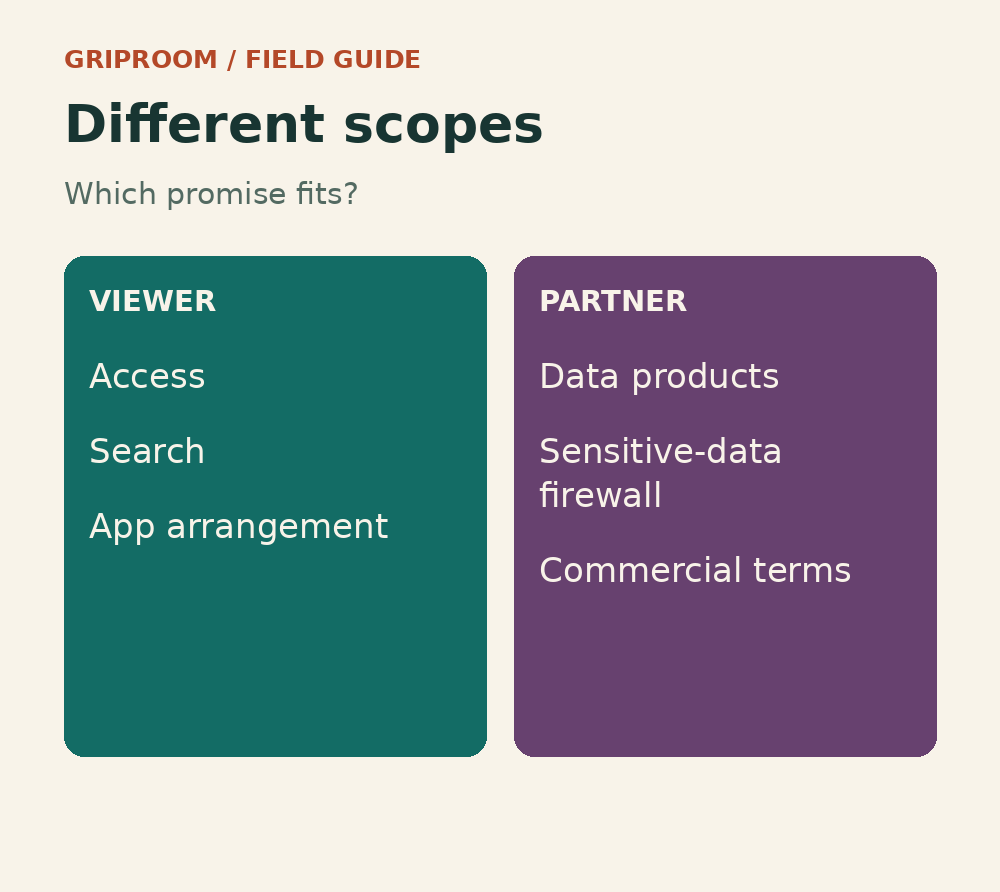
The graphic separates viewer-facing access, search and app arrangement from commercial data products, sensitive partner-data firewalls and commercial terms.
That approach also helps distinguish an immediate inconvenience from a broader concern about ownership. You can investigate a concrete service problem without first proving a theory about the new owner’s intentions.
There is no announcement-grounded reason to replace a working television merely because the ownership changed. Keep the actual commitments and the actual service change in view. The question that matters is how the two relate.